TIGHT CALVES
Tight Calves and Heel Pain: How Calf Tightness Pulls on the Heel and What Eases It
Stiff calves and a sore heel often travel together. Here is the connection, a simple way to check yours, and a routine that fits into a normal day.
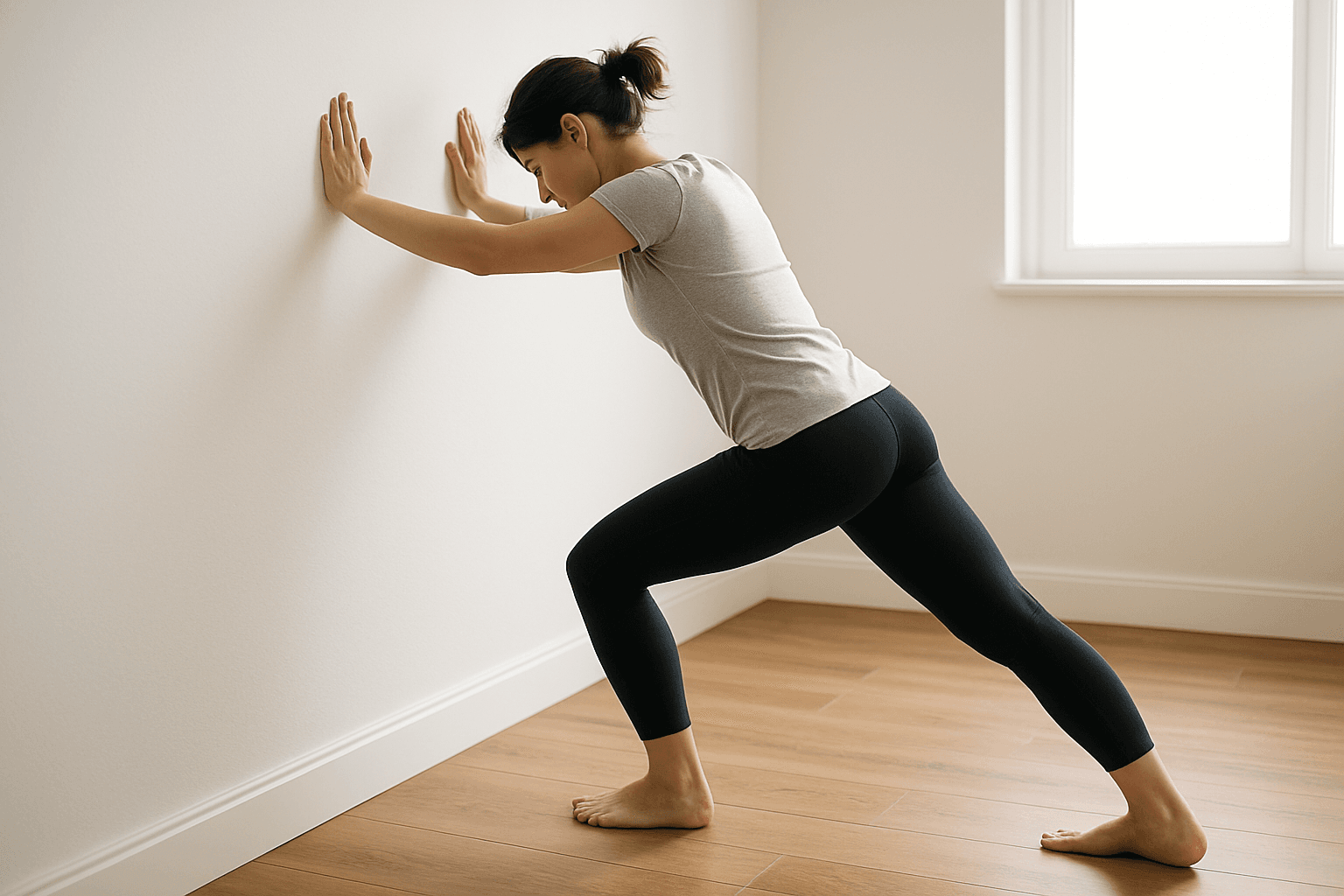
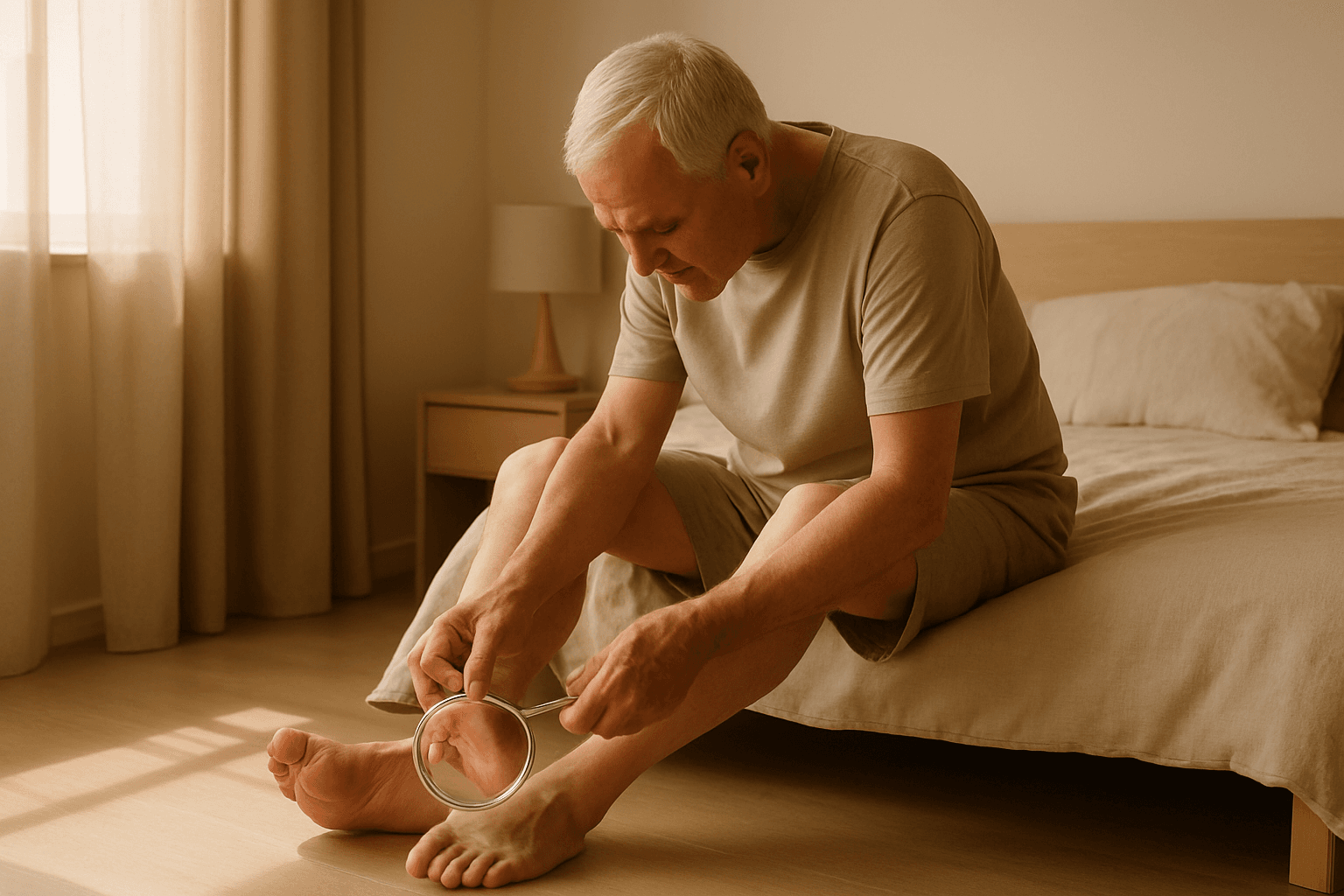
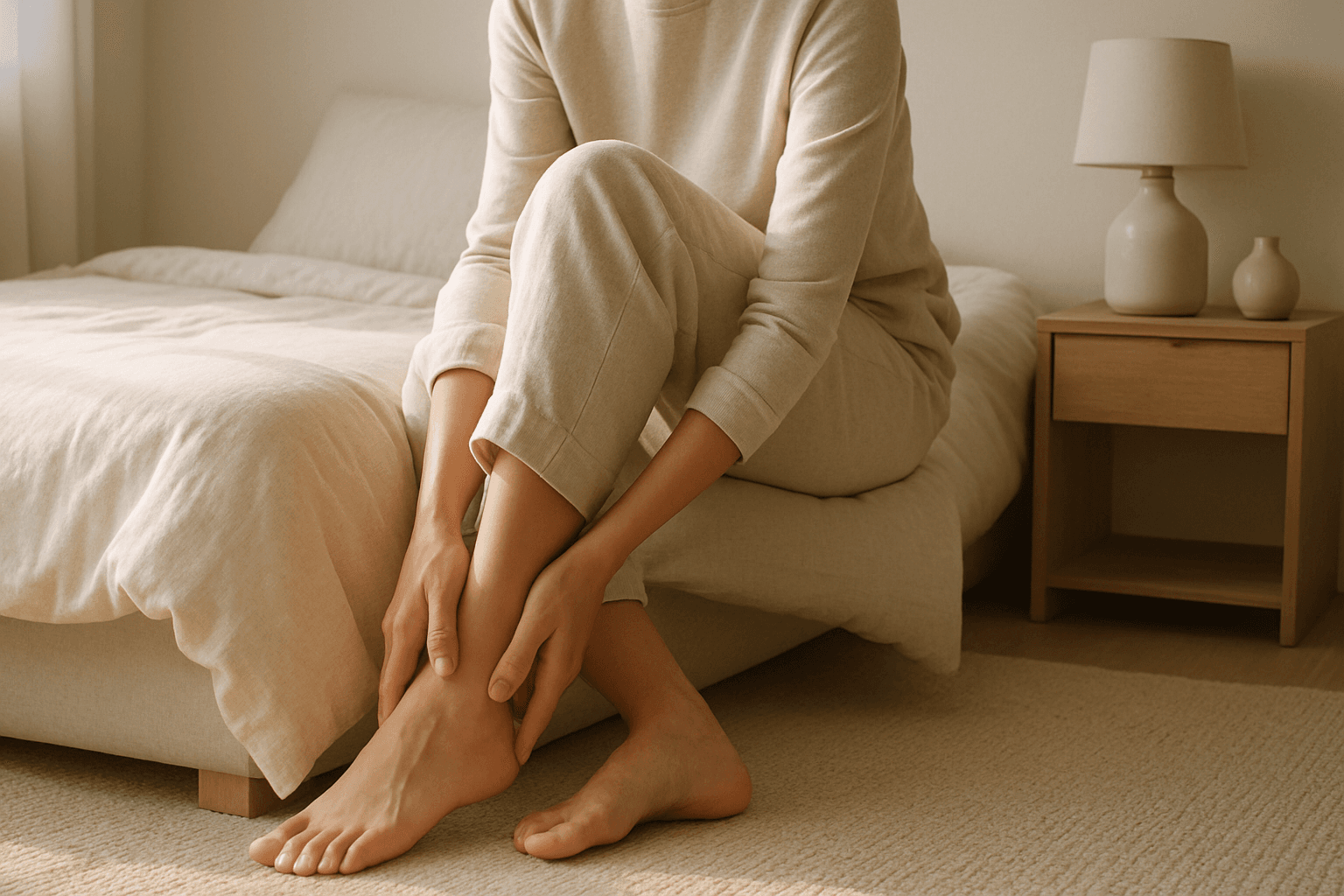
Tight calves can contribute to heel pain, and loosening them is one of the lowest-risk things you can try. The calf muscles join the Achilles tendon, which attaches to the back of the heel bone, and the tissue under your arch attaches to the same bone from the other side. When the calf is short or stiff, the foot works harder to roll forward with each step, and both the Achilles and the plantar fascia can end up carrying extra load.
That is a contributing factor, not a verdict. Calf tightness is one of several things researchers list alongside body weight, footwear, activity changes and foot structure. The evidence for calf stretching is encouraging but not strong: a 2020 systematic review and meta-analysis of randomized trials in plantar fasciitis, published in a peer-reviewed journal, found low-quality evidence overall, with stretching helping pain in several of the trials. In other words, it is cheap and sensible, but not a miracle.
This page shows how to check whether your calves are a likely factor, two stretches and a simple strengthening move that cost nothing, and how to support the heel at the same time. It is general information, not medical advice.
Why the calf and the heel are linked
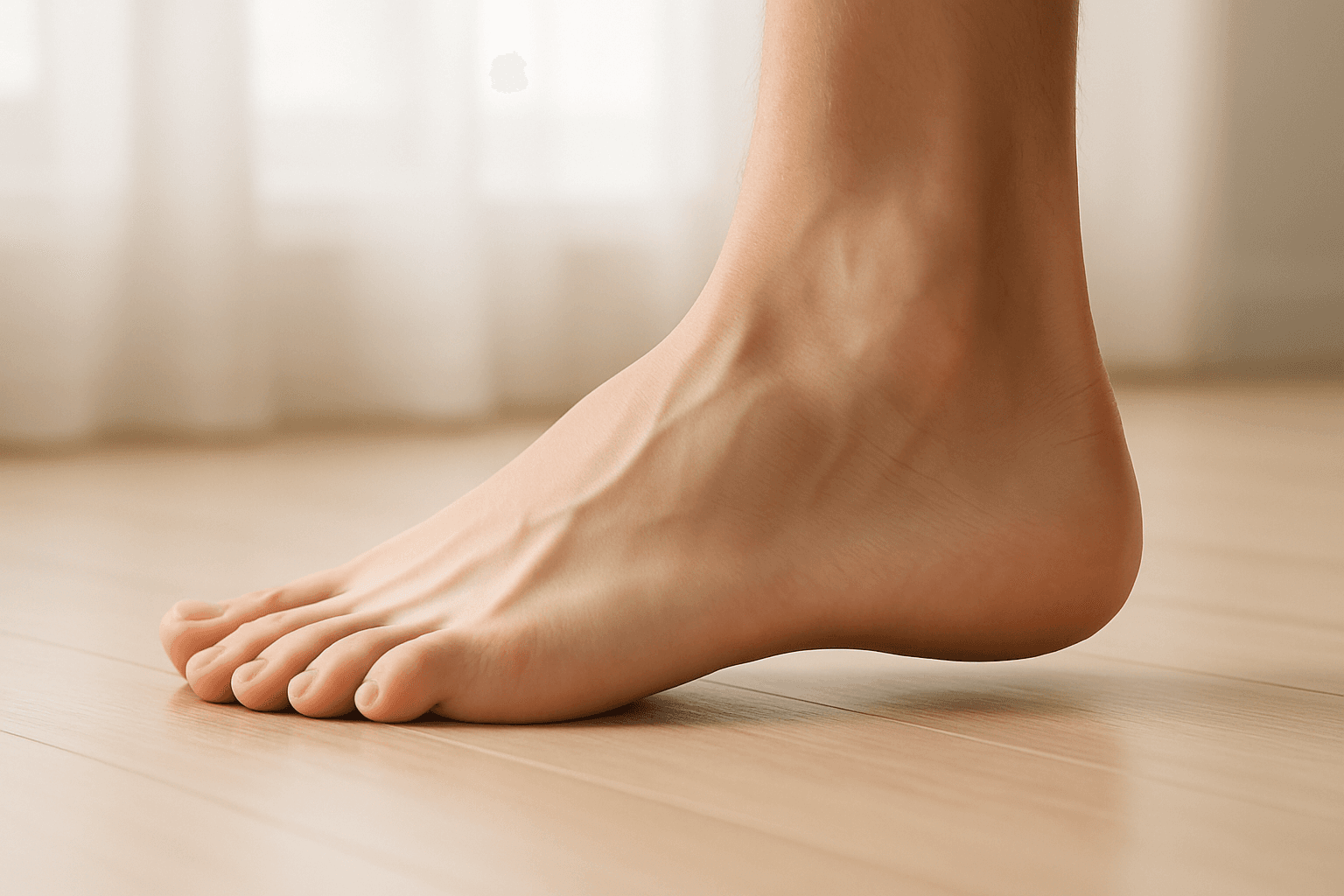
The two big calf muscles, the gastrocnemius and the soleus, feed into the Achilles tendon. The tendon anchors on the back of the heel bone. The plantar fascia runs from the underside of the same bone to the base of the toes. When the calf cannot lengthen enough as you step over your foot, the heel and arch absorb the difference.
Longer-term, this is thought to raise tension on the fascia during walking and push strain into the Achilles. That is why heel pain at the back, covered in pain in the back of the heel and Achilles tendonitis, and pain under the heel, covered in pain in the bottom of the heel, so often come with a tight-calf history.
A quick self-check
Try the wall test. Stand facing a wall and put one foot a hand-width or two from it, toes pointing straight ahead. Keeping the heel flat on the floor, bend the knee forward toward the wall. If your knee cannot come close without the heel lifting, or you feel a strong pull that stops you, that calf is tight. Compare both sides, since a noticeable difference between legs is informative. This is a rough home check rather than a diagnosis.
Another clue is how you feel after a day in flat shoes or after sitting for hours. If your calves feel like cords and your heels hurt more at the end of the day, tightness may be part of the picture.
Jobs and habits matter here too. Standing on hard floors, wearing flat or zero-drop shoes after years in a raised heel, and sudden jumps in running or hiking all load the calf. A person who moves from heeled shoes to flat ones overnight often finds the calves complaining within days. Switching gradually, and stretching a little more during the change, is a gentler path.
Two stretches that cover both calf muscles
Straight-knee calf stretch (gastrocnemius). Stand facing a wall with the back leg straight, heel down, and lean in until you feel a pull in the upper calf. Hold 20 to 30 seconds and repeat three times per side. One review noted that intermittent stretches of this length may be a reasonable approach, although the research has not settled on a single best protocol.
Bent-knee calf stretch (soleus). From the same position, soften the back knee while keeping the heel down. The pull moves lower in the calf, nearer the Achilles. Hold the same count. Do both versions once or twice daily, ideally after a short walk when the muscle is warm. Stretch to a firm pull, not pain, and skip any stretch that makes the heel itself flare. Our plantar fasciitis stretches page adds the arch-specific stretches.
Add a little strength
Stiffness is partly a strength problem. Slow heel raises build calf capacity so the tissue is better able to handle load. Stand holding a counter, rise onto both toes for two seconds, and lower over three or four seconds. Start with ten, once a day, and build slowly as long as the heel stays calm. If these hurt the back of the heel, stop and lean toward the gentler plan on the Achilles page. The plantar fasciitis exercises page has more options.
Support the heel while the calves loosen
Stretching helps, but you stand on the heel for most of the day. A supportive shoe and an insole with a firm arch and a cushioned heel cup help share the load. Some people with sore Achilles also find a small heel lift comfortable for a while, since it reduces how far the calf has to lengthen, although it is not a long-term fix. For a fit-to-shoe option that provides a firm arch and a deep cup, see our Akusoli insoles review. Heels that are too high, flat slippers, and going barefoot on hard floors tend to feed the problem.
When tight calves are not the answer
If the pain is sharp at the back of the heel after a sudden push-off, there is a gap you can feel above the heel, or you have swelling, redness, numbness or pain at night, see a doctor or podiatrist rather than stretching. The same applies when heel pain persists for more than a few weeks despite honest home care. A clinician can check calf flexibility properly and rule out other causes. Our heel pain hub maps the main patterns.
Explore the heel pain hub
Narrow down where your heel hurts and what tends to help each pattern.
Explore the heel pain hub →Frequently asked questions
Can tight calves cause heel pain?
They can contribute. The calf muscles attach through the Achilles tendon to the heel bone, and calf tightness is listed among the factors that raise strain on the heel and plantar fascia. It is usually one of several contributors.
How often should I stretch my calves for heel pain?
Many routines use two to three rounds of 20 to 30 seconds, once or twice a day. Research has not identified a single best schedule, so choose one you can keep up.
Should I stretch if the back of my heel hurts?
Go gently. Acute Achilles pain often does better with less aggressive stretching, so use a mild pull only and check with a clinician if it worsens.
Do heel lifts help tight calves?
Some people find a small lift comfortable because it reduces how far the calf must lengthen. It is a short-term comfort measure and does not lengthen the muscle.
How long until my calves feel looser?
Many people notice a difference within a few weeks of consistent stretching, though this varies. Persistent heel pain should be seen by a doctor or podiatrist.
HeelCups is reader-supported. When you buy through links on our site we may earn an affiliate commission, at no extra cost to you. This article is general information about foot comfort and is not medical advice — see our medical disclaimer.