NIGHT PAIN
Heel Pain at Night: Why It Throbs in Bed and What Eases It Before Sleep
Night heel pain has a handful of common causes. Here is how to sort them, what to try tonight, and which patterns mean a clinic visit.
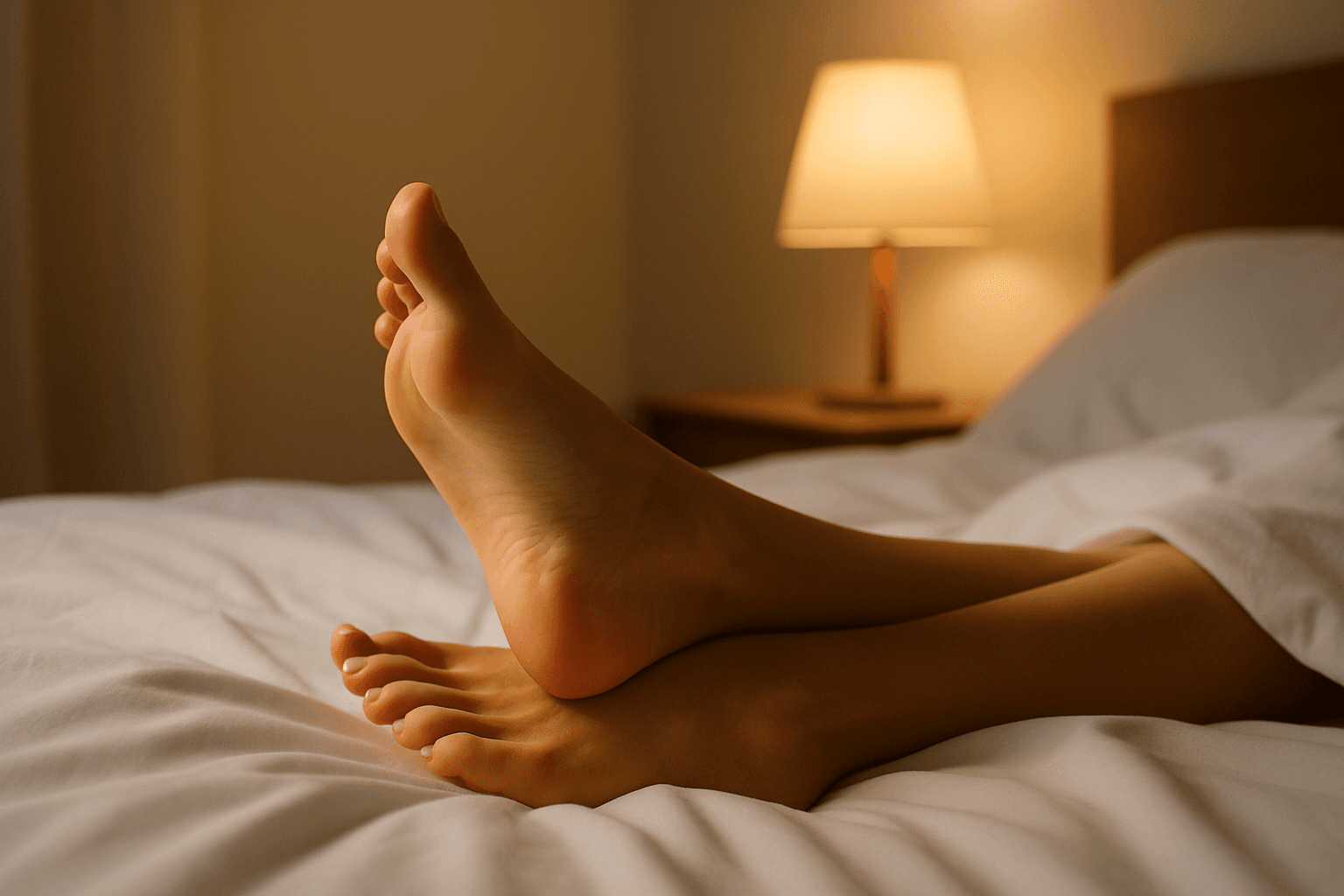
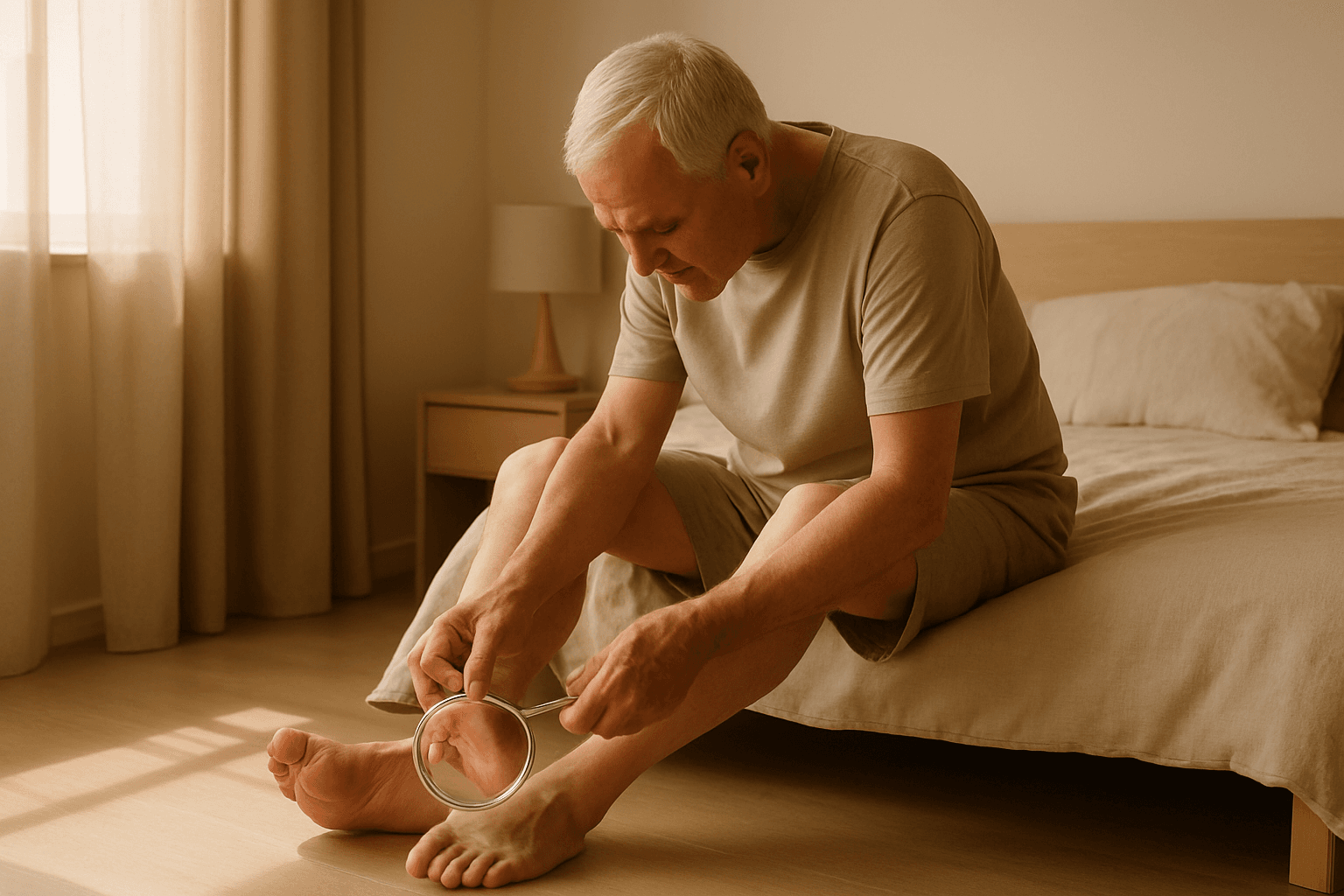
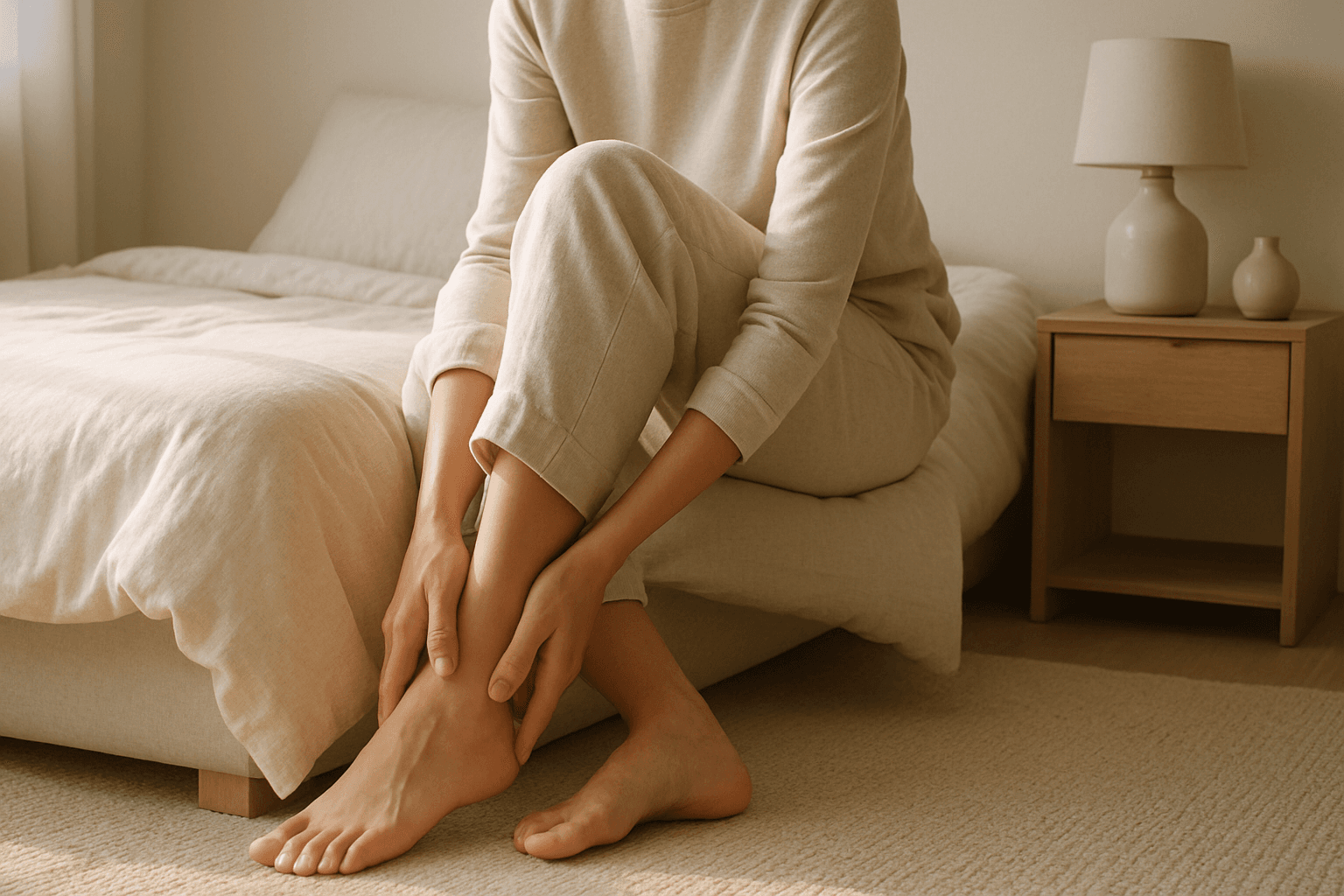
Heel pain that shows up at night is usually the end-of-day echo of a sore heel, not a separate problem. After hours of loading the heel, the tissue is warm, irritated and a little swollen; once you lie still the ache can become noticeable because nothing else is competing for your attention. For most people the pattern points to the same everyday culprits behind daytime heel pain: plantar fascia irritation, an irritated Achilles attachment, or a thinned heel pad.
What is worth sorting out is which kind of night pain you have. A dull throb that eases once you get comfortable is common and usually responds to the same support-and-stretch routine as daytime pain. Pain that wakes you from sleep, burns, tingles or does not change with position is a different pattern and deserves a clinician's eyes sooner rather than later.
This page walks through the common causes, a short evening routine, sleep-position tweaks and the red flags. Everything here is about comfort and support, not medical care. If heel pain keeps waking you, or has lasted more than a few weeks despite sensible home care, see a doctor or podiatrist.
Why heels ache more at night
During the day your attention, movement and footwear all change the load on the heel. At night, three things shift. First, the day's accumulated irritation catches up: tissue that has been loaded for ten or twelve hours is at its most inflamed in the evening. Second, lying still lets mild swelling settle around the heel without the pumping action of walking. Third, you simply notice it more when the house is quiet.
Position matters too. Lying with toes pointed down, which is how many of us sleep, shortens the calf and the plantar fascia overnight. That is the same shortening that makes the first steps of the morning so sharp, and it can make a sore heel feel tight and achy in bed as well.
The usual suspects behind night heel pain
Plantar fasciitis is the most common cause of pain under the heel. The 2023 clinical practice guideline for heel pain from the Academy of Orthopaedic Physical Therapy, published in the Journal of Orthopaedic and Sports Physical Therapy (Koc and colleagues), describes pain at the inner heel that is worst with first steps after rest and with long loading. Evening throbbing after a long day is a natural extension of that pattern. Our plantar fasciitis hub covers it in depth.
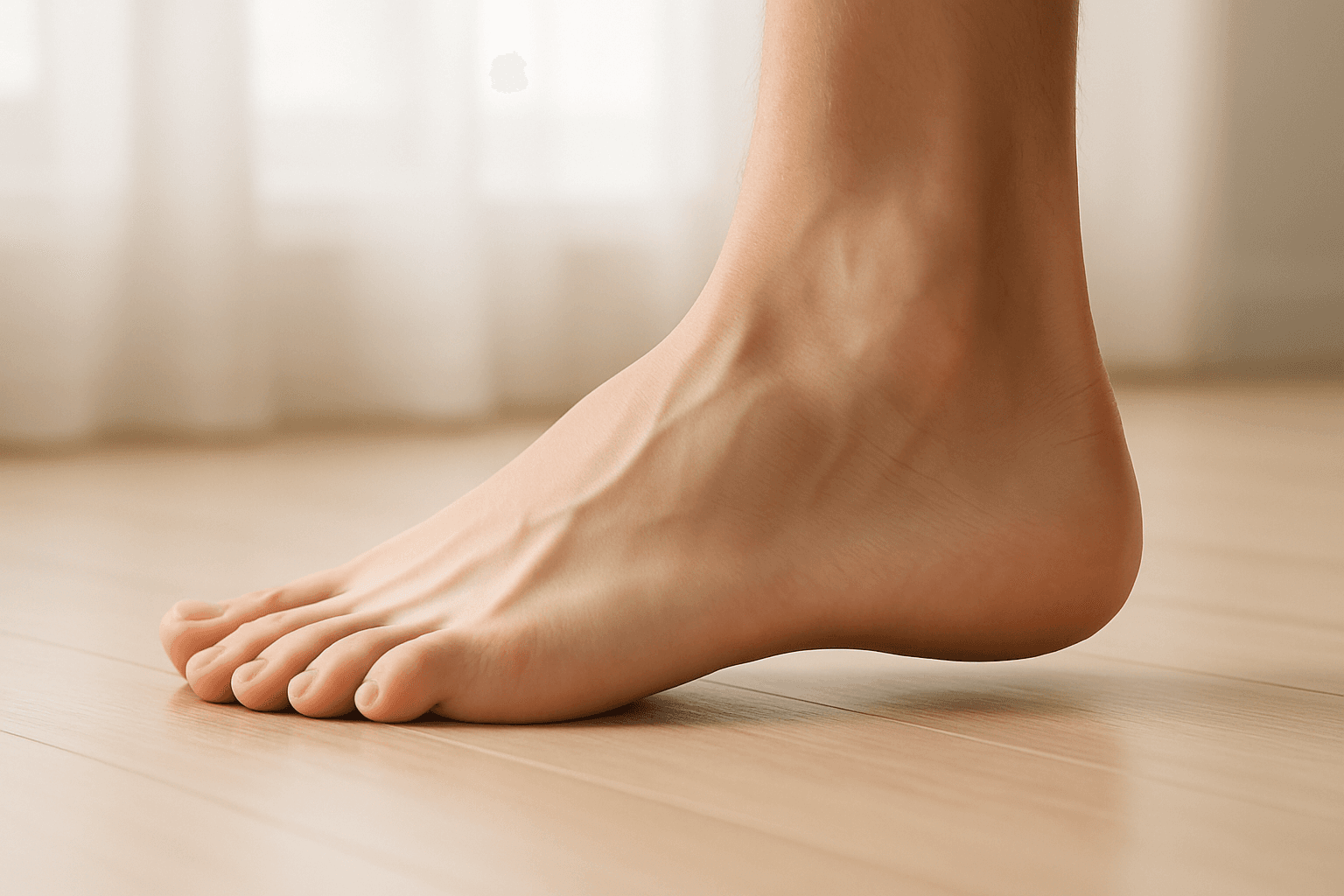
Pain at the back of the heel, with a tender cord or a bump, points toward the Achilles tendon or the bursa beside it. Those can ache after the day's activity and feel tight when you lie with your foot pointed. See our guide to pain in the back of the heel for how to tell them apart. A bruise-like ache straight under the heel that worsens on hard floors suggests a thinned heel pad rather than the fascia.
Less commonly, night pain that burns, tingles or radiates into the arch and toes can come from nerve irritation such as tarsal tunnel syndrome, and pain that is deep, constant and present at rest can come from a bone problem such as a stress fracture. Those patterns are why persistent night pain is worth a professional opinion.
A ten-minute evening routine
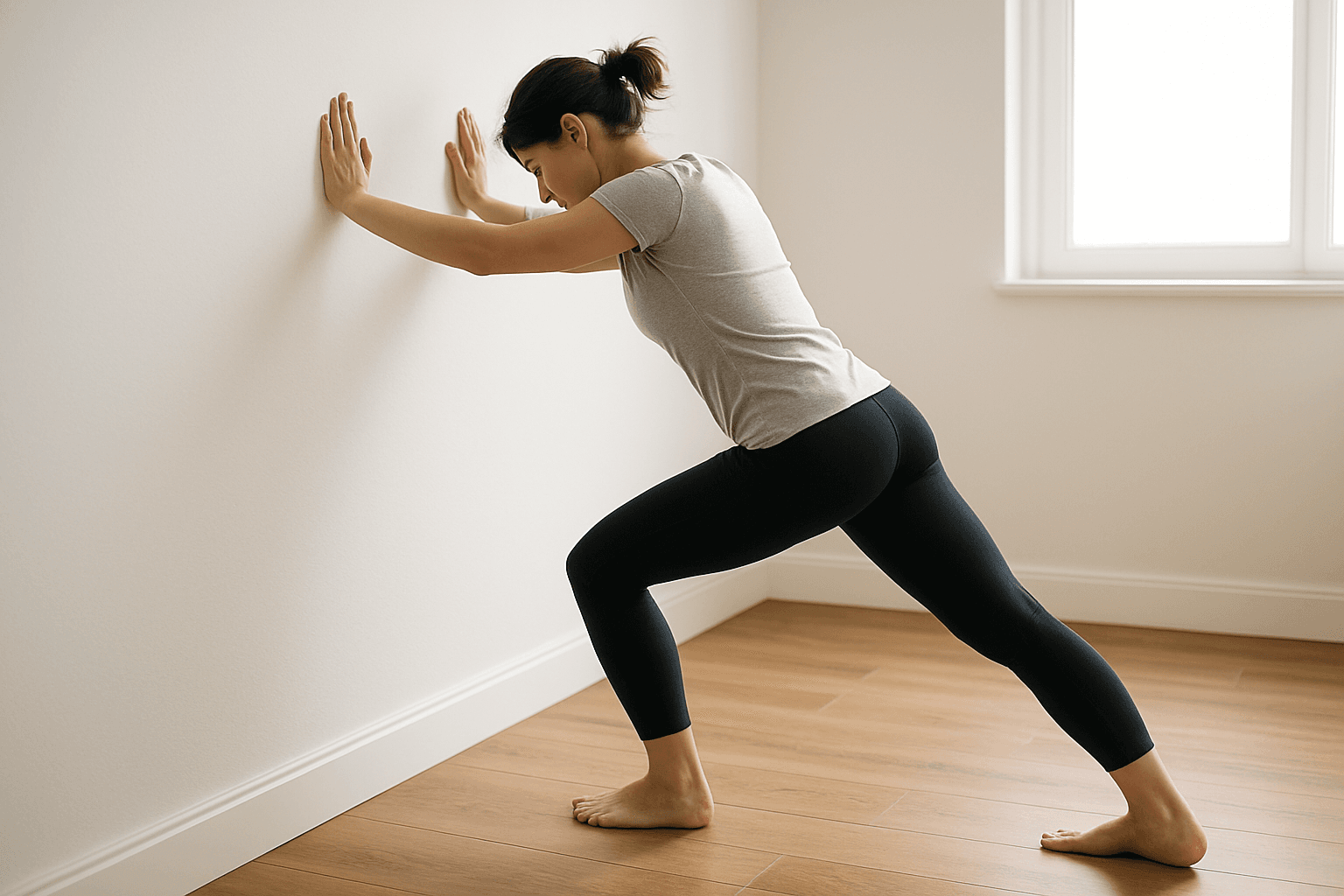
Start with the calf. Stand facing a wall, back leg straight with the heel down, and lean forward until you feel a stretch in the calf; hold thirty seconds and repeat twice per side. Follow with the plantar fascia stretch: sit, cross the sore foot over the opposite knee, pull the toes back toward the shin and hold for thirty seconds, three times. Our plantar fasciitis stretches page shows the full routine.
Then spend two or three minutes rolling the arch over a firm ball or a frozen water bottle. Cold is optional; plenty of people prefer warmth before stretching and a short cold session after. Our guide to ice or heat for plantar fasciitis explains the trade-offs.
Finally, put your feet up for ten minutes. Elevating the foot above the hip while you read or watch something lets swelling drain and gives the day's load a rest.
Sleep position and what to wear to bed
If you sleep on your back, a small pillow under the calves keeps the foot slightly raised, while tucking the blanket loosely at the foot of the bed stops the covers from pushing your toes down. Side sleepers can place a pillow between the knees and avoid pinning one foot beneath the other. Stomach sleepers often hang their feet off the mattress in a pointed position, which is worth changing if the heels are sore.
Some people find a soft sock with light arch support or a padded slipper for the bathroom trips at night helps, because the first steps after lying down are the harshest. A night splint holds the foot at a gentle right angle and is the classic tool for the shortening described above; it is bulky and takes getting used to, and our night splint guide covers who it suits and how to start with an hour or two.
Cut the daytime load that feeds night pain
Night pain is often a report card on the day. If your evenings are worst after long shifts on hard floors, the most effective change is usually underneath you: a supportive shoe and an insole with a firm arch and a deep, cushioned heel cup spread the load and keep the fascia from being pulled taut with every step. Our Akusoli insoles review covers the pair we recommend first for the shoes you already own.
Avoid barefoot walking on hard floors at home, especially in the evening, and swap tired shoes before the cushioning is flat. Taking short sit-down breaks in the afternoon rather than pushing through also reduces how angry the heel is by bedtime.
Red flags: when night heel pain needs a clinician
See a doctor or podiatrist if the pain wakes you from sleep repeatedly, is present even when you are completely still and not improving with position, comes with warmth, redness or visible swelling, follows an injury or a sudden jump in activity, or is accompanied by numbness, tingling or burning. Fever with a hot, swollen heel is urgent. People with diabetes or circulation problems should get any new foot pain checked promptly.
Also book a visit if you have followed a sensible routine of support, stretching and load management for four to six weeks without improvement. A clinician can examine the heel, rule out look-alikes with imaging when needed and set up a plan. Nothing on this site replaces that evaluation.
Support the heel through the whole day
A trim-to-fit insole with a firm arch and a deep heel cup to take load off a sore heel before the evening ache starts.
Support the heel through the whole day →Frequently asked questions
Why does my heel hurt more at night than during the day?
Usually because the tissue has been loaded for many hours and is at its most irritated by evening, and because lying still lets you notice the ache. Sleeping with the toes pointed can also shorten the calf and the fascia and add tightness.
Is heel pain that wakes me up serious?
It is worth taking seriously. Mild aching that eases when you settle is common, but pain that repeatedly wakes you, burns, tingles or is present at rest should be checked by a doctor or podiatrist.
Should I use ice or heat on a sore heel at night?
Either can be comfortable. Many people use warmth before stretching and a short cold session afterward. Keep sessions to around ten to fifteen minutes with a cloth between the skin and the ice, and skip both if you have reduced sensation in your feet.
Can my mattress or sleep position cause heel pain?
They rarely cause it, but they can make it feel worse. Sleeping with the toes pointed or the feet pinned under covers shortens the calf and fascia. A pillow under the calves and loose bedding at the foot can help.
Do I need a night splint for heel pain at night?
Not for everyone. A night splint is most useful when the worst pain is the first steps of the morning. It takes some getting used to, so many people start with an hour or two in the evening.
HeelCups is reader-supported. When you buy through links on our site we may earn an affiliate commission, at no extra cost to you. This article is general information about foot comfort and is not medical advice — see our medical disclaimer.