MORNING PAIN
Morning Heel Pain: Why First Steps Hurt Most and the Short Routine That Changes That
The stabbing under-heel pain with the first steps of the morning is the classic plantar fasciitis pattern. Here's why it happens overnight, why it eases as you walk, and the ten-minute routine that changes how the day starts.

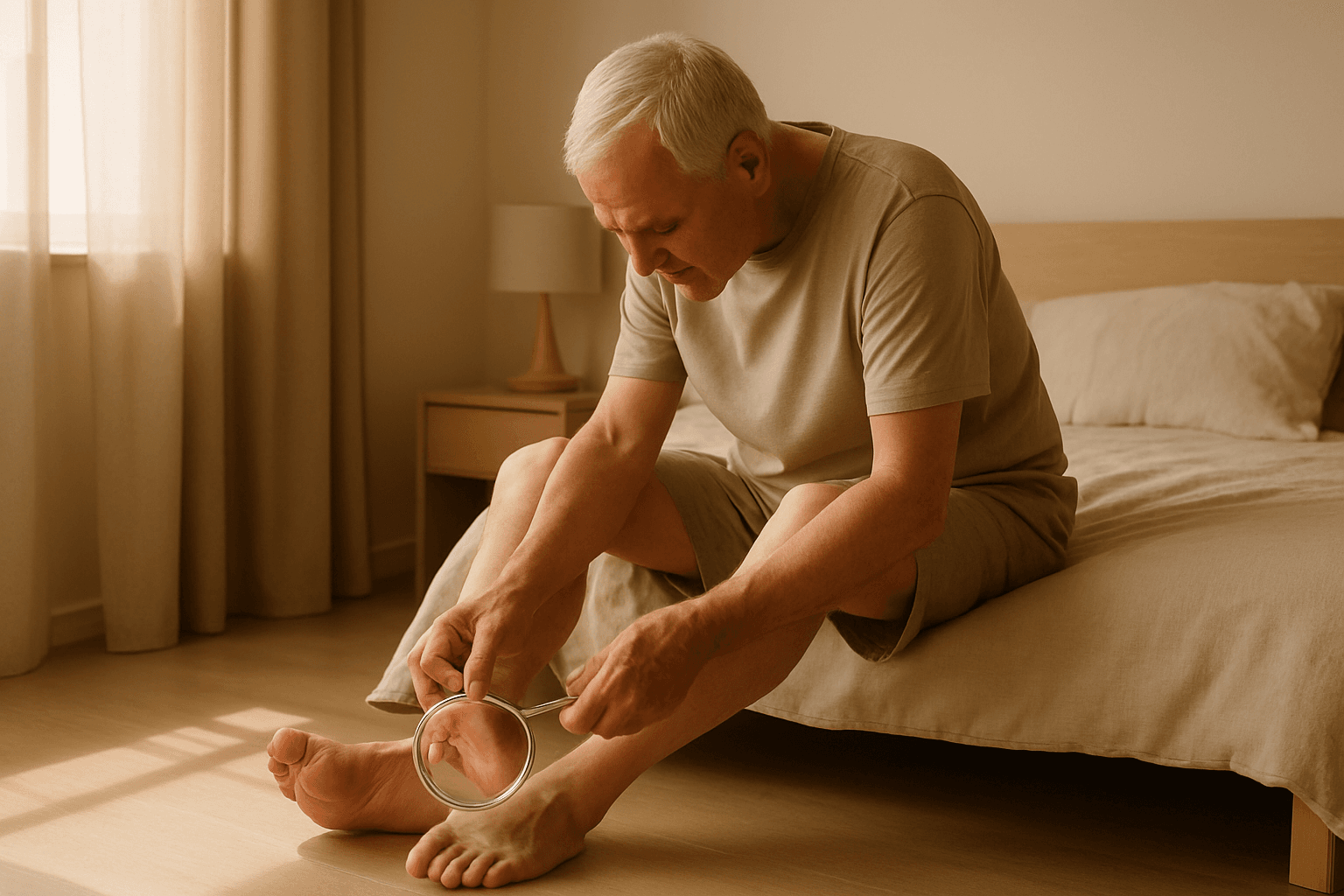
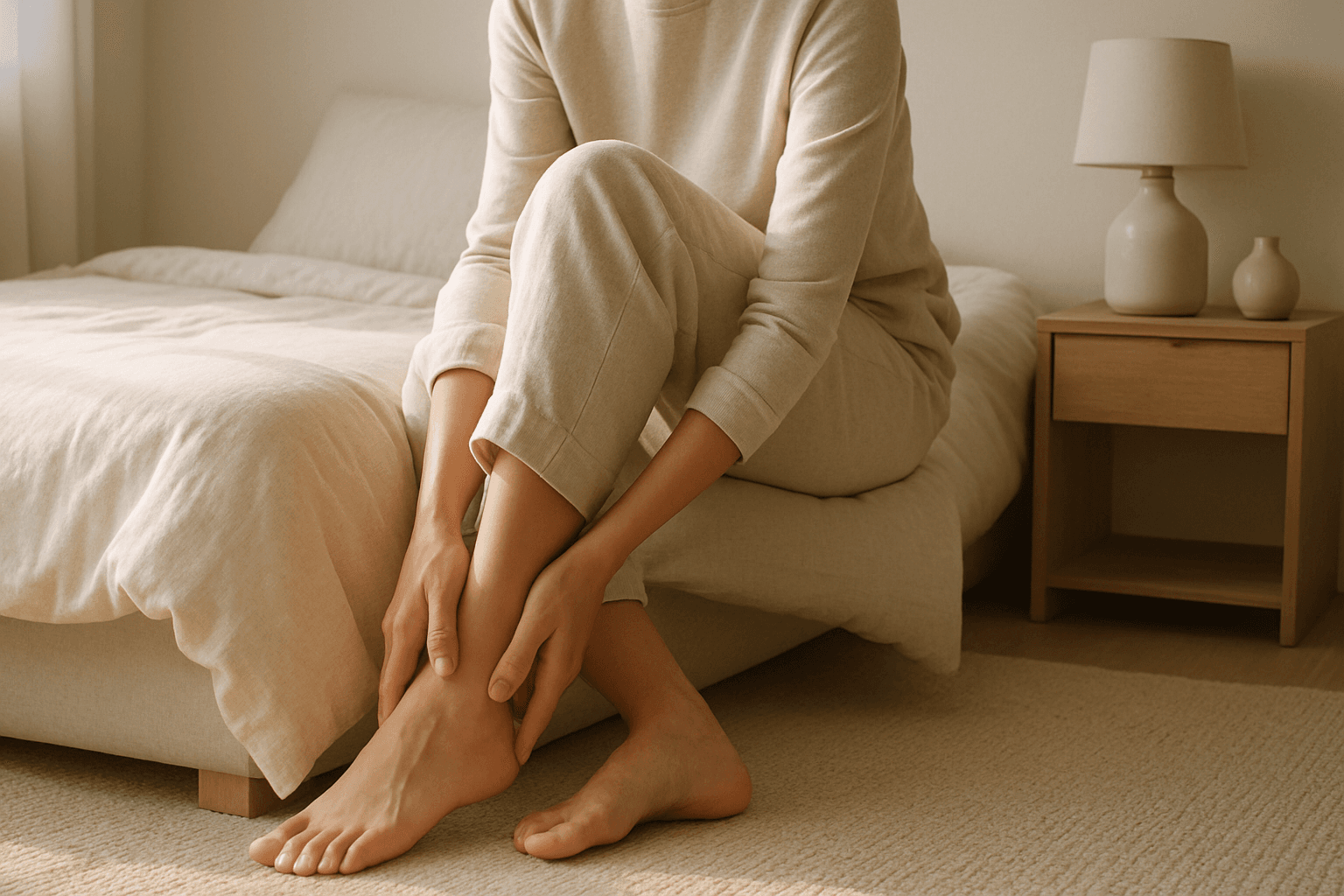
Almost everyone with plantar fasciitis knows the pattern. You wake up, swing your legs over the side of the bed, put weight on your feet, and the first two or three steps to the bathroom feel like standing on a bruise or a shard of glass right under the heel. A minute of shuffling later the pain quietens; ten minutes into the day it is barely a whisper. Then late afternoon rolls around, the fascia has been re-loaded through a full shift, and the pain creeps back — worse the next morning. That specific rhythm — worst first steps of the day, easing with movement, returning after long sits — is the plantar fasciitis pattern, and it is the single most recognized symptom in all of foot care.
The reason first steps are the worst is straightforward once you see it. Overnight, the fascia has been in a shortened, relaxed position, with your foot pointed slightly down and no body weight on it. Sleep also cools the tissue and lets the small daily inflammation settle into a stiffer state. Standing up puts your full body weight onto the shortened, sore fascia in a fraction of a second, before the tissue has warmed or lengthened. The tiny tears from yesterday get stretched all at once, and the pain sensors around them fire. A few minutes of walking warms the tissue and returns it to its usual working length, which is why the pain fades so predictably.
This page is the ten-minute morning routine that changes how those first steps feel — a short in-bed stretch, a smarter first-shoe choice, and the pre-sleep habits that add up over a couple of weeks. Nothing here is medical advice. Persistent heel pain that has not eased after four to six weeks of honest home care, or that comes with swelling, warmth, numbness or an injury, deserves an in-person exam by a doctor or podiatrist. Everything on this hub is written for comfort, support and relief.
The overnight shortening story
The plantar fascia does not rest in a neutral position while you sleep. In the average side-sleeping or back-sleeping posture, the ankle is plantarflexed — the top of the foot points slightly down, toward the sheets — and the fascia sits in a relaxed, shortened state. The soft tissue takes on the length it is being held at for hours at a time, and it stiffens into that shape. Body temperature drops through the night, which makes soft tissue less compliant. The small local inflammation from yesterday's load settles rather than being pumped through by movement.
All three of those pieces conspire to make the fascia short, stiff and cold when you stand up. Standing loads it with your entire body weight in a single moment, stretching the tissue back to its walking length before it is ready. That is the sharp pain you feel; it is not new damage, and the fact that it eases with movement is your evidence. The overnight shortening pattern is also why the same sharp pain returns after any long sitting stretch — a movie, a long car ride, a couple of hours at a desk — for exactly the same reasons on a shorter timescale.
The ten-minute morning routine
Start before your feet touch the floor. Sitting on the edge of the bed, loop a towel or a stretch strap around the ball of one foot, keep the knee straight, and gently pull the ball of the foot toward you until you feel a stretch along the calf and the arch. Hold for thirty seconds, breathing normally, and repeat twice on each foot. Total time: three minutes. This one stretch pre-lengthens the fascia and calf before you weight them, and it does more to change first-step pain than any other single habit.
Second, before you stand, roll the sole. Keep a small firm ball (a lacrosse ball, a dedicated foot-massage ball, or a tennis ball) or a frozen water bottle by the bed. Sit up, place it under the arch, and roll slowly from the ball of the foot to just in front of the heel for one to two minutes per foot. The pressure loosens the fascia mechanically and the nervous system input turns down local pain signals. Skip the direct heel-bone spot; the arch and mid-foot are where the useful pressure lives.
Third, put on a supportive shoe or a supportive house slipper before your first step, not after your third trip to the bathroom. This is the piece most people skip and it is worth more than any stretch. A soft slipper with a real arch, a running or walking shoe with your daily insole already inside it, or a dedicated house sandal with an arch profile — any of those changes what your fascia feels in that first stride. Ordinary flat house slippers or barefoot on a wood or tile floor is the exact load that makes the first steps hurt most; a supportive first step turns the pain down before it has a chance to spike.
What to do the night before
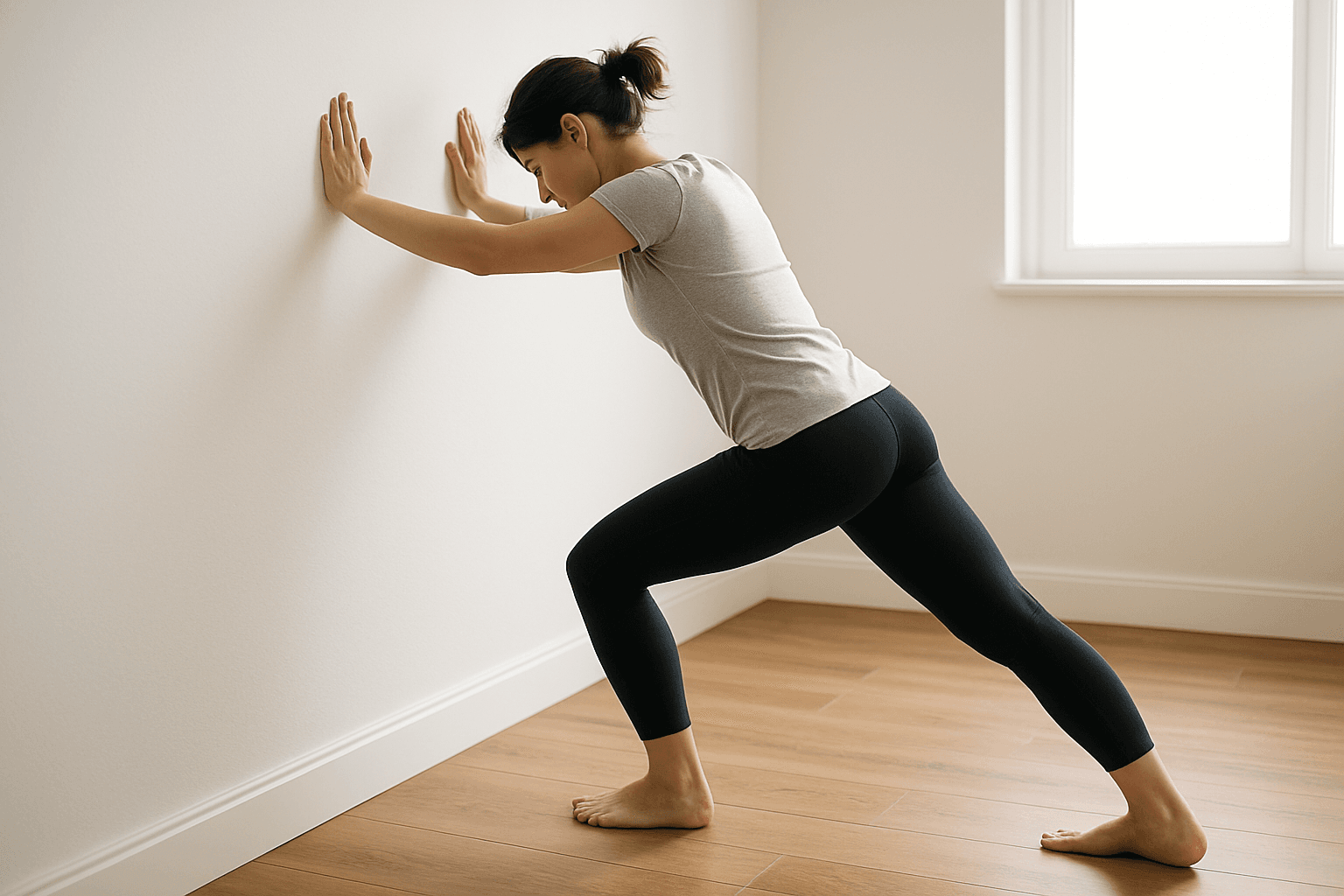
The pre-sleep half of the routine is small and matters. Do a short calf stretch — the same wall calf stretch or stair calf drop from our plantar fasciitis stretches page — for two minutes per side before bed. A calf that goes to sleep shortened is a fascia that wakes up pretensioned; a calf that goes to sleep at its full length is one less thing pulling on the heel at first step. Ice the sole for five to ten minutes if the day was long or the pain was worse than usual; a frozen water bottle rolled slowly under the arch is the standard trick.
The other pre-sleep lever is a night splint, and it is worth trying for anyone whose morning pain has not budged after two to three weeks of the ten-minute routine. A night splint holds the ankle at ninety degrees (or slightly beyond) while you sleep, keeping the fascia at its walking length rather than letting it shorten overnight. The rigid boot-style splints are more effective than the soft dorsal versions but bulkier at night; either one takes a week or two to get used to. Not everyone tolerates them, but the people they help often report a genuinely different first-step experience within a couple of weeks.
The shoe you wear from bed to breakfast
Rank your morning footwear options in order of how well they support the fascia and pick the best available. In descending order: your daily supportive walking shoe with your insole in it (if the mornings are cold enough to justify shoes indoors), a dedicated arch-supportive house sandal or slipper, a supportive slipper with a firm sole and a real arch shape, then ordinary house slippers, then socks on a wood or tile floor, then barefoot on a hard floor at the bottom of the list. Anyone whose mornings involve the bottom three options is loading the sore fascia in the exact way most likely to spike the first-step pain.
The single environmental change that makes the biggest morning difference for most people is upgrading the first-hour footwear. A supportive house sandal you can slip on before you swing your legs out of bed, or a walking shoe by the bed with an Akusoli insoles pair inside it, changes the load in your first stride. It does not replace the stretching or the pre-sleep routine — it works alongside them — but it is the piece with the fastest visible payoff. Give the whole routine three to four weeks before deciding whether it is working; morning pain is stubborn but responsive when the whole picture is right.
When morning heel pain is not plantar fasciitis
The morning-worst pattern is the plantar fasciitis fingerprint, but it is not the only cause of morning heel pain. Insertional Achilles tendinopathy at the back of the heel also feels worst with the first steps of the morning, but the pain lives at the back of the heel where the tendon meets the bone rather than under the front of the heel. Retrocalcaneal bursitis presents the same way. Fat pad irritation across the whole heel pad is worst at the end of the day, not the start, and does not follow the morning pattern; a diffuse bruised feeling across the pad points at the fat pad rather than the fascia. Our why does my heel hurt map is the fuller sorting exercise if the location is not obviously under the front of the heel.
Inflammatory conditions can present as bilateral morning heel pain that lasts longer than the usual few minutes and is accompanied by morning stiffness in other joints. Reactive arthritis, ankylosing spondylitis and related spondyloarthropathies inflame tendon attachments including the plantar fascia, and heel pain on both sides in a younger adult with morning stiffness that lasts an hour or more is worth flagging to a clinician. Persistent morning heel pain in a child or teenager is almost never plantar fasciitis; a growth-plate irritation called Sever's disease is far more likely and needs a different plan.
Same-week reasons to see a clinician regardless of the pattern: pain severe enough that you cannot bear weight, pain with swelling, warmth, numbness, tingling or a color change, pain that started after a fall or specific injury, and morning pain that has not eased at all after four to six weeks of honest home care. A podiatrist or foot-and-ankle physician is the right person to sort the ordinary causes from the less common ones. If the ache also builds into the evening and lingers in bed, see our guide to heel pain at night.
The insole that changes what first steps feel like
A trim-to-fit insole with a firm arch and deep heel cup — supports the fascia through the whole day so the overnight shortening has less to protest against.
The insole that changes what first steps feel like →Frequently asked questions
Why is heel pain worst in the morning?
Because the fascia shortens overnight in a relaxed, cooled position, and the first step puts your full body weight on the shortened, cold tissue before it has warmed or lengthened. The tiny tears from yesterday's load get stretched all at once, and the pain sensors around them fire. A few minutes of walking warms and lengthens the fascia to its walking length, which is why the pain fades so predictably. The same pattern shows up in miniature after any long sit for the same reasons.
Do night splints work for morning heel pain?
For a lot of people, yes — a night splint holds the ankle at ninety degrees while you sleep so the fascia does not shorten overnight, and morning first-step pain is meaningfully quieter within a couple of weeks. The rigid boot-style splints are more effective than the soft dorsal versions but bulkier at night. Not everyone tolerates sleeping in one; if the ten-minute morning routine and honest daily support have not moved the pain after three weeks, a splint is a reasonable next add-on.
Should I stretch my foot before I get out of bed?
Yes, this is the single highest-leverage thing you can do for first-step pain. Sitting on the edge of the bed, loop a towel around the ball of the foot, keep the knee straight, and gently pull the foot toward you for thirty seconds; repeat twice per foot. It pre-lengthens the fascia and calf before you weight them and takes about three minutes total. Most people notice a difference in the first three to five days of doing it consistently.
Is a frozen water bottle or a massage ball better in the morning?
A firm massage ball or lacrosse ball is our first pick for the morning routine because you want mechanical loosening of the shortened tissue more than cold at that hour. Save the frozen water bottle for the end of the day when the fascia is inflamed from a full load, or for after a longer-than-usual day. Some people prefer a room-temperature bottle rolled under the arch in the morning — that works too; the surface is firm enough to loosen without the numbing effect that cold adds.
What is the best shoe to wear to the bathroom in the morning?
Anything with a real arch and a firm sole beats slippers or barefoot on a hard floor. Rank the options: a walking shoe with an insole, then an arch-supportive house sandal, then a supportive slipper with a firm sole, then ordinary slippers, then socks on tile, then barefoot on a hard floor. The single upgrade that changes morning pain the most for most people is keeping a supportive house sandal or a walking shoe with an insole inside it by the bed and putting it on before the first step.
How long until morning heel pain gets better with a routine?
Most people notice a difference in the first week of a consistent ten-minute morning routine plus a supportive shoe from the first step. Meaningful, sustained improvement usually takes three to four weeks. Full quieting of morning first-step pain is often a two-to-three-month timeline for a chronic case, especially when a supportive insole for the rest of the day is not yet in place. If nothing has moved after four weeks of honest daily practice, add a night splint or see a podiatrist.
HeelCups is reader-supported. When you buy through links on our site we may earn an affiliate commission, at no extra cost to you. This article is general information about foot comfort and is not medical advice — see our medical disclaimer.