HEEL PAIN AFTER SITTING
Heel Pain After Sitting: Why the First Steps Hurt After a Long Sit, and How to Reset in Thirty Seconds
The stab in the heel after a movie, a long drive or an afternoon at the desk is the morning first-step pattern on a shorter timescale — and it responds to the same handful of small adjustments. Here is why sitting re-triggers the pain and the thirty-second reset that defuses most of it.
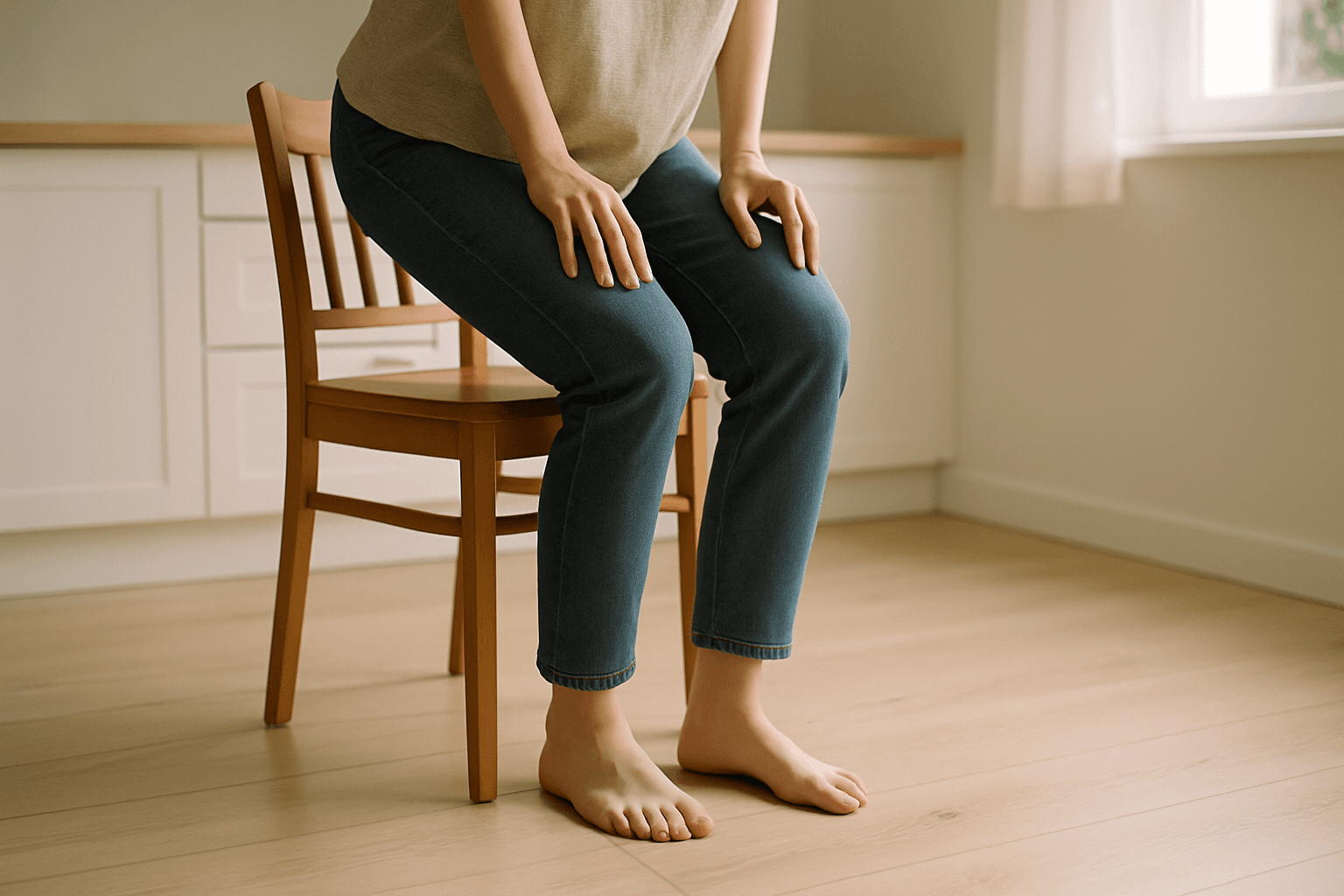
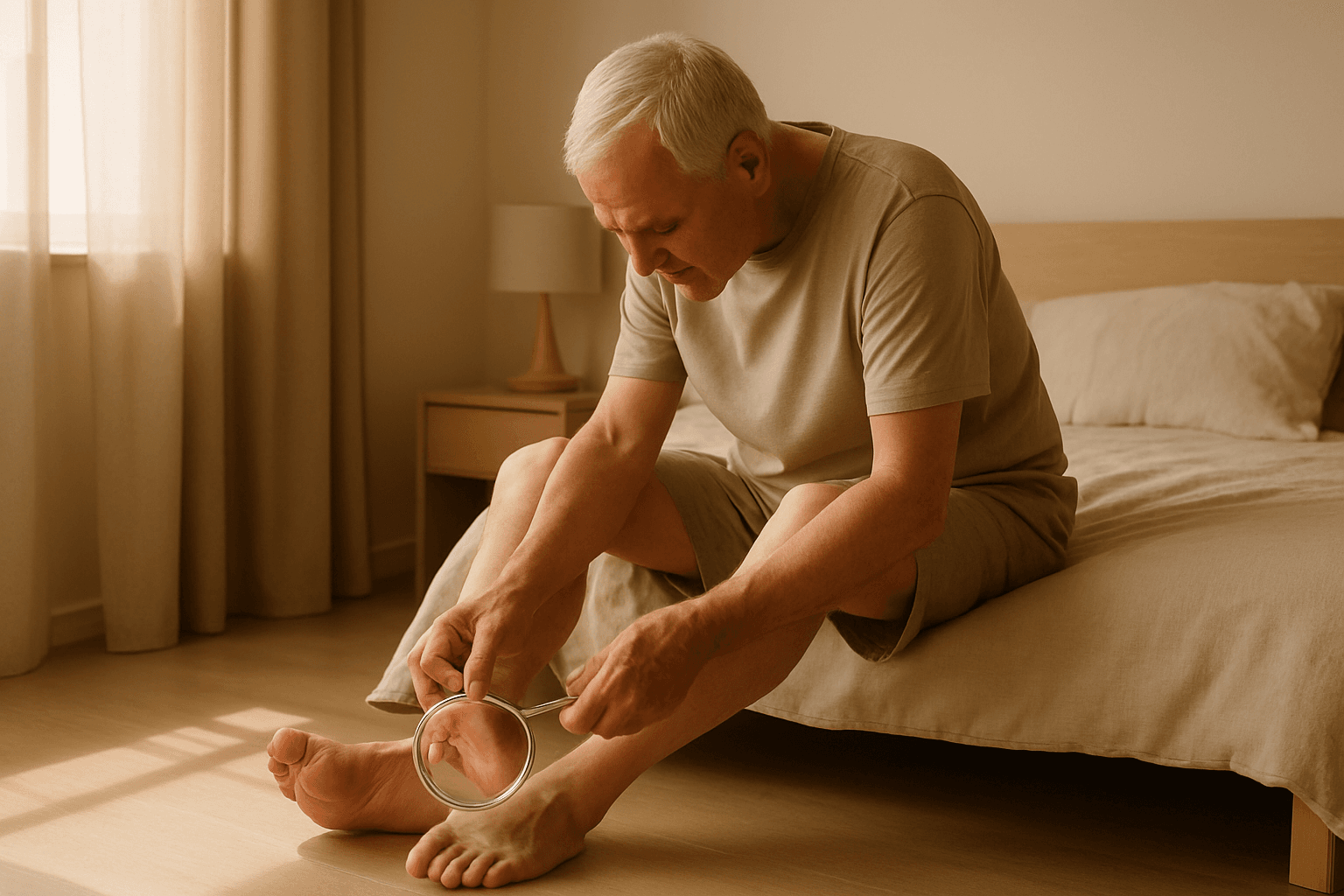
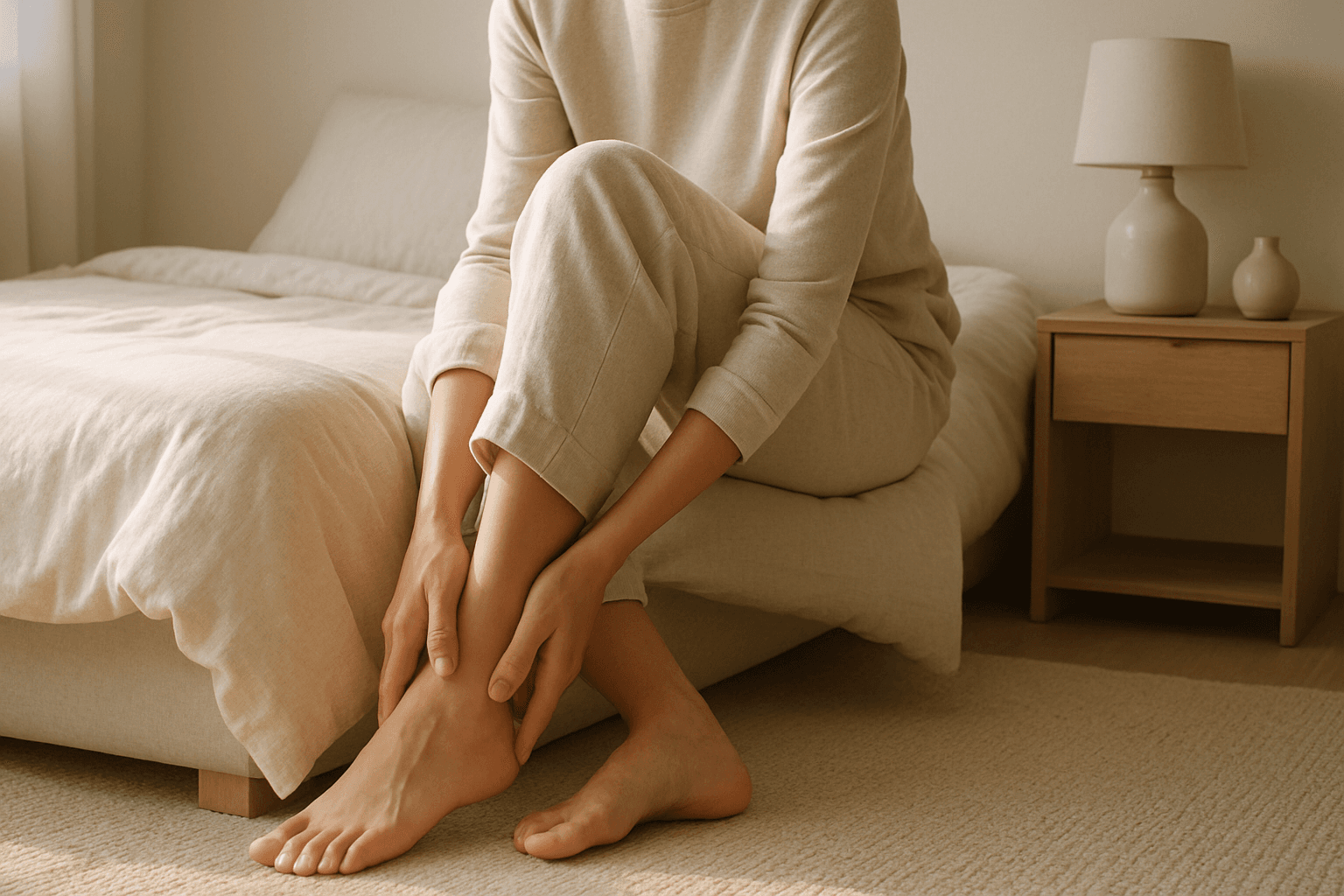
The pattern is a quiet one that most people with heel pain learn fast. You sit for an hour — at a desk, through a movie, on a long drive — and the first few steps when you stand up are a repeat of the morning stab under the heel. Pain sharp enough that you walk gingerly for a minute, then it eases as the tissue warms, then the whole cycle starts over at the next long sit. It has a clinical name, post-static dyskinesia, but what it really is, is the morning first-step pattern in miniature, playing out every time your feet have been still long enough for the fascia to settle into its resting length.
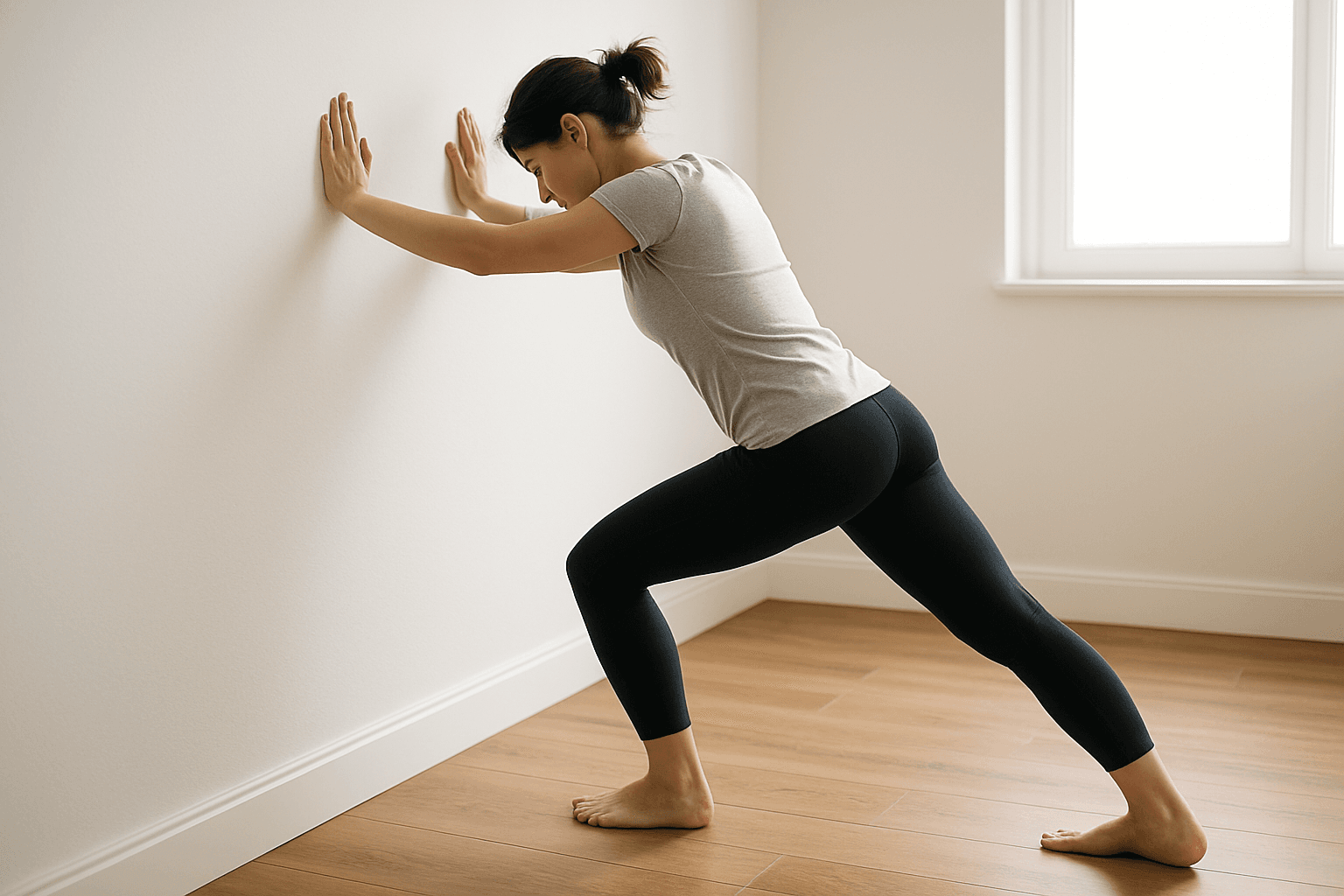
The after-sitting pattern is almost always plantar fasciitis, in the same way the morning version is, and it responds to the same handful of small adjustments: a short stand-up stretch before the first step, a supportive shoe or insole for the time you are at the desk, and a daily routine that is quietly bringing the resting fascia closer to its working length so the shortening gap gets smaller week by week. Not every stiff first step after sitting is plantar fasciitis, though, and this page covers what else can produce the pattern and how to tell them apart.
Nothing on this page replaces a clinician. Heel pain that has lasted more than four weeks despite honest home care, pain with swelling, warmth, numbness or an injury, or any pattern that is spreading or getting worse week over week deserves an in-person exam by a doctor or podiatrist. Every recommendation on this heel pain hub is written for comfort, support and relief.
Why sitting is as bad as sleeping for a sore fascia
The plantar fascia does not rest in a neutral position while you sit. In a chair, with your feet flat on the floor or (worse) tucked under the seat, the ankle is slightly plantarflexed and the fascia sits in a shortened, relaxed state — much the same posture it takes on overnight. Give that posture an hour, and the tissue settles into the shortened length, the small daily inflammation stops being pumped through by movement, and the fibers stiffen into the resting shape. When you stand up and take the first step, your body weight stretches the shortened tissue back to its walking length in a fraction of a second, and the pain sensors around the tiny tears from yesterday's load light up. A minute of walking warms the fascia and returns it to its working length; the pain fades, and the cycle resets for the next sit.
This is the same mechanism as the morning stab, which our morning heel pain walk-through covers in detail. The difference is that an overnight sit produces a bigger shortening (longer time, cooler tissue, no interruption) and therefore a louder first step, while a one-hour desk sit produces a smaller version. The intervention is the same for both, scaled: a short pre-stand stretch, a supportive shoe for the first steps, and a daily routine that reduces the baseline inflammation so the gap between resting length and walking length narrows over time.
The thirty-second reset that defuses the first step
Before you stand up, do a seated towel stretch. From a chair, loop a towel, scarf or stretch strap around the ball of one foot, keep the knee reasonably straight, and gently pull the ball of the foot toward you until you feel a stretch along the calf and the arch. Hold for twenty to thirty seconds, breathing normally. Repeat on the other foot. Total time: about a minute. This single move pre-lengthens the fascia and calf before you weight them, and it is the single highest-leverage change for after-sitting pain. Most readers who adopt it notice a difference within the first two or three days.
If a towel is not handy — airplane, cinema, car seat — the no-equipment version still works. Hook the toes of one foot under the opposite calf (so the foot is on its toe pads, with the top of the foot pressed down and the ball of the foot gently stretched), hold for twenty seconds, swap sides. Or hook the toes of both feet behind the chair legs so the ankles are at a mild dorsiflexion for the last minute of your sit, which keeps the fascia closer to its working length while you are still seated. These low-tech moves cost nothing, work in any setting, and change the character of the first step after a sit more than almost anything else at that price point.
What to put under your desk feet
The second lever is a supportive shoe or insole during the sitting itself. The feet-under-the-desk position is still loading the fascia slightly — not with body weight, but with the pull of the leg's resting posture — and a supportive shoe with a firm medial arch keeps the fascia closer to its working length through the sit rather than letting it drift into the shortened one. Many readers who report after-sitting pain are seated in soft loafers, canvas sneakers or barefoot socks, and the first upgrade is a supportive shoe with a trim-to-fit insole during work hours. Our Akusoli insoles review covers the pair we would reach for first.
The under-desk accessories that help in a small but real way: an angled footrest or a sloped foam wedge that holds the ankles at ten to fifteen degrees of dorsiflexion while you work. A tennis ball or a dedicated foot-massage ball parked under the desk, used for a slow ninety-second roll of each sole during a long call. A small anti-fatigue mat for the stand-up portion of a sit-stand desk. None of these replace the stretch-before-standing habit; they stack with it.
The home version of the problem is the couch. Three hours of a movie night in bare feet with the knees up on the sofa produces exactly the same after-sitting stab, and the fix is the same: a supportive house sandal on the feet during the movie, a towel stretch before standing, and a slow first thirty seconds. Our plantar fasciitis stretches page covers the full daily routine most of these habits sit inside of.
The patterns that are not plantar fasciitis
The after-sitting pattern is a fingerprint of plantar fasciitis, but a few other foot problems can produce a similar stiff-first-step feel. Insertional Achilles tendinopathy — pain at the back of the heel where the Achilles meets the bone — stiffens up after any long rest and loosens with movement, same as the fascia; the difference is where it hurts (back of the heel, not the bottom). Insertional calf tendon stiffness in older adults produces a general calf-and-ankle creakiness in the first few steps that is not focused under the heel. Our back of heel pain walk-through is the fuller sort for these.
Heel fat pad irritation produces a diffuse bruised feeling across the whole heel pad and tends to get worse through the day, not reset in the morning or after sits — if the after-sitting pain is a dull bruise across the whole heel rather than a sharp stab under the front of it, the fat pad is a better guess than the fascia. Our fat pad syndrome page covers the different plan.
A separate pattern worth flagging is stiffness-plus-swelling in multiple joints after any long sit, especially in a younger adult. Inflammatory conditions like reactive arthritis or ankylosing spondylitis inflame tendon attachments including the plantar fascia, and the after-sitting stiffness in those conditions tends to last an hour or more, show up in other joints, and come with a general sense of being unwell. Bilateral heel pain plus morning or after-sit stiffness in several joints is a reason to call a primary care doctor or a rheumatologist rather than treat the foot as mechanical.
The long sits that need the most planning
Three sits are reliably worse than the rest and deserve a specific plan. Long drives are the worst — the ankle is held at a plantarflexed angle on the gas pedal, which is the exact position that shortens the fascia; the fix is a supportive driving shoe, cruise control on the highway so the ankle can rest at ninety degrees for stretches, and a stop every ninety minutes to walk two or three minutes before continuing. Long flights are next; book an aisle seat so you can stand and walk every hour, and do a towel stretch under the seat in the last fifteen minutes before landing so the first step off the plane is not a flare starter.
Movies and long meetings are the sneakily worst because readers do not usually plan for them. The pre-standing stretch at the end of a two-hour movie is the one most people skip, which is why that first walk out of the theater is often the loudest heel pain of the week. The planning move is low-tech: a towel in the car for stretching before you walk back in, or a slow deliberate thirty seconds of toe-hook stretches before standing up from any sit that was longer than an hour. Readers who build the thirty-second reset into every long sit — a kind of foot equivalent of a seat-belt check — almost always report that the after-sitting pain quiets within two to three weeks.
Persistent heel pain after sits that has not eased after four to six weeks of the daily routine, or that has started to spread, deepen or spike into a stabbing pain that does not calm with the first minute of walking, deserves an in-person exam by a doctor or podiatrist. Nothing on this site cures a foot condition — the goal is comfort, support and relief while the fascia calms down, and the knowledge of when the picture has stopped fitting the self-care lane.
The insole that keeps the fascia at length through the sit
A trim-to-fit insole with a firm medial arch and deep heel cup — keeps the resting fascia closer to its working length so the stand-up stab is a lot quieter.
The insole that keeps the fascia at length through the sit →Frequently asked questions
Why does my heel hurt when I stand up after sitting?
Because sitting puts the ankle in a slightly plantarflexed position for long enough that the plantar fascia settles into a shortened, relaxed length — the same mechanism that produces the morning first-step stab, just on a shorter timescale. When you stand up, your body weight stretches the shortened fascia back to its walking length in a fraction of a second, and the pain sensors around yesterday's small tears light up. A minute of walking warms the tissue, lengthens it to working length, and the pain fades until the next long sit resets the cycle. Clinicians call this pattern post-static dyskinesia, and it is one of the most recognizable fingerprints of plantar fasciitis.
How do I stop heel pain after sitting?
Three small adjustments move it the most. Do a thirty-second seated towel stretch before you stand up from any sit longer than an hour — loop a towel or scarf around the ball of one foot, keep the knee reasonably straight, and gently pull the foot toward you for twenty to thirty seconds, repeat on the other side. Wear a supportive shoe with a firm arch during long sits rather than socks or soft loafers. Build the daily stretch-and-insole routine from the plantar fasciitis hub underneath. Most readers notice a meaningful change in the character of the first step within three to five days of consistency.
Should I wear shoes while sitting at my desk?
If you have been getting after-sitting heel pain, yes — a supportive shoe with a firm medial arch or a trim-to-fit insole during work hours keeps the fascia closer to its working length through the sit, rather than letting it drift into the shortened one that produces the first-step stab. Soft loafers, flat canvas sneakers and barefoot socks all let the fascia drift. For readers with a tile or hardwood home office, a supportive house sandal does the same job. The under-desk angled footrest and the stand-up portion of a sit-stand desk also help.
Why does it hurt more after a long drive?
Because driving holds the gas-pedal foot in a plantarflexed position for the entire trip, which is the exact posture that shortens the fascia the most. Combine that with a long trip (deep settling of the tissue into the shortened length) and a parking-lot first step onto hard asphalt, and the result is often the loudest after-sitting pain of the week. The fixes are a supportive driving shoe, cruise control on the highway so the ankle can rest at ninety degrees for stretches of the drive, and a stop every ninety minutes to walk two or three minutes before continuing. On arrival, a towel stretch before standing up out of the car defuses the first step more than any pain reliever.
Is heel pain after sitting a sign of plantar fasciitis?
Almost always, especially when the pain is a sharp stab under the front of the heel that eases within a minute of walking. The after-sitting pattern — technically post-static dyskinesia — is one of the clearest fingerprints of plantar fasciitis in all of foot care, and it is the second most recognized symptom after the morning version. Other foot problems can produce a stiff-first-step feel after sits, but the specific sharp-stab-that-eases pattern is almost always the fascia. If the pain is at the back of the heel rather than the front, or feels like a diffuse bruise across the whole heel pad rather than a focal stab, it is worth narrowing with the heel pain hub map before assuming.
How long does it take for after-sitting heel pain to go away?
Most readers notice meaningful improvement within one to two weeks of the thirty-second pre-standing stretch plus a supportive shoe during long sits. Full quieting of the after-sitting pattern usually takes four to eight weeks of the full plantar fasciitis routine running underneath — daily stretching, a supportive insole for all day wear, a short cold-roll routine at the end of long days. If the pattern has not shifted at all after four weeks of honest home care, that is a reason to see a podiatrist rather than wait another month.
HeelCups is reader-supported. When you buy through links on our site we may earn an affiliate commission, at no extra cost to you. This article is general information about foot comfort and is not medical advice — see our medical disclaimer.