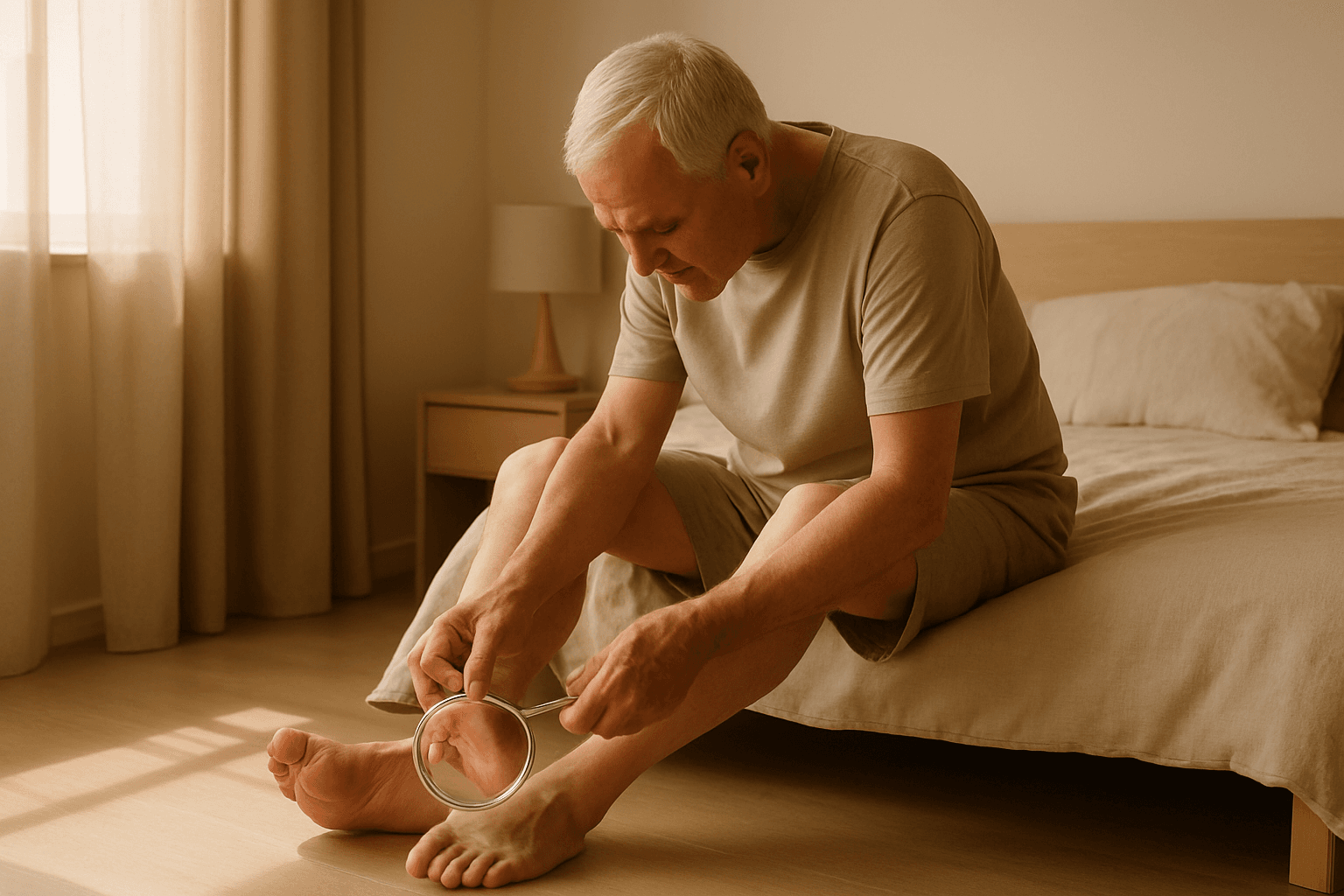
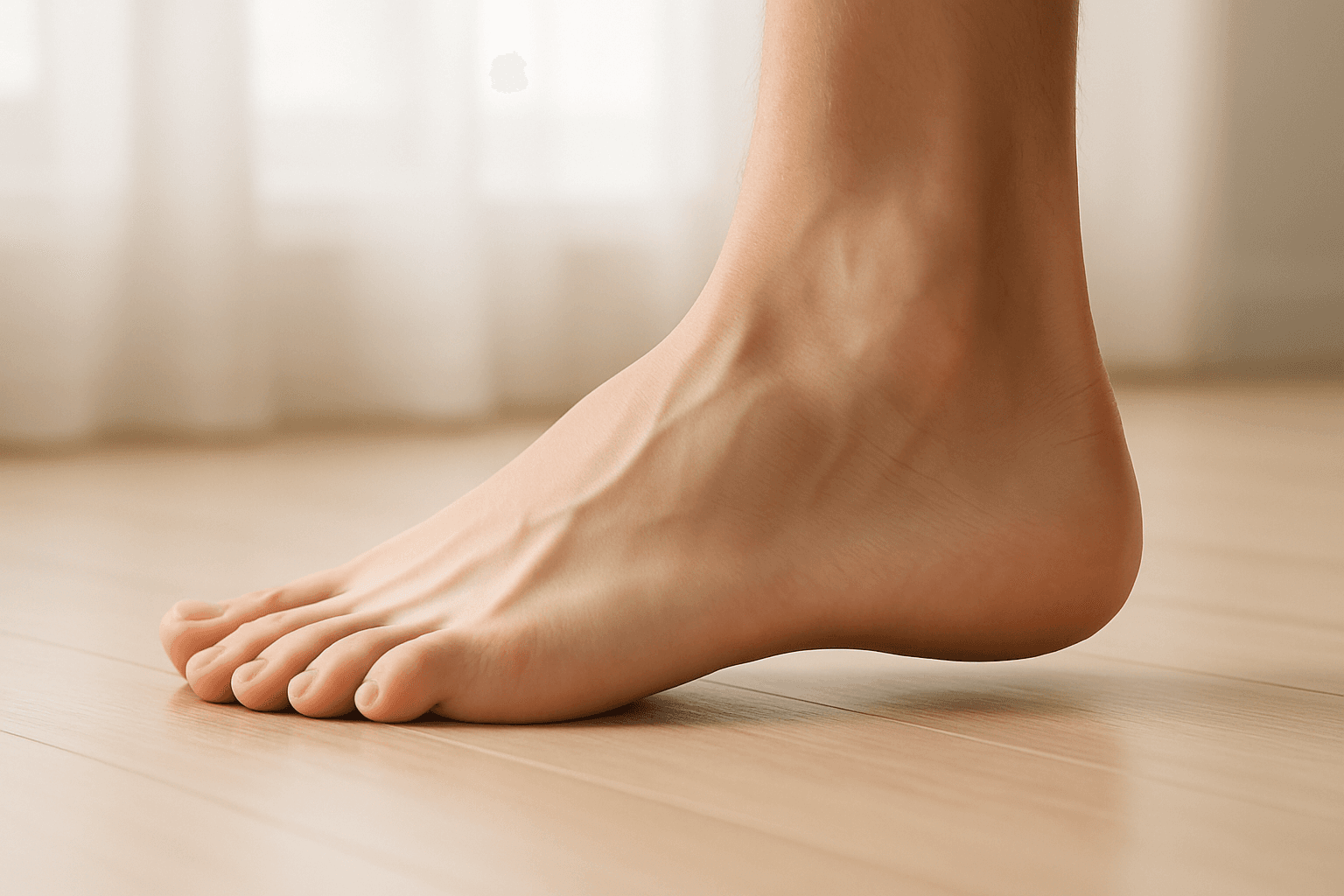
HEEL STRESS FRACTURE
Heel Stress Fracture: When Heel Pain Is the Bone, Not the Fascia
Most heel pain is soft tissue, but a stress fracture of the heel bone can look like plantar fasciitis at first. Here is how the two differ, why early X-rays can look normal, and why this is one to get checked.
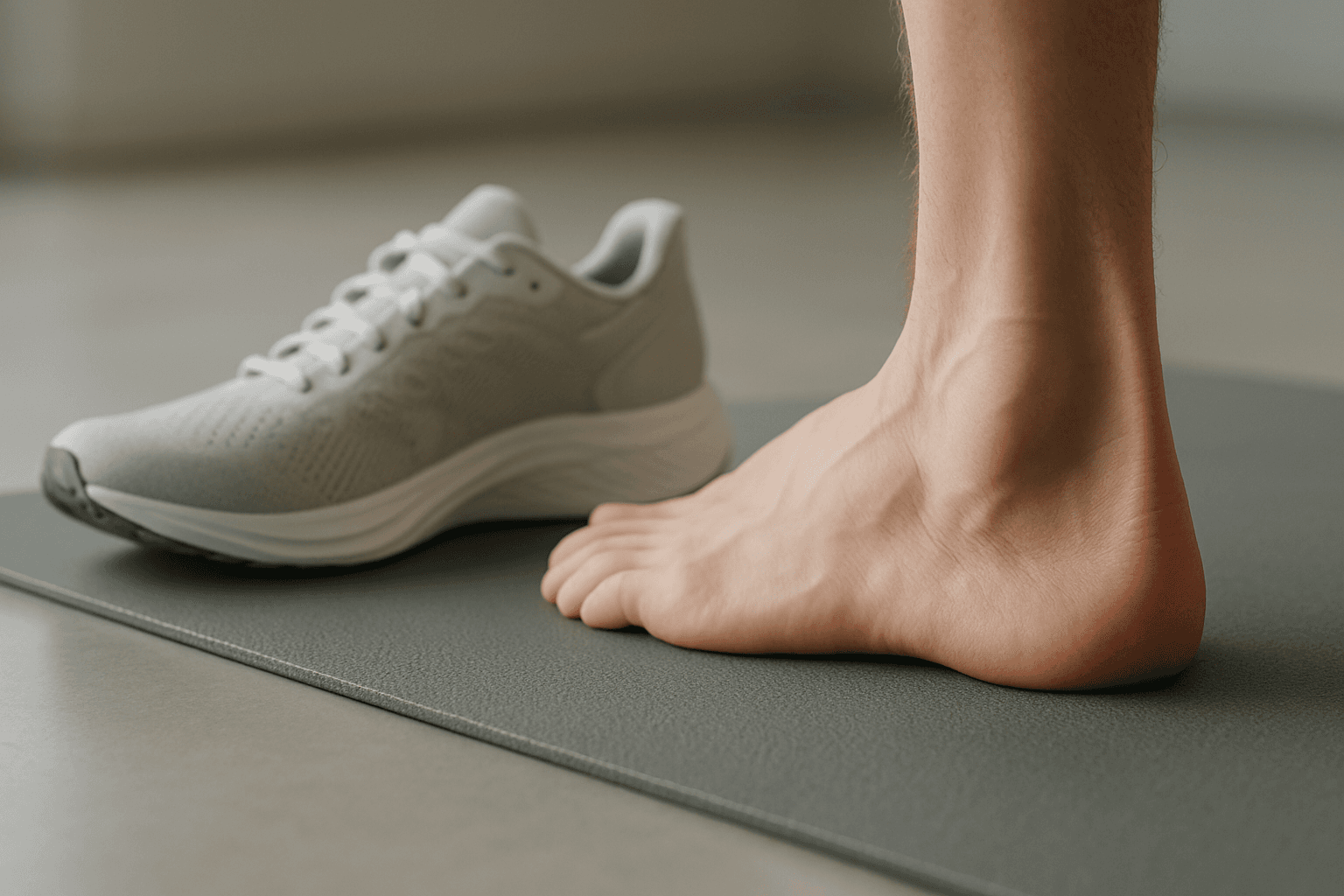
A calcaneal stress fracture is a tiny crack in the heel bone, caused by repeated load rather than a single injury. It is much less common than plantar fasciitis, but it matters because the usual plantar fasciitis routine of walking it off and stretching is the wrong plan for a bone that needs relief from impact.
The clues are a deeper, more diffuse ache in the heel that builds with running, jumping or long days on your feet, tenderness when you squeeze the sides of the heel, and pain that does not ease up with the first few minutes of walking the way plantar fasciitis often does. Pain that is getting steadily worse with activity, or that appears after a sudden jump in training, is worth taking seriously.
This page explains how to spot the difference, what typically happens at the clinic, and what rest and return-to-activity usually look like. It is general information, not a diagnosis. If you suspect a stress fracture, see a doctor or podiatrist rather than testing it at home.
What a heel stress fracture is
Bone constantly remodels itself under load. A stress fracture happens when repeated impact outpaces that repair, and the heel bone, which takes the first hit of every step, is one place it can occur. Runners, military recruits, people who suddenly increase their training, and anyone who steps up standing or walking volume quickly are the usual suspects. Low bone density, low energy intake and a very rapid change in surface or shoes can all raise the odds, which is why a clinician will ask about training history and general health.
It is an uncommon cause of heel pain, and for most people with a sore heel the answer is still a soft-tissue problem. The reason to know about it is the cost of missing it: continuing to pound on a cracked bone can make the injury worse and slow everything down.
How it differs from plantar fasciitis
Patient-education material from orthopedic and sports clinics describes the same pattern: a gradual ache under or around the heel that is more diffuse than the pinpoint spot of plantar fasciitis, worse with impact, and sometimes noticeable as a limp. A squeeze test, where a clinician presses on both sides of the heel, often reproduces the pain in a stress fracture. Plantar fasciitis, by contrast, is typically sharpest at the front of the heel with the first steps after rest and then eases as you move. Our bottom of heel pain page walks through the usual soft-tissue patterns side by side.
None of these differences is a reliable home test on its own. They are reasons to get examined, not a way to rule a fracture in or out.
Why an early X-ray can look normal
A common surprise is a normal X-ray. Clinic sources note that a stress fracture may not show on plain films early on, sometimes until the bone starts to heal two to three weeks later. When suspicion stays high, a clinician may order an MRI, bone scan or CT. A 2025 case report in the medical literature describes a heel stress fracture picked up on MRI after initial X-rays were negative, which fits that pattern.
So a normal first X-ray does not necessarily close the question, especially if the pain is behaving like a bone problem. Tell the clinician plainly how your training and symptoms have changed.
What usually happens next
Most calcaneal stress fractures are managed without surgery. Typical plans described by orthopedic practices include stopping impact activity, using a walking boot or splint and sometimes crutches while walking is painful, and a staged return to activity. One orthopedic source gives a window of around six to eight weeks, but timelines vary with the person and the fracture, and your clinician sets the plan. Our guide to a walking boot for plantar fasciitis explains what a boot does, though a suspected fracture is a clinician's call, not a self-prescribed one.
Return to running is usually tied to comfortable everyday walking and clearance from the clinician rather than a calendar date. Coming back too early is the common way to set things back.
Comfort while you wait for an appointment
Until you are seen, keep impact low: skip running and jumping, cut long walks, and wear well-cushioned, supportive shoes. A cushioning heel cup or supportive insole can make everyday steps more comfortable, and our Akusoli insoles review covers a trim-to-fit option with a deep heel cup. That is for comfort only; it does not replace an exam or promise anything about the bone.
Resist the urge to stretch or massage hard into a deep heel ache while the cause is unknown. Gentle rest is the safer default.
Red flags that mean book the visit now
See a doctor or podiatrist promptly if heel pain follows a sudden increase in training, hurts when you press the sides of the heel, is worse with impact and not easing with walking, wakes you at night, or comes with swelling, bruising, warmth or numbness. Adolescents with activity-related heel pain have their own common cause, covered in our Sever's disease page. For the wider picture, start at the heel pain hub.
Cushioned comfort for everyday steps
A supportive insole with a deep heel cup for comfort while you get an exam and follow your clinician's plan.
Cushioned comfort for everyday steps →Frequently asked questions
How can I tell a heel stress fracture from plantar fasciitis?
A stress fracture tends to be a deeper, more diffuse ache that builds with impact and may hurt when the sides of the heel are squeezed, while plantar fasciitis is usually sharpest at the front of the heel with the first steps and eases as you move. Only an exam can tell them apart, so get checked if impact makes it worse.
Can a stress fracture show up on an X-ray?
Not always early on. Sources note it may not appear until the bone begins to heal a couple of weeks later, so clinicians sometimes use MRI, bone scan or CT if suspicion stays high.
Do heel stress fractures need surgery?
Most are managed without surgery, usually with a period off impact, a boot or splint, and a gradual return to activity. Your clinician decides based on the specific fracture.
How long does a heel stress fracture take to settle?
One orthopedic source cites roughly six to eight weeks, but it varies. Return to impact is usually based on comfort in everyday walking and clinician clearance, not a fixed date.
Can I keep running with heel pain until I see someone?
If a bone problem is possible, it is safer to avoid impact until you are examined. Pushing through can make a stress injury worse.
Who is most at risk?
People who have recently increased running, walking or standing volume quickly, such as runners and military recruits, along with anyone with low bone density or low energy intake. A clinician can assess your individual picture.
HeelCups is reader-supported. When you buy through links on our site we may earn an affiliate commission, at no extra cost to you. This article is general information about foot comfort and is not medical advice — see our medical disclaimer.