SUPINATION
Supination Insoles: What Actually Supports a Foot That Rolls Outward
High arches and supination throw more shock into the outer heel and forefoot. The right insole cushions where the impact lands, cradles the heel, and lets the arch keep the shape it already has.
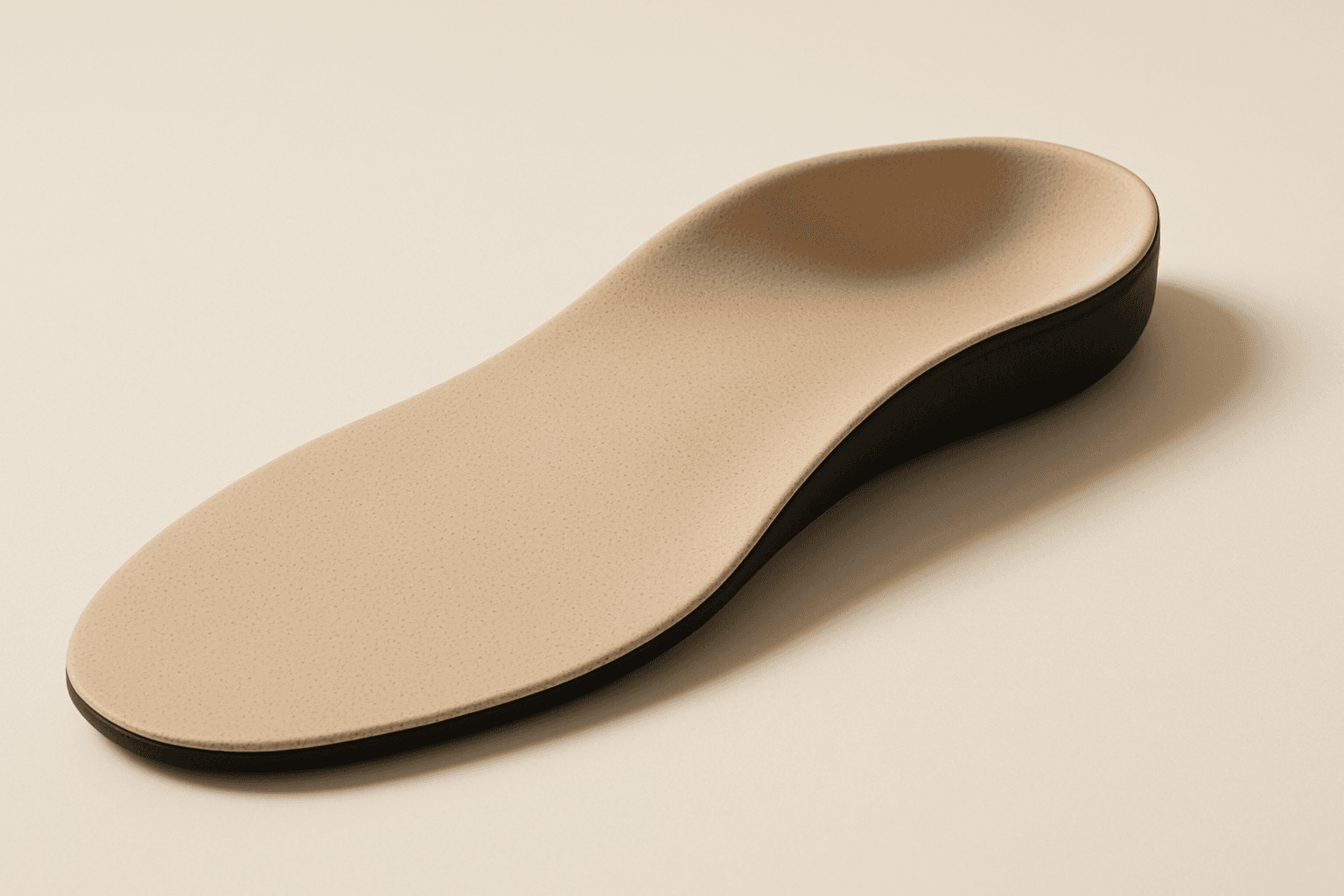
Supination is the opposite of the more famous over-pronation: instead of the ankle rolling inward at heel-strike and through mid-stance, it rolls outward, and the foot loads the outer edge more than the inner. Supinators usually have high, rigid arches — the two go together — and their shoes tell the story before their feet do. The outer heel wears down first, the shoe leans outward on the shelf when empty, and the pinky-toe side of the sock develops a hot spot no one else in the family gets. That mechanical pattern is not a disease and it does not need fixing; it needs supporting well enough that the outer heel and forefoot are not doing all of the shock work of a step.
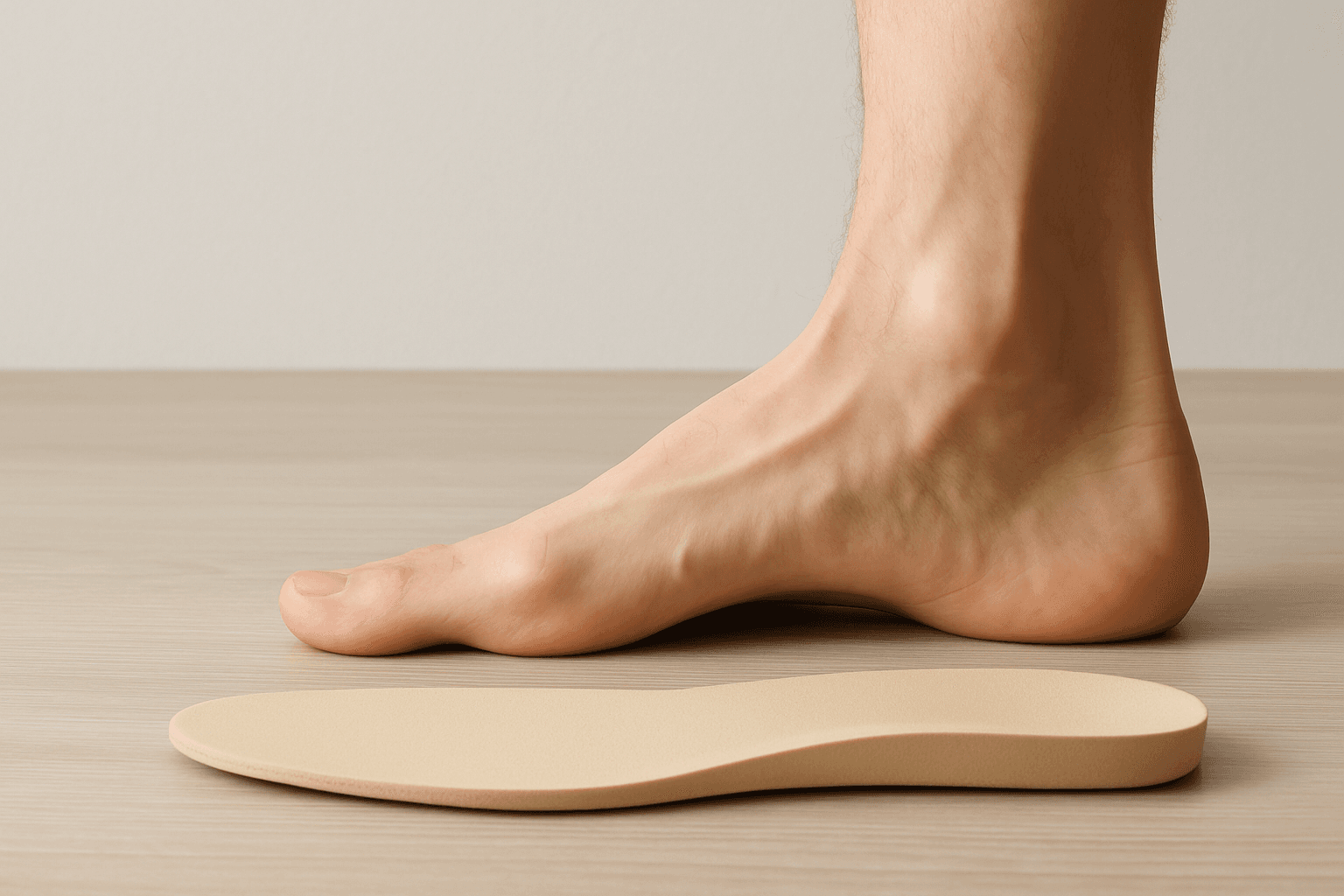
That is a different problem from a flat foot, and it wants a different insole. A high, rigid arch already holds its own shape under body weight; forcing a firm foam-over-plastic arch under it feels intrusive and often creates a pressure point rather than support. What supinated feet need is cushioning where the impact actually lands (outer heel, outer forefoot), a deep heel cup that keeps the heel from rocking further outward, and just enough arch contact that the middle of the foot has something to rest against rather than nothing at all. Get those three right and a long day feels less like being hit from underneath.
This page walks through what actually separates a useful supination insole from a marketing sticker, how to match a pair to the shoe you already wear, and the small habits that keep a supinated foot happier. Nothing here is medical advice. Persistent heel or foot pain that has not eased after four to six weeks of honest home care deserves an in-person exam by a doctor or podiatrist. Every recommendation on this hub is written for comfort, support and relief.
Supination, under-pronation and high arches: sorting the terms
The vocabulary in this corner of the aisle is muddled. "Supination" is a joint motion — the foot rolling outward and the sole turning slightly inward — that happens naturally at the end of every step, right before toe-off. "Under-pronation" is the walking or running gait pattern where supination stays present through more of the stance phase than average, so the foot never rolls inward enough to distribute load across the whole sole. A "high arch" or "pes cavus" is the foot shape most commonly linked to under-pronation, though the two are not identical: some high arches roll inward normally, and a small minority of medium-arched feet under-pronate through a mid-stance habit rather than a shape.
For an insole conversation, that distinction is fine detail. The practical read is the same: your outer heel and outer forefoot are absorbing more of the step's impact than they were built to, and the middle of your foot has less contact with the ground than a neutral foot does. That combination throws more shock into a smaller area of tissue over more hours than the shape is comfortable with. Whether you call it supination, under-pronation or high arches, the tool you want is the same.
One tell that is easy at home: stand up wet from the shower on a dark bathmat and look at the footprint. A neutral foot leaves a shape connected all along the outside from heel to ball; a supinated high arch leaves a narrow ribbon on the outer edge with the middle empty. If that is your footprint and your outer heels wear first, you are in this article.
Why supination causes the pain patterns it does
The pain map of a supinated foot follows the mechanics. Outer heel bruising and heel-pad fatigue show up first because the heel-strike lands more sharply on a smaller footprint. Fifth-metatarsal soreness, along the outer edge of the forefoot, is common in walkers and runners; the outer forefoot is doing more of the push-off work than the rigid arch will allow the inner half to share. Lateral ankle instability is a related complaint: the same rigid, outward-canted stance that under-pronates through the step is easier to roll outward on uneven ground, and repeated small sprains are more common in supinators than in the general population.
Farther up the chain, tight calves and Achilles fatigue often ride along, because a high arch is stiffer through mid-stance and the calf takes more of the shock-absorption load a mobile mid-foot would otherwise share. Pain that fits any of the patterns above — outer heel, outer forefoot, lateral ankle, tight calves — plus a footprint that shows a narrow outer band is a supination story, and it is one an insole can meaningfully shift.
What supination does not typically cause is the classic first-steps-in-the-morning sharp under-heel pain of plantar fasciitis. The plantar fascia in a high, rigid arch is short and stiff by resting length; it is under-stretched rather than over-stretched, and morning heel pain in a supinator is more often fat pad or Achilles related. If your pattern is the plantar fasciitis one, our plantar fasciitis hub is the right start; the insole recommendation on this page is not that page's answer.
The three features a supination insole actually needs
First, cushioning where the impact lands. A supinated heel-strike hits the outer edge of the heel harder than a neutral one; a supinated push-off loads the outer forefoot more than the ball. A supination-friendly insole has real cushioning across the whole heel area (not just under the medial arch) and along the lateral half of the forefoot. Foam density matters more than gel dots — a dense EVA base that dampens without bottoming out under a rigid, high-arched foot is what earns the recommendation.
Second, a deep heel cup. Same tool as everywhere else on this hub, and the reason is the same on a supinated foot: the fat pad under the heel bone absorbs shock better when it is cradled than when it splays outward. On a supinator, the cup does the extra job of catching the heel just before it rolls further outward, which cuts the small daily contribution to lateral ankle instability. A bowl-shaped cup is what you want, not a shallow disc.
Third, moderate arch contact rather than aggressive arch support. This is the counter-intuitive part. A high-arched, rigid foot is already carrying its own arch shape; a firm foam-over-plastic support pushing up under it feels like a nub and creates a pressure point within a mile of walking. What supinators want is a soft, low-profile arch fill that gives the middle of the foot something to rest against without forcing a shape. The rule of thumb: press your thumb into the arch of a candidate insole. A supination-friendly arch yields easily; a plantar-fasciitis or flat-foot arch pushes back. If you find one designed for high arches specifically, that is the wording to look for.
Cushioning without losing arch contact: getting the balance right
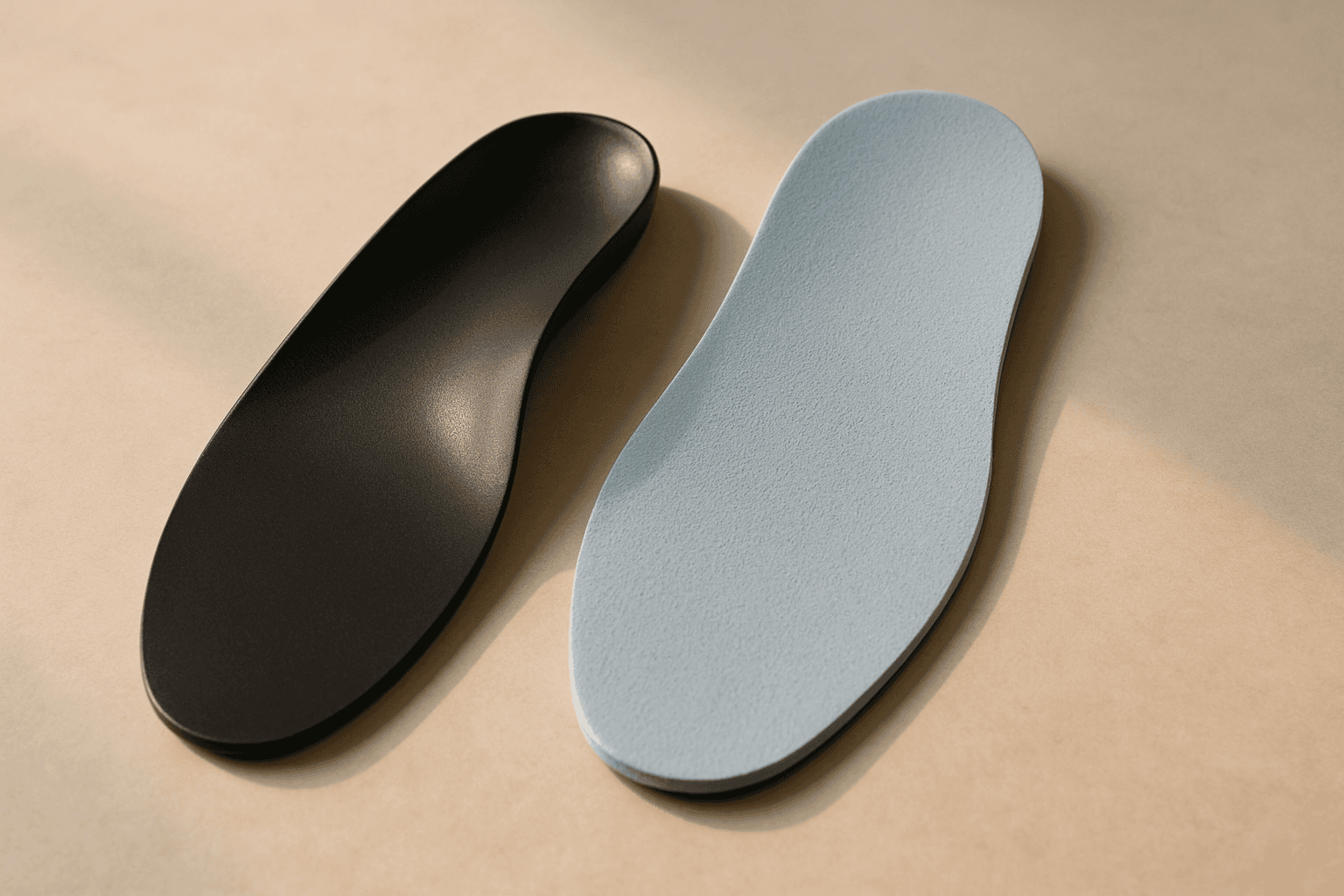
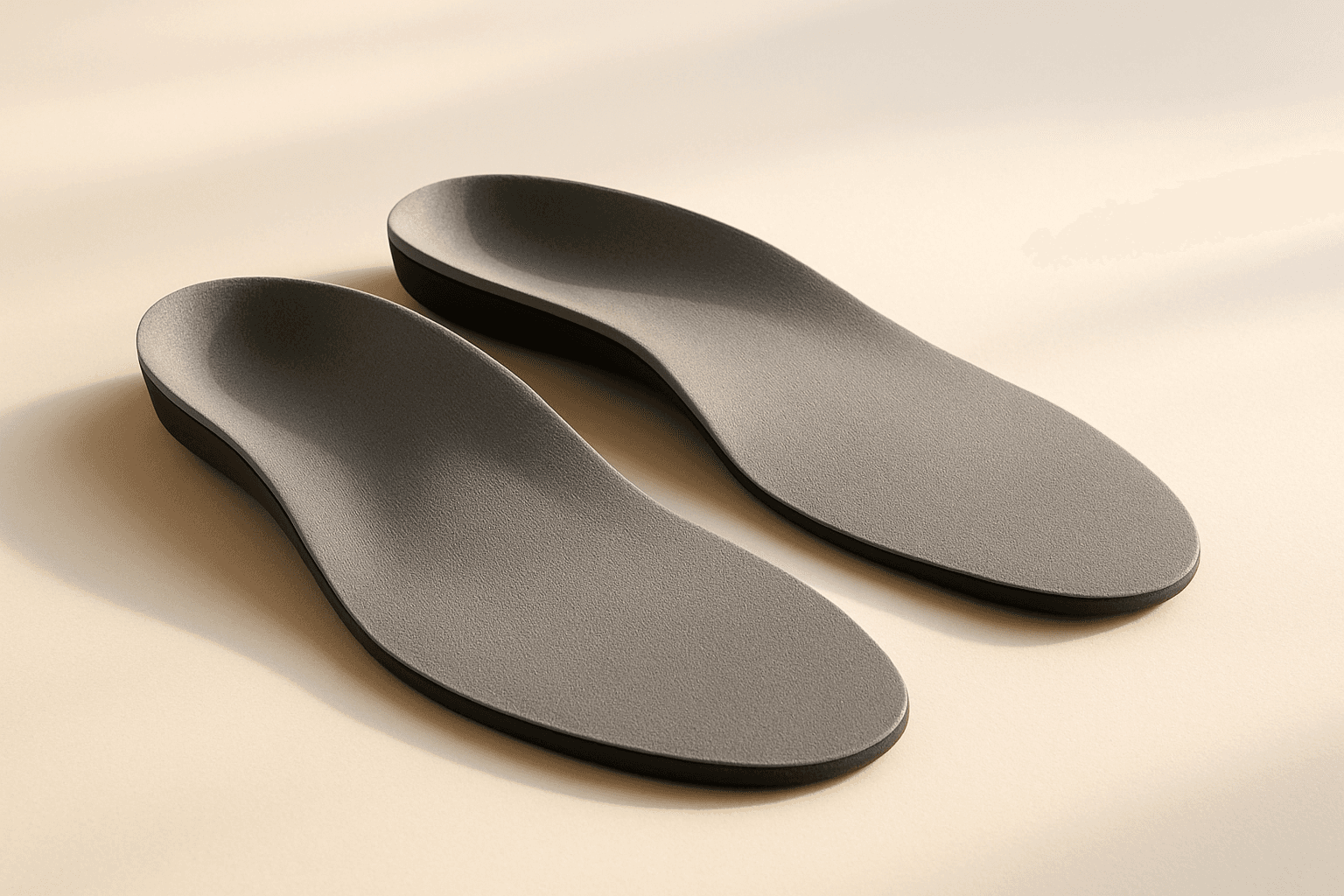
The trap on the supination side of the aisle is going too soft. All-foam "maximum cushion" insoles feel wonderful in the store, and they pack down under a rigid, high-arched foot within a couple of weeks of daily wear because the pressure sits in a smaller footprint than the foam was designed for. What supinated feet want is a dense-but-forgiving base — dense enough to dampen and last, forgiving enough not to feel like a plank under an already stiff foot. Semi-rigid insoles built with a lower-profile arch fit this brief best; the pair we would install first for most supinators is the Akusoli insoles, whose arch shape stays lower than a plantar-fasciitis pair and whose deep heel cup handles the outer-heel work.
Full-length or three-quarter length? For a supinator whose outer forefoot takes a beating on long walks or runs, full-length is the right pick — the forefoot cushioning is doing meaningful work, and a three-quarter insole leaves that half unsupported. For a supinator with mostly outer-heel pain in an office or house shoe, three-quarter length is fine and often more comfortable in slim shoes. Trim to fit with the old insole as a template and cut a little outside the line first so you can test.
Break-in and shoe pairing
Ease a new supination insole in over a week rather than dropping it into a Monday twelve-hour day. A few hours the first two days, then a half day, then full days. Feet coming from flat drugstore insoles often notice the heel cup working muscles that had been coasting; that fades in three to seven days. A sharp pain along the outer edge of the foot that is new is a sign the cushioning is too soft for your weight and the outer edge is still bottoming out — try a denser pair.
Shoe choice does half the job. A neutral running shoe or walking shoe with reasonable cushioning is a better home for a supination insole than a stability shoe built for over-pronation; the stability shoe's medial post pushes an already outward-canted foot further outward. If you are a runner who has been in stability shoes because the salesperson glanced at your gait, try a neutral shoe with a supportive insole instead — most supinators do better in that combination. For work and daily walking, any shoe with a firm heel counter (the cup at the back that holds the heel in place) and a stable, non-tapered outsole helps the insole do its job. Our how to use heel cups walk-through covers the shoe-and-cup pairing in more detail if you want to layer on a standalone cup in a shallow shoe.
Give a supination insole three to four weeks before deciding whether it is working. The signs a pair is helping: the outer heel is less tender at the end of the day, the fifth-metatarsal soreness fades, calves are less tight after a long walk. Replace foam-based insoles every six to twelve months of daily wear; the pair has done its life's work when the heel cup no longer feels distinct under your thumb.
When supination is not the whole story
Supination gets blamed for pain patterns it is not causing, and correcting a footprint that is not the source of the trouble wastes weeks of care. Persistent outer-ankle pain, especially after a specific twist or roll, is worth a clinician's exam — a chronic instability from repeated sprains, a peroneal tendon problem, or a small fracture along the outer foot can hide inside a general "my foot rolls out" complaint. Numbness, tingling or burning along the outer edge of the foot points at a nerve rather than the fat pad and belongs with a clinician. Pain that woke up out of nowhere without a change in shoes, mileage or standing time deserves a look regardless of your footprint.
The site pointer: our heel pain hub covers the broader map of where heel pain lives and what each pattern means. Anyone whose foot or heel pain has not eased after four to six weeks of honest home care deserves an in-person exam by a doctor or podiatrist. Insoles are a comfort and support tool, not a treatment; the goal is comfort, support and relief while the tissue calms down, and knowing when the picture has stopped fitting the self-care lane. If your arch is rigid rather than rolling outward, our insoles for high arches guide covers the contact-and-cushion approach.
The insole we would install for a supinated foot
A trim-to-fit insole with a deep heel cup and a lower-profile arch that cushions the outer heel and forefoot without pushing up hard on a rigid high arch.
The insole we would install for a supinated foot →Frequently asked questions
Do supinators need arch support?
Not the same kind that a flat-footed reader does. A high, rigid arch already holds its own shape under body weight, and a firm foam-over-plastic arch pressed up under it feels like a nub within a mile of walking. What supinators want is cushioning where impact lands (outer heel, outer forefoot), a deep heel cup, and a low-profile arch fill that lets the middle of the foot rest against something without being forced into a shape. That combination is what an insole labelled for high arches or supination is built to do.
How do I know if I supinate?
The clearest home tell is the wear pattern on your shoes — supinators wear the outer edge of the heel down first and their shoes lean outward on a flat surface. A wet-footprint test also helps: stand up wet on a dark mat and look at the shape you leave behind. A supinated high arch leaves a narrow ribbon connecting heel to ball along the outside edge, with the middle of the foot empty. Pain along the outer heel, outer forefoot or lateral ankle rounds out the picture. If none of that fits, you probably are not a supinator.
Are supination insoles the same as insoles for high arches?
In practice, mostly yes. High arches and supination usually go together, and the insole features that help — cushioning where impact lands, a deep heel cup, a low-profile arch that does not push up hard against a rigid foot — are the same for both. If a product is marketed specifically for high arches or specifically for under-pronation, either wording is on the right shelf. The exception is a product marketed for over-pronation or flat feet, which usually has a firmer, higher arch and is not the pair a supinator wants.
Can I run in supination insoles?
Yes, and it is one of the more useful places to wear them. Pair a supination-friendly insole with a neutral running shoe — not a stability shoe, whose medial post pushes an already outward-canted foot further outward — and ease the pair into your training over a week or two rather than dropping them into a long run. Runners with recurring outer-foot or lateral-ankle complaints often find the combination cuts both. For a broader read on run-related heel pain, our heel pain hub covers the mapping.
How long do supination insoles take to break in?
A few hours the first two days, then a half day, then full days from day three or four. Feet coming from flat drugstore insoles notice the heel cup working muscles that had been coasting for the first three to seven days; that fades. Sharp new pain along the outer edge of the foot is a sign the cushioning is too soft for your weight and the outer edge is bottoming out — try a denser pair. Give any honest routine three to four weeks before deciding whether it is working.
Do I still need to stretch if I have a supinated foot?
Yes, and calves and Achilles are usually the highest-leverage places. High, rigid arches often ride with tight calves because a stiff mid-foot passes more shock up the chain; a daily calf stretch morning and evening, held for thirty to sixty seconds each side, is a cheap and reliable addition to any insole. Our plantar fasciitis stretches page covers the sequence, which is the same one that helps most heel and calf complaints regardless of arch shape.
HeelCups is reader-supported. When you buy through links on our site we may earn an affiliate commission, at no extra cost to you. This article is general information about foot comfort and is not medical advice — see our medical disclaimer.