COMPRESSION
Compression Socks for Tired Feet: What Graduated Compression Actually Does at the End of a Long Day
Tighter at the ankle, easing up the calf — the mechanism that helps aching feet, swollen ankles and heavy legs after long shifts, long flights and long standing days. Here is what the numbers on the label mean, when compression earns its money, and when it does not.
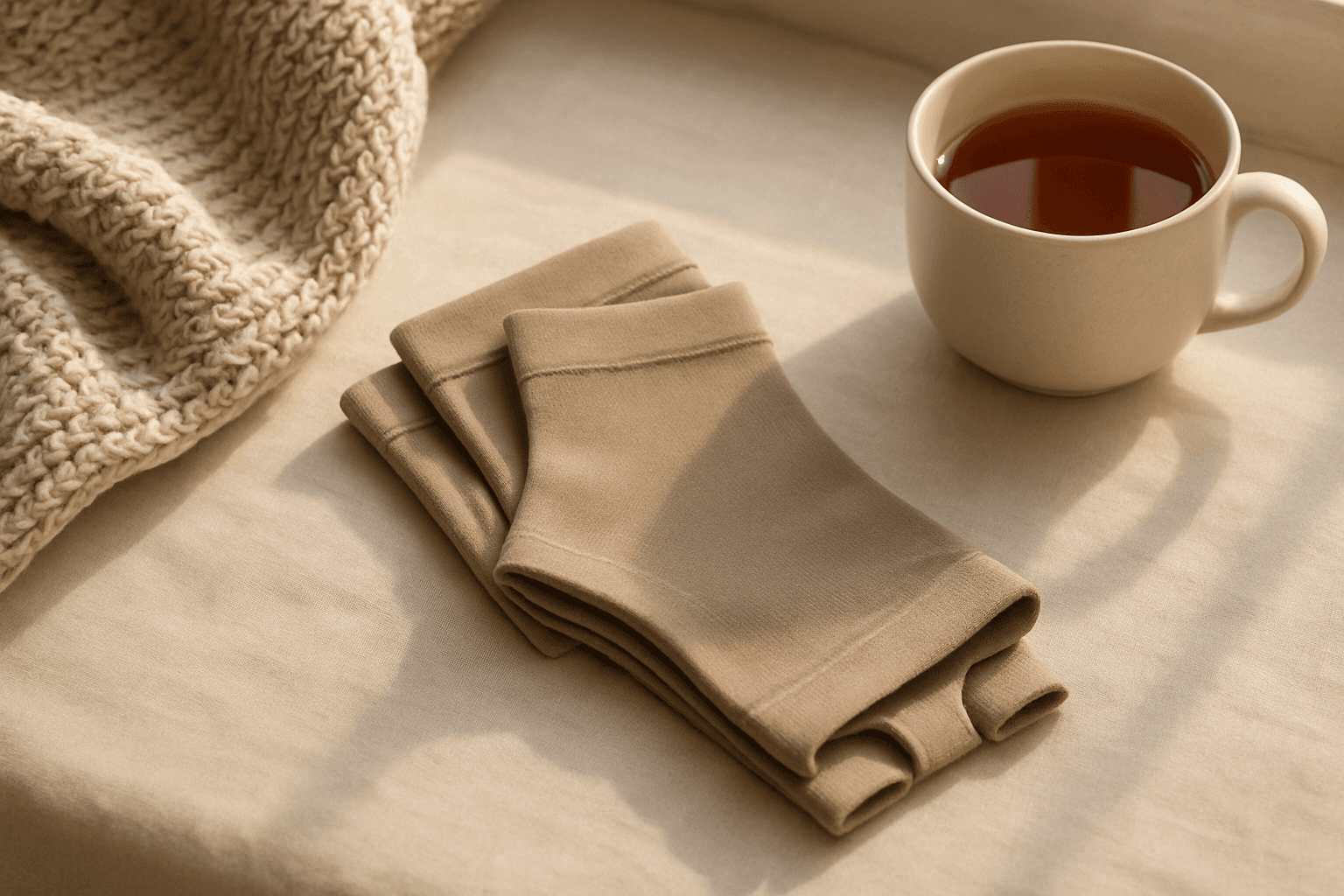
Tired feet at the end of a twelve-hour shift, swollen ankles after a long flight, and the heavy-legs feeling that shows up on the second half of a warehouse day are all the same underlying complaint. Blood and lymphatic fluid pool in the lower leg when the calf muscles have not been able to pump them back up efficiently for hours on end. Standing, sitting, heat and gravity all conspire to make it worse. Graduated compression — a sock that is firmest at the ankle and eases up toward the calf — supports that upward flow, and for a lot of readers it takes real edge off the end-of-day heaviness.
The word "compression" gets used for two very different things in the sock aisle. Athletic compression sleeves and marketing-flavored "compression" socks are one product; graduated medical-grade compression stockings are another. The first is a comfort tool that helps mild everyday tiredness. The second is a therapeutic tool used for venous conditions, post-surgery recovery, and long-haul travel, and the numbers on its label mean something specific. Sorting the two out is what this page is for.
Nothing here is medical advice. Leg swelling that comes on quickly, that affects one leg more than the other, or that comes with pain, warmth or discoloration, is out of the self-care lane and belongs with a clinician the same day. Every recommendation on this hub is written for comfort, support and relief. If swelling is your main complaint, start with our guide to swollen feet.
What graduated compression actually does
The calf muscles are the body's second heart. Every time they contract during a step, they squeeze the veins in the lower leg and push blood up against gravity toward the heart. When you stand still or sit for hours, the pump stops working; venous return slows, tissue fluid accumulates in the ankles and feet, and the leg feels heavy. Graduated compression puts the tightest squeeze at the ankle and less pressure as it works up the calf. That gradient nudges fluid in the right direction, supports vein walls that would otherwise stretch under the pooling load, and keeps swelling in check while you are on your feet.
The evidence base for graduated compression is unusually solid for a foot-care product. Systematic reviews (a 2016 Cochrane review of graduated compression stockings for long-haul flights, and multiple occupational-health studies of nurses and retail workers) find that graduated compression reduces end-of-shift ankle swelling, reduces the risk of superficial venous thrombosis on long flights, and improves comfort scores in workers who stand all day. The effect is real, and the mechanism is well understood.
What compression does not do is fix an underlying vein problem, reverse chronic venous insufficiency or replace medical care for a leg-swelling complaint. It supports the leg while it is on; it does not change the veins between wears.
Reading the mmHg label: 15-20 vs 20-30 vs higher
Compression is measured in millimeters of mercury (mmHg) at the ankle, and a good label prints two numbers — the minimum and maximum pressure across a normal fit. The three ranges you will see are 8 to 15 mmHg (mild), 15 to 20 mmHg (moderate, the workhorse for everyday use), and 20 to 30 mmHg (firm, medical-grade). Anything above 30 mmHg is prescription-territory and is fit by a clinician.
For tired feet and end-of-day heaviness with no underlying medical condition, 15 to 20 mmHg is the useful range. It is enough compression to feel supportive within the first minute of wear and to visibly reduce ankle swelling by the end of a long day. It is comfortable enough to wear for eight to twelve hours, and it does not need a clinician's fitting. A pair at this level is our default recommendation for nurses, teachers, retail and warehouse staff, and desk workers with an afternoon flight.
20 to 30 mmHg is firm compression, used for venous insufficiency, recovery from certain surgeries, and for people with a history of blood clots. It is not more "comfort" — it is a therapeutic tool, and it belongs on a clinician's advice. Wearing 20 to 30 mmHg without one is not dangerous for most healthy people, but it is often uncomfortable and it may not do more good than a 15 to 20 mmHg sock for a straightforward tired-feet complaint.
Knee-high socks vs foot sleeves vs calf sleeves
Knee-high graduated compression socks are the standard. They cover the whole lower leg from the ball of the foot to just below the knee, and the graduated squeeze runs the full length. This is the format the evidence base is built on and the format most travel and occupational recommendations point at. Solid-color, thin-fabric versions look enough like dress socks that they work in offices; ribbed athletic versions are what most nurses and retail workers pick.
Foot sleeves — no toes, no heel, a tube from the ball of the foot to the ankle — are marketed as compression but are a different tool. They apply light pressure across the arch, help with arch fatigue and mild plantar fasciitis symptoms in shoes that will not fit a full insole, and are not a substitute for a knee-high sock for leg swelling. Our plantar fasciitis socks walk-through covers this format in detail.
Calf sleeves — a tube around the calf with no foot coverage — are an athletic recovery product. They help post-run soreness and race-day comfort for some runners, and are used for shin splints and calf strains. They do not do the venous-return job of a full graduated sock because they miss the ankle, where the compression needs to be firmest.
How to fit a graduated compression sock
Fit matters more than brand. A graduated sock that slides down the calf during the day, that bunches at the ankle, or that leaves deep marks that do not fade within twenty minutes of removal is the wrong size. Measure your ankle circumference and calf circumference at their widest points first thing in the morning before any swelling has set in, and check the maker's chart. If you are between sizes, size down for firmer compression and up for comfort. A good pair pulls on with real effort at the ankle and eases as it works up the calf.
Put a graduated sock on before you start moving in the morning. Fluid that has already pooled in the ankles is harder to move back up than fluid that never had time to pool. Wear the pair through the workday or the long flight; take it off when you are done for the day. Sleeping in graduated compression is not necessary for a tired-feet complaint and can be uncomfortable.
When compression is not the right answer
Compression is not a diagnosis. Leg swelling that comes on quickly (over hours rather than a full day), that is worse in one leg than the other, that comes with pain, warmth, redness or a color change, is a same-day clinical picture — deep vein thrombosis and cellulitis both show up that way, and neither is a compression-sock problem. Sudden shortness of breath along with new leg swelling is a same-hour emergency-department picture.
Circulation concerns need a clinician's read before you buy compression. Peripheral arterial disease, diabetic neuropathy with reduced sensation, and heart failure with fluid overload all change what compression does in a way that is worth having a professional look at first. A primary care physician or vascular clinician can say quickly whether compression is helpful, unhelpful or harmful for your specific picture, and what level to buy.
Chronic venous insufficiency, varicose veins that cause daily discomfort, and post-thrombotic syndrome all benefit from compression, but at higher pressures and with medical guidance on the fit and the duration. Compression sold as a comfort product does not treat these conditions on its own.
Pairing compression with the rest of the foot-care picture
For end-of-day tiredness after a long shift, compression is one of three moves that stack well: a supportive insole in every work shoe or boot to change how the foot loads across the day, a 15 to 20 mmHg graduated sock to support venous return through the shift, and ten minutes with the feet elevated above heart level after work to let the residual fluid drain. Each addresses a different piece of the picture, and the combination is what most readers notice.
A heated sock or a warm wool sock at home in the evening is a compression sock's cousin for a different complaint — cold feet after work rather than swollen ankles during it. If both problems are on the list, the compression pair goes on during the day and the warm pair goes on at home.
Nothing on this hub is a treatment for a foot or leg condition. The goal is comfort, support and relief while the body handles the load of a long day, and knowing when the picture has stopped fitting the self-care lane. Leg swelling that has not eased with honest home care after two weeks, or any of the red flags above, deserves an in-person exam by a doctor.
Explore the foot-care hub
Socks, skin, nails and everything below the ankle that is not heel pain — the honest picks in each category.
Explore the foot-care hub →Frequently asked questions
What level of compression should I buy for tired feet after work?
15 to 20 mmHg is the useful range for everyday tiredness with no underlying medical condition. It is enough compression to feel supportive within the first minute of wear and to keep ankle swelling in check through an eight- to twelve-hour shift, without being uncomfortable or needing a clinician's fitting. Above 20 mmHg is a therapeutic range and belongs on a doctor's advice.
Can I wear compression socks all day, every day?
For most healthy readers, yes — 15 to 20 mmHg graduated socks worn through the workday and taken off at night are safe for daily wear. Skip a day if the skin under the sock is irritated, if the sock leaves marks that do not fade within twenty minutes of removal, or if you develop any new leg symptoms. If you have a circulation or heart concern, a diabetes diagnosis, or peripheral neuropathy, ask a clinician before wearing compression daily.
Do compression socks help plantar fasciitis?
Compression foot sleeves — a different product from knee-high graduated compression socks — help mild plantar fasciitis symptoms by adding light pressure across the arch, especially in shoes that will not fit a full insole. Knee-high graduated compression can help by reducing end-of-day heaviness that pairs with plantar fasciitis after long shifts, but it does not change the fascia. Our full walk-through on plantar-fasciitis-specific sock formats lives on the plantar fasciitis socks page.
How do I put on a tight compression sock without a fight?
Put it on first thing in the morning before your feet have swollen at all. Bunch the sock down to the heel, slip the heel in, then slowly unroll the fabric up the calf, smoothing wrinkles as you go. A silk-lined "sock butler" or a small handful of talc on the calf helps for firmer socks. If pulling the sock on takes real effort at 15 to 20 mmHg, you may have sized down too far; try the next size up.
How often should I replace compression socks?
A daily-wear pair of 15 to 20 mmHg socks holds its compression for roughly six months of consistent use, less if it is washed hot or tumble-dried. Rotate two pairs so each has a full day of no-load rest between wears, wash on cool and air-dry, and expect to replace the pair when the compression no longer feels distinct against a fresh sock. That is usually the six- to nine-month mark for full-time wearers.
Are compression socks safe on a long flight?
For most travelers, yes — 15 to 20 mmHg graduated compression on flights of four hours or more reduces ankle swelling and lowers the risk of superficial venous thrombosis, per the Cochrane review of compression stockings for air travel. Talk to a clinician first if you have a history of blood clots, a recent surgery, a diagnosed clotting disorder, or a heart or vascular condition — the recommended compression level and any other precautions are more specific than an off-the-shelf sock covers.
HeelCups is reader-supported. When you buy through links on our site we may earn an affiliate commission, at no extra cost to you. This article is general information about foot comfort and is not medical advice — see our medical disclaimer.