HEEL CUPS VS INSOLES
Heel Cups vs Insoles: Which One Do You Actually Need for Your Heel Pain?
A heel cup cushions and cradles the heel; an insole supports the whole arch. Different tools for different problems — and often the right answer is one specific combination of the two.
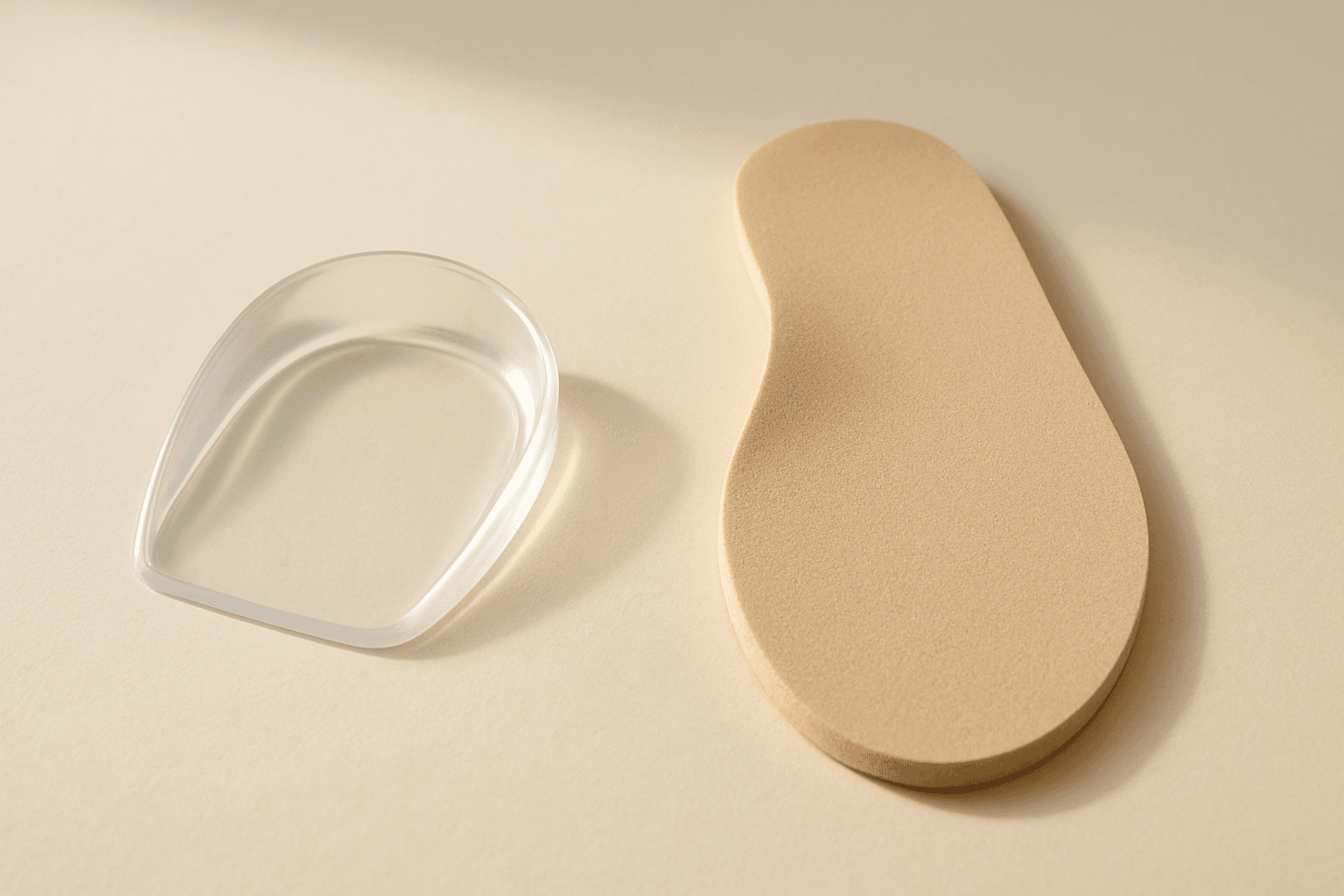
Walk into any drugstore foot-care aisle and you will see two very different objects marketed for the same complaint: a small silicone or gel cup that sits under the heel, and a full-length insole that runs the length of the shoe. They look like alternatives. In practice they solve different problems, and the reason so many people bounce from one to the other for months is that they picked whichever was cheaper first without asking which one their heel actually needed.
This page is the short, honest walk-through: what a heel cup does that an insole does not, what a supportive insole does that a heel cup cannot, the specific heel pain patterns that respond to each, and the case for owning both when the picture is mixed. If you are still working out where your pain lives, the heel pain hub is a better first stop — the answer to "cup or insole" depends on which pattern is yours.
Nothing in this section is medical advice. Heel pain that has lasted more than four to six weeks despite honest home care, or that came with an injury, swelling or numbness, deserves an in-person exam by a doctor or podiatrist. Everything here is written for comfort, support and relief while the tissue calms down.
What a heel cup actually does
A heel cup is a small shell — usually silicone, gel or dense EVA foam — shaped like a shallow bowl that sits directly under the heel bone. Its job is two things and two things only: cushion the impact of the heel strike, and cradle the fat pad under the heel so it does not squash out sideways under body weight. The good ones have a firmer rim and a softer center; the cheap ones are flat pads of gel with no meaningful cradle at all.
That cradle matters more than the cushioning. The fat pad under your heel is a dense network of fat compartments built as your body's own shock absorber. When it splays outward with every step — the way flat foam under a bare heel invites it to — it stops working the way it was designed to, and the heel bone lands closer to the surface than it should. A properly shaped heel cup keeps the fat pad compressed into its natural shape, so it absorbs shock the way evolution intended. This is why a heel cup often does more for fat pad pain than a thicker general-purpose insole does.
What a heel cup does not do is support the arch. It stops at the front of the heel bone. Everything from the arch forward — the plantar fascia's long belly, the metatarsal heads, the toes — is left to whatever the shoe provides. For pain that lives under the arch or at the front of the heel bone, a heel cup on its own is the wrong tool.
What a full insole actually does
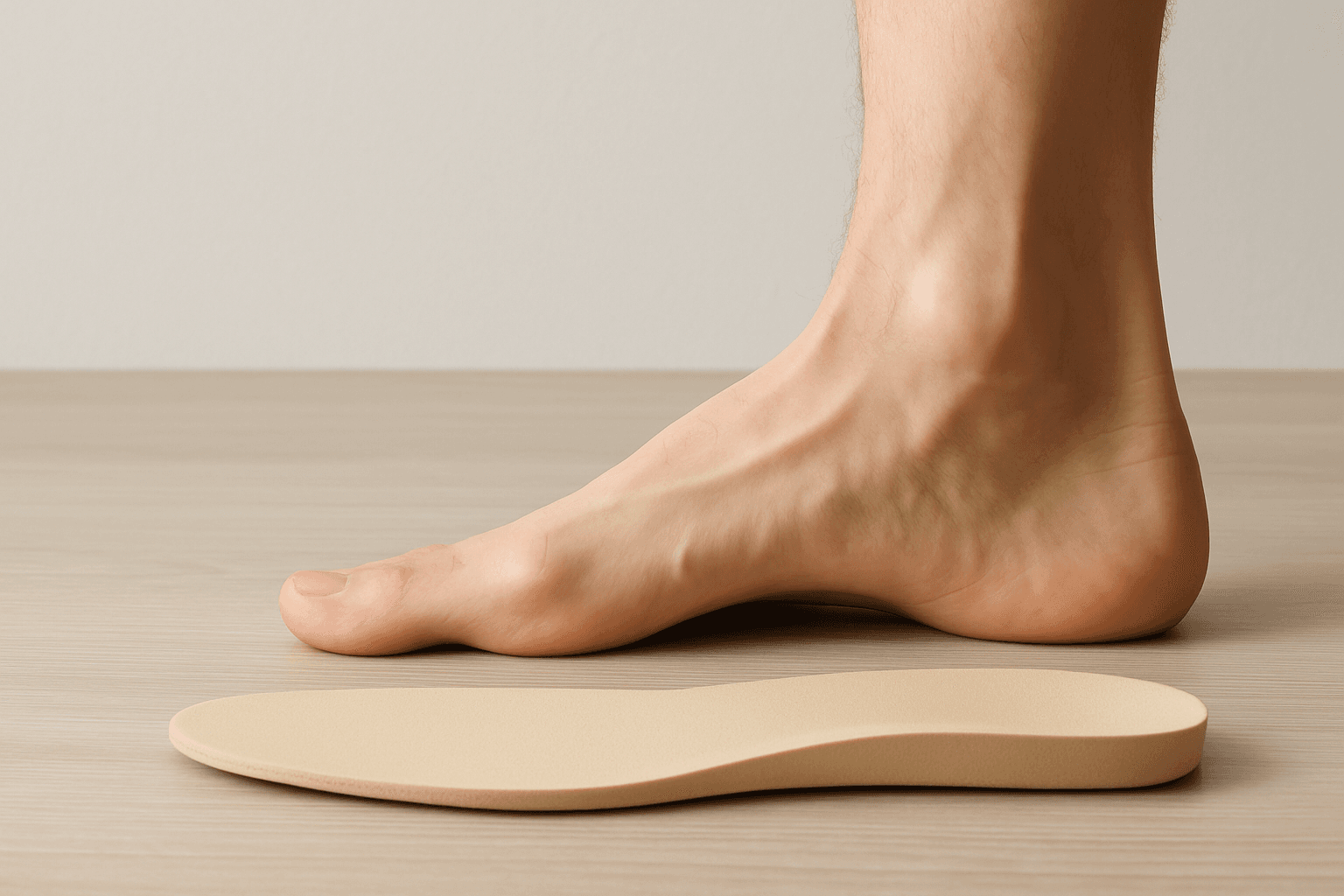
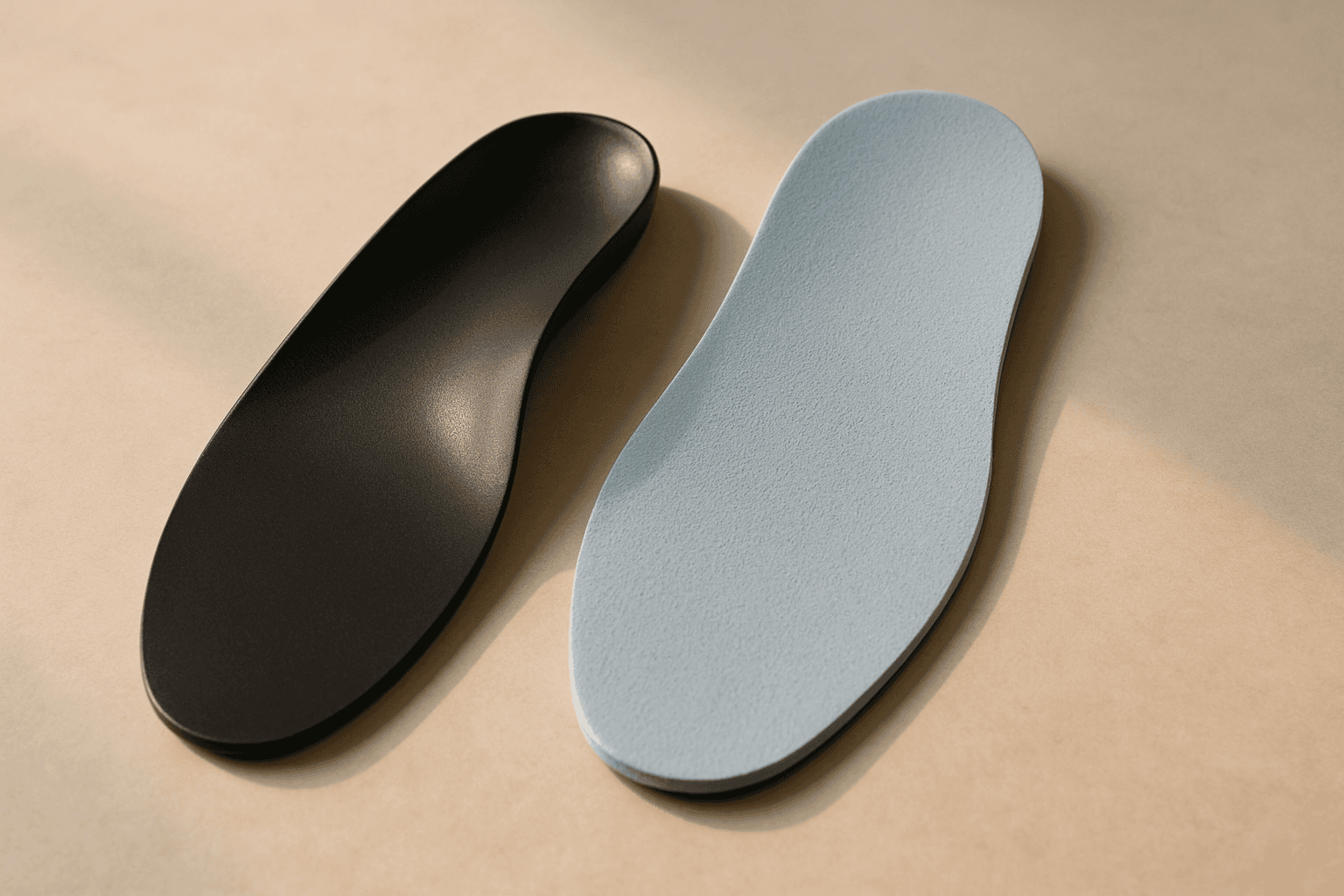
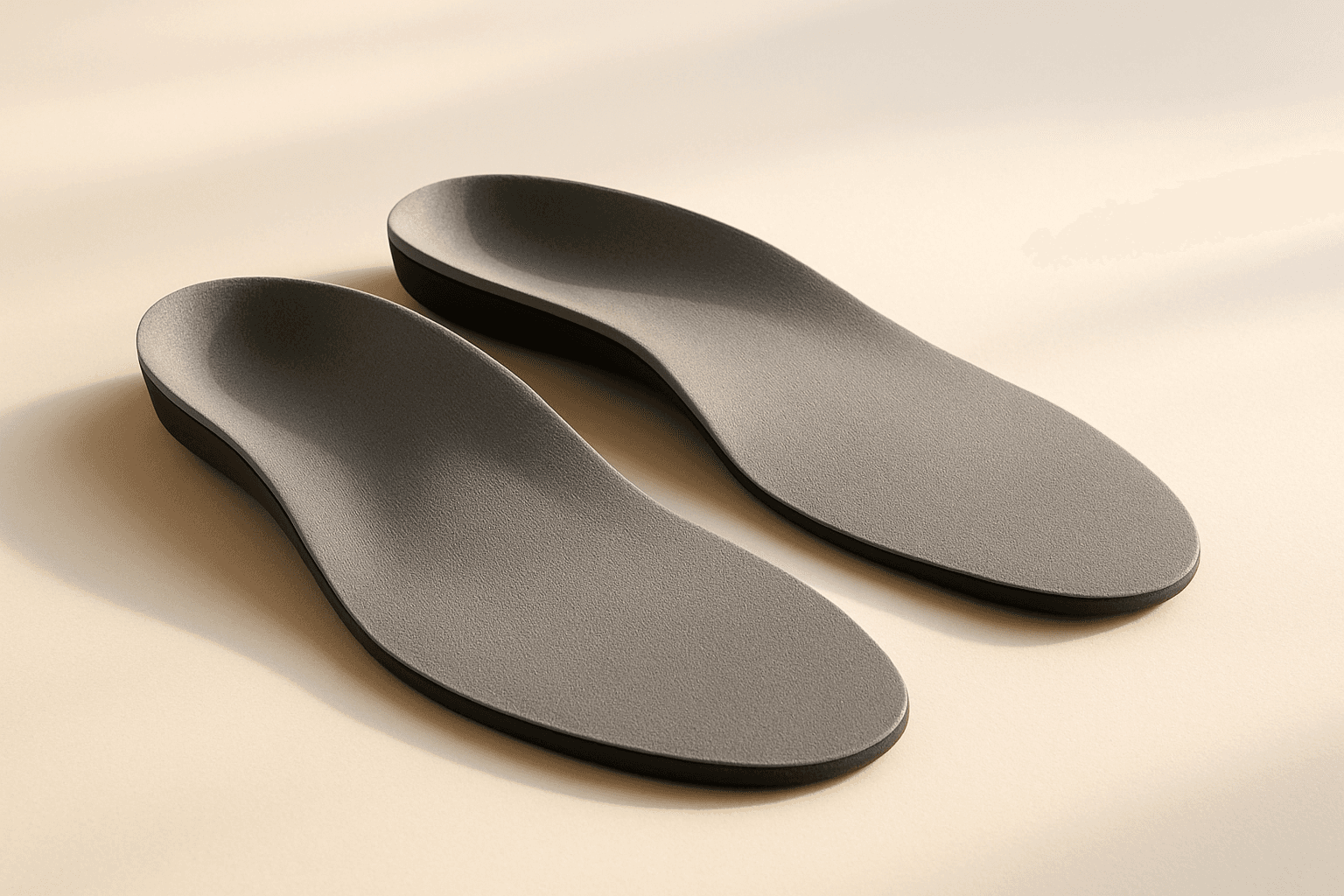
A supportive insole is a full-length shaped platform that runs from the heel to the toes. The parts that earn its keep are the firm medial arch that lifts and holds the arch's shape under body weight, and the deep heel cup at the back that does the same job a standalone heel cup does. The two work together: the arch support unloads the plantar fascia so it is not overstretched with every step, and the heel cup cradles the fat pad so the heel lands the way it was built to. Everything else — gel dots, magnets, cooling top layers, acupressure nodes — is comfort or bonus.
The most important distinction between an insole and a heel cup is the arch. A firm arch is what changes the mechanics of your gait for the plantar fasciitis pattern — the sharp under-heel pain that is worst with the first steps in the morning. Take that away and you are back to whatever your shoe offers, which for most everyday shoes is not much. A well-made insole with a firm arch and a deep heel cup does both jobs in one object, which is why for most people with heel pain — where the pattern is either plantar fasciitis, fat pad irritation, or a mix — a full insole is the higher-leverage buy.
There is a real trade-off, though: a full insole displaces the shoe's own insole, so it takes up volume. Snug dress shoes, minimalist runners and low-volume slip-ons may not accommodate a full-length insole comfortably. A three-quarter length insole (arch through mid-foot, no forefoot section) or a heel cup alone is often the better fit in those shoes.
Match the tool to your pain pattern
Plantar fasciitis — sharp pain right under the heel, worst with the first steps in the morning, eases with walking then returns after hours on your feet. First choice: a full insole with a firm arch and a deep heel cup. A heel cup alone will cushion the impact but will not address the arch pull that is doing most of the damage. Our first-pick pair is in the Akusoli insoles review, and the full daily plan lives on the plantar fasciitis hub.
Fat pad irritation — bruised, diffuse pain across the whole heel pad, worst at end of day rather than first thing in the morning. First choice: a deep, cushioned heel cup, either standalone or built into a supportive insole. Rigid orthotics tend to make fat pad pain worse; the shape you want is a cradling cushion, not a hard shelf. Standalone silicone heel cups work well in shoes that will not fit a full-length insole.
Back-of-heel pain — Achilles tendinopathy or retrocalcaneal bursitis. Neither a heel cup nor a full insole is the primary tool here; a small heel lift (six to twelve millimeters) is the specific fix, and a supportive insole underneath the lift stabilizes the heel while the tendon calms. See our back of the heel walk-through for the daily plan.
Long shifts on concrete with no specific diagnosis — the classic "my feet are killing me by five" complaint. Either tool helps, and a full insole with a deep heel cup helps more. If the shoe cannot fit a full insole and you cannot swap shoes, a good heel cup and a well-cushioned midsole cover most of the same benefit. Our insoles for standing all day walk-through covers what a shift-shoe insole actually has to do to survive hour ten.
When to own both
A common setup for people who spend all day in one pair of work boots and evenings in slip-on house shoes is a full insole in the boots and a heel cup pair in the slip-ons. That way the arch support stays with you for the eight to twelve hours that matter most, and the heel is still cradled during downtime on hard floors at home. Barefoot floors are a bigger contributor to heel pain than most people realize; a heel cup in a slipper is a cheap way to close that gap without changing shoes.
Runners often carry both too — a supportive insole in daily trainers, a heel cup in racing shoes or old favorites that will not fit a full insole. If you are dealing with an acute plantar fasciitis flare, do not skip the insole for a run day; the arch support does the work you cannot substitute for.
The one setup that does not usually work is two heel cups without any arch support anywhere. That covers cushioning but leaves the fascia doing its overloaded job for the whole day. If you can only afford or fit one thing, and your pain matches the plantar fasciitis pattern, buy the full insole.
What to look for in each
For a heel cup: silicone or medical-grade gel is the material that lasts. A firmer rim with a softer center is what you want; a flat pad of soft gel does not cradle. Check the cup depth — a shallow disc will not stop the fat pad from splaying. A washable and reusable pair beats disposables. Skip anything with acupressure nodes on the underside; they sound therapeutic and just make the heel sore.
For a full insole: firm medial arch that holds its shape when you press hard with a thumb, deep heel cup, dense (not soft) foam or EVA base, trim-to-fit so it works in more than one pair of shoes. Ease it in over a week — three to four hours the first day, half a day the second, then full days — because the arch is doing work the muscles were compensating for. Replace every six to twelve months of daily wear. The pair we recommend first for most readers is in our Akusoli insoles review.
For either: match the fit to the shoe. A full-length insole in a low-volume runner may crowd the toes; go three-quarter length or add only a heel cup instead. A heel cup that lifts the heel too much in a snug dress shoe will chafe the ankle; a thinner cup or a shoe swap is the answer, not a bigger cup. If a heel cup is what you land on, our how to use heel cups walk-through covers placement, break-in and the small mistakes worth avoiding. If a podiatrist has raised the idea of a custom device instead, our orthotics vs insoles walk-through covers the difference in plain language and the situations where a custom device actually earns its price.
The short version
Pain worst in the morning, sharp, under the front of the heel: buy the full insole. Pain worst at end of day, diffuse, bruised feeling: buy the heel cup, or a full insole with a deep heel cup. Pain at the back of the heel: neither, start with a small heel lift and read our back of the heel page. Tired-feet complaints from long shifts on concrete: either works, and the full insole works more.
The point of this hub is to make the shoes you already own better, not to buy your way out of a problem. Whichever tool you pick, pair it with the two habits that move the needle: less time barefoot on hard floors, and a short daily stretching routine. Everything else — including which brand of gel is the softest — is secondary.
See our first-pick full insole with a deep heel cup
A trim-to-fit insole with a firm medial arch and a cradling heel cup — does both jobs in one object, in the shoes you already own.
See our first-pick full insole with a deep heel cup →Frequently asked questions
Are heel cups and insoles the same thing?
No. A heel cup is a small shell that sits under the heel and does two jobs — cushions the impact and cradles the fat pad. A full insole is a shaped platform that runs the length of the shoe and adds a firm arch on top of a heel cup. Both help, and they help different problems. For pain under the front of the heel with a morning peak, the arch support in a full insole is the piece that changes things; for a bruised feeling across the whole pad, a good heel cup is often enough.
Can I wear a heel cup and an insole together?
You can, but you usually should not stack them. A well-made insole already has a deep heel cup built in, and stacking a second one on top raises the heel too much and can slide inside the shoe. The exception is a very shallow standalone gel pad in a shoe whose stock insole is flat; there the gel adds cushioning without meaningfully raising the heel. When in doubt, use one or the other, not both.
Which is better for plantar fasciitis, a heel cup or an insole?
A supportive insole with a firm medial arch and a deep heel cup — because the arch is what unloads the fascia during the eight to twelve hours a day you are wearing shoes, and a heel cup alone does not touch the arch. See our Akusoli insoles review for the pair we recommend first, and the daily routine on the plantar fasciitis hub.
Do gel heel cups actually help?
For fat pad pain and long shifts on hard floors, yes — a properly shaped silicone or gel heel cup cradles the fat pad and cushions the impact of the heel strike better than the shoe alone. For plantar fasciitis, gel heel cups help a little but not enough on their own; the arch is the missing piece. Cheap flat gel pads with no cradle are not worth buying either way.
Can I use a heel cup in a work boot?
Yes, and a full insole is often the better move in a work boot because there is room for the extra volume. If the boot has a molded stock insole that already supports the arch reasonably well, a standalone silicone heel cup adds cushioning without changing the fit. If the stock insole is a flat pad of foam — the common case in work boots — swap it out for a full supportive insole and see our insoles hub for the buyer's guide.
How long before a heel cup or insole makes a real difference?
Most people notice the change on day one for cushioning and comfort, and within a week for the mechanical change from a firm arch. The full recovery timeline for plantar fasciitis is six to twelve weeks and depends on the stretching and activity changes you pair with the support, not just the insole itself. If nothing has moved after three to four weeks of daily wear plus a real routine, add or swap the other tool, or see a clinician.
HeelCups is reader-supported. When you buy through links on our site we may earn an affiliate commission, at no extra cost to you. This article is general information about foot comfort and is not medical advice — see our medical disclaimer.