ACHILLES SHOES
Shoes for Achilles Tendonitis: What to Look For, What to Avoid and Whether a Heel Lift Helps
A sore Achilles is sensitive to heel height, stiff collars and flat soles. Here is how to choose everyday and running shoes that keep the load on the tendon manageable.
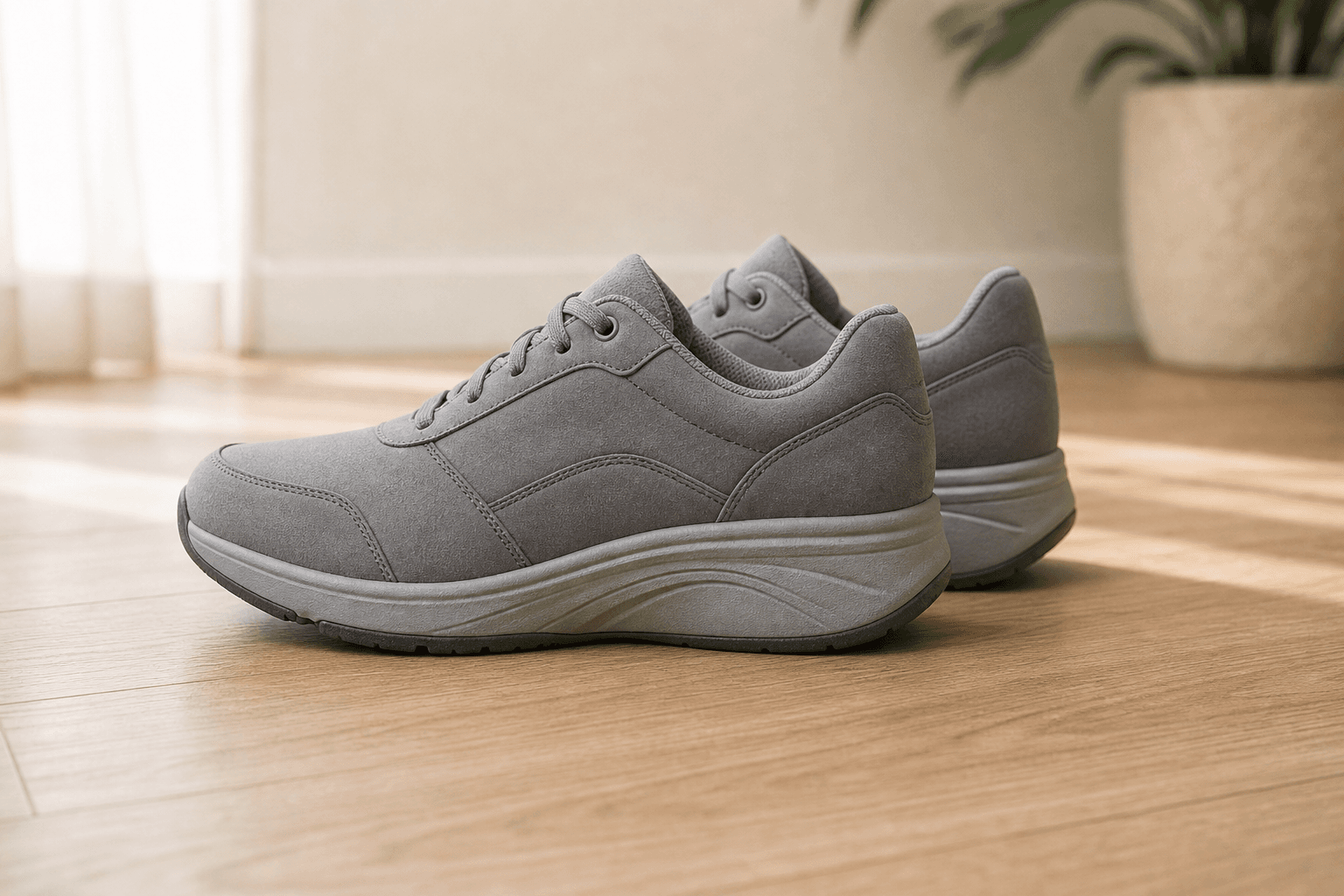
The shoes that tend to feel best on a sore Achilles tendon have a modest heel rise, a cushioned heel, a firm heel counter and a soft, low collar that does not press on the back of the heel. Shoes that tend to feel worst are flat, zero-drop or barefoot-style pairs, backless slides, and anything with a stiff rim that digs into the tender spot.
Footwear does not repair a tendon, and the evidence is mixed on how much it matters. What it can do is change how hard the calf and tendon work with every step, which is why a shoe swap is a common first comfort step alongside the loading routine in our Achilles tendonitis exercises guide.
This page covers the features worth checking, the heel lift question, running shoes, and when shoes are not the issue. For the condition itself, start with Achilles tendonitis, and see the heel pain hub for look-alikes.
Heel rise: why a little lift can ease the tendon
A shoe with a heel higher than the forefoot holds the ankle slightly pointed, which shortens the calf-tendon unit and reduces how far the tendon stretches on each step. NHS Forth Valley patient guidance suggests a shoe with a heel gradient of about 4 cm, or a rigid heel lift of roughly 12 mm placed inside an ordinary shoe, to reduce some of the stress on the tendon. It advises using a lift in both shoes even when only one side hurts, so your legs stay level.
The research is not settled. A 2021 randomised trial of 100 adults reported that firm 12 mm heel lifts improved pain and function at 12 weeks more than calf eccentric exercise, but the 2018 JOSPT clinical practice guideline made no recommendation on heel lifts because the evidence conflicted. Treat a lift as a low-cost comfort experiment, not a guaranteed answer.
If you are not sure how much heel rise you currently have, check the spec: running shoes list a heel-to-toe drop in millimetres, and many everyday trainers sit between 8 and 12 mm. Walking from a 4 mm shoe to a 10 mm shoe overnight is a big change for some people, so introduce a new pair for a few hours a day first. Wear the same style at work and at home when you can, because swapping between very different heel heights all day keeps asking the tendon to adapt.
Very high heels are the opposite problem: they shorten the calf over time and can make the tendon less tolerant when you switch back to flats. Moderate is the goal.
The features worth checking in the shop
Cushioned heel: a midsole that absorbs impact takes some shock out of each step. Firm heel counter: press the back of the shoe; it should resist collapsing, which limits side-to-side wobble. Soft, low collar: the padded rim should sit below or around the sore spot, not on it. If the rim lands on the tender area, try another shoe or another size.
Moderate flexibility: the shoe should bend at the ball of the foot, not in the middle. A toe box with room helps if swelling comes and goes through the day. Try shoes late in the day, with the socks you will wear, and walk on a hard floor before buying.
If the back of your heel has a bony bump, the rubbing may be Haglund's deformity or the insertional form described in our insertional Achilles tendonitis guide; stiff-backed dress shoes are the usual aggravators there.
What to avoid while the tendon is sore
Barefoot, zero-drop and minimalist shoes ask the calf and Achilles to do more work, so many clinicians suggest waiting until the tendon is calm before trying them. Flat canvas shoes, thin flip-flops and backless slides give little heel cushioning and little hold on the heel, and a slipping heel can rub the tendon. Stiff-backed boots and skates can press on the attachment.
Be wary of shoes with a stiff, narrow back that cut across the lower tendon, and of old shoes whose heel counter has collapsed inward, because they let the heel roll and rub. Worn-down outer heels tilt the ankle and add uneven strain, so check the soles for lopsided wear before blaming the tendon alone.
Going barefoot on hard floors at home counts too. A supportive house shoe or slipper with a cushioned heel helps if mornings are your worst time; see slippers for heel pain.
Running and walking shoes
Runners with a sore Achilles often do better in a cushioned trainer with some heel-to-toe drop than in a flat racing or minimalist shoe. Do not swap shoe types in the middle of a flare; change one thing at a time. Worn-out midsoles lose their cushioning, so retire shoes that feel flat or show uneven wear.
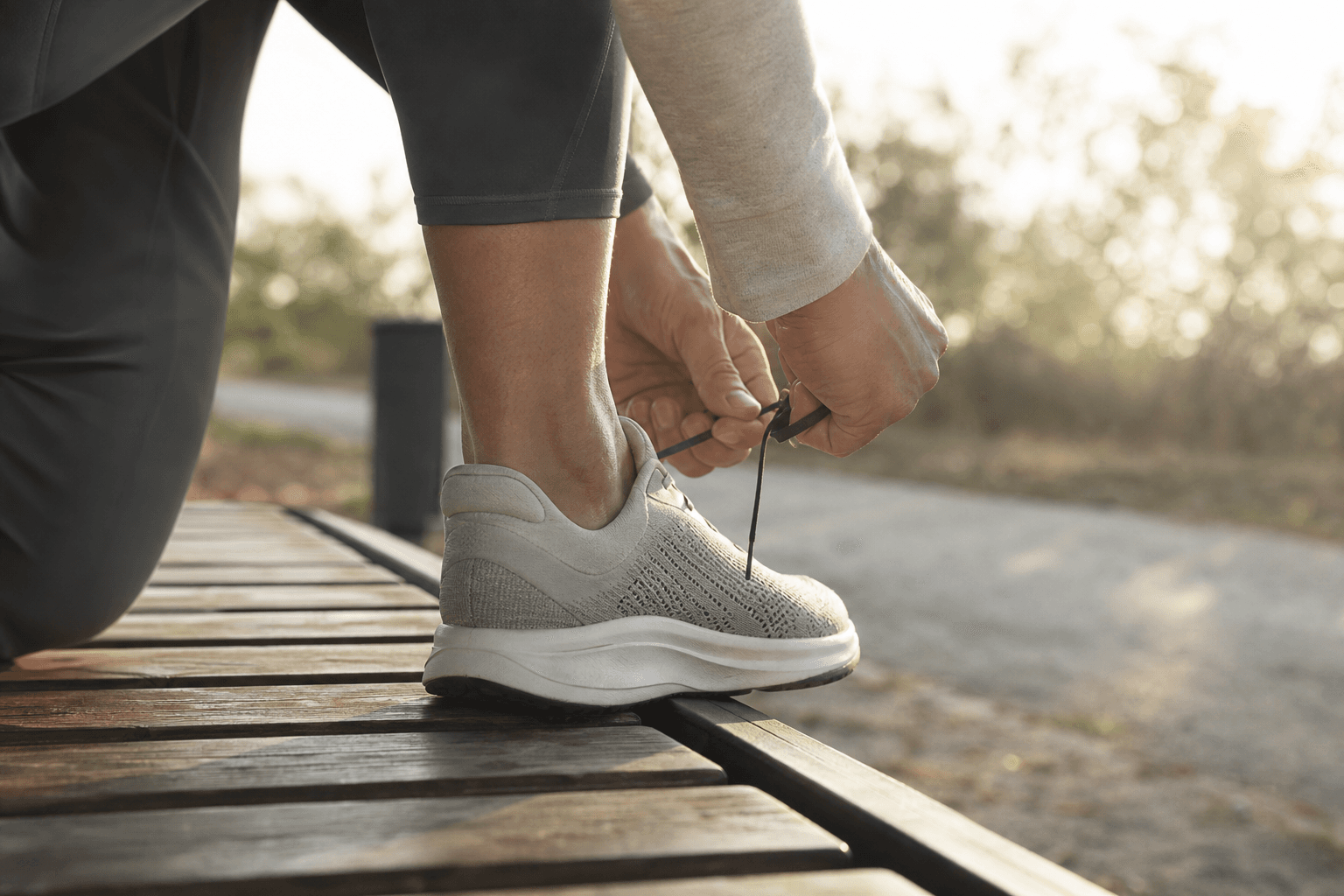
Lacing matters as well. A locked-in heel reduces slipping and rubbing, and our heel-lock lacing walk-through shows the runner's loop. Rocker-sole shoes reduce ankle movement and can feel easier on the tendon for some walkers; see rocker sole shoes.
Where insoles fit in
A supportive insole can add some heel cushioning and a small amount of lift, and helps keep the heel seated in the shoe. A heel cup or insole that raises the heel is a comfort aid, not a repair for the tendon. One option we reviewed is covered in our Akusoli insoles review. Check that an insole does not make the shoe too tight at the heel, which can press on the tendon.
When to see a doctor or podiatrist
Shoes alone will not resolve every case. NHS guidance suggests asking your GP about physiotherapy if there is no improvement after 6 to 12 weeks. See a clinician promptly after a sudden pop or snap at the back of the ankle, if you cannot rise onto your toes, or if there is marked swelling or bruising: these can signal a tear. Persistent heel or tendon pain deserves a podiatrist or doctor's assessment.
Explore the heel pain hub
Back-of-heel, under-heel and Achilles guides in one place.
Explore the heel pain hub →Frequently asked questions
What kind of shoes are best for Achilles tendonitis?
Shoes with a cushioned heel, a modest heel rise, a firm heel counter and a soft collar that does not press on the tendon are the usual recommendations. Avoid flat, zero-drop and backless shoes while it is sore.
Do heel lifts help Achilles tendonitis?
Some people find them comfortable. NHS Forth Valley guidance suggests about 12 mm lifts in both shoes, and one 2021 trial reported benefit, but the 2018 JOSPT guideline made no recommendation because evidence conflicts.
Should I wear flat shoes with a sore Achilles?
Usually not. Flat shoes let the tendon stretch further with each step, which many people find more irritating than a shoe with a modest heel.
Are zero-drop shoes bad for the Achilles?
They load the calf and tendon more, so many clinicians suggest waiting until the tendon is calm and then transitioning gradually.
How long until shoe changes help?
Some people notice a difference within days, but tendon problems usually settle over weeks to months. If there is no improvement after 6 to 12 weeks, see a clinician.
HeelCups is reader-supported. When you buy through links on our site we may earn an affiliate commission, at no extra cost to you. This article is general information about foot comfort and is not medical advice — see our medical disclaimer.