ACHILLES EXERCISES
Achilles Tendonitis Exercises and Stretches: A Gradual Loading Routine and What to Expect
Rest alone rarely settles a cranky Achilles. Here is how calf stretches and slow heel drops are usually used, how much discomfort is acceptable, and the realistic timeline.
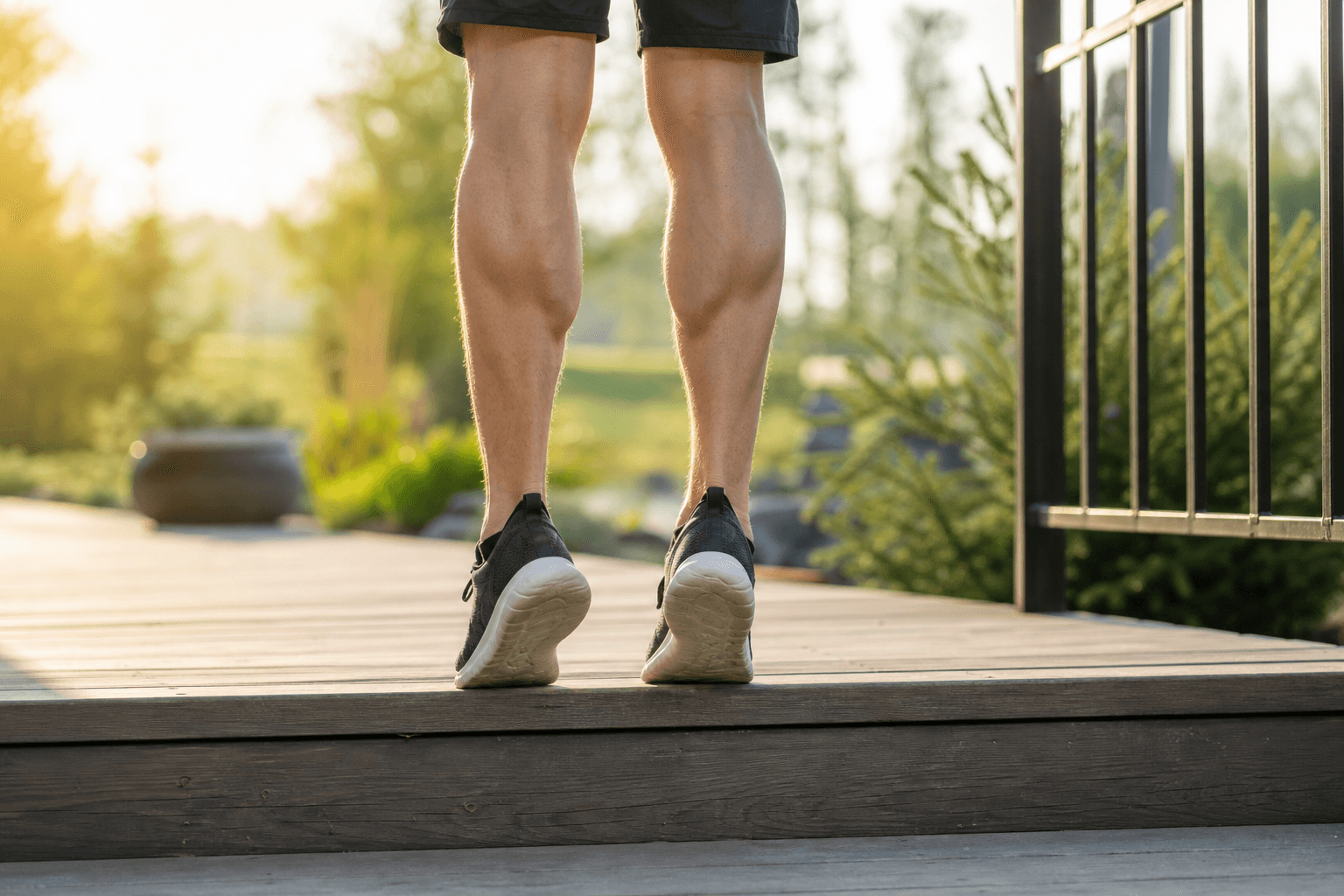
The exercises most often recommended for Achilles tendonitis are calf stretches plus slow, progressive strengthening such as eccentric heel drops. Strengthening is the part many people skip, yet rehabilitation research has long found that gradually loading the tendon is a mainstay of managing it, while stretching alone tends to be less effective.
A well-known example is the Alfredson protocol, described in the late 1990s, which uses sets of slow heel drops off a step, twice a day, for about twelve weeks. Later approaches, including the work of Silbernagel and colleagues, allow some discomfort during exercise as long as it settles afterwards. The details below are general information, not a prescription, so adapt them with a clinician if you are unsure.
Where to begin depends on where it hurts. Pain in the tendon a couple of centimetres above the heel bone is the common midportion kind, while pain right where the tendon meets the bone behaves differently. Our overview of Achilles tendonitis explains the difference, and if the pain is lower down or sharp at the back of the heel, see pain in the back of the heel. To see how the different tendon problems compare, read our guide to Achilles injury types.
Before you start: is this really Achilles tendonitis?
Typical signs are stiffness and aching along the back of the ankle that is worst on getting up and after resting, eases as you warm up, and flares after a run or hill. A thickened, tender cord on pinching is common. A sudden pop, a snap sensation, or a gap you can feel with swelling and trouble pushing off suggests a tear and needs same-day medical attention rather than exercise. Our page on calf tightness and heel pain is also worth a read, because tight calves are a common contributor.
Gentle calf stretches
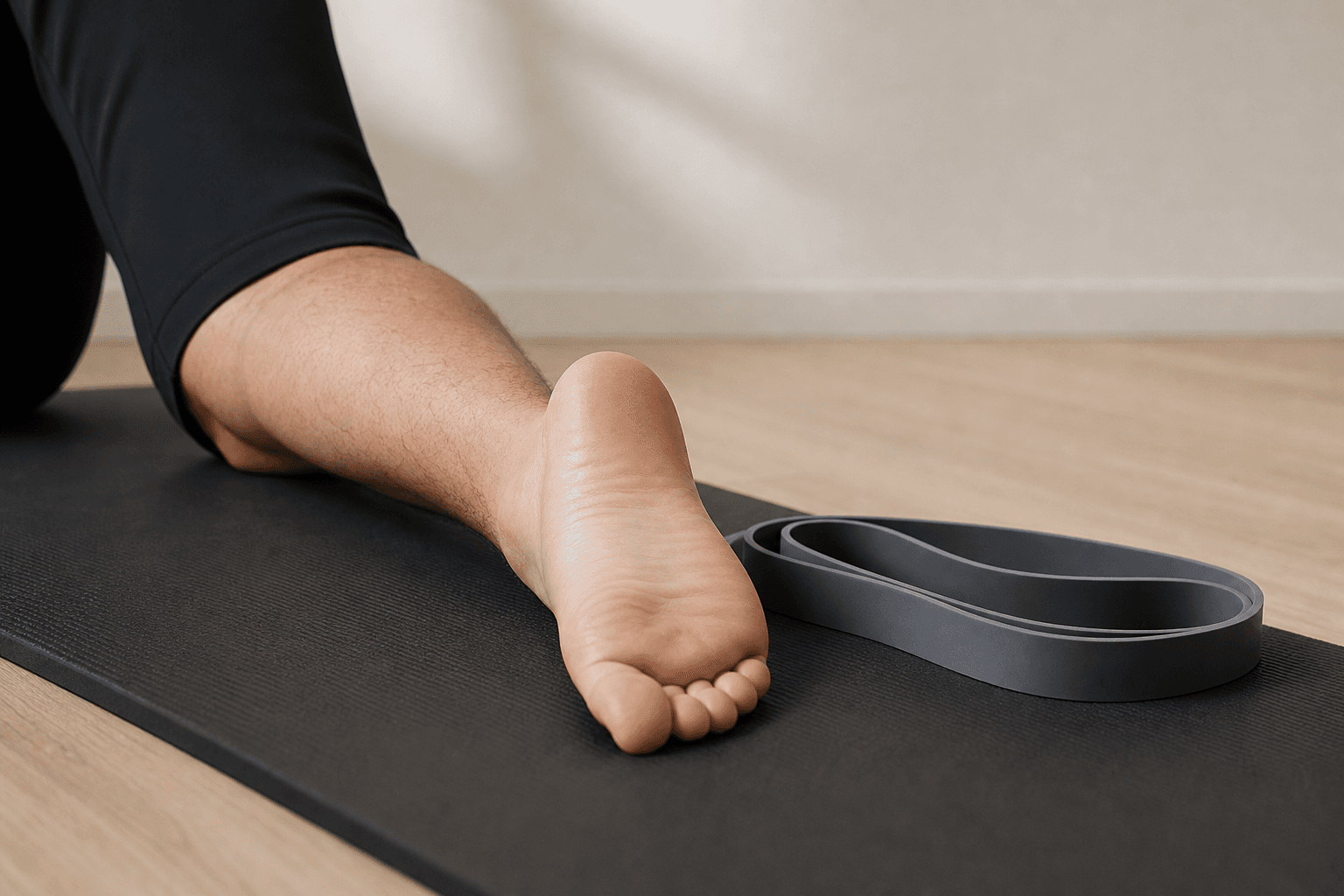
Stand facing a wall with one foot back, heel on the floor and knee straight, and lean forward until you feel a stretch in the upper calf. Hold about thirty seconds, then repeat with the back knee slightly bent to reach the lower calf and tendon region. Two or three rounds each, once or twice a day, is a common starting point.
Keep stretches comfortable. Pulling hard into a painful tendon, particularly bouncing, tends to irritate it. People with insertional pain, where the tendon meets the heel bone, are often advised to avoid dropping the heel below the level of the step, since that position compresses the tendon against the bone. Ask a clinician if that sounds like you.
Heel drops and the loading idea
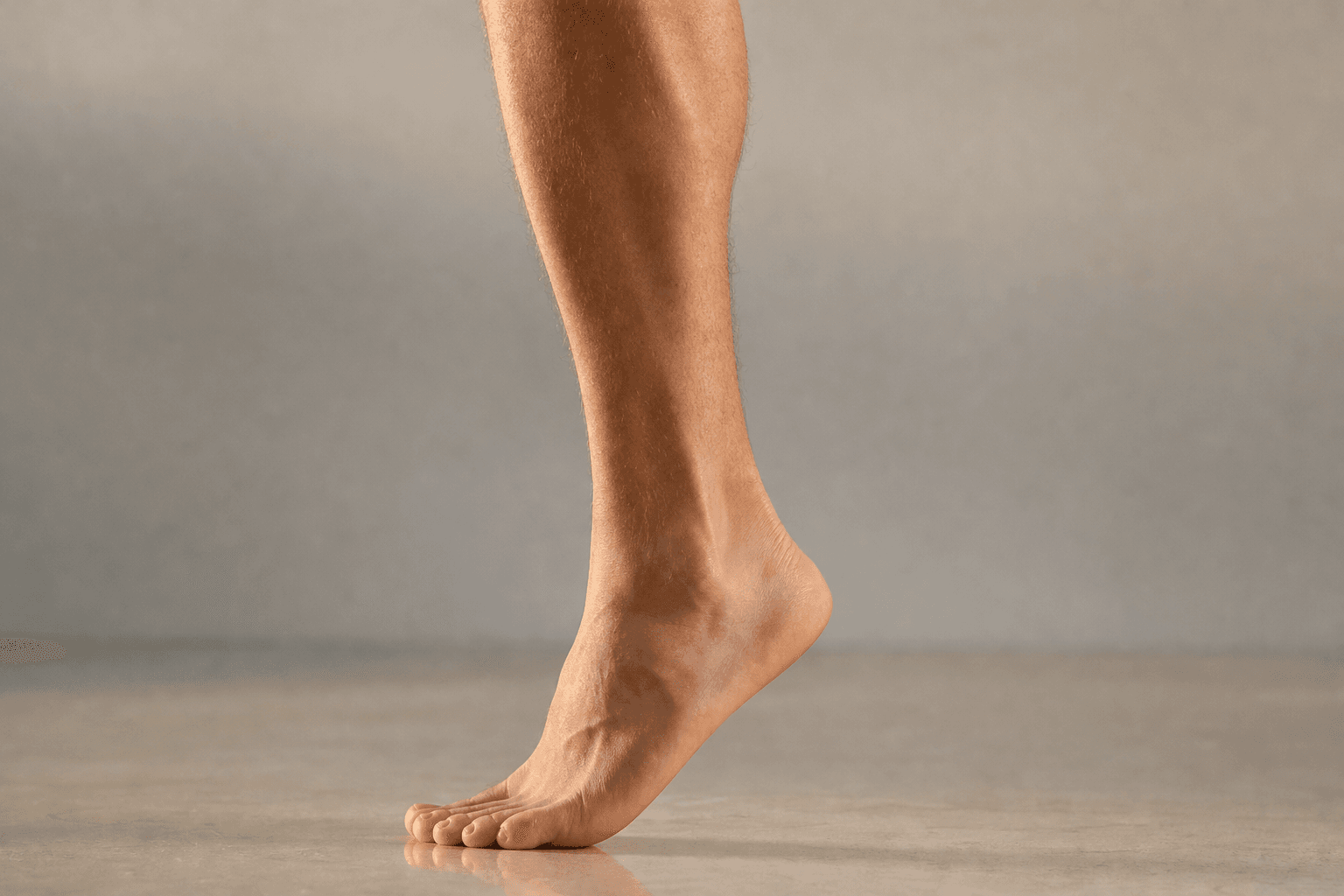
Stand on the edge of a step with the balls of both feet on it, rise onto your toes using both legs, then shift to the sore side and lower the heel slowly over about three seconds. Return to the top using both feet and repeat. The classic version uses fifteen repetitions for three sets, with a straight knee and then a bent knee, performed daily. Start with fewer sets if that is too much, and add a backpack with weight only when the exercise is easy.
A commonly used guide is to accept mild to moderate discomfort, roughly up to a 4 or 5 out of 10, during the exercise, provided it settles within a day and the tendon is not worse the next morning. Sharp pain, pain that lingers or morning stiffness that is clearly increasing means pull back. This pain-monitoring approach is described in Silbernagel's research and is the logic many physical therapists use.
Progressing: from slow to heavy to springy
Once heel drops are comfortable, therapists usually move to slower, heavier work, such as straight-leg and bent-knee calf raises with added load, then to quicker, springy movement like skipping or small hops, and finally back to running or sport. Each stage should feel manageable before the next begins. Rushing the final step is a classic cause of flares.
Walking and cycling are generally easier on the tendon than hill running or jumping while you rebuild. Cutting activity completely for long periods can leave the tendon weaker, so most plans aim for modified activity rather than total rest.
What to expect on timing, and the role of footwear
Loading programmes are usually measured in weeks to months. Many people notice a difference within the first month or two, and a twelve-week commitment is typical, though recovery varies and some cases take longer. Steady improvement matters more than speed.
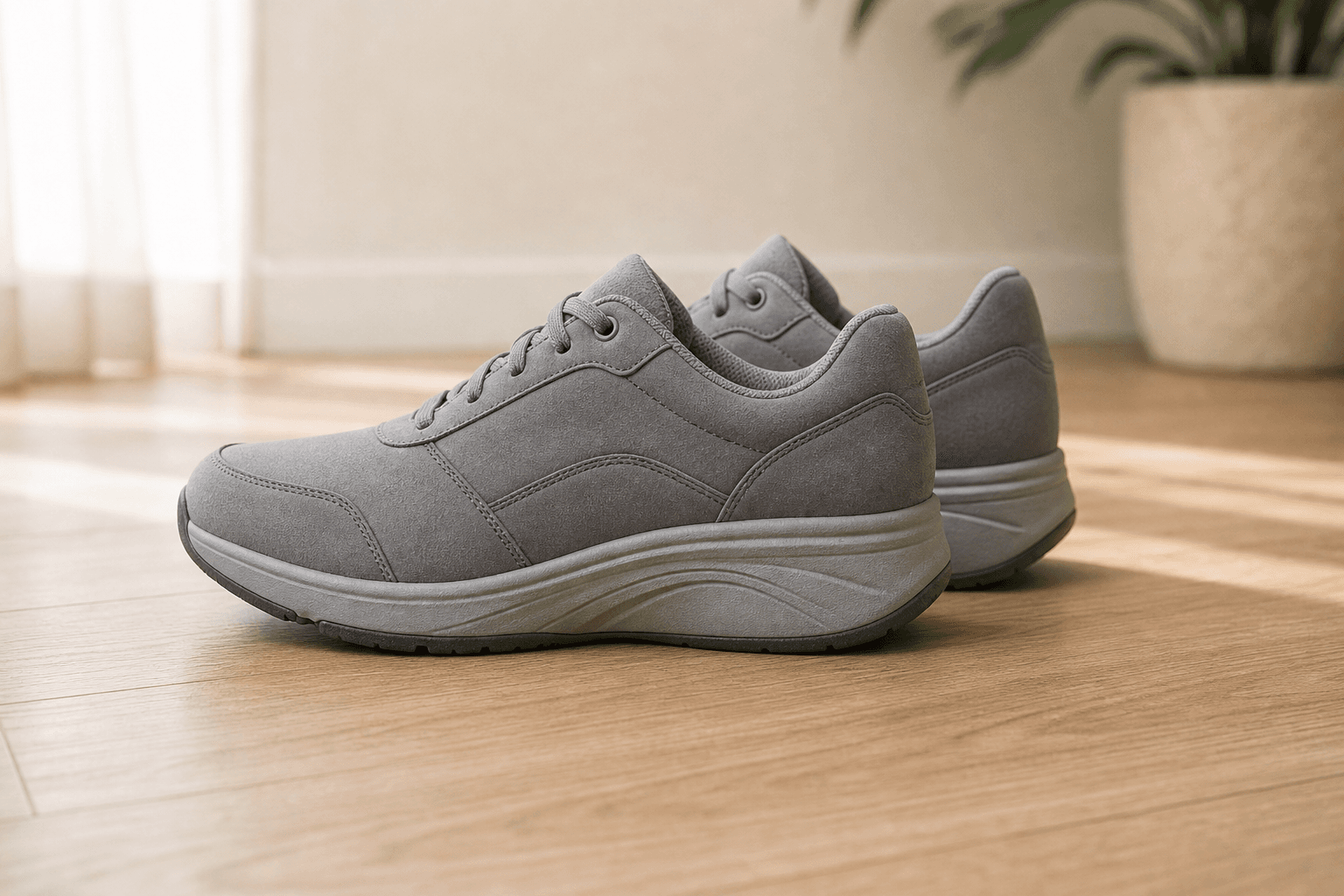
Shoes affect load. A slightly raised heel, from a cushioned trainer or a soft heel lift, can take some stretch off the tendon while it settles, and many people find a heel cup comfortable for the same reason. Our guide to how to use heel cups covers fit, and the Akusoli insoles review looks at one cushioned option. These are comfort aids that sit alongside the exercises, not replacements for them.
When to see a clinician
See a doctor or podiatrist for a sudden pop or sharp injury, an inability to rise onto your toes, marked swelling or bruising, redness or warmth, fever, or pain that is not clearly improving after several weeks of sensible loading. Certain antibiotics and corticosteroids have been linked to tendon problems, so mention any medicines you take. Persistent Achilles pain deserves a professional assessment. More guides sit in our heel pain hub.
Explore the heel pain hub
Map your pain by location and timing, then follow the page that fits.
Explore the heel pain hub →Frequently asked questions
What is the best exercise for Achilles tendonitis?
Slow, progressive calf loading, such as eccentric heel drops, is the most studied option and is widely used by physical therapists. Gentle calf stretching is often added. A clinician can tailor the plan to your situation.
Should I stretch an Achilles that hurts?
Gentle, comfortable calf stretches are usually fine, but avoid forceful or bouncing stretches. If the pain is where the tendon meets the heel bone, ask a clinician first, since some stretch positions can aggravate it.
How many times a day should I do heel drops?
The original Alfredson protocol used three sets of fifteen, twice a day, for about twelve weeks. Many clinicians use gentler or once-daily versions, so start lower and follow professional advice.
Is some pain okay while exercising?
Many rehabilitation approaches accept mild to moderate discomfort during exercise if it settles within a day and is not worse the next morning. Sharp or worsening pain means scale back.
How long does Achilles tendonitis take to improve?
Often weeks to a few months, with a twelve-week loading plan being typical. Chronic cases can take longer, so see a clinician if there is no improvement.
HeelCups is reader-supported. When you buy through links on our site we may earn an affiliate commission, at no extra cost to you. This article is general information about foot comfort and is not medical advice — see our medical disclaimer.