ROCKER SOLES
Rocker-Sole Shoes for Plantar Fasciitis: What the Curved Sole Does, What the Research Shows and Who Might Try Them
Rocker soles are the curved, stiff-bottomed shoes podiatrists mention for sore heels. Here is the mechanism, the small amount of evidence, and how to try a pair without overselling it to yourself.
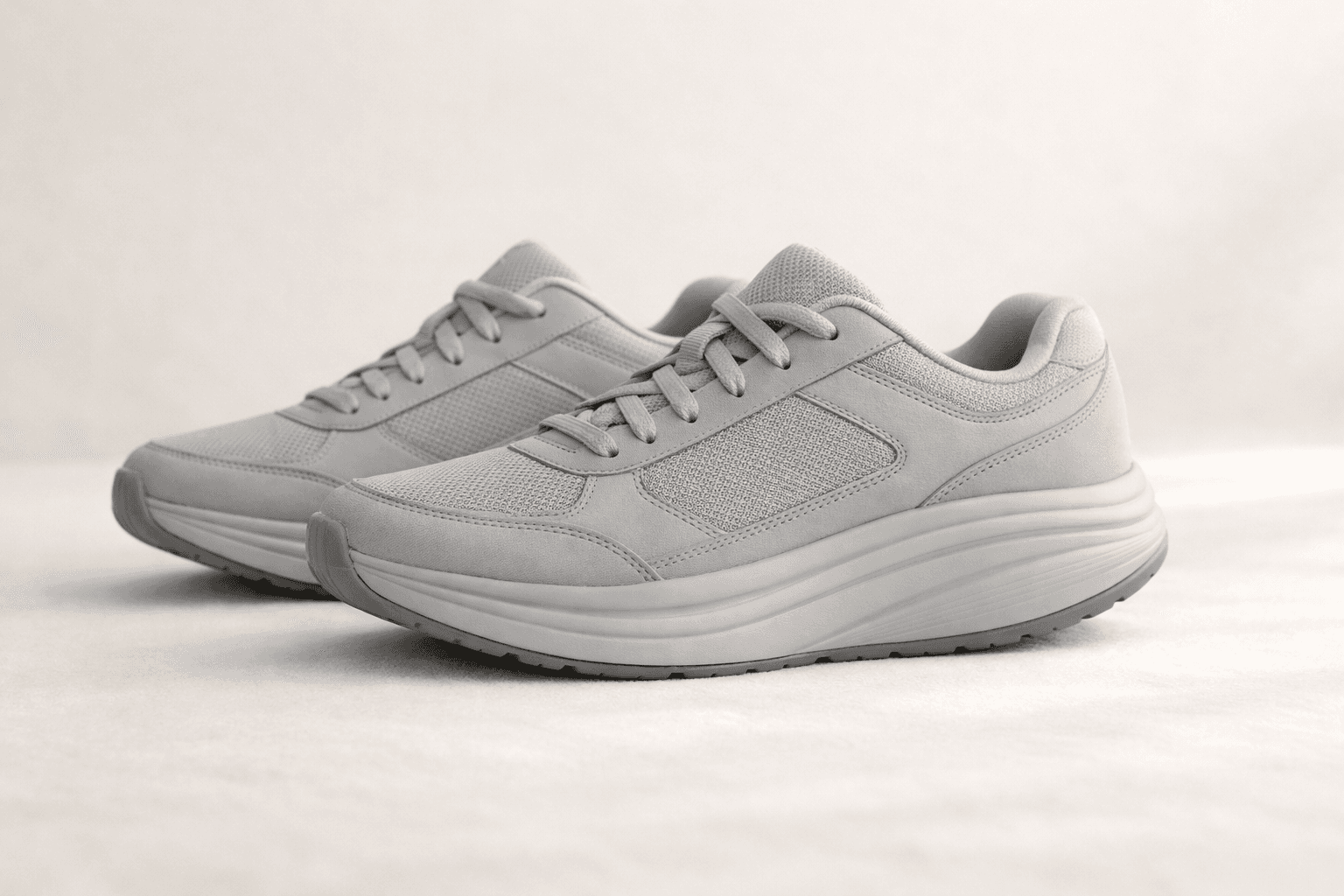
A rocker-sole shoe has a stiff, curved bottom that rolls you forward from heel strike to toe-off instead of letting the foot bend at the ball. The idea is that the shoe, rather than your foot and calf, does part of the work of rolling over the foot. For a plantar fascia that is irritated by every push-off, that sounds appealing, and many people with heel pain find a rocker shoe comfortable to walk in.
The honest answer on evidence is that it is thin. The most direct lab test we found, a small 2019 study in PLOS One by Greve and colleagues, put eight people with plantar fasciitis and eight without into rocker shoes. The shoes lowered Achilles tendon force and reduced how far the big toe bent, but they did not significantly reduce peak strain on the plantar fascia itself. So think of rocker soles as a comfort option that unloads some structures, not a proven fix for the fascia.
This page explains how the shape works, who tends to like it, what to look for in a pair, and how it fits alongside the basics in our doctor-recommended shoes guide and the plantar fasciitis hub. It is general information, not medical advice.
How a rocker sole changes the way you walk
Normal walking asks the toes to bend upward as you push off. That bend tightens the plantar fascia like a winch, which is part of why push-off can sting when the tissue is irritated. A rocker sole has a stiff midsole and a curve (the apex, or rolling point) just behind the ball of the foot. The shoe rolls instead of the toes bending, so the big toe joint moves through less range.
The same curve also reduces how much the ankle has to flex, which in turn lowers the pull on the Achilles tendon and calf. That matters because tight calves are part of most heel pain stories; our page on tight calves and heel pain explains the link. In the Greve study, that Achilles and big-toe effect is exactly what the researchers measured.
What the research does and does not show
The lab data is small and short-term. Besides the PLOS One study, a 2012 crossover study in Clinical Biomechanics by Fong and colleagues looked at 15 people with one-sided plantar fasciitis and compared rocker shoes, custom orthoses and both together, measuring immediate heel pain and pressure under the foot. It is a useful sign that clinicians take the idea seriously, but it measured short-term comfort, not who is better a year later.
What we can say fairly: rocker shoes are widely used in clinics, they change load in predictable ways, and some people find them more comfortable. What we cannot say is that they shorten the course of plantar fasciitis. Anyone selling them as a cure is ahead of the evidence, and we will not do that here.
Who tends to like them
People who find push-off the worst moment, those with a stiff or sore big toe joint, and people on hard floors all day often report that a rocker sole feels easier. If you also have big toe joint pain from stiffness, the reduced bend can be a double benefit.
They are less obviously suited to people who want a natural, flexible feel. If you are exploring minimalist footwear, read our page on barefoot shoes and plantar fasciitis first; the two ideas pull in opposite directions, and trying both in the same week makes it hard to know what is helping.
What to look for in a pair
Press the shoe: a rocker sole should resist bending in the middle, and the sole should visibly curve up at the toe. Look for a firm heel counter that holds the back of your heel, a removable insole so you can swap in a supportive one, and a roomy toe box. Cushioning helps, but a mushy sole with no stiffness is just a thick shoe, not a rocker.
Be cautious with very aggressive curves. They can feel unstable at first, and some people notice calf or shin tightness in the first weeks. If your balance is uncertain, choose a gentler curve or ask your clinician before buying.
Pairing a rocker shoe with an insole
The shoe and the insole do different jobs. The rocker curve handles roll-over; an insole with a firm arch and a deep heel cup supports the foot inside the shoe. Many people do best combining the two, which is also what the Fong study compared. Read insoles for plantar fasciitis for what to look for, and see our Akusoli insoles review if you want a reviewed option.
Add one change at a time. Wear the new shoes for a few hours on the first days, then build up, and keep your stretching going. Our plantar fasciitis stretches routine is a good baseline.
When shoes are not enough
Pain that has not eased after four to six weeks of steady home care, pain that follows an injury, or pain with swelling, numbness, tingling or colour change deserves an exam. A doctor or podiatrist can check for look-alikes and discuss options such as physical therapy or custom orthoses. If heel pain persists, please see one rather than trying product after product.
Explore the plantar fasciitis hub
Symptoms, stretches, footwear and the honest ladder from home care to clinic.
Explore the plantar fasciitis hub →Frequently asked questions
Are rocker-sole shoes good for plantar fasciitis?
They are a commonly used comfort option, and lab studies show they lower Achilles tendon force and big toe bending. A small 2019 study did not find a significant drop in plantar fascia strain, so the benefit is comfort-related rather than proven.
How long does it take to get used to a rocker sole?
Many people adapt within a week or two if they build up wear time gradually. Start with a few hours a day and stop if you feel unstable or notice new calf or shin pain.
Can I wear a rocker shoe with an insole?
Usually yes. Take out the shoe's own insole if it is removable and put in a supportive one with a firm arch and heel cup, checking there is still room at the toes and heel.
Are rocker soles the same as cushioned running shoes?
No. Many cushioned shoes have a slight curve, but a true rocker sole is stiff through the middle and curves up noticeably at the toe. Thick foam alone does not do the same job.
Should I wear rocker shoes all day?
Build up gradually and rotate them with your other supportive shoes. Going barefoot or in flat shoes at home can undo some of the comfort, so consider supportive indoor footwear too.
HeelCups is reader-supported. When you buy through links on our site we may earn an affiliate commission, at no extra cost to you. This article is general information about foot comfort and is not medical advice — see our medical disclaimer.