FOOT SOAKS
Epsom Salt Foot Soaks: What a Warm Soak Can Do for Tired Feet, What It Cannot and Who Should Skip It
A warm soak feels good after a long day. Here is what the evidence does and does not say about Epsom salt, a safe routine, and the people who should wash rather than soak.
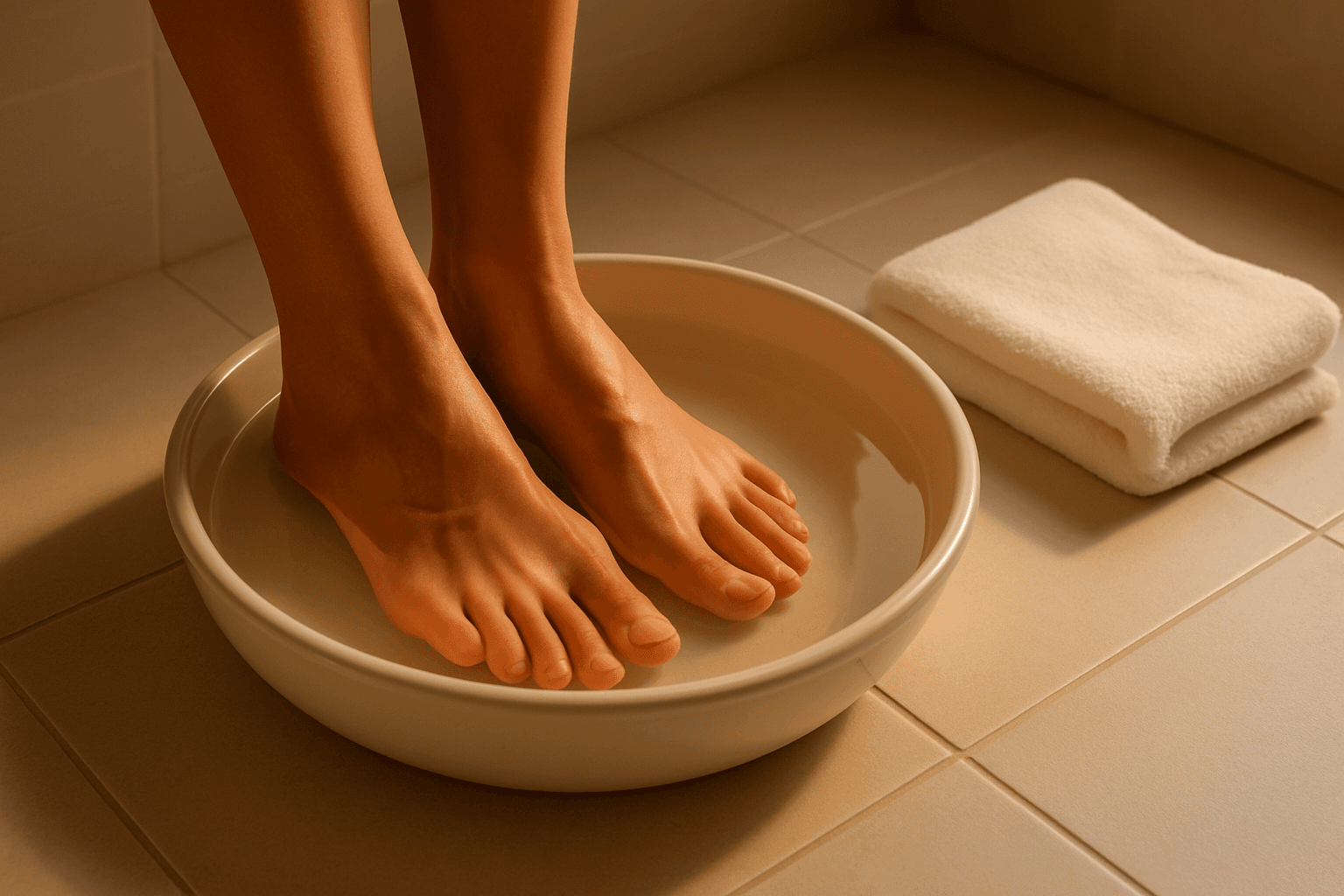
A warm foot soak can make tired, achy feet feel better at the end of the day, and that comfort is real. What is less certain is whether Epsom salt adds anything beyond the warm water. Medical News Today notes that there are no studies supporting the claimed benefits of Epsom salt foot soaks, so think of a soak as a relaxing comfort routine rather than a way to change a condition.
If you have diabetes or reduced feeling in your feet, the advice changes: mainstream sources such as Healthline recommend washing and checking your feet daily instead of soaking, unless your doctor says otherwise. The reasons are covered below.
This page fits with our other foot care guides and with the heel pain pages, where a soak is sometimes used before stretching. Nothing here is medical advice. Persistent heel or foot pain deserves a visit to a doctor or podiatrist.
What a warm soak can realistically do
Warm water relaxes muscles and softens the skin, which is why a soak feels good after a shift on your feet. It can make it easier to move the foot and to do gentle stretching afterwards, and it can soften thick skin before filing. It does not stretch the plantar fascia, shrink a heel spur or change how a foot is built.
If you want to use a soak around heel pain, a sensible pairing is a few minutes of warm water followed by the stretches in our plantar fasciitis stretches guide. Whether to use heat or cold on a sore heel is covered in our ice or heat page.
Does Epsom salt add anything?
Epsom salt is magnesium sulfate. The popular claim is that magnesium absorbs through the skin and eases soreness. Medical News Today states that studies do not support the claimed benefits of the salt in a foot soak, and the evidence for absorbing meaningful magnesium through the skin is weak. Some people simply prefer the feel of it, which is a fair reason to use it if your skin tolerates it.
If you think you are low in magnesium, that is a question for your doctor, not a foot bath. Healthline's guidance on Epsom salt and diabetes also advises against relying on soaks and suggests asking your doctor about oral magnesium instead of skin products.
A simple, safe routine
Fill a basin with comfortably warm water, not hot. Test it with your elbow or a thermometer, since a burn is easy to miss when feet are tired. Many guides suggest roughly ten to fifteen minutes; longer soaks can dry the skin, so keep it short. If you add salt, follow the packaging, usually a few tablespoons.
Dry thoroughly afterwards, particularly between the toes, because lingering dampness is how athlete's foot gets started; see our athlete's foot guide. Then moisturise the skin, avoiding the gaps between the toes. For dry, splitting heels our cracked heels routine goes into more detail.
Who should skip soaking
People with diabetes are the main group. Healthline says to talk to your doctor first and, unless advised otherwise, avoid Epsom salt foot baths, because soaking can dry the skin and make cracks and infection more likely. Reduced sensation adds a second risk: you may not feel water that is too hot. Our page on heel pain and diabetes covers a daily foot check, which is the better habit.
The same caution applies to anyone with numbness, poor circulation, open sores, a skin infection or swelling of unknown cause. Soaking an open wound can make it worse, and heat can aggravate swelling. If your feet are puffy, our swollen feet guide lists the signs that mean a doctor's visit.
Skin conditions matter as well. A soak can soften a plantar wart or thick callus before gentle filing, but it also leaves skin more fragile for a while, so avoid aggressive scrubbing right afterwards. If the skin between your toes is itchy, peeling or white and soggy, a long soak keeps it damp and works against you, so dry it carefully and read our athlete's foot guide first. Anything that looks infected, such as spreading redness, warmth, pus or fever, needs a clinician, not a basin.
What to do instead for sore feet
If your aim is relief after a long day, other comfort measures work as well: elevating the feet for a few minutes, a gentle massage, rolling the arch over a ball and changing into supportive footwear. See our massage at home guide for technique.
If your feet hurt every day regardless of soaks, the cause is probably mechanical, such as footwear, load or a tight calf. Shoes and cushioning matter more than anything in the basin, so our heel cups vs insoles page is a better next step than another soak.
More foot care guides
Skin, nails, socks and more below the ankle, on the foot care hub.
More foot care guides →Frequently asked questions
Does Epsom salt help sore feet?
Warm water feels soothing, but Medical News Today notes no studies support the claimed extra benefits of Epsom salt. Use it for comfort if you like it and your skin tolerates it.
How long should I soak my feet?
Many guides suggest about ten to fifteen minutes in comfortably warm water. Longer soaks can dry the skin.
Can I soak my feet if I have diabetes?
Mainstream sources such as Healthline advise washing and checking the feet daily instead of soaking, and talking to your doctor first. Reduced sensation raises the risk of burns and dry skin raises the risk of cracks.
Will a foot soak help plantar fasciitis?
It may feel comforting and can loosen the foot ahead of stretching, but it does not treat the underlying irritation. Stretches, supportive shoes and load management matter more.
Should I soak in hot water?
No. Use comfortably warm water and test it first, especially if your feet are numb or tired.
When should I see a doctor about foot pain?
If pain lasts more than a few weeks, there is swelling, redness, numbness, an open sore or fever, or you have diabetes or circulation problems, see a doctor or podiatrist.
HeelCups is reader-supported. When you buy through links on our site we may earn an affiliate commission, at no extra cost to you. This article is general information about foot comfort and is not medical advice — see our medical disclaimer.