STANDING ALL DAY
Best Insoles for Standing All Day: What Actually Survives a 12-Hour Shift
Concrete floors, no walking rhythm, and hours before your next sit-down — a working guide to what an insole needs to have to still feel like an insole at hour ten.

Standing all day is a different problem from walking or running all day, and the insoles that were built for the latter often disappoint at the former. A shift nurse doing loops between a nurses' station and patient rooms, a warehouse picker on a concrete floor for ten hours, a barista behind a machine, a teacher on a classroom rug over a slab — none of these are logging enough steps to look impressive on a fitness tracker, and all of them come home with feet that hurt worse than a five-mile walk. The reason is unglamorous: standing loads the same tissues over and over without giving them the pumping motion of a stride to move fluid, refresh blood flow and share the work.
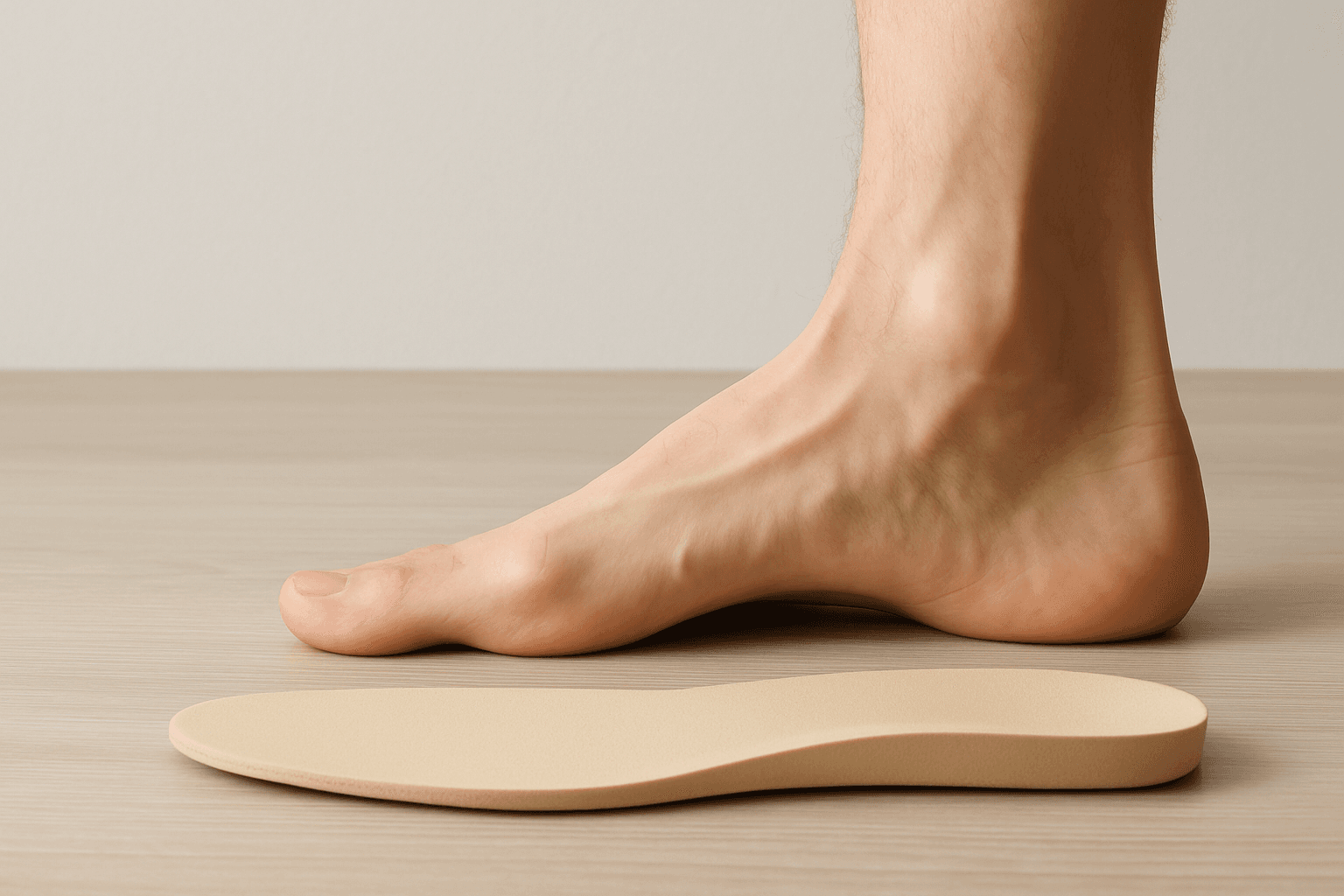
The right insole for standing shifts changes what happens in that narrow window under your heel and arch for eight to twelve hours. A firm medial arch stops the plantar fascia from being pretensioned every minute you are on the floor; a deep, cushioned heel cup keeps the fat pad from splaying under body weight; a dense but not brick-like base takes the edge off concrete. That is a different specification from a running insole (which prizes energy return and forefoot flex) or a hiking insole (which prizes torsional rigidity over uneven terrain). It is closer to what an orthopedic pair does, at a price you can actually pay for two of.
This page walks through what a real standing-shift insole has to do, how to pick one that lasts a shift and a season, and the break-in and rotation habits that turn a good pair into a routine that gets you to hour twelve. Nothing here is medical advice. Persistent heel or arch pain that has not eased after four to six weeks of honest home care deserves an in-person exam by a doctor or podiatrist. Everything on this hub is written for comfort, support and relief.
Why standing all day is harder on your feet than walking
A walking stride cycles the foot through swing and stance. During swing, the foot unloads completely; muscles relax, the venous pump in the calf empties, blood returns from the periphery. During stance, the foot loads under body weight but only for a fraction of a second before the other foot takes over. Standing skips the swing half entirely. Your body weight sits on both feet at once, muscle activity is a low static hum rather than a rhythmic contraction, and the calf pump barely runs. Fluid pools. The fat pad compresses and stays compressed. The plantar fascia holds its slightly stretched shape for hours instead of unloading between steps.
That is why hour ten of a standing shift feels different from hour ten of a walking day, and why the useful features in an insole are subtly different. Cushioning that gets more comfortable with repeated foot-strikes (the springy foams in running shoes) matters less than cushioning that holds up under static load without packing down. Aggressive forefoot flex matters less than a firm, unyielding arch that holds its shape when your entire weight has been sitting on it since morning. And breathability — one of the most-ignored features on standing-shift insoles — starts to matter a lot once your feet have been inside a work shoe for eight hours without a walk break.
None of this makes standing a bad thing; it just means the tools were engineered for a different job. The right insole is one that treats standing as the specific load pattern it is.
The three features an all-day insole actually needs
First, a firm medial arch. Press your thumb into the arch of a candidate insole hard enough to bottom it out. If your thumb reaches the base plate easily, that arch will collapse under body weight and do nothing for the fascia by hour four. What you want is an arch that pushes back — foam-over-plastic or dense EVA is a common recipe — and holds its shape. Soft, squishy arches feel wonderful in the store and are useless for standing.
Second, a deep cushioned heel cup. The fat pad under the heel is a shock absorber that only works when it stays compressed into its natural shape. Under a flat surface, it splays outward with every load and stops absorbing shock well; the heel bone lands closer to the surface than it should. A deep heel cup — a bowl, not a shallow disc — keeps the pad in place and cradles it while the shoe's midsole absorbs whatever the pad doesn't. This feature is what makes a standing-shift insole feel noticeably better under the heel even before the arch does its work.
Third, a dense base under everything. Foams range from gummy to firm; for standing, you want dense EVA or a similarly firm foam that will not permanently compress after a season of daily shifts. Gel is fine as a top layer for cushioning; a gel-only base packs down within months. Antimicrobial top layers (silver-treated fabrics are the common approach) matter more here than for a runner because your feet spend more hours inside the shoe without the airflow of a stride — odor and moisture build up otherwise.
Match the insole to the shoe you already wear
The best insole in the world is useless in the wrong shoe. Standing shifts happen in a specific set of footwear — work boots on warehouse floors, nursing clogs or crocs-style shoes in hospitals, non-slip service shoes in restaurants and retail, chef's clogs, and closed-toe leather flats in classrooms and offices. Each has a different volume budget for an insole to fit inside.
Work boots and heavy walking shoes almost always have room for a full-length trim-to-fit insole and are the easiest case. Pull the factory insole (usually a flat pad of foam that packs down in a month) and replace it with a supportive full-length insole; the boot is designed for the extra volume. Nursing clogs and closed-back service shoes usually work the same way, though a few molded clog interiors do not accept an aftermarket insole cleanly — check the fit before buying two pairs. Chef's clogs and low-volume dress flats often need a three-quarter length insole (arch through mid-foot, no forefoot section) to avoid crowding the toes; a heel cup alone is another option in the shallowest shoes.
The single move that changes standing shifts the most is not adding an insole to your best shoe — it is adding an insole to the shoe you actually wear on shift. If your best-fitting supportive insole lives in a walking shoe at home while you spend twelve hours in a flat clog, you are missing the entire point.
Break-in and rotation: getting to hour twelve
Ease the new insole in over a week rather than dropping it into a Monday twelve-hour shift. A few hours the first two days, then a half shift, then a full shift. Feet coming from flat drugstore insoles often report a strange first-day feeling as the arch does work the small muscles were compensating for; that fades. If day-one soreness in the arch or the top of the foot persists past the first shift or two, drop back down a step and re-ramp.
Rotate two pairs if you can. A foam-based insole recovers most of its compression between shifts if it has 12 to 24 hours of no-load rest, so alternating pairs across two identical work shoes (or moving one pair between two pairs) extends life meaningfully. Rotating also gives shoes and insoles time to dry between shifts, which matters for both the material and your skin. If two pairs are not in the budget, one pair still beats none — just replace it a little sooner.
Pair the insole with the small habit changes that make the biggest end-of-day difference. Two or three real breaks off your feet (five to ten minutes off the floor is enough) rather than one long lunch. Compression socks — graduated, moderate compression — under the shift shoe help the calf pump keep working even when your gait doesn't. A frozen water bottle rolled under the arch for five minutes after your longest shift day is the single cheapest recovery trick clinicians pass along.
How long a pair actually lasts on a standing shift
Foam-based insoles worn daily on a standing job last roughly six to twelve months before the arch loses its firmness and the heel cup flattens. That is shorter than the same insole in a walking or casual shoe because static load compresses foam more thoroughly than intermittent load does. The tell-tale signs: the arch no longer feels distinct when you press it, the heel cup has flattened to a shallow disc, and end-of-day fatigue creeps back to where it was before the insole. Replace at that point rather than waiting for pain.
If you are on a floor twelve hours a day, five days a week, plan to replace the insole every six months and rotate two pairs. If you are on a floor eight hours a day, four days a week, once a year is realistic. Track it by putting the purchase month in a phone note the day you start; feet acclimate slowly and it is easy to forget how a fresh pair felt.
Do not chase the newest gadget insole every six months in place of a proven pair. The features that matter — firm arch, deep heel cup, dense base — have not changed. The pair we recommend first for most standing-shift readers is in our Akusoli insoles review; it hits the three-feature spec at a price you can actually rotate two of.
When a standing-shift complaint is not an insole problem
An insole is a support and comfort tool, not a treatment. Persistent heel pain that has not eased after four to six weeks of honest home care — a supportive insole in every shift shoe, calf and fascia stretching morning and night, less time barefoot on hard floors at home, and cutting whatever activity tipped the tissue over — deserves an in-person exam by a doctor or podiatrist. So does pain that came with a specific fall or injury, or that comes with swelling, warmth, numbness, tingling or a color change.
Not every standing-shift complaint lives under the heel. Pain at the back of the heel points at Achilles or bursa problems and needs a heel lift more than a full insole — see our back of the heel walk-through. Tired arches after long shifts overlap with plantar fasciitis; the plantar fasciitis hub covers the routine that keeps them from becoming worse. Diffuse bruised-feeling pain across the whole heel pad is the fat pad; a heel cup with deep cradling matters more than an aggressive arch. Match the tool to the pattern and standing shifts get a lot more livable.
The trim-to-fit insole we would rotate on a standing shift
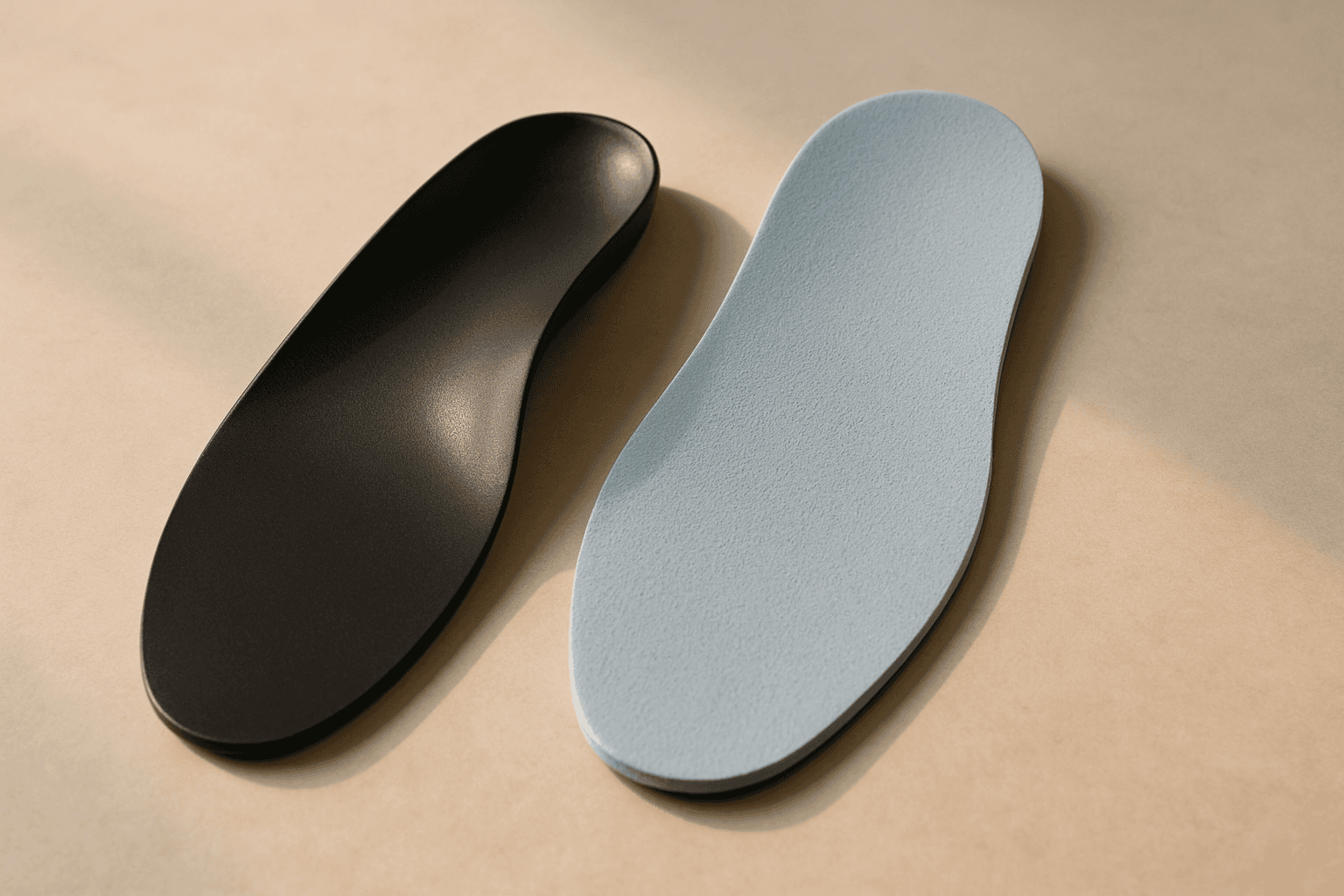
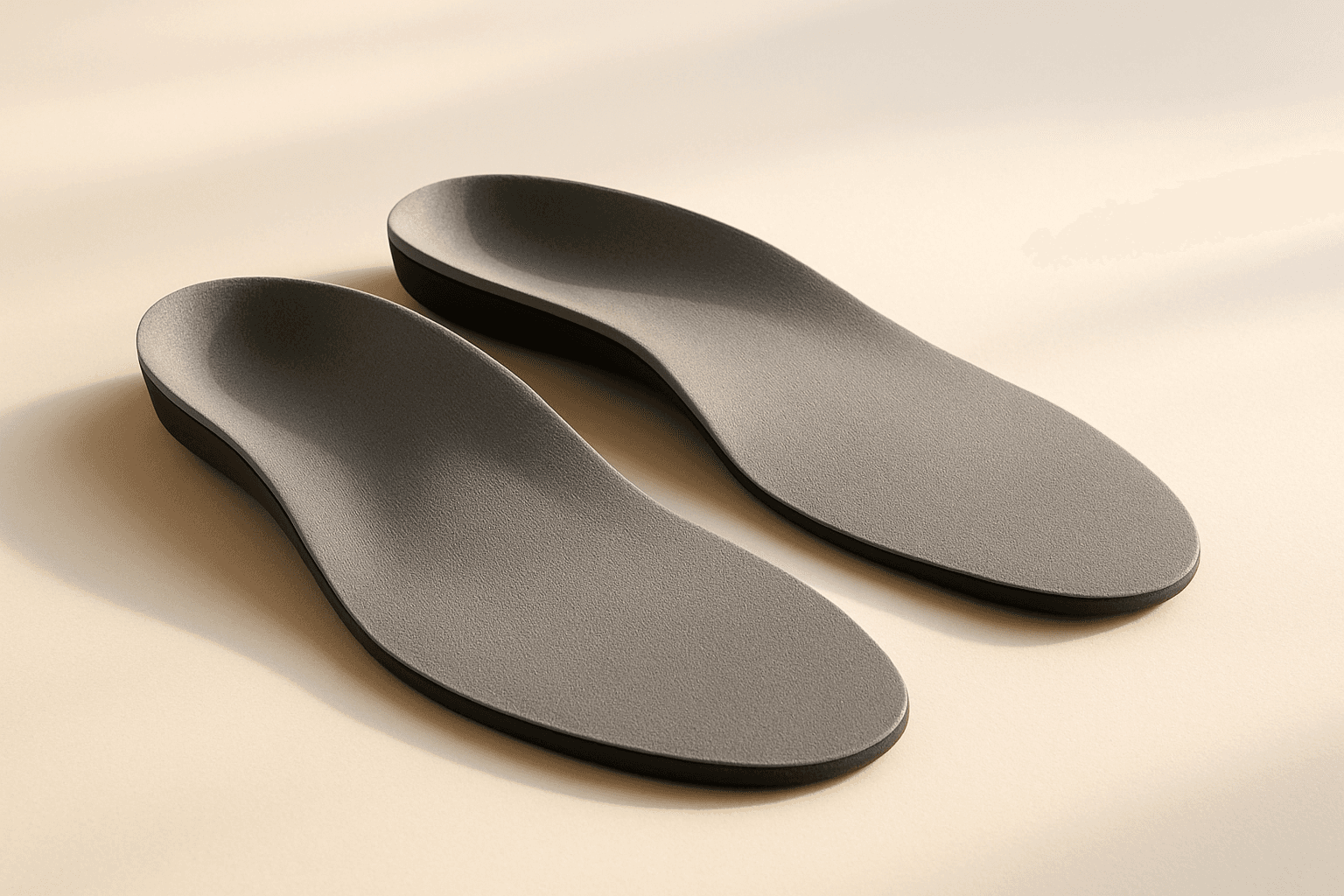
A firm arch, a deep heel cup and a dense EVA base — the three features that matter for hour ten of a twelve-hour shift.
The trim-to-fit insole we would rotate on a standing shift →Frequently asked questions
What is the best insole for standing on concrete all day?
A trim-to-fit full-length insole with a firm medial arch, a deep cushioned heel cup and a dense EVA base — the three features that matter most for static load. Softer, squishier insoles feel great in the store and pack down within weeks. Skip a gel-only base for concrete; it disappears under body weight fast. Our first-pick for most standing shifts is in the Akusoli insoles review.
How is an insole for standing different from a running insole?
Standing loads the foot statically for hours at a time; running loads it in short repeated cycles with unloaded swing phases between them. A standing insole prizes an arch that holds its shape under continuous body weight and a dense base that will not permanently compress. A running insole prizes energy return, forefoot flex and springy foams. The overlap is real, but the perfect running insole is often too soft for a twelve-hour shift on a slab floor.
Can I use a heel cup instead of a full insole for standing all day?
For fat pad pain across the whole heel pad, a good silicone heel cup covers a lot of the same benefit and fits in shoes that will not accommodate a full-length insole. For arch fatigue or plantar fasciitis first-step morning pain, you want the firm arch of a full insole; a heel cup alone will not touch that. See our heel cups vs insoles walk-through for the full comparison.
How long should a pair of standing-shift insoles last?
Roughly six to twelve months of daily wear on a standing job before the arch loses its firmness and the heel cup flattens. That is shorter than the same insole would last in a walking or casual shoe because static load compresses foam more thoroughly than intermittent load. Rotate two pairs of insoles between shoes to extend life, and replace at the first sign that end-of-day fatigue is creeping back.
Should I wear compression socks with my standing-shift insoles?
Graduated, moderate-compression socks help the calf pump keep working even when your gait doesn't, and most people find they reduce end-of-day heaviness and swelling. They are a comfort tool, not a medical treatment; leg swelling that only affects one side, or that comes with pain, warmth or a color change, belongs with a clinician. Pair them with the supportive insole, not instead of.
Do I need to break new insoles in before a long shift?
Yes. Ease the pair in over a week — a few hours the first two days, then a half shift, then a full shift. Feet coming from flat drugstore insoles often feel the arch working muscles that had been coasting; that fades within a few days. Dropping a brand-new insole into a Monday twelve-hour shift is the fastest way to feel awful and quit them by Tuesday.
HeelCups is reader-supported. When you buy through links on our site we may earn an affiliate commission, at no extra cost to you. This article is general information about foot comfort and is not medical advice — see our medical disclaimer.