SPUR VS FASCIITIS
Heel Spur vs Plantar Fasciitis: How to Tell Them Apart, and Why the Fix Is Often the Same
A heel spur is a bony change on X-ray; plantar fasciitis is inflammation of the soft tissue. They overlap constantly, and treatment for the painful version of a spur looks nearly identical to treatment for plantar fasciitis.
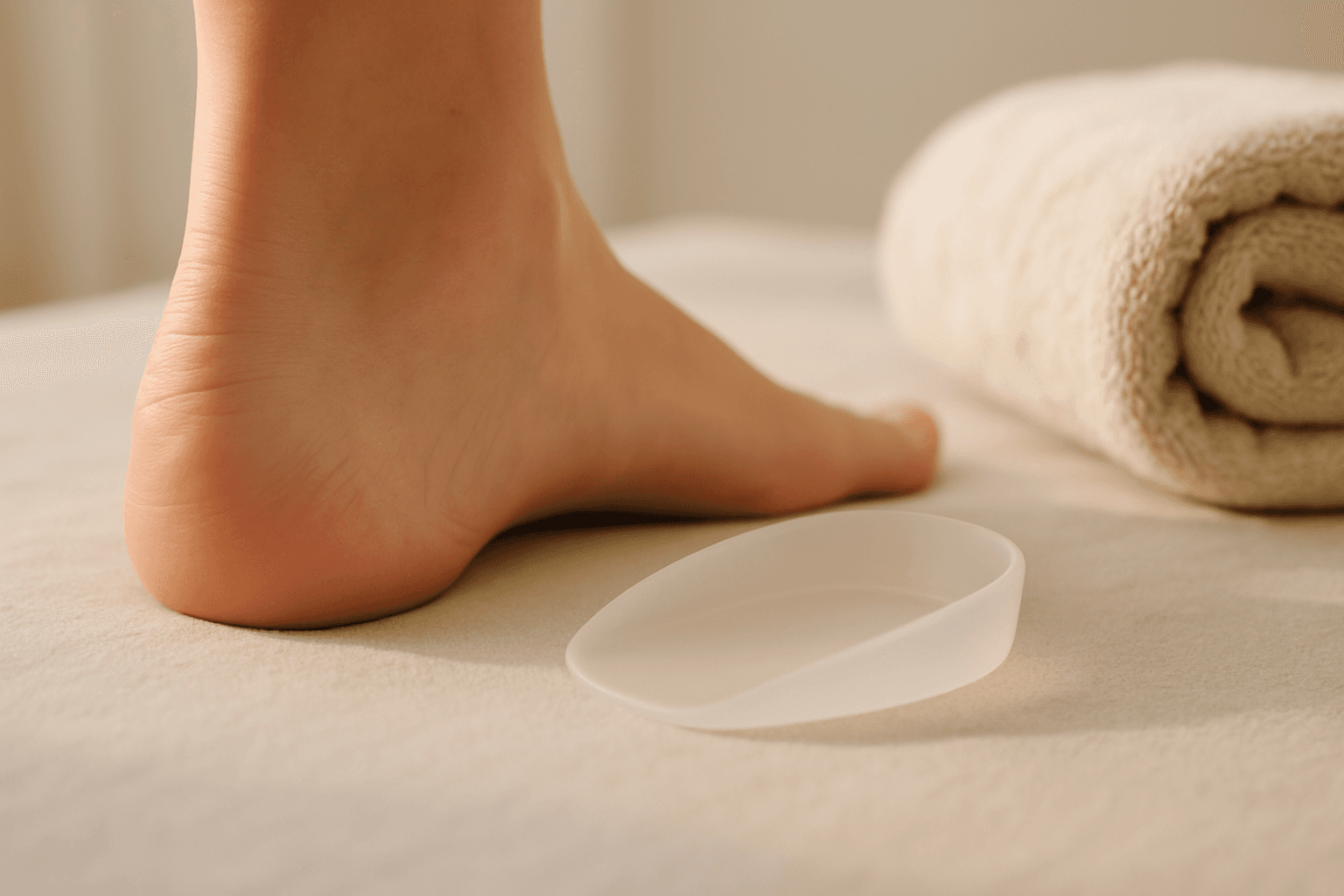
"Do I have a heel spur or plantar fasciitis?" is one of the most common questions in the podiatry clinic, and it is asked as though the two things were alternatives. They are not. A heel spur is a bony outgrowth that shows up on X-ray; plantar fasciitis is irritation of the soft tissue attached to that same bone. Many people with plantar fasciitis have a spur on X-ray; many people with a spur on X-ray have no pain at all; and when a heel with a spur hurts, the pain almost always comes from the same soft tissue that hurts in plain plantar fasciitis. The two labels describe different layers of the same problem more often than they describe different problems.
This page sorts out what each term actually means, why the imaging picture and the pain picture come apart so often, and why the daily plan for a painful spur looks nearly identical to the daily plan for plantar fasciitis. For the broader background on spurs, the heel spurs hub is the map; for the broader background on the fascia and its overload story, the plantar fasciitis hub covers it end to end.
Nothing in this section is medical advice. Persistent heel pain that has not eased after four to six weeks of honest home care, or that came with an injury, swelling or numbness, deserves an in-person exam by a doctor or podiatrist. Everything here is written for comfort, support and relief while the soft tissue calms down.
The two words describe different tissues
A calcaneal spur — a heel spur — is a small bony outgrowth that forms on the underside or the back of the heel bone. It shows up on X-ray as a hook or a short peak, and it grows slowly over years wherever the body senses persistent tension: usually at the front of the heel where the plantar fascia anchors, sometimes at the back of the heel where the Achilles tendon attaches. The bump itself is bone, not soft tissue. A doctor can point at it on an X-ray.
Plantar fasciitis is inflammation and micro-damage to the plantar fascia, the thick ligament-like band that runs from the heel bone to the base of the toes and holds up the arch. It shows up on ultrasound or MRI as a thickened fascia at the point where it meets the heel, and on exam as a tender spot at that same point that reproduces the person's pain. It is a soft-tissue overuse injury, not a bony change.
The reason the two get confused is geography. The spur, when it exists at the front of the heel, sits right at the fascia's anchor point. If both are present, they are in the same square inch of foot. But they are different tissues, and the difference matters when it comes time to decide what to treat.
The imaging picture and the pain picture come apart
Population imaging studies find spurs in roughly one in five to one in ten adults, and the majority have no heel pain at all. On the other side of that coin, most people with a clean plantar fasciitis presentation — sharp under-heel pain that is worst with the first steps in the morning — do not have a spur on X-ray, and their pain resolves without one ever forming. If the spur were the pain generator, neither of those groups would exist.
What the evidence points to instead is that a spur is a slow downstream response: years of tension on the fascia's attachment lay down extra bone at that spot, the way a callus lays down thicker skin under a pressure point. The bone change is a fingerprint of the old tension, not the current pain. When a heel with a spur hurts, the culprit is nearly always the soft tissue around it — the fascia at its heel attachment, or the Achilles tendon and retrocalcaneal bursa at the back of the heel — and treatment aims at that tissue, not the bony bump.
This is why a spur that shows up incidentally on an X-ray taken for another reason — an ankle sprain, a foot injury — is not itself a diagnosis. And why an X-ray is often not the first imaging a clinician orders for heel pain; an ultrasound of the fascia and a hands-on exam frequently tell the story better than a picture of the bone underneath.
How to tell what is hurting when you have both
The pain pattern almost always sorts it out. Sharp, focal pain right at the front of the heel bone, worst with the first steps in the morning and after long sits, that eases as you walk then creeps back after hours on your feet — that is the fascia's pattern, whether or not X-ray shows a spur. Add a positive Windlass test (pain reproduced when a clinician passively pulls your big toe backward while stretching the fascia) and the read is nearly always plantar fasciitis, spur or not.
A tender bump at the back of the heel that is worst going up stairs, on hills, or when a stiff shoe collar presses on it, points at Achilles-side pathology and, if a spur is there, an insertional Achilles spur rather than a plantar spur. A diffuse bruised feeling across the whole heel pad, worst at end of day, without a single focal tender spot, is the fat pad rather than either the fascia or the spur. Deep focal pain that hurts with any weight, that started after a jump in activity or a fall, and that does not track a mechanical pattern, is worth flagging as possible bone bruise or stress fracture — a different lane entirely.
If the pain still is not sorting itself out, our why does my heel hurt map is a symptom-by-symptom walk-through. Getting the label right is worth the ten minutes; the daily plans for fascia, Achilles and fat pad problems are all different.
The daily plan is almost identical
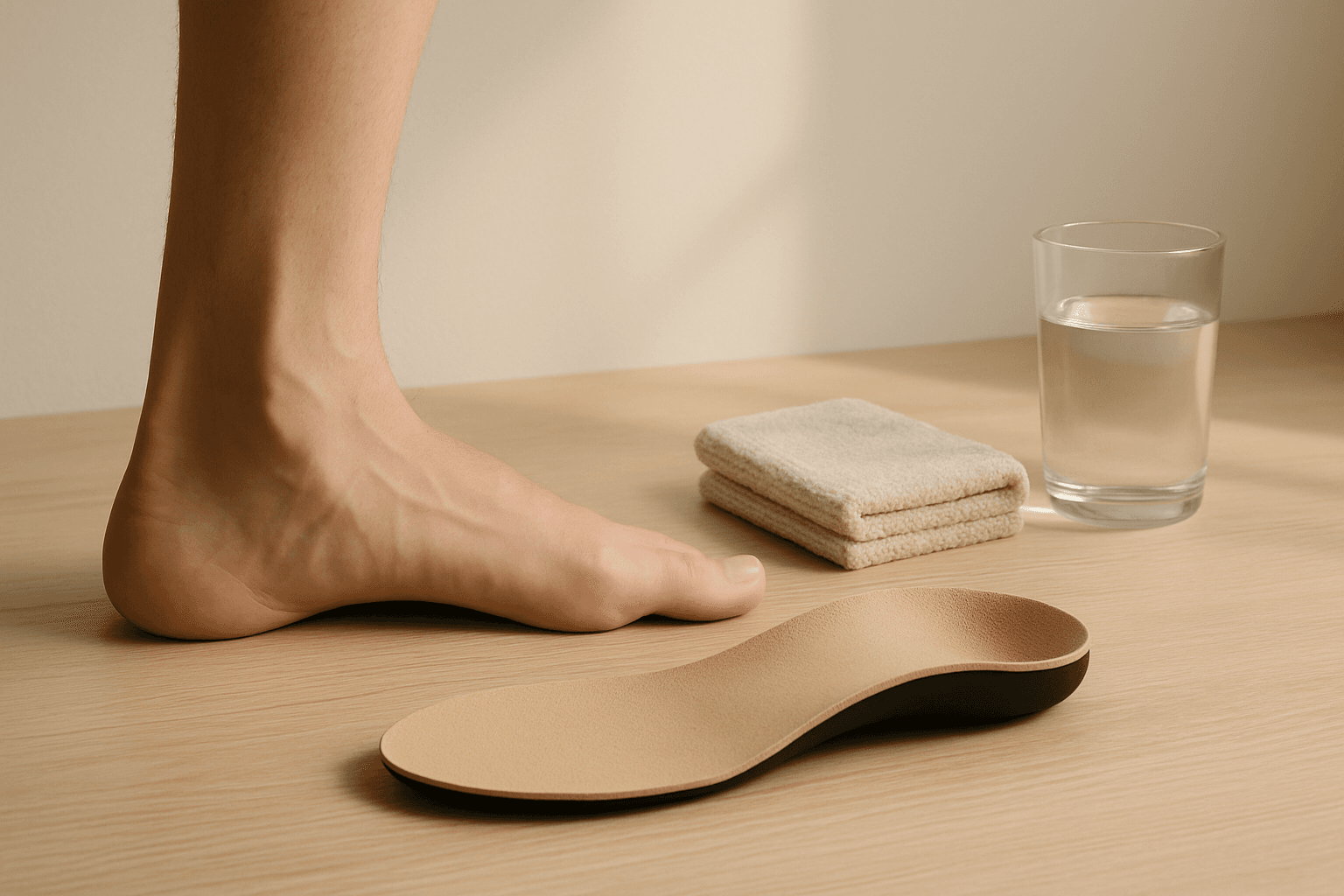
Here is the twist that makes the whole "spur vs fasciitis" debate mostly moot: the useful daily plan for a painful spur at the underside of the heel is essentially the plan for plantar fasciitis, because the target — the inflamed soft tissue at the fascia's attachment — is the same. That plan is unglamorous and effective: add a supportive insole with a firm medial arch and a deep, cushioned heel cup to every shoe you wear all day, so the fascia is unloaded during the eight to twelve hours a day that matter most; do a short daily calf and fascia stretch, morning and evening; ease the specific activity (mileage jump, long shifts on concrete, summer of flat sandals) that tipped the tissue over the edge for two to four weeks; and give the routine three to four weeks before deciding whether it is working.
For the stretching half of the routine, the plantar fasciitis stretches page has the six that most physical therapists start with. For the support half, our first-pick pair is in the Akusoli insoles review. None of this shrinks the spur — nothing in the conservative-care lane does — but it changes the daily load so the soft tissue around the spur can quiet down. That is what most people experience as "the spur getting better," and it is why so many spurs stop hurting without ever going away.
For a painful spur at the back of the heel, the plan shifts to the Achilles version: a small heel lift in every shoe, cut hills, stairs and speed work for two to four weeks, retire shoes whose back edge presses on the sore area, and hold off aggressive calf stretching until the acute pain calms. Our back of the heel walk-through covers the whole plan.
Where the treatments really diverge
The rare place the label "heel spur" matters more than "plantar fasciitis" is at the far end of the treatment ladder — six to twelve months into a painful case that has not responded to honest conservative care and injections. In that setting, a surgeon looking at a large plantar spur may include a partial spur excision as part of the operation, alongside a plantar fascia release or debridement of the fascia's attachment. It is late in the ladder, not a first move, and even then the operation targets the soft tissue as often as it targets the bone. A podiatrist or foot-and-ankle surgeon is the right person to sort that decision.
For everyone earlier on the ladder — which is the great majority of readers with either label — the daily plan and the products that support it are the same. Insoles, stretching, sensible activity, less time barefoot on hard floors, ice after long days. Nothing exotic. Nothing that promises a cure.
What we would ignore
The internet's most popular pseudo-treatments for heel spurs — apple cider vinegar soaks, magnetic insoles, essential oil rubs — do nothing to either the bone or the soft tissue around it, and burn time and attention that a real routine deserves. The same is true of shoe inserts marketed specifically "for heel spurs" that are just soft foam heel pads with the phrase printed on the packaging; the useful features are the ones any good insole or heel cup provides.
Anti-inflammatory pills are comfort medicine for a bad day, not a plan. A single corticosteroid injection can settle stubborn soft-tissue inflammation and a clinician can decide whether it fits the picture. Extracorporeal shockwave therapy has evidence in chronic cases. All of these belong in the clinician-guided part of the ladder, not the first-week self-care lane.
The insole that helps the soft tissue around a spur calm down
A trim-to-fit insole with a firm arch and deep heel cup — supports the fascia through the whole day so the tissue around a spur can settle.
The insole that helps the soft tissue around a spur calm down →Frequently asked questions
Is a heel spur the same thing as plantar fasciitis?
No. A heel spur is a bony change on X-ray; plantar fasciitis is inflammation of the soft tissue at the front of the heel. They often coexist because the spur forms slowly at the same point where the fascia pulls, and when a heel with a spur hurts, the pain almost always comes from the inflamed soft tissue rather than the bone itself. Treatment for the painful version of a spur therefore looks essentially identical to treatment for plantar fasciitis.
Can a heel spur be there without any pain?
Yes, and often. Population studies find spurs in roughly one in five to one in ten adults, and most of those people have no heel pain at all. A spur discovered incidentally on an X-ray taken for an unrelated reason is not, on its own, a diagnosis. Whether it hurts depends on what the surrounding soft tissue is doing, which is what most treatment aims to change.
Will treating my plantar fasciitis make the spur go away?
No — conservative care does not shrink the bony spur, and neither do the insoles, stretches or footwear changes that reduce the pain. What treatment changes is the daily load on the soft tissue around the spur, which is what most people feel as "the spur getting better." A large spur that is causing mechanical trouble in the shoe can be surgically shaved as part of a fascia release, but that is a late-ladder move for painful cases that have not responded to six to twelve months of honest home care.
Do I need an X-ray to tell heel spurs from plantar fasciitis?
Usually not. The pain pattern — where it hurts, when it hurts, what makes it better — plus a hands-on exam sorts out the fascia, fat pad and Achilles patterns without imaging. An X-ray or ultrasound is more useful for ruling out a stress fracture or other structural cause when the picture does not fit, or later on when a decision about injections or surgery is on the table.
What insole should I use for heel spur pain?
The same one that helps plantar fasciitis, because you are treating the same soft tissue: a supportive insole with a firm medial arch and a deep, cushioned heel cup. Cheap flat pads marketed "for heel spurs" without any real arch or cup rarely help. Our first-pick pair is in the Akusoli insoles review, and the insoles hub covers the broader buyer's guide.
When is a heel spur an emergency?
It is not, on its own. The concerning versions of heel pain — pain at rest or at night, pain with any weight-bearing, swelling with warmth and redness, fever, numbness, a color change, or pain that followed a fall or twist — belong with a clinician regardless of whether a spur is present. Persistent heel pain in a child or teenager is a different problem entirely and always deserves an in-person exam.
HeelCups is reader-supported. When you buy through links on our site we may earn an affiliate commission, at no extra cost to you. This article is general information about foot comfort and is not medical advice — see our medical disclaimer.