ORTHOTICS VS INSOLES
Orthotics vs Insoles: What the Words Actually Mean and When You Need Each
Insoles, orthotics, arch supports, footbeds and inserts are often used interchangeably in the aisle — but a custom orthotic and an over-the-counter insole are two different products with two different price tags. Here is when each one earns its money.
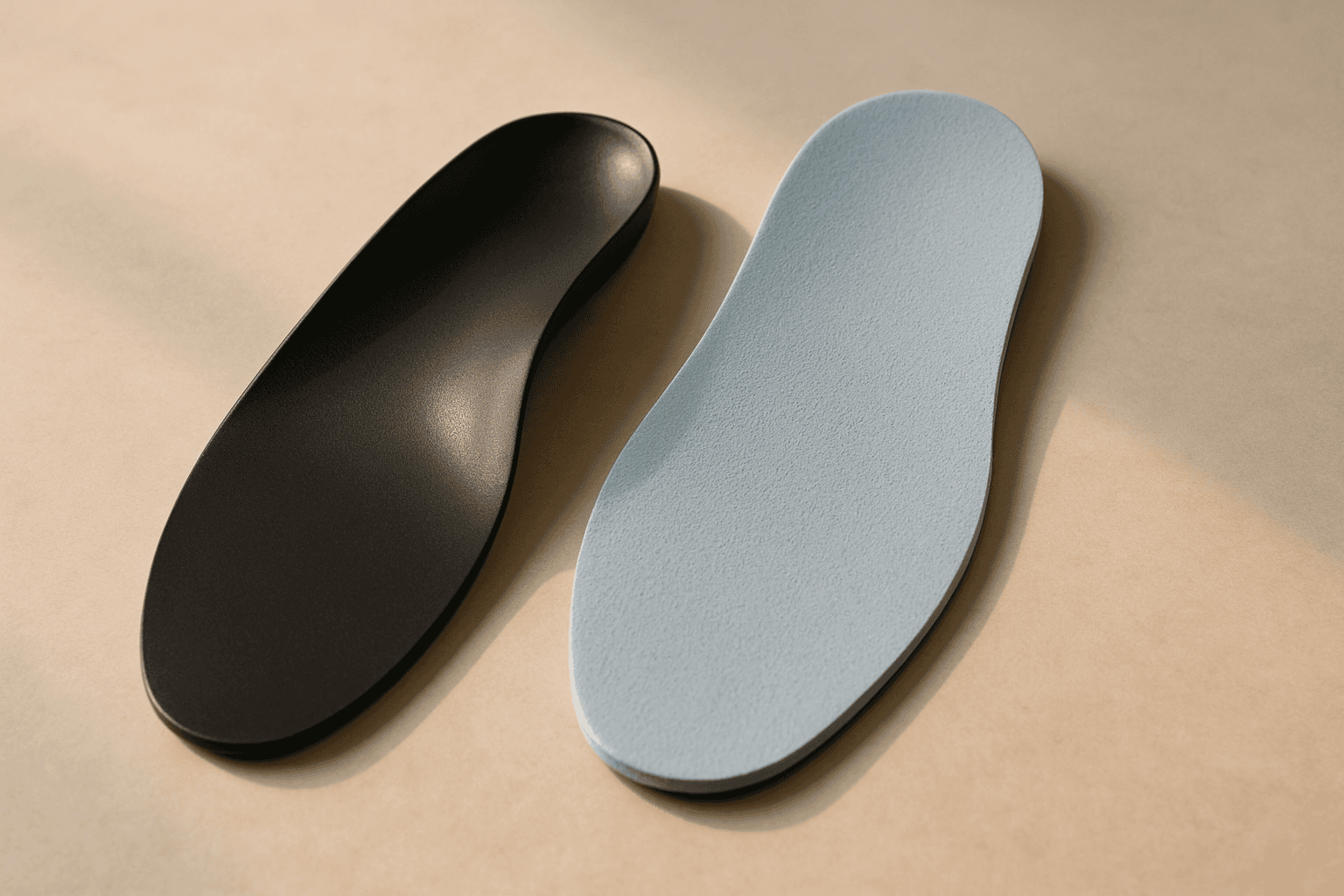
Walk into any pharmacy foot-care aisle and you will find products labelled insoles, inserts, arch supports, footbeds, comfort insoles and orthotic insoles, most of them under thirty dollars. Walk into a podiatry office and the word 'orthotic' means something very different: a rigid or semi-rigid device made from a plaster or 3D-scanned mold of your foot, shaped in a lab and priced at three hundred to six hundred dollars a pair. Both categories share a shape and a job — support the arch, cradle the heel, change how the foot loads with every step — and both are useful. But which one you actually need is a question with a real answer, and getting it wrong wastes either money or time.
The short version: over-the-counter insoles cover the vast majority of everyday cases, especially for readers with garden-variety plantar fasciitis, tired arches after a long shift, or the desire to give a supportive shoe a little more support. Custom orthotics earn their keep in a narrower band of situations where a specific foot deformity, an uneven leg length, or a stubborn condition that has not responded to over-the-counter tools all point at the extra precision of a molded device. Very few readers who arrive at this page thinking they need custom orthotics actually do; most are better served spending forty dollars on a good over-the-counter pair and reserving the option to escalate.
This page sorts the terms honestly, walks through what each category actually does mechanically, and gives you an ordered plan for deciding which to try first. Nothing here is medical advice. Persistent heel or foot pain that has not eased after four to six weeks of honest home care deserves an in-person exam by a podiatrist. Every recommendation on this hub is written for comfort, support and relief.
The vocabulary sort: what the words actually mean
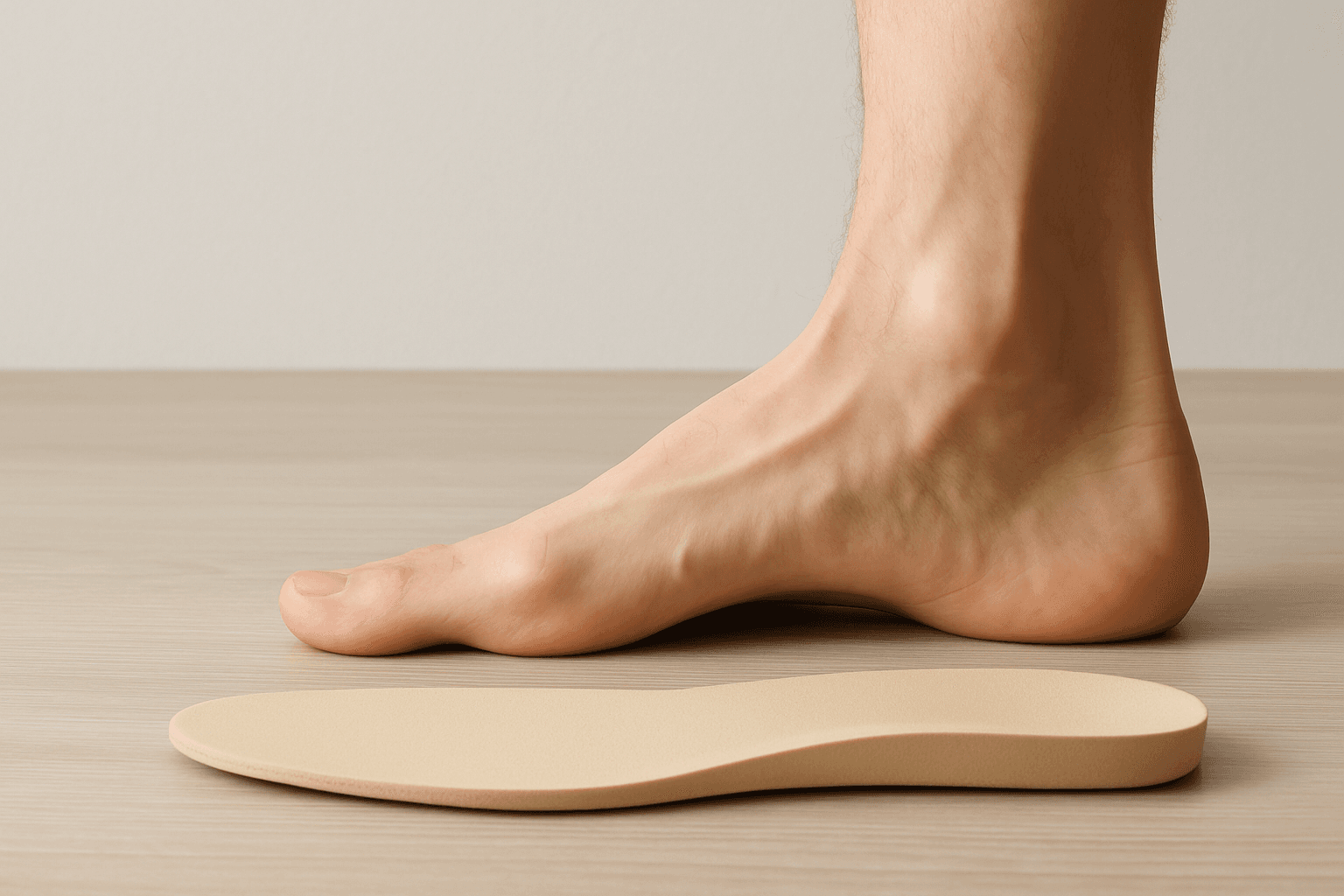
'Insole' is the generic word for anything that sits inside a shoe under the foot. The insole your shoe came with — the thin foam liner you can pull out of most sneakers and work boots — is technically an insole. So is the twenty-dollar over-the-counter pair from the pharmacy shelf, and so is the three-hundred-dollar custom-molded device from a podiatrist. Confusion in the aisle comes from marketing that uses 'orthotic insole' as a synonym for 'supportive insole,' which is not what a clinician means by the word orthotic.
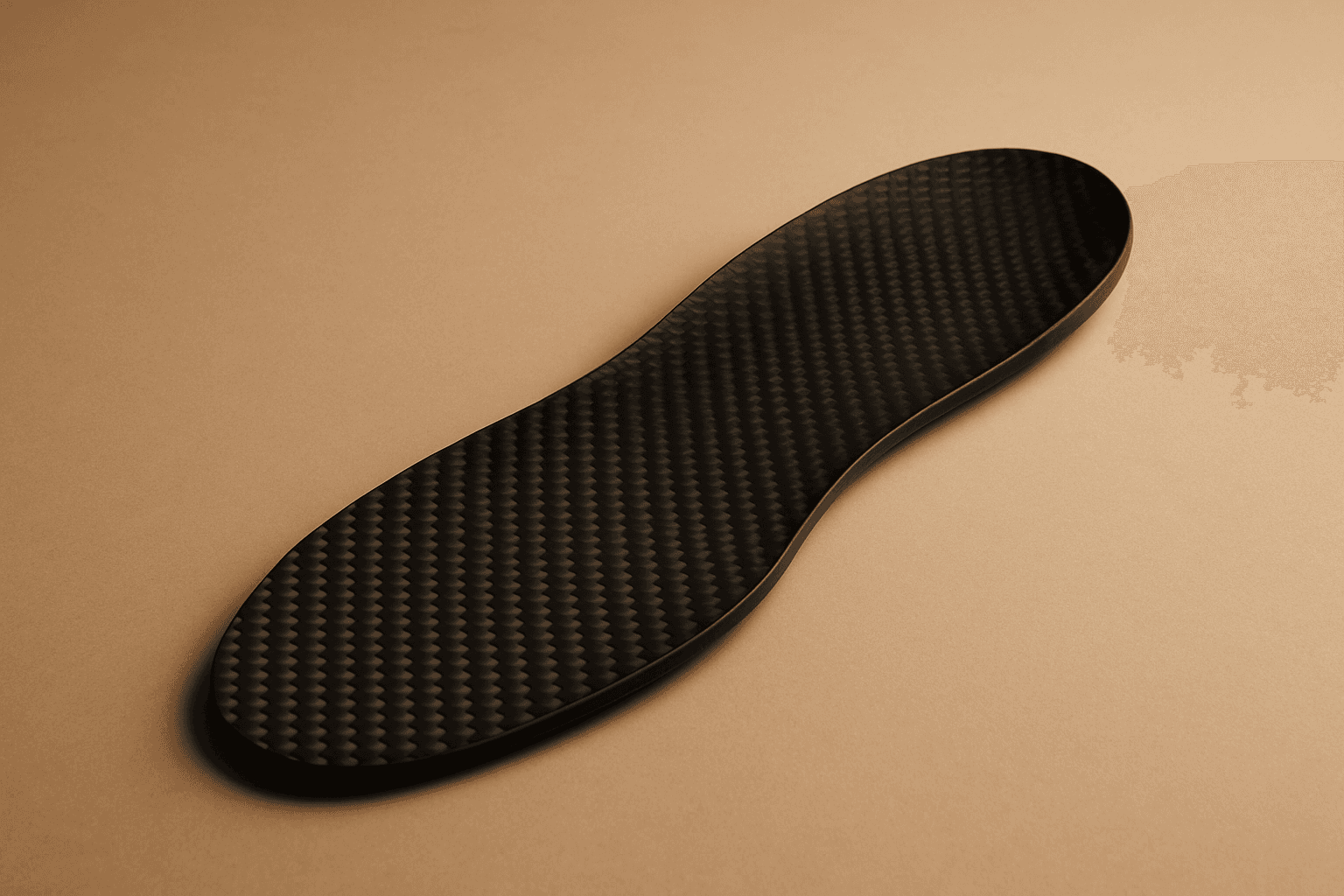
'Orthotic' in a medical setting means a device that is prescribed and custom-fabricated by a clinician for a specific foot, usually a podiatrist or an orthotist. Traditional orthotics are made from a plaster or foam impression of the foot, though most modern practices use a 3D scanner instead. The device is then milled or molded from a rigid or semi-rigid material — usually a polypropylene shell for the base with softer top layers added for comfort — to hold a specific arch height, correct a specific asymmetry, or offload a specific painful spot. A clinician-made orthotic is legally a medical device in the United States, and a small number of insurance plans (usually with pre-authorization and a diagnostic code) cover part of the cost.
'Arch support,' 'footbed' and 'insert' are all loose synonyms for insole in general marketing usage. None of them means anything specific by itself; look at the product, not the label. A ninety-nine-cent 'arch support insert' from the drugstore and a two-hundred-dollar 'premium footbed' from a running store are the same category as far as a clinician is concerned — over-the-counter insoles at different price points and different levels of construction.
The one legitimate middle category is a 'semi-custom' or 'heat-moldable' insole. These are over-the-counter products designed to be heated in an oven at home and shaped to your foot for a rough fit. They are closer to a good over-the-counter insole than to a clinician-made orthotic; the mold takes a general impression rather than a corrective one. For most readers, a good non-moldable pair does the same job for less money.
What over-the-counter insoles actually do
A good over-the-counter insole is doing four unglamorous things at once. It raises the medial arch so the plantar fascia does not stretch as far under body weight; it cradles the fat pad under the heel bone with a deep heel cup so impact is spread across a broader area rather than concentrated on a single spot; it adds a thin layer of dense cushioning between the foot and the shoe's midsole; and it slightly lifts the whole foot so the heel-to-toe drop is more supportive. Most of these effects come from the arch and the heel cup; the cushioning and the small height change are comfort bonuses.
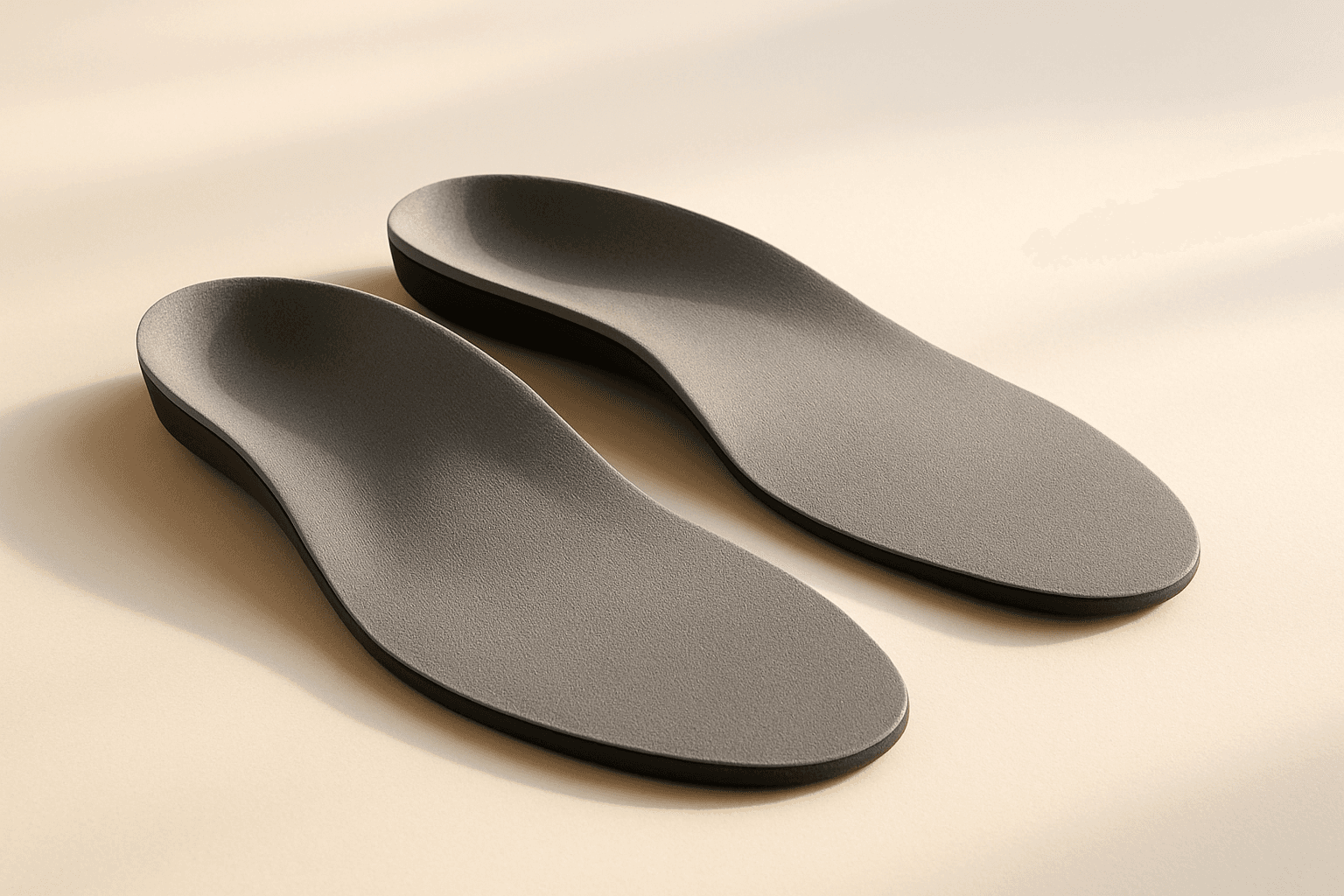
Materials do most of the sorting between good and bad pairs. A firm medial arch usually means a polyethylene or thermoplastic shell laminated with a foam top layer — the shell does the mechanical work and the foam does the feel. A deep heel cup is a molded feature of the shell rather than a printed shape on the top layer. Squishy gel or soft foam through the arch feels great in the store and does essentially nothing after a mile of walking, because gel and soft foam compress under body weight and stop supporting anything. If you can flex the insole flat in your hands without much resistance, the arch is not going to support anything under load either.
Over-the-counter insoles cover most of what most readers need. For garden-variety plantar fasciitis, our Akusoli insoles review is the pair we would install in the shoe you wear most. For flat feet, our insoles for flat feet walk-through covers the shape and the pick. For a supinated high arch, our supination insoles walk-through covers the different geometry. For eight to twelve hours on hard floors, our insoles for standing all day walk-through covers the durability picture. For heavy work boots, our insoles for work boots walk-through covers the different volume and thickness needs.
Cost is the reason to start here. A good over-the-counter insole runs eighteen to sixty dollars, works out of the box, does not require a clinic visit, and can be tried in a single pair over two to four weeks. If it works, you have solved the problem for a fraction of the cost of a custom device. If it does not work — and there is a specific narrow band of situations where it will not — you have data for the next conversation.
What custom orthotics do that over-the-counter cannot
A custom orthotic is more precise in three specific ways. First, it is molded to your exact arch shape rather than to a size range's average, which matters when your arch is at the far end of a distribution (very high, very flat, or asymmetric between the two feet). Second, the shell can be built with a specific corrective posture — a five-degree medial post to bring an over-pronating foot toward neutral, a lateral wedge to offload a painful outside heel, a metatarsal dome placed at a specific millimeter under the ball of the foot. Third, materials and durability are on a different tier: a well-made polypropylene shell often lasts three to five years of daily wear rather than the six-to-twelve-month life of over-the-counter foam.
The clinical situations where the extra precision pays off are narrower than the marketing suggests. Structural asymmetries — a leg length discrepancy larger than about half an inch, a rigid flatfoot in which the arch never rises, a very high rigid cavus foot — are legitimate reasons. Diabetic feet with sensation loss benefit from custom accommodative devices designed to offload specific pressure points before an ulcer forms; this is not a comfort purchase, and a podiatrist should be driving the decision. Post-surgical feet where the joint mechanics have changed permanently often need a custom device to compensate. Chronic plantar fasciitis that has failed six to twelve months of honest conservative care, including good over-the-counter insoles and physical therapy, is the classic escalation point.
Rheumatoid arthritis and other inflammatory arthropathies of the foot and ankle, tarsal coalition (a bony bridge between two foot bones that limits normal motion), and severe collapsed midfoot from posterior tibial tendon dysfunction are the other conditions where the specificity of a custom orthotic earns its money. In each case, an over-the-counter insole is the wrong tool because the foot has a structural feature that a generic shape cannot accommodate. A podiatrist or a foot-and-ankle-trained orthotist is the right person to sort these situations.
The honest read on cost, insurance and quality
A pair of custom orthotics from a podiatry office in the United States typically runs three hundred to six hundred dollars, and sometimes more in specialized biomechanics practices. That price bundles the office visit for the impression, the lab fabrication, and one or two follow-up adjustments. Turnaround is usually two to four weeks between the impression and the finished device. Insurance coverage is inconsistent — some plans cover custom orthotics with a specific diagnostic code and prior authorization, most do not — and the pre-visit call to your insurer to check coverage is worth ten minutes of hold time.
There is also a gray market of 'custom orthotics' sold through mall kiosks, online retailers that mail you an impression kit, and pharmacy scan-and-print stations. These are somewhere between an over-the-counter insole and a clinician-made device. The scanner or foam impression captures your general foot shape but no clinical assessment goes into the design — no gait analysis, no examination for asymmetries, no specific corrective posting. For most readers the price-to-value ratio is worse than a good over-the-counter pair, because you are paying custom prices for a semi-custom product without the diagnostic value of a clinician's examination.
The quality signal that matters when comparing over-the-counter insoles is not the price sticker; it is the construction. Look for a firm medial arch that does not compress under thumb pressure, a deep molded heel cup rather than a flat cup shape, a full-length or three-quarter format that fits your shoe, and a dense but not brick-like feel through the midfoot. Gel dots, magnets, acupressure nodes, and copper infusions are marketing rather than mechanics. Our heel cups vs insoles walk-through and our Akusoli insoles review both cover what to look for.
An ordered plan for deciding what to buy
Start over the counter unless you already know you need custom. A good over-the-counter insole in the shoe you wear most hours in solves the problem for most readers, and the two-to-four-week test costs forty dollars rather than four hundred. Ease the insole in over a week — a few hours the first two days, then a half day, then full days — and give it a fair trial before deciding whether it is working. Many people report a strange first-day feeling as the arch does work the muscles were compensating for, and that fades.
If a fair trial of over-the-counter insoles is not enough, the next step is a physical therapy referral before a custom orthotic. Physical therapy is often covered by insurance, includes a gait analysis and biomechanical assessment, and adds the strengthening and stretching side of the plan that no insole can substitute for. Six to twelve visits over two to three months is a typical dose, and many readers whose over-the-counter insoles were not enough discover that a supportive shoe plus an insole plus a physical therapy routine does the job that a custom orthotic would have been sold to do.
If physical therapy plus over-the-counter insoles has not moved the needle after three months of honest daily practice, that is the reasonable escalation point for a podiatry visit and a conversation about custom orthotics. Bring your over-the-counter insoles to the visit so the podiatrist can see what you have already tried and what did not work. The custom device that follows will be more informed by the failed trial than by a first-visit examination.
For readers with a specific structural condition — diabetes with sensation loss, a rigid flatfoot, a leg length discrepancy, rheumatoid arthritis of the foot, a post-surgical foot — skip the over-the-counter step and go straight to a podiatrist. In these situations an over-the-counter insole is not the right tool, and time spent trying it is time the underlying condition is not being properly managed.
Common misconceptions worth clearing up
Custom is not always better than over-the-counter for a specific person. A well-made over-the-counter insole with a firm arch that happens to match your foot's needs can outperform a poorly-scoped custom device made off a rushed impression at a busy clinic. Multiple studies in sports medicine journals have found no meaningful difference between prefabricated and custom orthotics in outcomes for common plantar fasciitis. The specificity of a custom device matters where it matters and does not otherwise.
Rigid is not automatically better than semi-rigid or flexible. Rigid polypropylene shells are the right choice for structural correction and for high-mileage runners with a specific complaint. Semi-rigid EVA-plus-foam constructions are the right choice for everyday comfort, standing shifts, and readers whose feet have more give in them. Very flexible foam insoles are the right choice for readers who want a comfort upgrade rather than a supportive one. There is no single tier that is always right; matching the tool to the job is the exercise.
Orthotics do not correct the underlying condition. This is the most common piece of marketing misdirection. An orthotic — custom or over-the-counter — changes how the foot loads while it is in the shoe. It does not restore a collapsed arch, resolve inflammation, or change the shape of a foot. The pain relief comes from the load change, and the moment the device is out of the shoe the load reverts. The corollary is that an orthotic-only strategy without stretching, strengthening, footwear and load management is usually a temporary answer; the full plan is what gets people back to a long-term neutral.
You do not need to wear an insole in every shoe forever. Most readers can graduate from full-time insole use back to shoes-alone for shorter days and casual wear once the underlying condition is settled and the calves and arch are conditioned. The insole belongs in the shoe you spend the most hours in, and in any shoe that will be worn for a long walking day. It does not have to live in dress shoes and evening slippers.
The over-the-counter pair we would try first
A firm medial arch and a deep heel cup at a fraction of a custom orthotic's price — the right first step for most readers.
The over-the-counter pair we would try first →Frequently asked questions
Are custom orthotics worth the money?
For a narrow band of situations — diabetic feet with sensation loss, rigid flatfoot, significant leg length differences, post-surgical feet, and chronic plantar fasciitis that has failed six to twelve months of honest conservative care — yes, the extra precision of a molded device earns its price. For garden-variety plantar fasciitis, tired feet from long shifts, or the ordinary shape of a foot that responds to a supportive shoe, a good over-the-counter insole at forty dollars does the same mechanical work. Start over the counter and reserve the right to escalate rather than starting at the top of the price ladder.
Will insurance pay for custom orthotics?
Sometimes, and it depends on the plan and the diagnostic code. Diabetic-foot ulcer prevention is the most consistently covered indication in the United States. Chronic plantar fasciitis, adult flatfoot with pain, and post-surgical accommodation are sometimes covered with prior authorization. Comfort or performance orthotics are rarely covered. Call your insurer before the podiatry visit and ask specifically about custom foot orthotics; ten minutes on hold before the appointment saves a surprise bill after.
How long do custom orthotics last compared to over-the-counter insoles?
A well-made polypropylene shell for a custom orthotic typically lasts three to five years of daily wear before the material's mechanical properties change enough to affect performance. The soft top cover on the same device usually needs replacement every one to two years and can be re-covered at the same office that made the orthotic. A foam over-the-counter insole in daily wear is usually good for six to twelve months before the arch packs down and the heel cup no longer feels distinct. Life-cost per year is closer than the sticker prices suggest, but the upfront cost of the custom is still the higher barrier.
Can I use an over-the-counter insole in the same shoe as a custom orthotic?
No — they are meant to replace, not stack. A custom orthotic is designed to sit on top of the shoe's removable OEM footbed (or in place of it) and provide the entire supportive surface under the foot. Stacking an over-the-counter insole on top of it, or under it, changes the arch height in a way the podiatrist did not design for, and it usually makes the shoe fit too tight through the arch. If you want the extra cushioning of an over-the-counter insole in a specific shoe, wear it in that shoe on days you do not need the custom orthotic, and let the custom orthotic do its work alone.
Do 'semi-custom' or 'heat-moldable' insoles bridge the gap?
Not really. Heat-moldable insoles are essentially over-the-counter products with a customization ritual — the mold takes a general impression of your foot rather than a corrective one, and there is no clinical assessment behind the shape. Some readers love them, and for a foot in the middle of the size range they can be a good fit. For most readers, a good non-moldable over-the-counter pair does the same job for less money, and a full custom orthotic is the right escalation when specificity actually matters.
Will an orthotic weaken my foot muscles by doing the work for them?
Not in the way the marketing for barefoot shoes sometimes suggests. Studies of long-term orthotic wearers do not find meaningful atrophy of foot intrinsic muscles from insole use, and the pain relief from unloading a stressed fascia lets many readers return to the walking and running that keep those muscles working. The situation where this concern is legitimate is a full-time rigid orthotic worn from morning to night for years without any barefoot time, calf work or strength training; that pattern can leave a foot dependent on the orthotic for support. Rotate in a supportive shoe alone for shorter days, keep up the calf and arch stretching, and the foot stays working.
HeelCups is reader-supported. When you buy through links on our site we may earn an affiliate commission, at no extra cost to you. This article is general information about foot comfort and is not medical advice — see our medical disclaimer.