HEIGHT LIFTS
Height-Increasing Insoles: What They Are, How to Wear Them Without Wrecking Your Feet
A lift under the heel or the whole foot can add half an inch to two inches of height inside almost any shoe. Done well, they are comfortable; done badly, they crowd your toes, roll your ankles and re-arrange your gait — here is the honest read.
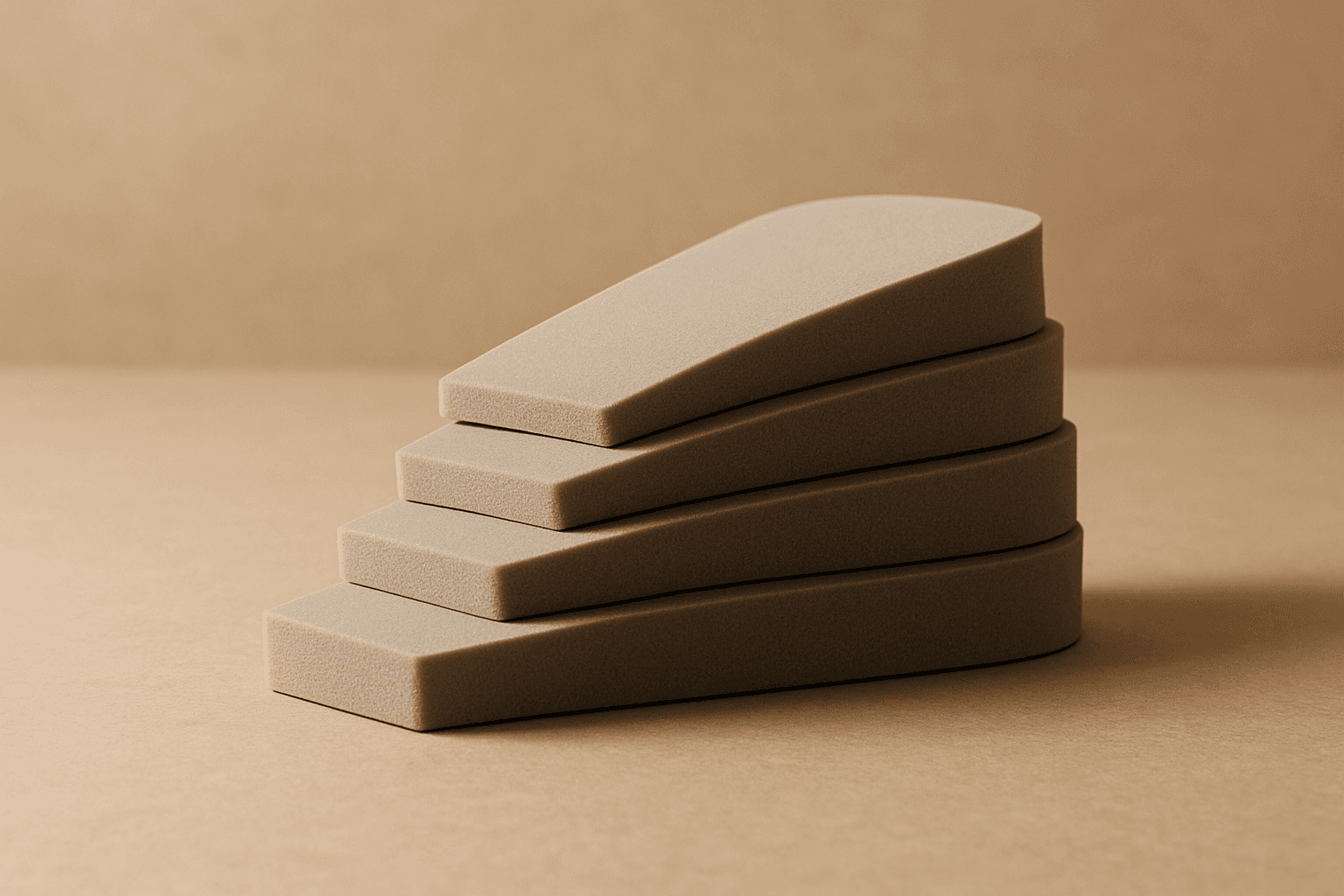
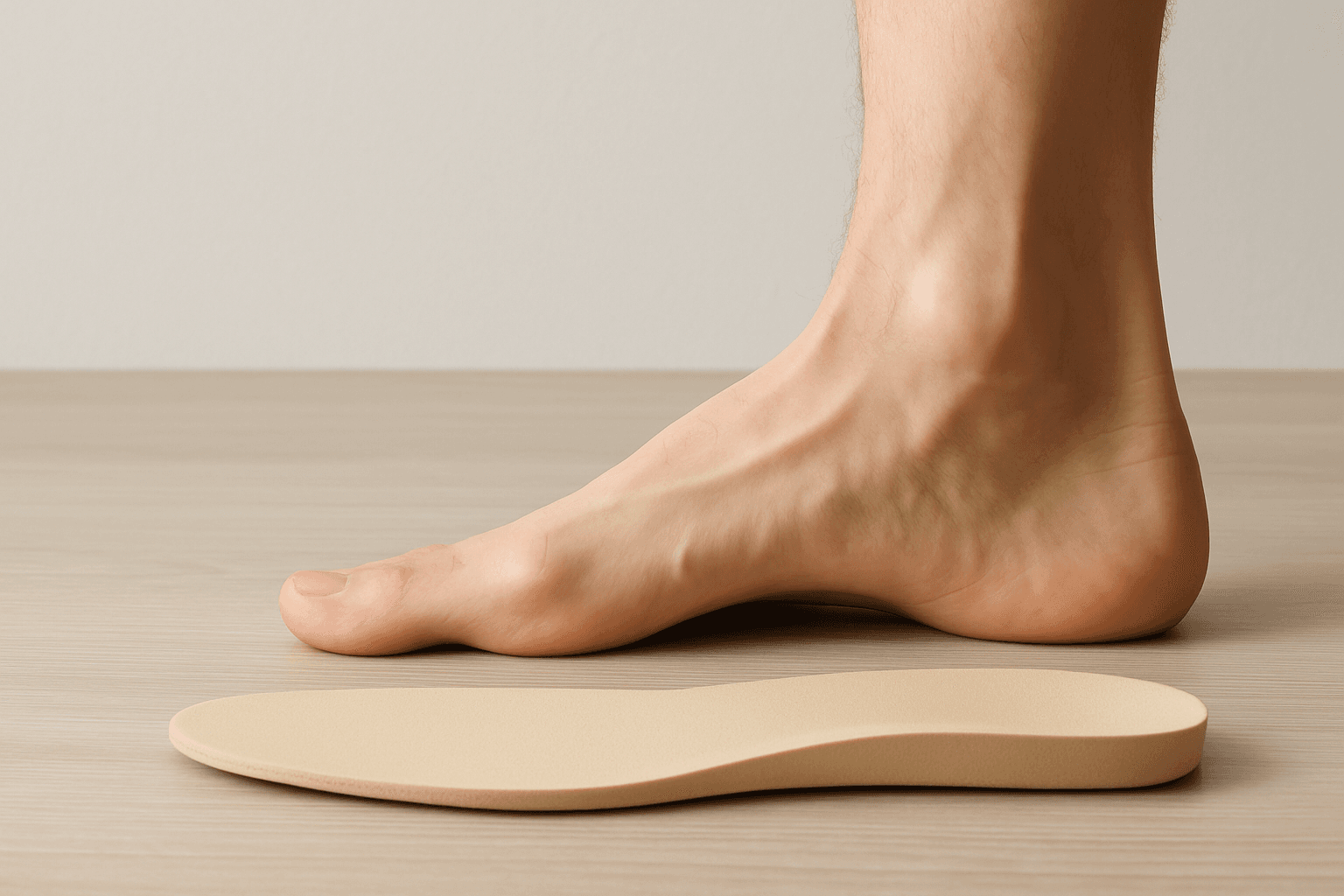
Height-increasing insoles — sometimes called shoe lifts, elevator insoles or hidden lifts — are a separate category from the therapeutic insoles that fill the rest of this hub. Their job is cosmetic first: add half an inch to two inches of height inside a shoe so the wearer stands taller. Some designs raise only the heel and taper down to nothing at the toes; others raise the entire footbed by a smaller amount. A few blend both, with a two-and-a-half inch heel wedge inside a boot and a thinner forefoot lift to keep the whole geometry walkable. None of them are a foot-pain treatment, and the honest read on comfort depends almost entirely on how well the specific product's geometry fits the specific shoe.
That honest read is the reason this page exists. Height lifts sit next to insoles for plantar fasciitis on Amazon search pages, and readers often assume the two are variants of the same thing. They are not. A supportive plantar fasciitis insole tries to unload the fascia and cushion the heel; a height lift is trying to raise the wearer, and its arch and heel cup features (if any) are along for the ride. Wear a poorly-fitted height lift for a full day and the complaints — pinched toes, an unstable ankle, sore calves, low back tightness — are predictable. Wear a well-chosen one at the right height, with a shoe that has the depth, and it is a comfortable everyday tool.
This page walks through the height ranges that stay comfortable, the shoes that fit each range, the risks of going too tall too fast, and how to shop honestly. Nothing here is medical advice. Persistent foot, ankle or back pain that has not eased after four to six weeks of honest care deserves an in-person exam by a doctor or podiatrist. Every recommendation is written for comfort, support and relief.
What a height-increasing insole actually is
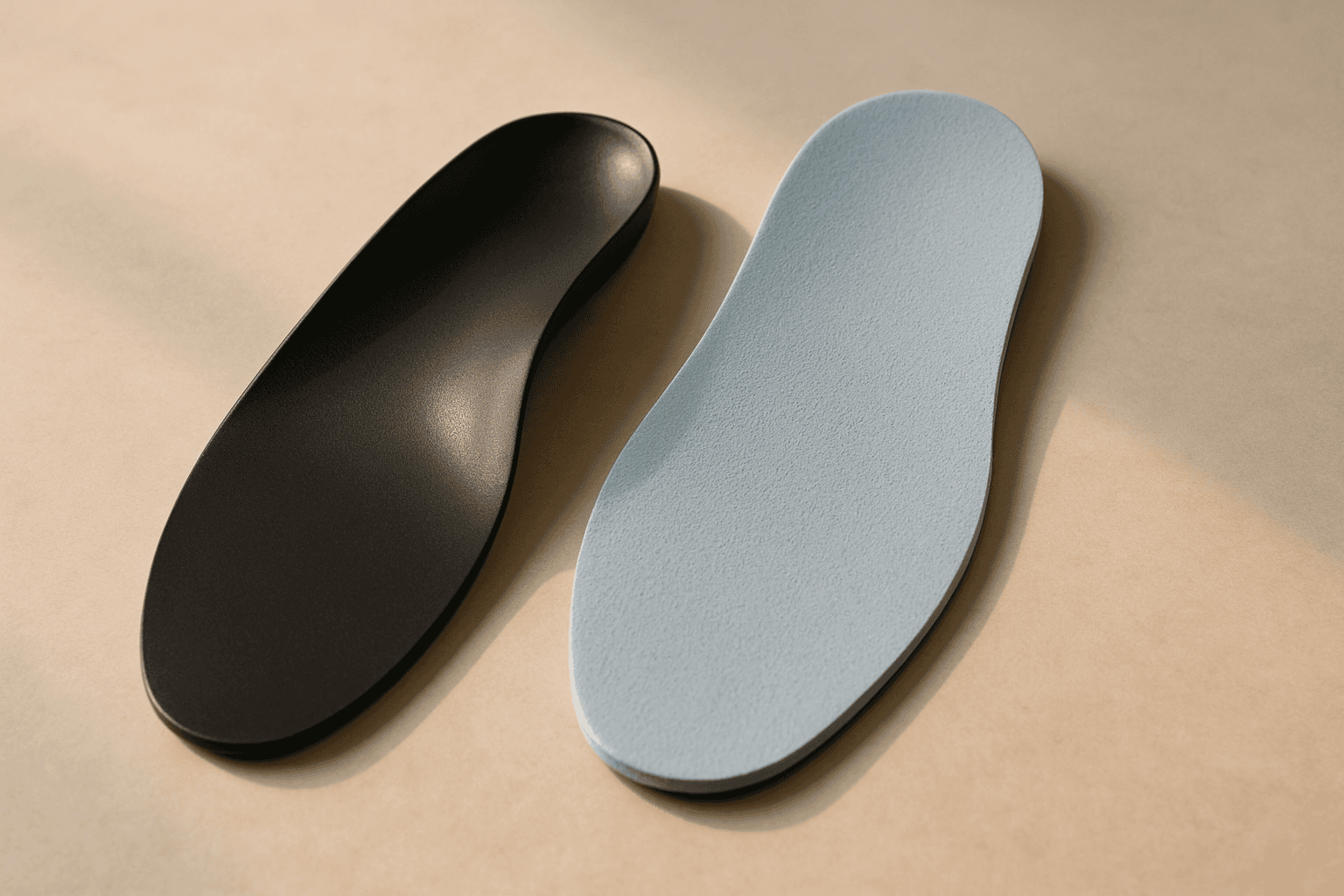
Most consumer height lifts are made from a firm, molded PU foam or a stacked silicone rubber, with a heel wedge that steps up in half-inch or centimeter increments and a lower forefoot section. Cheaper versions are a single molded piece at a fixed height. Better ones use stackable layers — a base plus one or two removable heel inserts — so the height can be dialed in over weeks rather than jumped to on day one. The material is usually firm rather than squishy; a soft-foam lift compresses under body weight and delivers less real height than the box promises, so most manufacturers pick a denser foam or a laminated rubber.
Height is measured at the heel, since the heel is where the maximum lift lives. A one-inch lift raises the heel one inch and tapers to the toes; a two-inch lift raises the heel two inches and does the same. A very small subset of full-length lifts raise the whole foot by a uniform amount, which changes the picture — the shoe still has to fit the raised foot, so the top of the shoe crowds the toes and the ankle sits higher in the collar. Most everyday height lifts are heel-wedge designs for that reason: the foot's forward geometry stays close to normal and only the heel is raised.
The other honest read: a height lift is a heel lift with cosmetic intent. Small heel lifts — three to six millimeters, a quarter-inch — are the same tool used for Achilles tendinopathy rehab and leg-length discrepancy. Larger lifts are cosmetic; anything above about an inch changes the geometry of the step meaningfully, and anything above about an inch and a half needs a boot to hide.
Height ranges and what each one actually feels like
Half an inch (about 1.3 cm) is the low end of the cosmetic range and by far the most forgiving. It fits in almost any closed-toe shoe with the factory insole pulled out, adds a small amount of visible height, and is comfortable to walk in for full days after a week of break-in. Nearly no shoe-fit consequences at this height; nearly no gait consequences either. If you are testing whether a lift is for you, half an inch is the honest starting point.
One inch (about 2.5 cm) is the middle of the range. It adds a visible amount of height, still fits in most casual shoes and most boots, and asks the wearer to pay attention to shoe depth and heel counter fit. The step is now perceptibly different — the calves work a little harder, the forefoot rocks over more prominently, and the ankle collar sits closer to the top of the shoe. Comfort at this height depends heavily on shoe choice: a boot with real internal volume is fine, a low-cut runner with a soft heel counter is not.
One and a half to two inches (3.8 to 5 cm) is the top of the everyday range. At this height the lift only fits inside a boot with substantial internal volume — a work boot, a fashion Chelsea boot with a taller ankle, a hiking boot — and even then the shoe's opening will be closer to the ankle bone than usual. Walking is meaningfully different, and there is a real adaptation cost: calves are tighter, the low back may feel new work by the end of the day, and stairs and uneven ground demand more attention. Two inches is a real height gain and a real biomechanical change; do not treat it as a casual purchase.
Above two inches, most reputable makers stop labeling the product as a shoe insole and start selling it as a specialist orthopedic lift or a stage/costume prop. The physics get uncomfortable — the foot is now sitting at a steep angle, the ankle is far from the ground, and the lift is a stability tool for a specific setting rather than an all-day wear item. Skip that range unless a clinician has recommended it for a leg-length difference.
Shoe fit: the part that actually matters
The single biggest mistake with a height lift is dropping it into a shoe that does not have the internal volume for it. Pull the shoe's factory insole (nearly every closed-toe shoe has one) and lay the lift on the internal footboard. The lift plus your foot should fit inside the shoe without the top of your foot pressing against the tongue and without your heel pushing up out of the counter. If it does, the shoe is too shallow; either try a taller-collared shoe or step down to a smaller lift. A lift that pushes the heel up out of the counter is unstable, and unstable is how ankles roll.
Boots are the friendliest home for a taller lift. Work boots, hiking boots, Chelsea boots and combat boots have the collar height and the internal volume to swallow a full-length lift and still hold the foot securely. Low-cut runners, dress shoes with a shallow toebox, and any slip-on with a loose collar are the worst homes; a lift raises the foot straight out of them. Wear the lift with the shoe it was measured for, not the shoe it fits worst.
Toe box depth is the second constraint. A heel-wedge lift tapers to nothing at the toes and rarely crowds the front of the shoe, but a full-length lift raises the whole foot and can push the top of the toes into the roof of the toebox. Wide-toe hiking boots and wide work boots handle this well; slim leather boots and pointed dress shoes do not. If the shoe was already a snug fit before the lift, it will be too tight after.
Break-in, gait adaptation and the calf question
Ease a height lift in over a week to two weeks rather than dropping it into a Monday twelve-hour day. Two to three hours the first two days, then a half day, then full days from day four or five. If the lift is stackable, start at half an inch (or the lowest step available), wear that height for three to five days, then add the next increment and repeat. This gradual approach gives the calves, ankles and low back time to adapt to a slightly higher heel-to-toe drop, and it is the single most useful habit for keeping the lift comfortable.
Calves are the joint that adapts most visibly. A lift raises the heel and slightly shortens the Achilles tendon relative to the calf muscle. Over a few days of daily wear the tendon adapts, but the muscle may feel unusually tight for the first week. A short daily calf stretch — thirty to sixty seconds each side, held twice — is a cheap and reliable addition. If calf tightness does not fade after two weeks, the lift is likely too tall for your current adaptation and stepping down half an inch is the right move.
Low back and hip adaptation is the other quiet piece. Raising the heels tips the pelvis slightly forward, which some readers feel as a mild low-back tightness at end of day. This is the same effect a tall dress shoe has on wearers who spend all day in them, and it responds to the same tools: a short daily hip-flexor and hamstring stretch, and stepping down the lift height if the tightness does not settle. Wearing a two-inch lift on legs that have only ever worn flat shoes is a bigger adaptation than the marketing photos suggest; go slower than the box says and the picture is much rosier.
Comfort features that separate a decent lift from a bad one
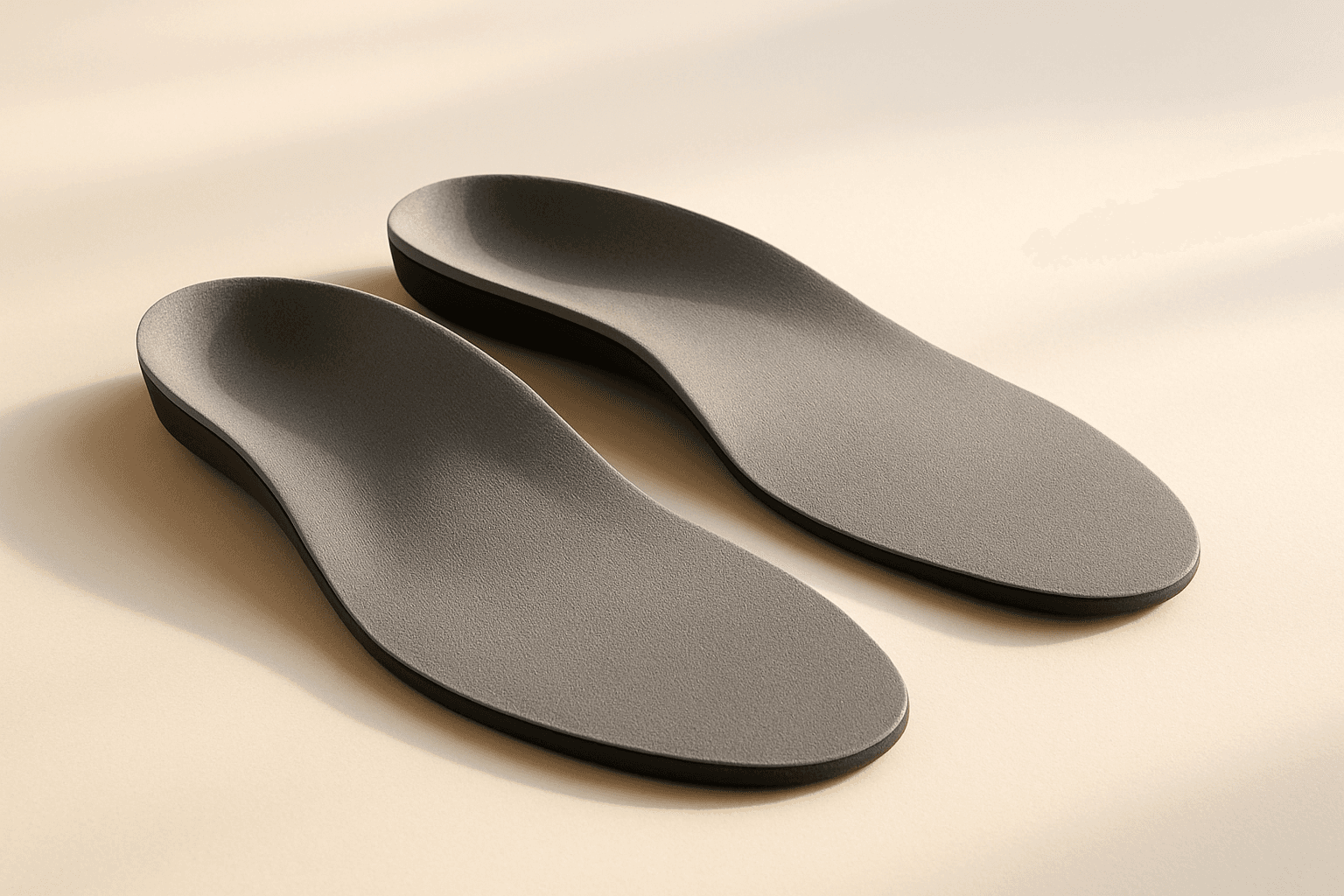
The features that matter on a height lift are unglamorous. A firm, non-slippery top layer keeps the foot from sliding forward inside the shoe on a longer walk; a lift with a smooth silicone top and no texture skates through a work day and rubs blisters on the underside of the arch. A cupped heel section (even a shallow one) cradles the fat pad and keeps the heel centered on the lift rather than sliding sideways; a completely flat lift lets the heel drift and drives the small daily contribution to lateral ankle instability. Some form of forefoot cushioning — even a thin foam layer — takes edge off the drop from the raised heel to the floor level of the toes.
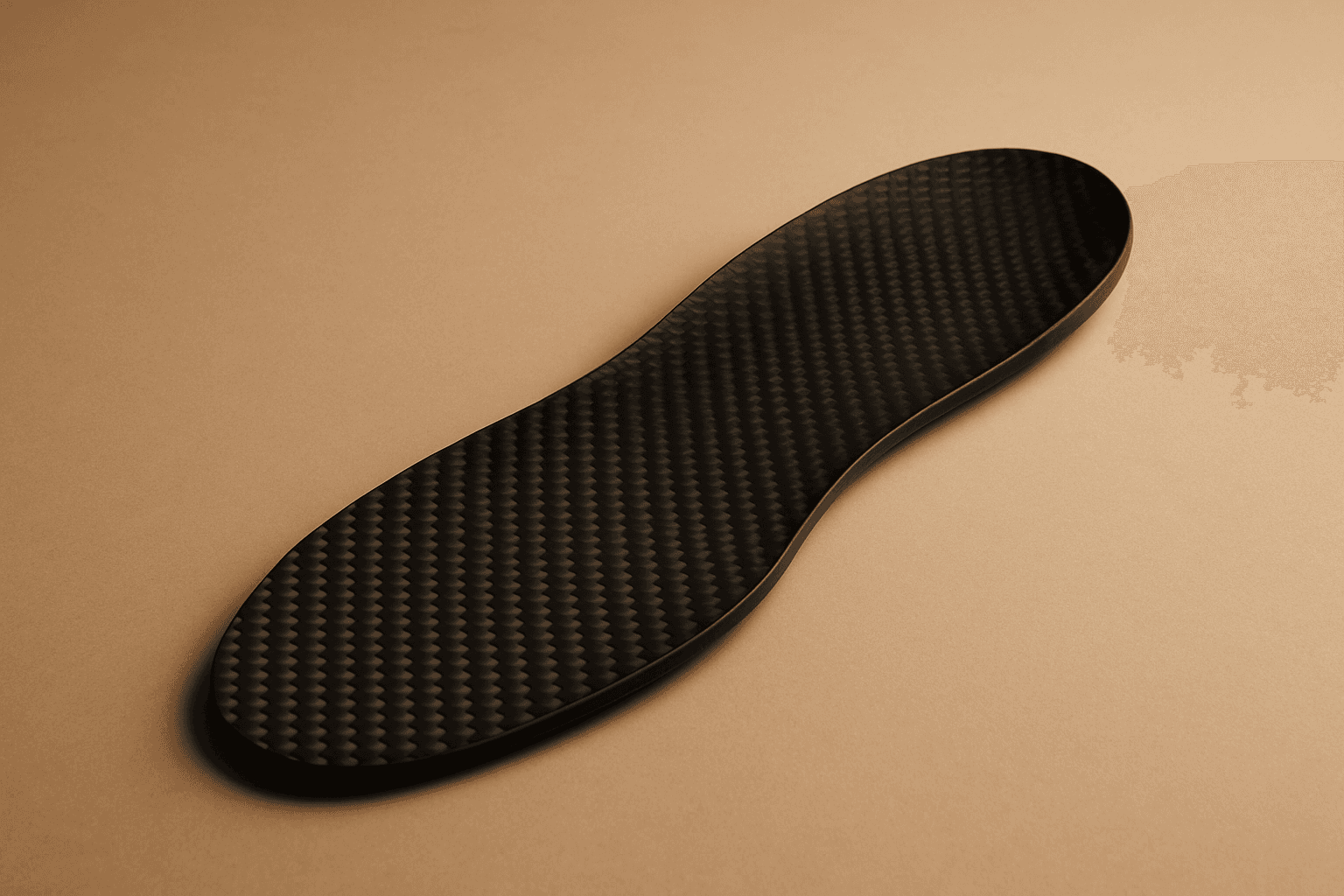
Firmness matters as much as texture. A soft, squishy lift compresses under body weight and delivers less height than advertised, and the compression is uneven — softer under the heaviest part of the foot, less compressed at the edges — which subtly rocks the ankle. A denser PU foam or a laminated rubber lift keeps its shape through the day. Press the lift firmly with your thumb before buying; a lift that dents easily under thumb pressure will dent under body weight all day.
What does not matter: gel dots, cooling gel, memory foam, aromatherapy layers, magnets, acupressure nodes. Height lifts are sold with the same comfort-marketing overlay as ordinary insoles, and almost none of it makes a real difference at height. Firmness, cupped heel, textured top and correct height for the shoe are the four features that count.
When a height lift is the wrong tool
For real leg-length discrepancy — one leg noticeably shorter than the other, confirmed by a clinician's measurement or an X-ray — an over-the-counter cosmetic height lift is not the right tool. A clinician-fitted heel lift or a modified shoe with a raised sole is the more useful approach, and using a stack of drugstore cosmetic lifts for a real leg-length issue rarely delivers the exact half-centimeter accuracy the correction wants.
For plantar fasciitis, Achilles pain, or any of the heel pain patterns covered elsewhere on this site, a height lift is not the tool either. A small heel lift of three to six millimeters is part of Achilles rehab, and a supportive insole with a firm arch and deep heel cup is the right pick for plantar fasciitis — the pair we would install first is in our Akusoli insoles review, and a two-inch cosmetic lift is a different product entirely that can make either condition worse by re-arranging load through the day. Our pain in the back of the heel walk-through and the rest of the heel pain hub cover the therapeutic tools.
For anyone with a history of ankle sprains, poor balance, or working in a job that involves ladders, scaffolding or uneven surfaces, a taller lift raises the small but real daily risk of a roll or a fall. Half an inch is usually fine; two inches on a ladder is not. Match the height to the environment, and step down when the ground is unpredictable.
The support insole we would install for foot pain
Height lifts are a cosmetic tool, not a foot-pain treatment. For readers looking for relief from heel or arch pain, a supportive foam insole with a firm arch and a deep heel cup does more useful work than any lift.
The support insole we would install for foot pain →Frequently asked questions
Are height-increasing insoles bad for your feet?
At a modest height (half an inch to about an inch) and in a shoe with the internal volume to fit them, no — most wearers adapt in a week and stay comfortable. Above that, the picture gets less friendly: taller lifts crowd shoes, push the heel up out of the counter, and add real load to the calves, ankles and low back. The common complaints — pinched toes, unstable ankle, sore calves, low-back tightness — nearly always trace to a lift that was too tall, a shoe that was too shallow, or a break-in that was too fast. Match the height to the shoe, ease it in over a week or two, and stop if new pain shows up further up the chain.
How tall can a height insole be without hurting my back?
The honest range for everyday comfort is half an inch to about an inch and a half. Below half an inch the lift barely changes gait; between one and one and a half inches most readers can adapt within a week or two if they ease in gradually. Above two inches, the biomechanical change is real, calves and low back are working differently, and the lift only fits inside a taller boot. Anyone with a history of low-back pain should start at half an inch and step up only if that height stays comfortable for two weeks first.
Can I wear height insoles in running shoes?
Small lifts (a quarter to half an inch), yes — most running shoes have the internal depth for a half-inch heel wedge without pushing the foot out of the counter. Taller cosmetic lifts (an inch or more), rarely — the low collar of most runners cannot hold the raised heel securely, and an unstable heel is a running-injury risk. If you want to run in a lifted shoe, a boot-cut cross trainer with a taller collar is a better home than a low-cut running shoe. For run-related heel pain, our walking or running page covers the tools that actually help.
Do height insoles work with dress shoes?
In most dress shoes, only the smaller sizes fit — half an inch is usually the ceiling before the shoe's shallow toebox and thin collar start to push back. Chelsea boots, dress boots with an ankle-height collar, and modern chunkier dress shoes handle taller lifts better than classic Oxfords and slim loafers. Pull the factory insole first and test the fit at home; if the top of your foot presses hard against the tongue or your heel rides up out of the shoe, the lift is too tall for that pair.
Will height insoles make my shoes uncomfortable?
If the shoe was a comfortable fit before the lift and the lift is under an inch, usually no — pull the factory insole to reclaim the depth and the shoe is close to its original fit. If the shoe was already snug or the lift is over an inch, expect the shoe to feel tighter and the heel to sit higher in the collar. A lift in the wrong shoe is the most common source of new foot pain in this category; a lift in the right shoe is comfortable for full days. Take the shoe pairing seriously.
How long do height-increasing insoles last?
Firm PU foam lifts worn daily last six to twelve months before the material compresses meaningfully; laminated rubber lifts can go longer, into the twelve-to-eighteen-month range. Cheaper single-piece foam lifts flatten faster, sometimes within three months. Replace when the height feels visibly shorter than the box promised — a compressed lift is delivering less lift and, more importantly, is holding its shape unevenly through the day, which is the ankle-stability risk. Rotating two pairs across shoes extends the life of both.
HeelCups is reader-supported. When you buy through links on our site we may earn an affiliate commission, at no extra cost to you. This article is general information about foot comfort and is not medical advice — see our medical disclaimer.