CARBON FIBER
Carbon Fiber Insoles: What the Stiff Plate Actually Does and When It Helps
A thin sheet of carbon fiber laid under the foot changes how the toes bend, how the arch stores energy, and how much pain a stiff big toe gives back at each step — a very different tool from the foam and gel insoles on the rest of this hub.
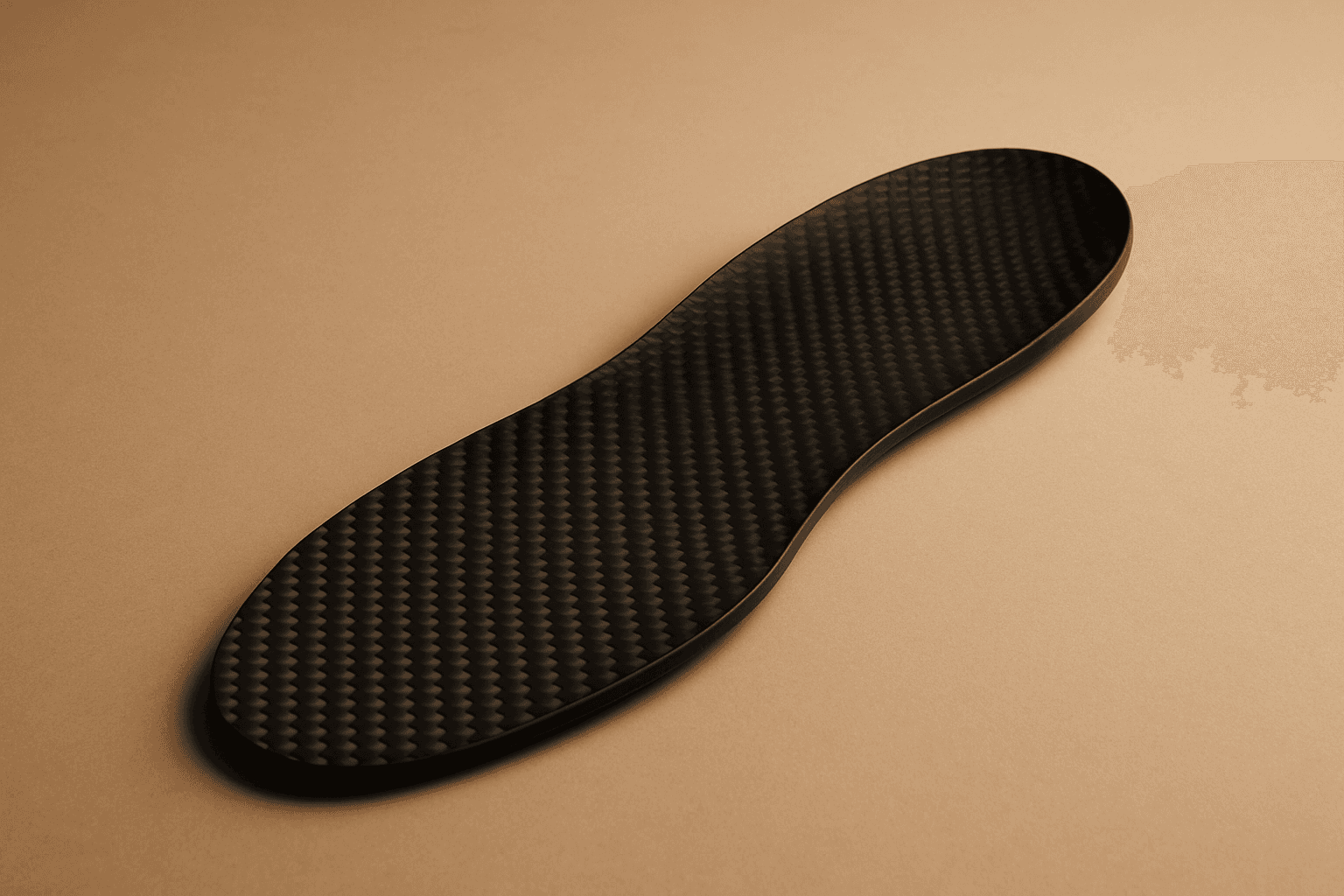
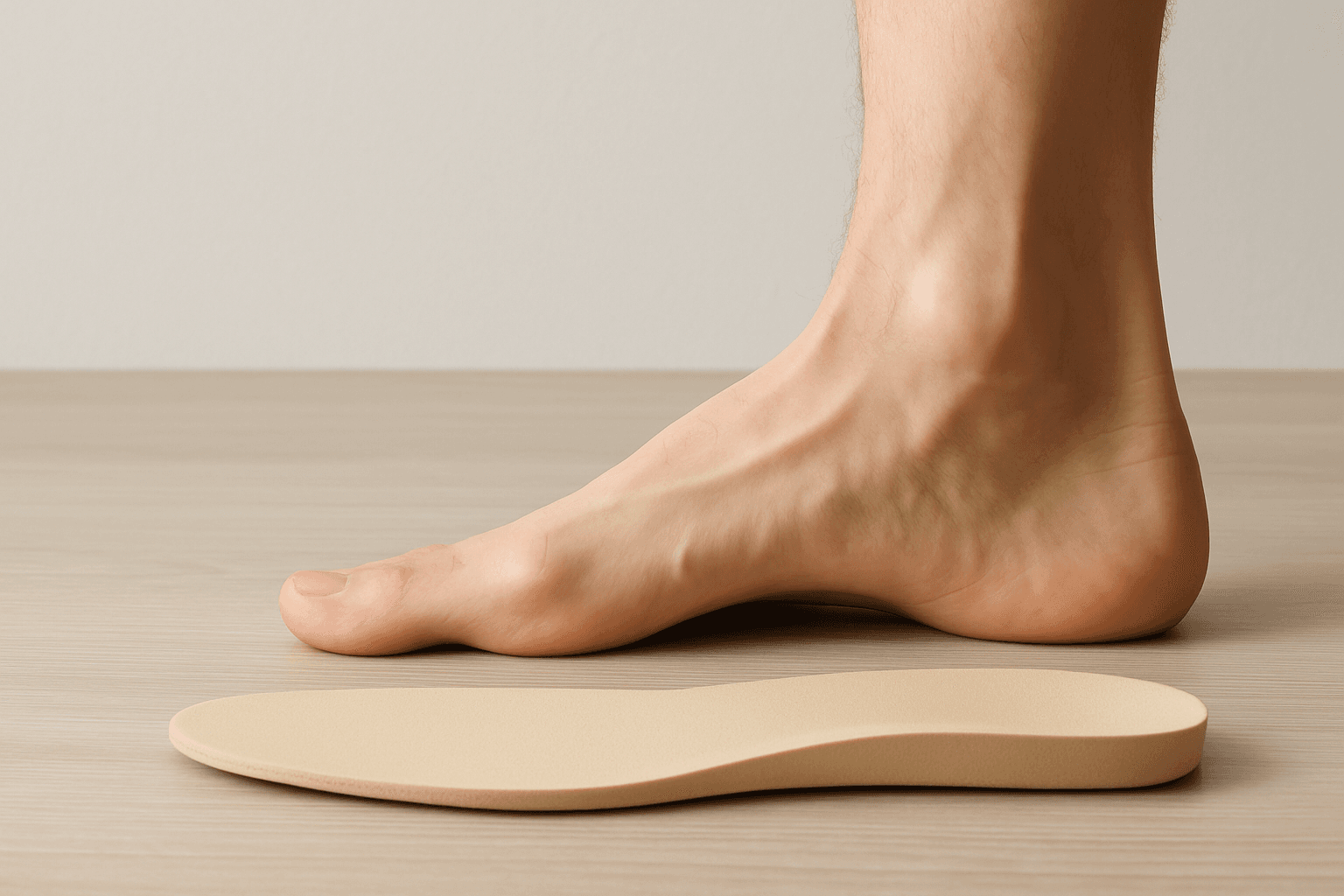
Carbon fiber insoles look strange next to the foam and gel pairs on the same shelf. A carbon insole is a thin rigid sheet, usually a millimeter and a half to two and a half millimeters thick, that sits flat under the foot and refuses to bend the way a foam insole does. In the hand it feels closer to a piece of stiff plastic than to an orthotic. The point of that stiffness is not comfort in the usual soft-and-squishy sense — it is a change in how the foot bends at each step, and it is a very specific tool with a very specific job.
The clearest use case is a big-toe joint that hurts to bend. Turf toe, hallux rigidus (a stiff arthritic big-toe joint), and lingering pain from a first-metatarsal or sesamoid injury all share the same complaint: every step asks the big toe to bend at push-off, and every bend re-loads a joint that would rather stay still. A stiff carbon plate under the foot stops the shoe from flexing at that joint, so the foot rocks over the toe instead of pushing off through it. The step becomes shorter and stiffer, and the joint stops being asked to do a job that hurts.
This page walks through what a carbon fiber insole is, when it actually helps, when it is the wrong pick, and how to get the fit right. Nothing here is medical advice. Persistent foot or toe pain that has not eased after four to six weeks of honest home care deserves an in-person exam by a doctor or podiatrist. Every recommendation on this hub is written for comfort, support and relief.
What a carbon fiber insole is and how it differs from foam
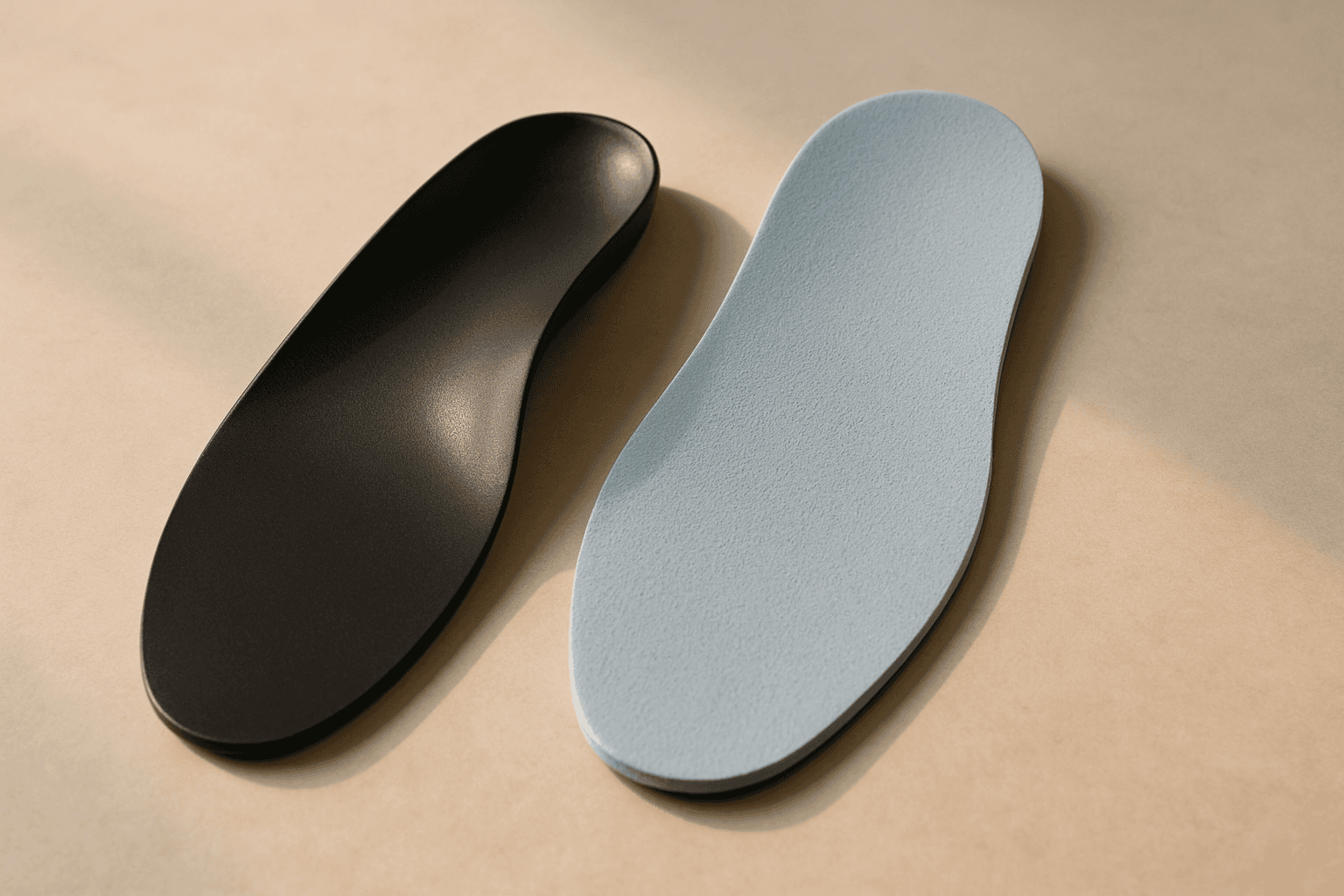
A carbon fiber insole is a flat or gently contoured sheet of woven carbon fiber, usually thermoformed into a shallow foot shape and sometimes topped with a thin foam layer for feel. The sheet is what the manufacturer is selling; the foam is a comfort layer. Thickness runs from about 1.2 millimeters at the low end to 2.5 millimeters for a full rigid plate, with a few specialist medical products going thicker. Roughly, thicker means stiffer, and stiffer means more of the toe-flex is prevented at each step.
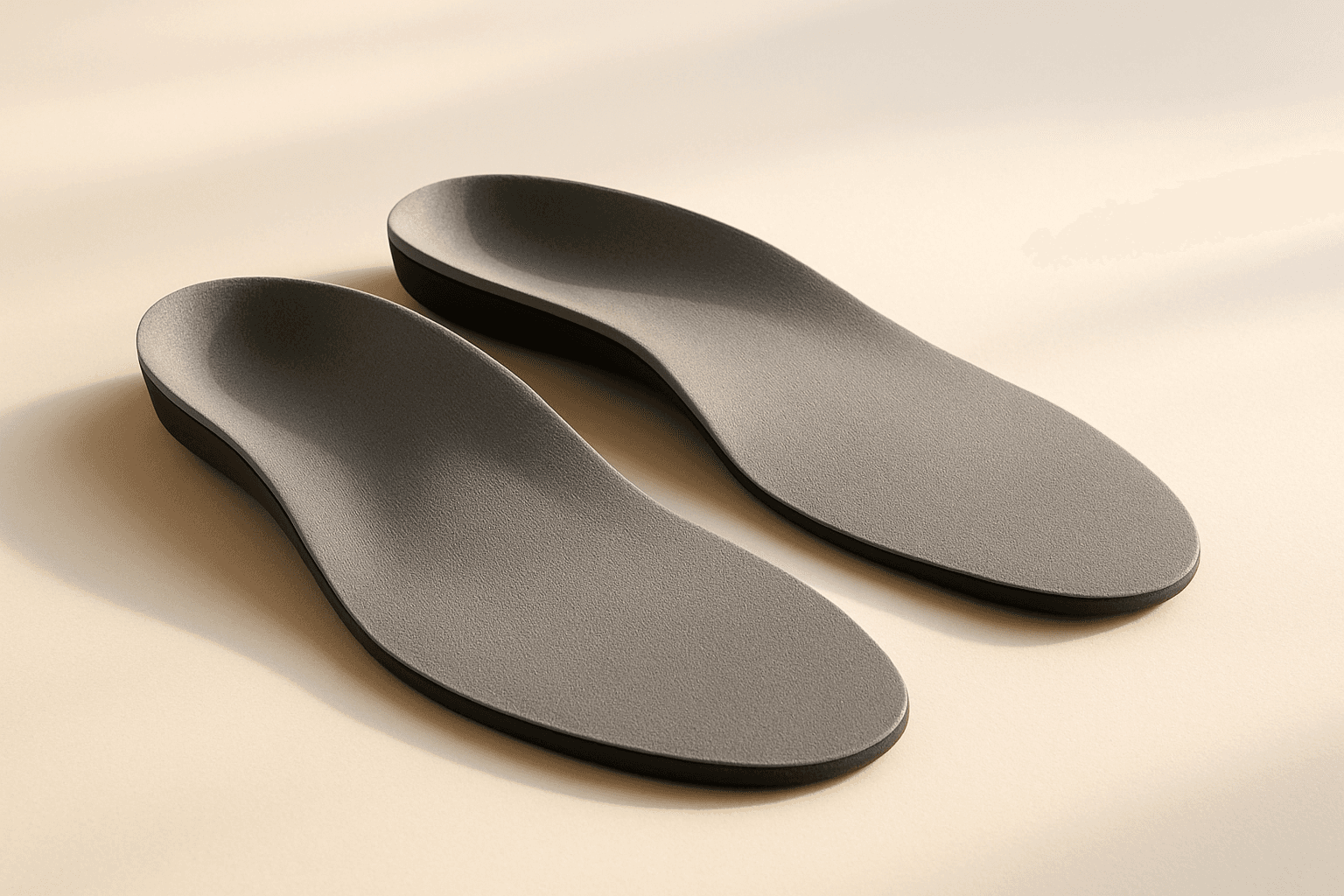
That is a fundamentally different geometry from the foam and EVA insoles that fill the rest of this hub. A foam insole with a firm medial arch and a deep heel cup changes how the foot loads across the arch and the heel — it cushions, it cradles, and it holds the arch shape while the fascia rests. A carbon fiber insole does none of those jobs. It changes how the foot bends at the ball, not how it sits in the arch. The two solve different problems, and dropping the wrong one under the wrong complaint wastes weeks of care.
Some products blur the line by adding a foam cushion layer over the carbon sheet or by shaping the arch region into a mild contour. Read the product page carefully: if the sheet extends all the way from heel to toe and refuses to bend when you fold it in your hands, it is a rigid carbon plate and it will act like one under your foot. If it bends easily when folded and the carbon is a smaller reinforcement rather than a full-length sheet, it is a semi-flexible insole with a carbon feature, which is a different tool.
The joint pain patterns a carbon plate actually helps
Hallux rigidus is the most common reason a podiatrist reaches for a rigid carbon plate. The big-toe joint at the base of the first toe (the first metatarsophalangeal joint) has developed arthritis, and the smooth range of bending that lets a healthy foot push off through the toe is gone. Every step asks the joint to bend and hurts as it does. A stiff carbon plate underfoot stops the shoe from flexing at the forefoot, so the foot rolls forward over the toe rather than bending through it. Readers with hallux rigidus who add a carbon plate usually notice within a week that push-off is less painful and the after-walk soreness is lower.
Turf toe — a sprain of the same joint, common in football, soccer, dance and any activity that plants the toe against a hard surface — responds to the same mechanic. The joint's collateral ligaments and plantar plate need weeks of low-load healing, and a stiff plate underfoot cuts the toe-bend at each step so the injured tissue is not re-loaded through the day. Podiatry rehab protocols routinely include a carbon plate through the return-to-play phase because the biomechanics research on toe stiffness is unusually clean here: peer-reviewed work in the Journal of Foot and Ankle Research and elsewhere has measured that a rigid forefoot plate reduces peak dorsiflexion of the toe joint and the pressure under the ball of the foot at each step.
Sesamoiditis (inflammation of the small bones under the first metatarsal), stress reactions in the second metatarsal from long distance running, and post-surgical protection after big-toe surgery are the other common indications. In each case, the plate is protecting a specific structure from the specific load of a bending toe. If your complaint is not in that map — heel pain, arch pain, plantar fasciitis, tired feet at the end of a shift — a carbon plate is not the right tool, and a supportive foam insole with a real arch and a deep heel cup will do more good.
Why carbon feels stiff on day one and what to expect
First-day feel is the part that surprises new readers. A carbon plate does not feel cushioning. It feels like a smooth firm surface underfoot with almost no give. Walking is noticeably different — the step is a little shorter, the push-off is rocked rather than sprung, and the calves may work slightly harder for the first few days because they are not getting the small assist that a normal toe-flex gives. That is not a defect; it is the plate doing exactly what it is designed to do. The oddness fades within a week or two as gait adapts.
Ease a carbon insole in over five to seven days rather than dropping it into a Monday twelve-hour day. A few hours the first two days, then a half day, then full days from day three or four. Feet that have never worn a rigid plate before will often report a mild calf tightness or arch fatigue on day one that quiets by day three; if it does not, or if new pain shows up somewhere else, take the plate out and reintroduce more slowly. Rigid orthotics of any kind are a load-redistribution tool and the rest of the body needs a beat to adapt.
Some products advertise a spring-like energy return from the carbon plate. That effect is real in stiff-plated running shoes, where a curved plate combined with a specifically tuned foam gives a measurable push at toe-off. In a flat aftermarket insole it is more marketing than mechanics — the plate is doing protective work, not propulsion. Buy a carbon insole for what it protects, not for a promise of energy return.
Fit, shoe pairing and thickness
Fit is trickier for a rigid plate than for a foam insole. The plate does not compress at the edges to fit the shoe's shape, so it wants to sit on top of the shoe's internal footbed without buckling. Pull the shoe's factory insole first (nearly every closed-toe shoe has a removable insole; those that do not are usually the wrong home for a carbon plate) and lay the carbon plate directly on the internal footboard. If the plate rides up at the sides or lifts at the toe, the shoe is too shallow and a different pair will need it. A running shoe, a wide walking shoe, or a work boot usually has the internal volume; a slim dress shoe or a low-volume court shoe usually does not.
Length is the other constraint. A full-length carbon plate must sit flat from heel to toe without folding. Some products come in a range of lengths marked by shoe size and are trimmed only lightly at the toe if needed; others come oversized and are cut with a sharp utility knife along a marked line. Trim conservatively — cut a little outside the line and shave more later — because a plate cut too short will slide forward inside the shoe. Follow the manufacturer's cutting guide if one is included, and do not try to shorten a full-length plate with kitchen scissors.
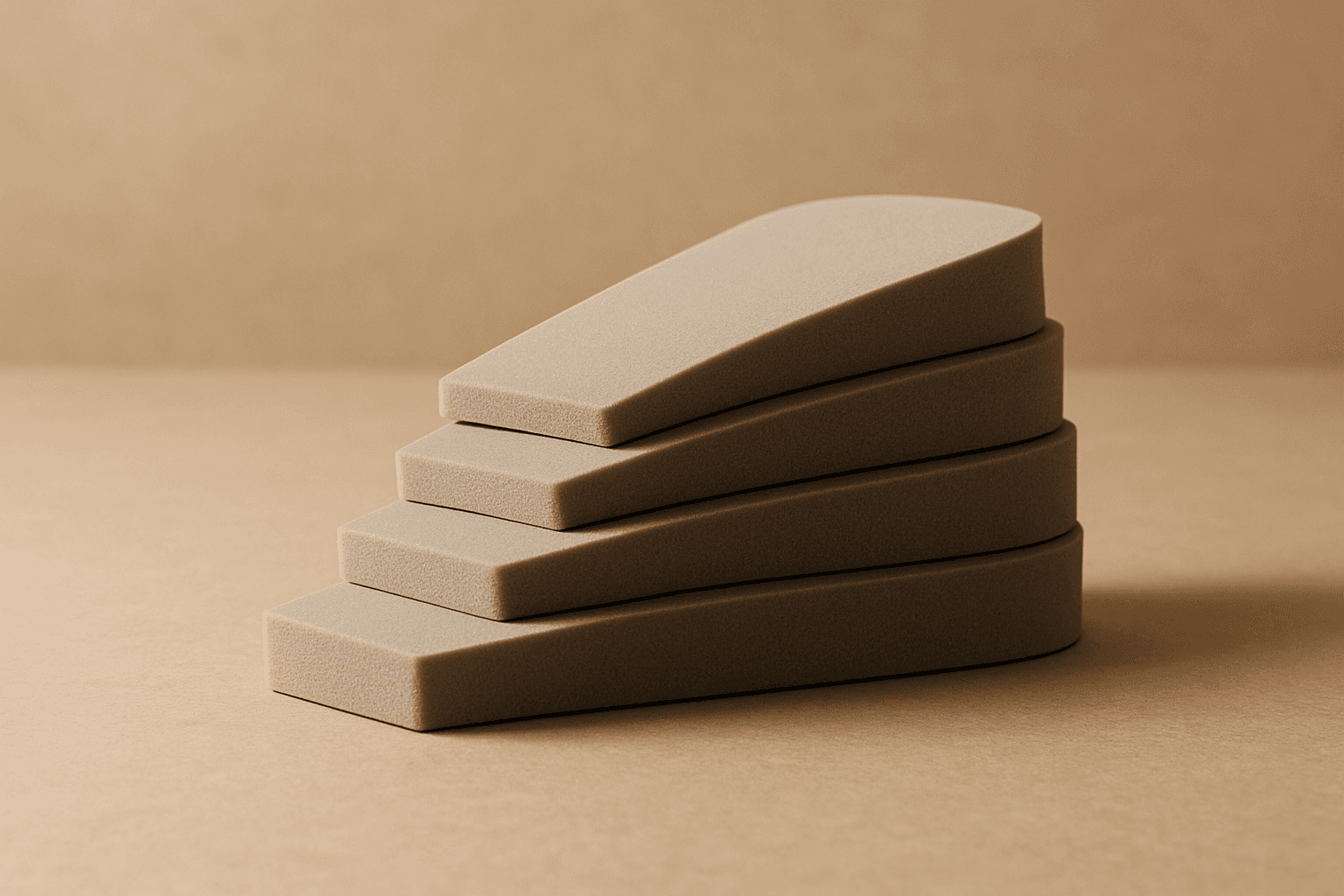
On thickness: 1.2 to 1.5 millimeters is the low end, appropriate for milder cases and for shoes with less internal volume. 2 to 2.5 millimeters is the more common therapeutic thickness for hallux rigidus or turf toe. Rigid Morton's extension plates that specifically extend under the first toe are a specialist variant used for hallux rigidus and are usually picked with a podiatrist's read of imaging rather than off a shelf. If a clinician has already recommended a specific thickness or geometry for your foot, use theirs; if you are self-selecting for a home rehab of a mild flare, a 1.5 to 2 millimeter full-length plate is a reasonable starting point.
Where a carbon plate is the wrong pick
For plantar fasciitis, a carbon plate is not the tool. Plantar fasciitis is an arch and fat pad problem, not a toe-bend problem, and a flat rigid plate does nothing for a fascia that wants unloading. A supportive foam insole with a firm medial arch and a deep heel cup — the pair we review at Akusoli insoles — is the more useful buy. The two tools do not overlap.
For flat feet with tired arches, a rigid flat plate can actively feel worse than the shoe's factory insole. A flat foot wants an arch that holds shape and a heel cup that keeps the pad from splaying; a flat carbon sheet gives it neither. Our insoles for flat feet walk-through covers the pair we would install for that pattern instead.
For general standing fatigue, or heel pain of any kind, foam wins. Carbon fiber insoles are a specialty tool for a narrow set of forefoot problems. Buying one for general comfort is the equivalent of buying a wrist brace for a broken finger — it is the wrong tool for the joint that hurts. If your complaint is heel, arch, or fatigue rather than the big toe or the ball of the foot, the heel cups vs insoles walk-through and the rest of this hub are the right start.
Sports-specific and off-label uses
Runners with recurring turf toe or a Morton's neuroma (a nerve irritation between the metatarsals, usually between the third and fourth toes) sometimes use a carbon plate to shorten the forefoot flex through a return-to-training block. It is a reasonable off-label use if the specific complaint is bend-related; it is a waste of money if the underlying complaint is anything else. Trail runners with big-toe arthritis often carry a carbon plate through steep uphill blocks where every step demands more toe-bend than a flatter route would.
Dancers with sesamoid pain and soccer players with a stubborn turf toe are the two athletic populations who most often carry a carbon plate through a rehab. Both are working the specific joint the plate is designed to protect. Basketball players and cross-fit athletes occasionally add a carbon plate for general forefoot pain, and results are mixed — the plate helps a bend-driven problem but does nothing for a cushioning-driven one, and general "my forefoot hurts after games" often has both components.
Everyday walkers with hallux rigidus who put a carbon plate in their most-worn walking shoe often describe the change as "my toe stopped complaining about walking." That is the plate doing its job: the joint is no longer being bent through the arthritic range at each step, so the after-walk soreness drops. It is not a treatment for the arthritis itself, and the underlying joint has not changed. The comfort is real; the mechanism is protective, not curative.
The everyday support insole we would install first
For the vast majority of readers whose complaint is heel or arch — not big-toe — a supportive foam insole with a firm medial arch and a deep heel cup does more useful work than any carbon plate. Save the plate for a specific big-toe or ball-of-foot problem.
The everyday support insole we would install first →Frequently asked questions
Do carbon fiber insoles work for plantar fasciitis?
No, not really. Plantar fasciitis is an arch and fat pad problem — the fascia is over-loaded across the middle of the foot, and the fat pad under the heel is taking too much shock. A flat rigid carbon plate does nothing for either. What plantar fasciitis wants is a supportive foam insole with a firm medial arch and a deep heel cup; the pair we would install first is in our Akusoli insoles review. A carbon plate is a specialty tool for big-toe and ball-of-foot problems, not for heel-pain patterns.
How thick should a carbon fiber insole be?
For most self-guided use, 1.5 to 2 millimeters of full-length carbon plate is the useful range — thick enough to stop the toe from bending meaningfully, thin enough to fit in most closed-toe shoes without pushing the heel out of the counter. Milder cases and shallower shoes can start at 1.2 to 1.5 millimeters; a podiatrist-recommended plate for a specific injury may run 2 to 2.5 millimeters or add a Morton's extension shaped for the affected toe. If a clinician has already picked a thickness for your foot, use theirs.
Can I run in carbon fiber insoles?
Yes, if you have a specific big-toe or ball-of-foot complaint the plate is designed to protect. Runners with hallux rigidus, a healing turf toe or a stress reaction in the second metatarsal often carry a carbon plate through a return-to-training block. The plate changes the step — shorter, stiffer at push-off — so ease it in over five to seven days rather than dropping it into a long run. For heel pain when running, our walking or running page covers the more useful tools; a carbon plate is not one of them.
Will a carbon fiber insole make my back hurt?
Usually no, but the possibility is real if the plate is too thick for your shoe or you dropped it into full days without a break-in. Rigid orthotics of any kind change how the rest of the body loads at each step, and the calves, knees and lower back may get a beat to adapt to a shorter, stiffer forefoot rock. Ease the plate in over five to seven days and step out of it if new pain shows up further up the chain. A one-inch height jump on top of the plate — say, from a thick cushion layer plus a thick plate — is a common trigger for that kind of adaptation soreness.
How long do carbon fiber insoles last?
Considerably longer than foam. Carbon fiber is not a wear part — the plate itself does not pack down with use — so daily-wear pairs typically hold their shape for two to four years, and the thin foam top layer (if present) is the piece that wears out first. If the plate cracks along a visible line, or if the top layer has flattened and no longer feels like a distinct surface, it is time to replace. Skip the dishwasher and hot cars; heat can warp the shape of a thermoformed plate over time.
Do I need a prescription for a carbon fiber insole?
No — over-the-counter carbon insoles are legal and widely sold. But the useful use cases are specific enough that a podiatrist's read of your complaint is worth having before you buy. Hallux rigidus and turf toe are the two clearest indications; if your foot pain does not fit those patterns, a foam insole with a real arch and a deep heel cup is more likely to help. Any foot pain that has not eased after four to six weeks of honest home care deserves an in-person exam by a doctor or podiatrist.
HeelCups is reader-supported. When you buy through links on our site we may earn an affiliate commission, at no extra cost to you. This article is general information about foot comfort and is not medical advice — see our medical disclaimer.