INSOLES FOR PF
Insoles for Plantar Fasciitis: The Features That Actually Change Morning Pain
A firm medial arch, a deep heel cup, the right density and a shell that does not pack down — the four things that separate a plantar-fasciitis insole from a glorified foam sticker, and how to fit one into the shoes you already own.
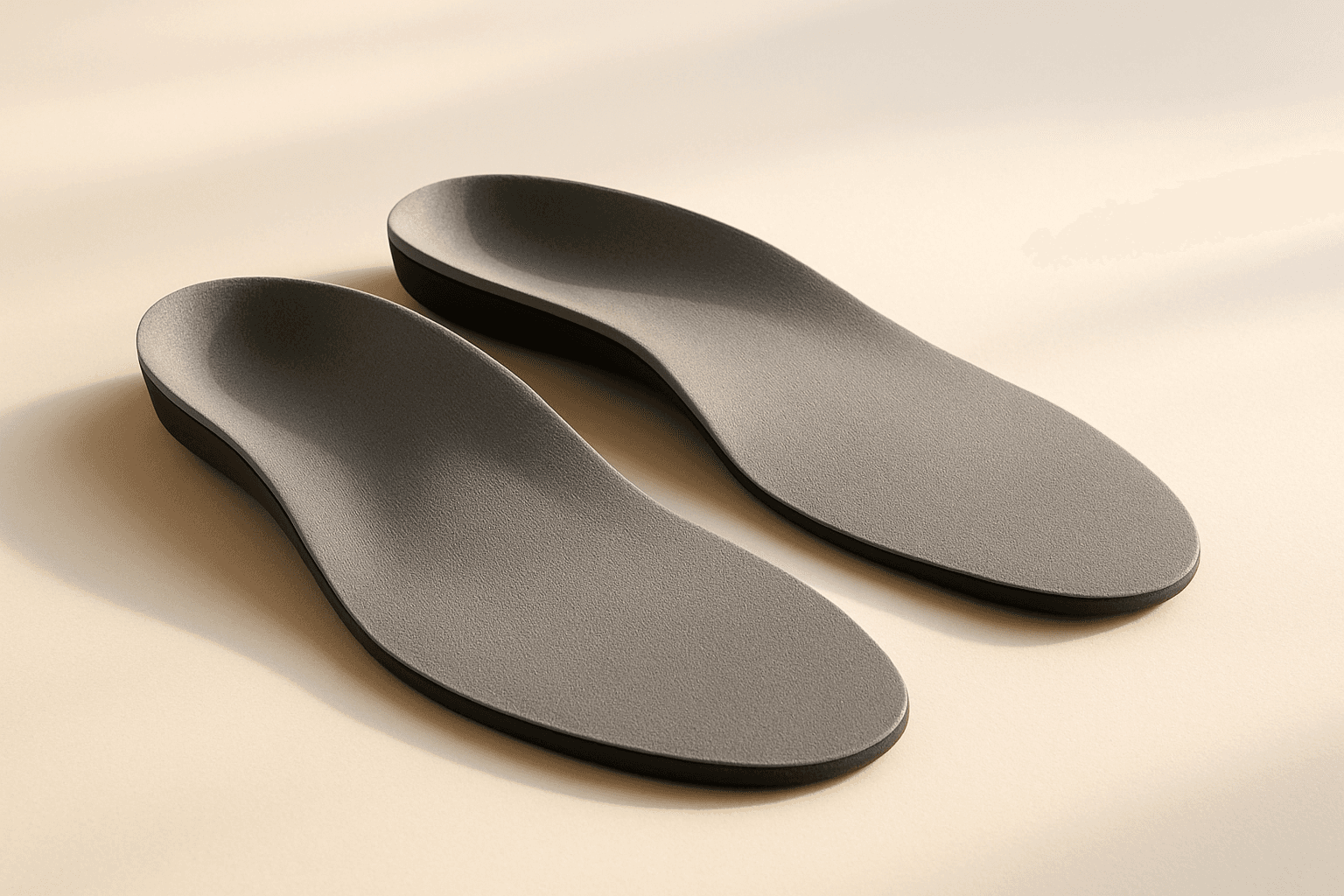
The single highest-leverage upgrade for plantar fasciitis is not a night splint, a taping trick or a special sock. It is a supportive insole in every shoe worn for more than an hour a day. The fascia is a tension problem, and the fascia is under tension every time body weight lands on an unsupported arch. A well-shaped insole holds the arch's shape through the step, so the fascia is not pulled taut with each stride, and it cradles the heel in a deep cup so the fat pad absorbs shock the way it was built to. Combine that with a daily stretching routine and, for most readers, the first-steps-of-the-morning pain fades within a couple of weeks.
The insole aisle makes this sound complicated on purpose. Gel dots, acupressure nodes, brand-name marketing, memory-foam top layers and cooling gel promise a lot of things that have nothing to do with why an insole works or does not work for plantar fasciitis. What actually matters is unglamorous: a firm medial arch that does not collapse under body weight, a deep heel cup, an EVA or firm-foam shell that carries them both, and a full-length shape that fits your shoe. Everything else is comfort or bonus.
This page walks through the four features that make an insole useful for plantar fasciitis, the fit and break-in details that make or break the result, and where insoles slot into the wider picture. Nothing here is medical advice. Persistent heel pain that has not eased after four to six weeks of honest home care deserves an in-person exam by a doctor or podiatrist. Every recommendation on this hub is written for comfort, support and relief.
A firm medial arch that does not collapse
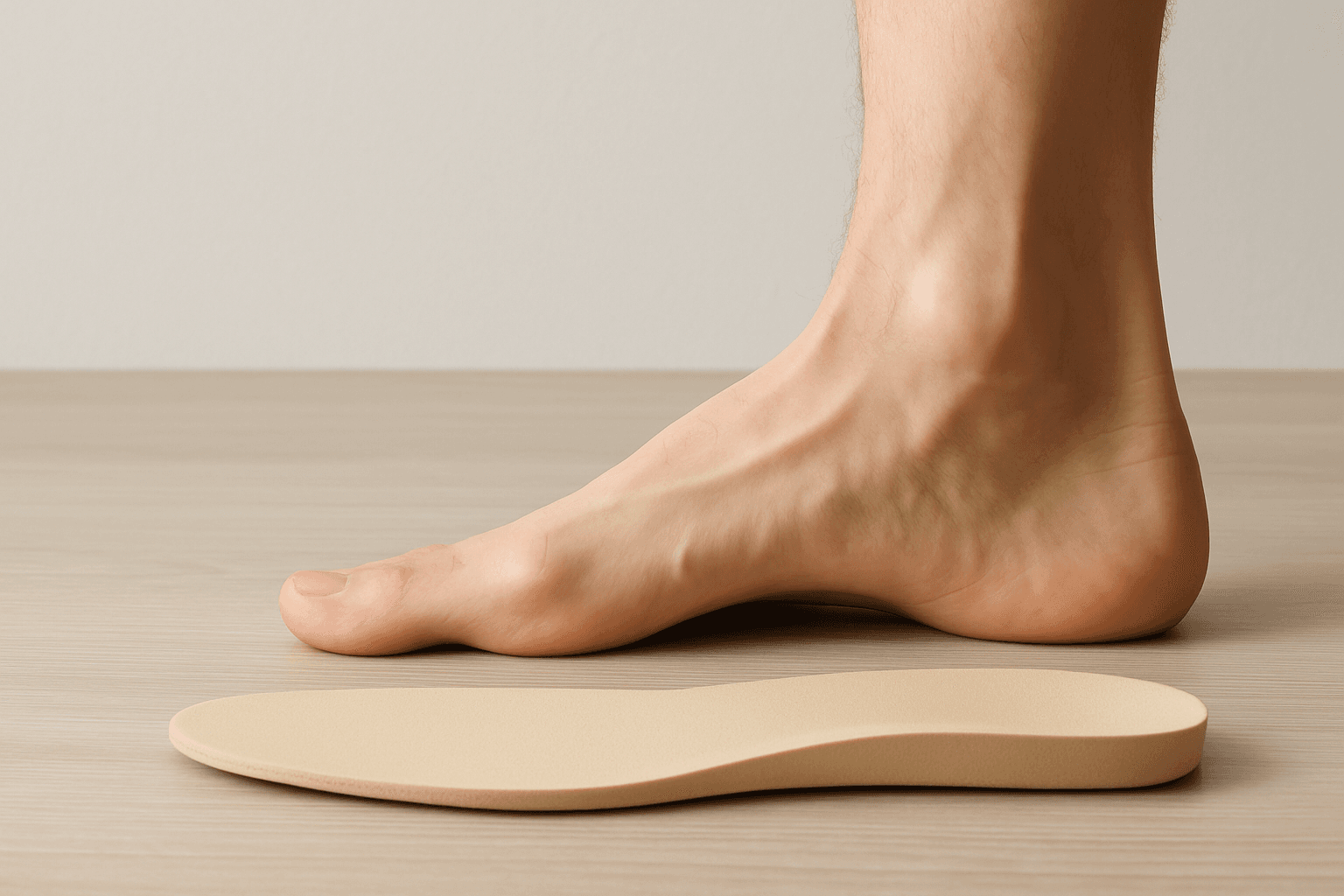
The most important feature of a plantar fasciitis insole is a firm medial arch that holds its shape under body weight. Press on the arch of the insole with your thumb, as hard as you can push. A useful arch resists — it flexes a little but does not flatten. Squishy, soft arches feel great in the store and do almost nothing after a mile of walking, because they collapse under load and let the fascia stretch through the same range it would without an insole.
Firmness is not the same as rigidity. A plantar-fasciitis insole is not a rigid custom orthotic; those are useful in the stubborn cases and cost hundreds of dollars, and they take weeks to make. What over-the-counter insoles do is sit in the useful middle — firm enough to hold the arch's shape through eight to twelve hours of walking, soft enough to be comfortable from day one. Podiatry surveys and randomized trials (a 2003 study in the Journal of Bone and Joint Surgery by Pfeffer and colleagues, and a 2016 Cochrane review of custom foot orthoses) consistently find that over-the-counter supportive insoles perform close to custom orthotics for typical plantar fasciitis, at a fraction of the cost.
That firmness is why the insole in our Akusoli insoles review earns its place — the arch shell holds through a real workday. A gel-only insole from a drugstore rack usually does not.
A deep, cradling heel cup
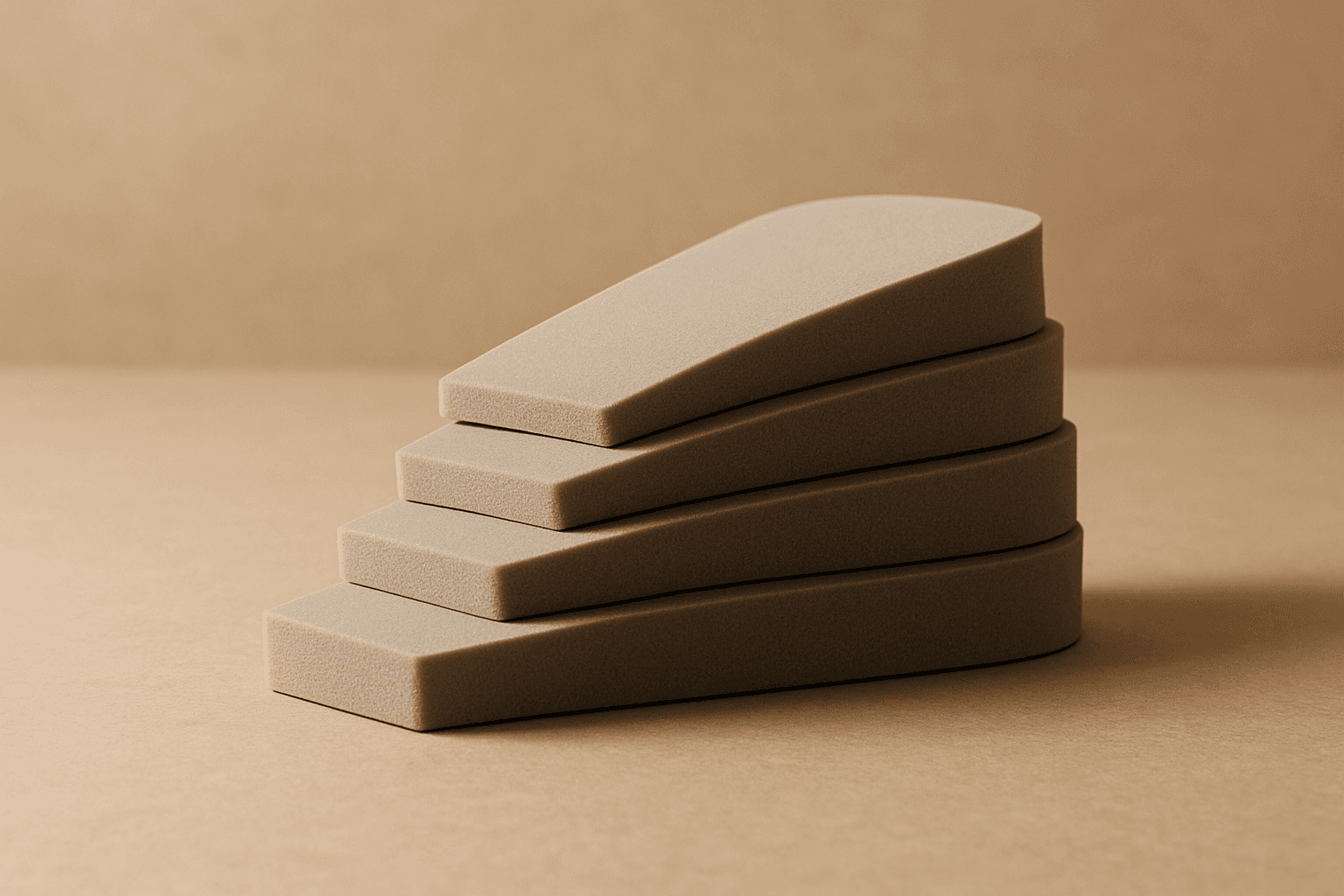
The second feature is a deep heel cup that cradles the fat pad under the heel bone. Look at the insole from the back: a real heel cup is a bowl shape that visibly wraps up around the sides and back of the heel, not a shallow dish. The point of the cup is to keep the fat pad in place under body weight. A healthy fat pad is a natural shock absorber; when it splays out to the sides under load, the heel bone hits the ground with less padding between it and the shoe, and the plantar fascia at its heel attachment takes the extra impact.
Depth matters. A one- to two-centimeter deep heel cup is the range most useful insoles land in; deeper is fine as long as the shoe has the volume to accept it. If you have thin fat pads (common with age, high arches or a lifetime of running on hard surfaces), a deep heel cup is the single feature to prioritize. Our heel cups vs insoles walk-through goes deeper on when a standalone cup is enough and when the full insole earns its money.
Shell material and density: what carries the arch and the cup
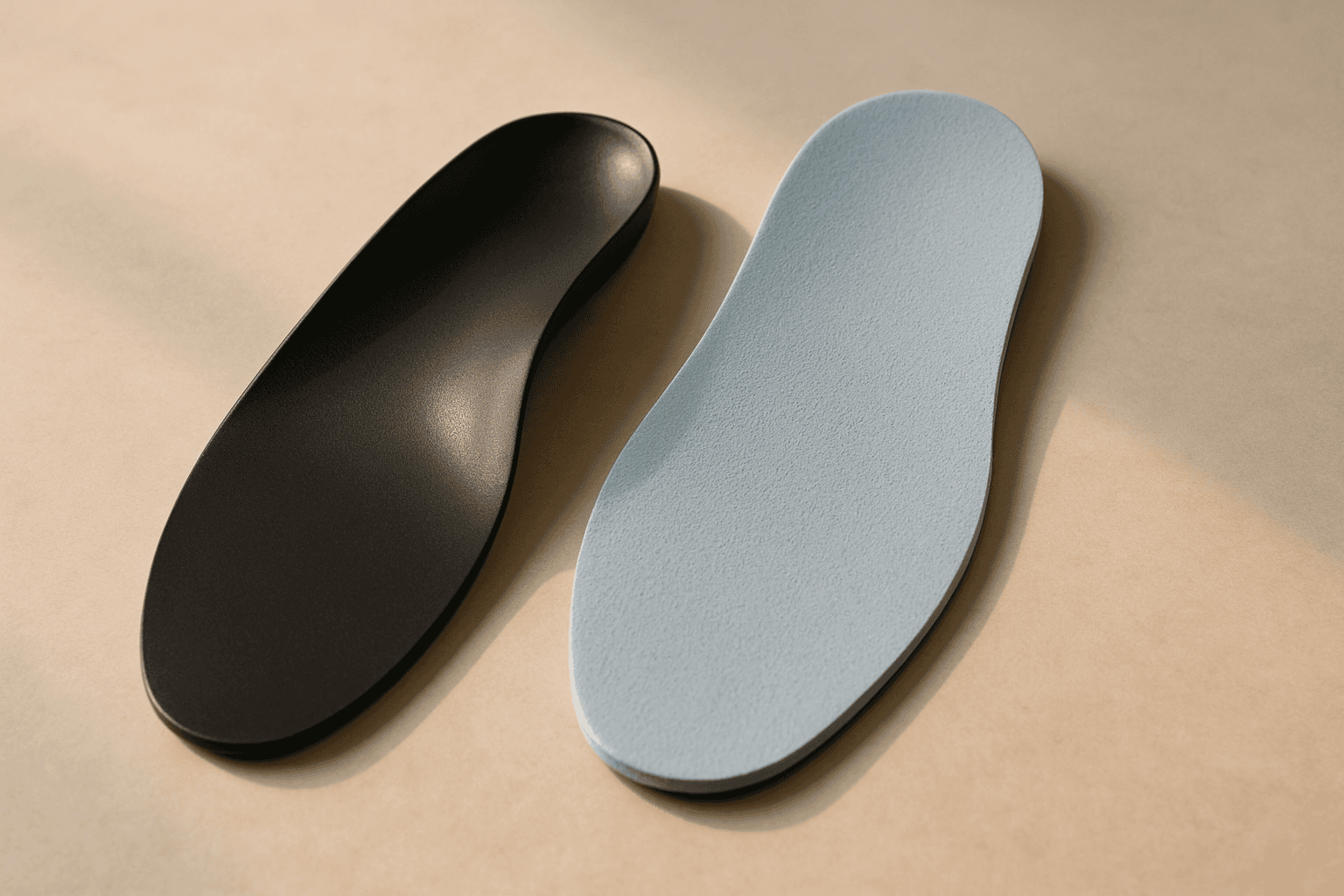
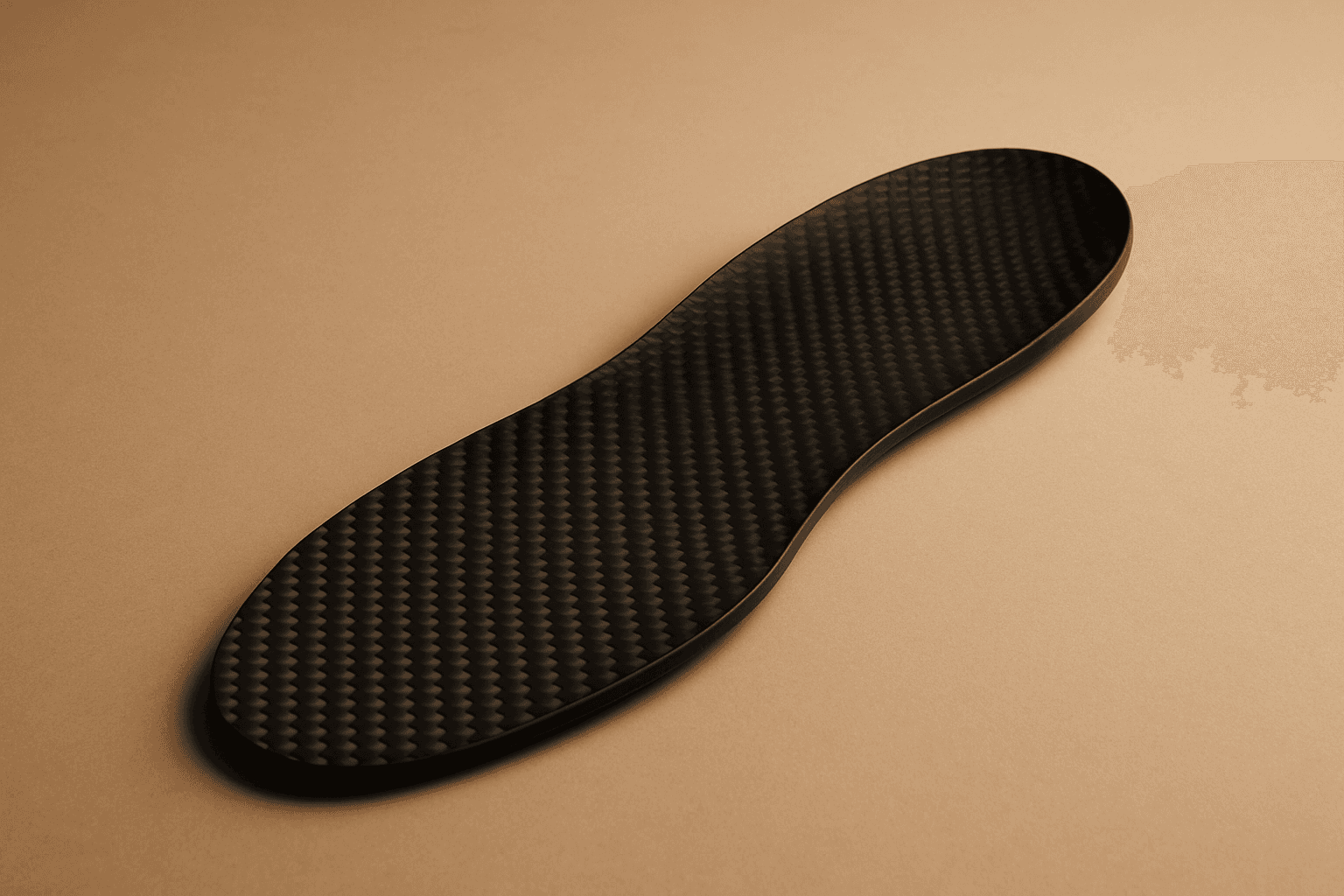
The shell is the firm layer that carries the arch shape and the heel cup. Almost all useful over-the-counter insoles use either dense EVA foam, a thermoplastic (a thin rigid layer of plastic with foam on top and bottom), or a firm-foam sandwich construction. All three can work. What separates a good shell from a bad one is whether it holds its shape after months of daily wear. A shell that packs down within four to six weeks is doing less and less work each week, and by the six-month mark it is a foam pad with a memory of an arch.
The tell in the store is the density of the shell. Bend the insole in your hands. A useful shell resists — you can feel a distinct "snap back" when you release it. A limp insole is soft foam under a thin cover, and it will not last a season of daily wear even if it feels wonderful at first. This is the single most common way an insole disappoints — it starts helping, packs down over a month, and readers assume the insole "stopped working" when what really happened is the shell died.
Top-cover material (the layer against your foot) is comfort, not support. A thin fabric layer, a light foam, a moisture-wicking mesh — any of them is fine. Do not pay a premium for exotic top covers. Do pay attention to the shell.
Full-length vs three-quarter, and the shoe compatibility question
Most plantar-fasciitis insoles come in a full-length version (heel to toe) and a three-quarter length (heel to just behind the ball of the foot). Full-length is the default for walking shoes, work boots, running shoes and any closed-toe shoe with a removable factory insole. Three-quarter is the pick for slim dress shoes, low-volume court shoes and anywhere a full insole would crowd the toes; it supports the arch and heel without competing for forefoot volume.
Almost every closed-toe shoe made in the last twenty years has a removable factory insole. Pull it out first — the shoe was designed to be paired with an insole roughly the thickness of the one that came out — and lay the aftermarket insole on the exposed footbed. If the aftermarket insole rides up at the sides or the toe, it is too big for that shoe; trim it a shade smaller using the factory insole as a template, cutting a little outside the line and shaving more later. Slip the shoe on and walk twenty steps on a hard floor: the arch should feel firm and supportive, not painful, and the heel should feel cradled rather than lifted.
Shoes without a removable factory insole (many boat shoes, some fashion sneakers, most flip-flops) are the wrong home for a supportive insole. Save them for short wears once symptoms are quiet, and put the insole in the shoes that will fit it. Pair the insole with the doctor-recommended shoes for plantar fasciitis walk-through if you are shopping for a new pair.
Breaking in: the first week matters more than the brand
Feet coming from flat drugstore inserts or unsupportive shoes often notice a strange first-day feeling with a new supportive insole. The arch is doing work that muscles and the fascia were compensating for, and the compensation itself was part of the problem. A little arch fatigue on day one, or a mild ache on the top of the foot in the evening, is normal and quiets within a week. Sharp pain, blistering or new numbness is not, and means the insole is the wrong fit or shape for your foot; take it out and try a different pair.
Ease it in over a week: two to three hours the first two days, a half day on days three and four, then full days from day five. Do not drop a new insole into a Monday twelve-hour warehouse shift. If both feet feel supported and quietly more comfortable after two weeks of full-day wear, you have the right insole; if not, most reputable brands accept returns within thirty to sixty days for exactly this reason.
How insoles fit into the wider plantar fasciitis routine
A supportive insole is the highest-leverage single change most readers can make, and it is not the only change. Pair it with the plantar fasciitis stretches routine morning and night — the towel stretch before your feet hit the floor, calf work against a wall, and rolling the arch with a frozen bottle after long days. Cut whatever activity tipped the tissue over (mileage jumps, long shifts on concrete, a summer of flat sandals) for two to four weeks. Give the whole picture three to four weeks before deciding whether it is working; morning pain is stubborn but responsive when the routine is honest and consistent.
Insoles are a comfort and support product, not a treatment. They cannot fix a stress fracture, a nerve entrapment, or an inflammatory condition, and pain that has not budged after a month of honest care deserves an in-person exam by a doctor or podiatrist. Within their lane, they are the piece of gear we would install first and would keep in every shoe for as long as the foot benefits from the support.
Read the Akusoli review
A firm medial arch, a deep heel cup and a shell that holds up — the trim-to-fit pair we would drop into a walking shoe first.
Read the Akusoli review →Frequently asked questions
How do I know if an insole is actually firm enough for plantar fasciitis?
Press hard on the arch of the insole with your thumb. A useful arch resists — it flexes a little and then holds. A squishy arch that collapses under thumb pressure will collapse under body weight, and it will not do the mechanical job that changes plantar fasciitis. Firm foam or a foam-over-plastic shell is the pattern to look for; gel-only or memory-foam-only arches almost always disappoint.
How long do plantar fasciitis insoles take to work?
Most readers notice the first-steps-of-the-morning pain softening within the first two weeks of full-day wear paired with a daily stretch routine. Full symptom relief usually takes four to eight weeks. If nothing has changed after four weeks of honest daily use with a firm-arch insole and the stretches, either the fit is wrong for your foot or a clinician needs to look at the picture; keep the receipt while you decide.
Custom orthotics or over-the-counter insoles — which do I need?
For typical plantar fasciitis, over-the-counter supportive insoles perform close to custom orthotics in the trials that have compared them, at a small fraction of the cost. Custom orthotics earn their money when off-the-shelf has failed honestly, when there is a specific structural issue (a rigid high arch, a severe flatfoot, a leg length difference), or when a clinician has identified a target the standard insole shape does not hit.
How long does an insole last before I need to replace it?
Six to twelve months of daily wear is the normal life for a foam-over-shell insole. When the arch has packed down and no longer feels distinct against a fresh pair, when the heel cup looks flattened, or when the top cover has worn through, the insole has done its life's work. A packed-down insole is not doing the job you bought it for even if it still fits in the shoe.
Can I use the same insole in running shoes and work boots?
You can, but a single pair rarely lives happily in two very different shoes. Running shoes and walking shoes usually have similar internal volume and accept the same full-length insole. Work boots have deeper volume and often benefit from a firmer, thicker insole. Slim dress shoes usually need a three-quarter-length version. Buying two supportive pairs and leaving one in each primary shoe is what most readers end up doing.
Do insoles help a heel spur diagnosis specifically?
A supportive insole with a firm arch and a deep heel cup helps the soft tissue around a heel spur calm down — the spur itself is bone and the insole does not touch it, but the fascia and fat pad that are actually painful respond to the same support that helps plantar fasciitis. Our heel spurs hub goes into the overlap and where the two conditions diverge.
HeelCups is reader-supported. When you buy through links on our site we may earn an affiliate commission, at no extra cost to you. This article is general information about foot comfort and is not medical advice — see our medical disclaimer.