WORK BOOTS
Best Insoles for Work Boots: What Actually Survives a Season on Concrete
Steel toes, stiff shanks and eight-hour shifts on a slab floor — the working guide to picking an insole that outlasts the factory pad and still feels supportive at hour ten.
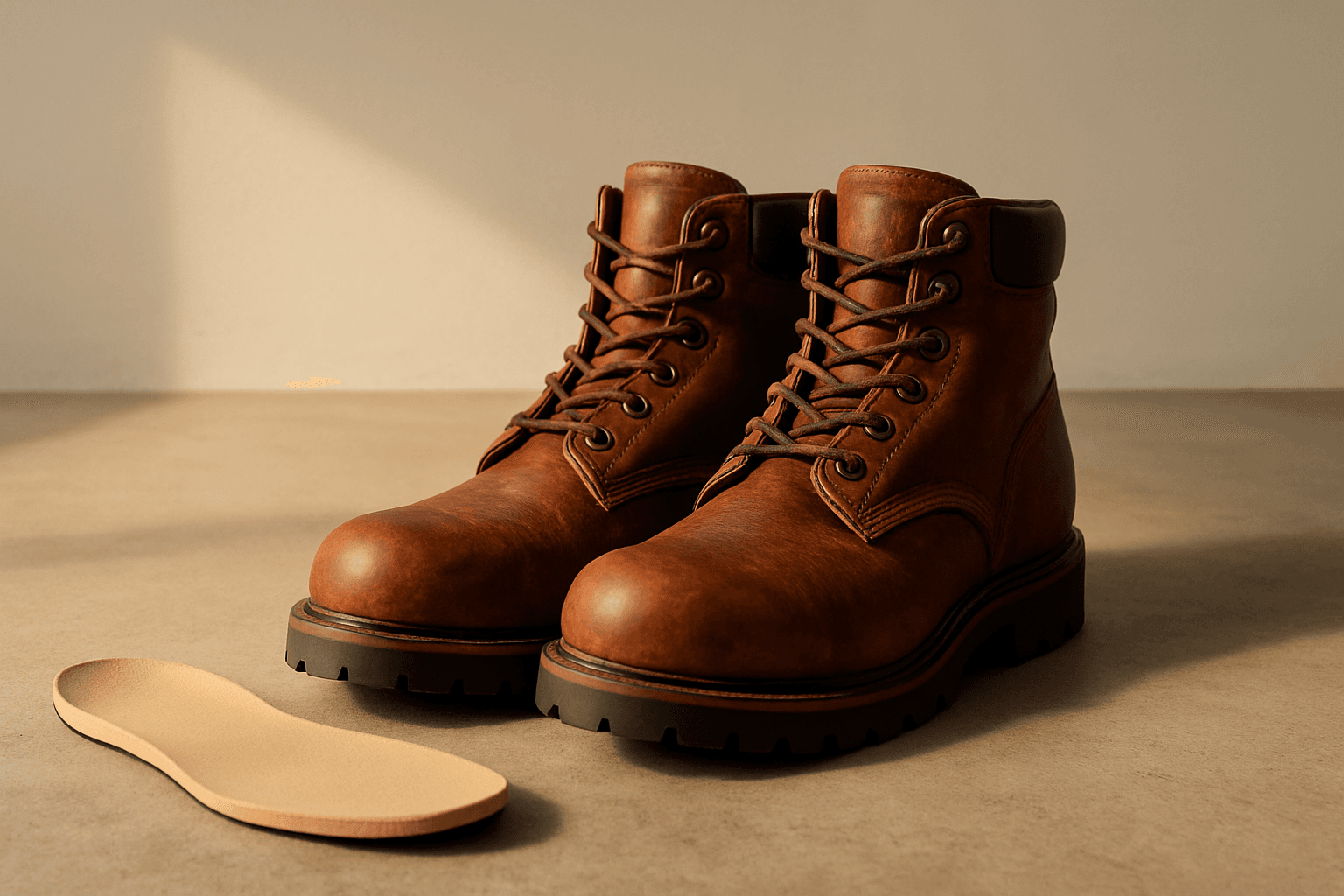
Work boots are one of the harshest homes an insole can live in. Warehouse, construction, oil-field and factory boots weigh two to four pounds each, sit on a rigid shank that barely flexes, and often carry a steel or composite toe that pushes the fit budget forward. Their factory insoles are usually flat pads of foam that pack down within a month, leaving the fascia and heel pad to fend for themselves on a concrete floor for the next fifty weeks. Any real support you want in a work boot is support you install yourself.
The good news is that a boot's rigid build actually makes it a good candidate for an aftermarket insole. The boot's stiff shank and thick outsole take the punishment of the floor; the insole only has to change what happens in the last inch between the sock and the boot bed — support the arch, cradle the heel and take the edge off the static load. There is usually plenty of vertical room inside a work boot, once the factory pad comes out, for a full-length trim-to-fit insole with real geometry. That is a friendlier situation than a slim dress shoe or a low-volume runner ever gives you.
This page walks through what a work-boot insole actually needs to do, how to fit one without crowding a steel toe, and the break-in and rotation habits that get a pair through a season rather than a paycheck. Nothing here is medical advice. Persistent heel or arch pain that has not eased after four to six weeks of honest home care deserves an in-person exam by a doctor or podiatrist. Every recommendation on this hub is written for comfort, support and relief.
Why work boots chew through factory insoles
The insole a boot ships with is not a serious support tool. Its job at the factory is to make the boot feel padded when the customer tries it on and to fill vertical space so the fit looks right; it is usually a flat pad of low-density foam glued into place. Under a heavy boot on a hard floor, that foam compresses permanently within a few weeks. By month two the pad has flattened to the outline of the wearer's foot with no arch geometry left. That is why so many boots feel supportive for the first week and then feel like standing on a plank by the end of the first month.
Static load is what does the damage. A walking stride cycles the foot through swing and stance; each foot spends roughly half of every step unloaded, and the foam has a moment to recover. Standing on a factory or warehouse floor loads both feet almost continuously — muscle activity is a low static hum rather than a rhythmic contraction, the calf pump barely runs, and the insole foam holds its compressed shape for hours at a time. Foams designed for the walking cycle pack down two to three times faster under standing load. Add a heavy boot and a rigid outsole that transfers rather than absorbs floor impact, and the factory pad is doing the least useful job in the whole shoe.
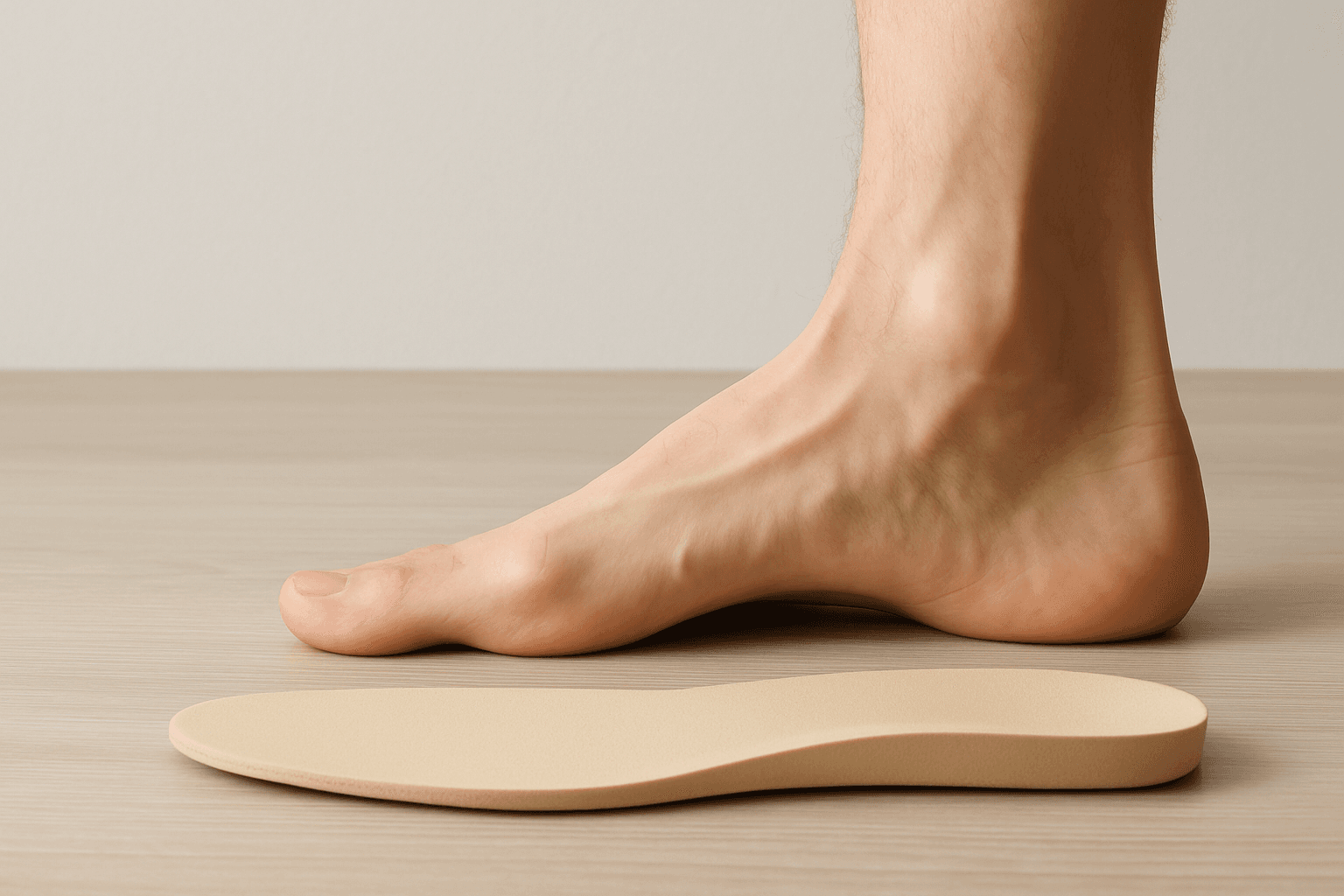
Replacing that pad with a supportive full-length insole changes what your foot feels for the twelve-hour day. A firm medial arch stops the plantar fascia from being pretensioned every minute you are standing; a deep heel cup keeps the fat pad under the heel bone from splaying under the weight of the boot; a dense but not brick-like base takes the edge off the concrete the boot's outsole is transferring straight up.
The three features a work-boot insole actually needs
First, a firm medial arch. Press your thumb hard into the arch of a candidate insole. If it flattens easily to the base plate, that arch will collapse under body weight — plus the weight of the boot — within an hour and do nothing for the fascia by hour four. The good insoles push back: foam-over-plastic or dense EVA is the common recipe. The peak of the arch should sit under the medial side of the foot, closer to the heel end than the toe end, matching where the anatomical arch actually lives.
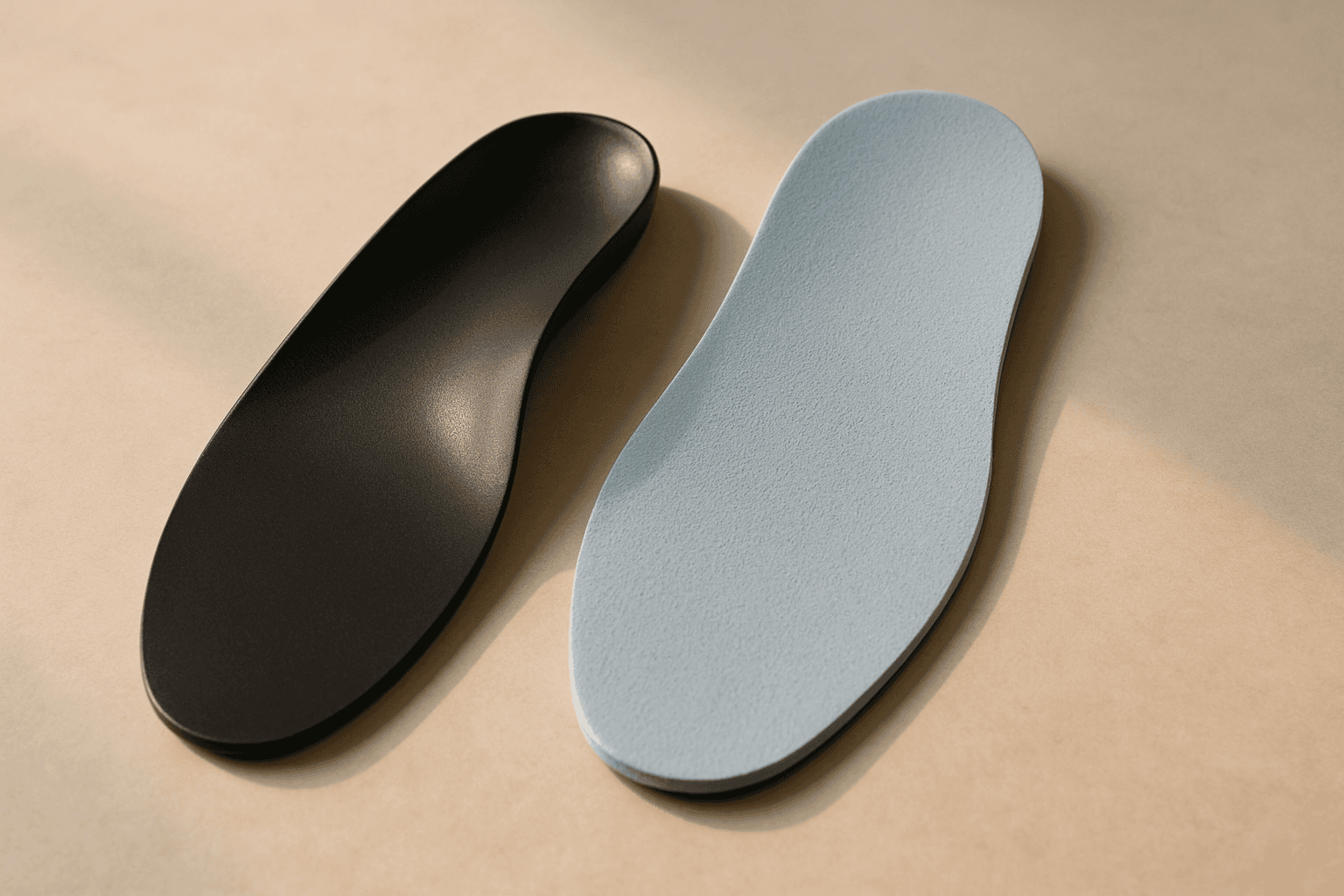
Second, a deep heel cup. Work boots concentrate a lot of weight straight down through the heel, and a fat pad that splays sideways with every load absorbs less shock than one that stays cupped in place. A bowl-shaped heel cup — not a shallow disc — keeps the pad seated and cradles it while the boot's midsole handles whatever the pad does not. Deep heel cups are also what make a work-boot insole feel noticeably better under the heel before you have even walked ten steps.
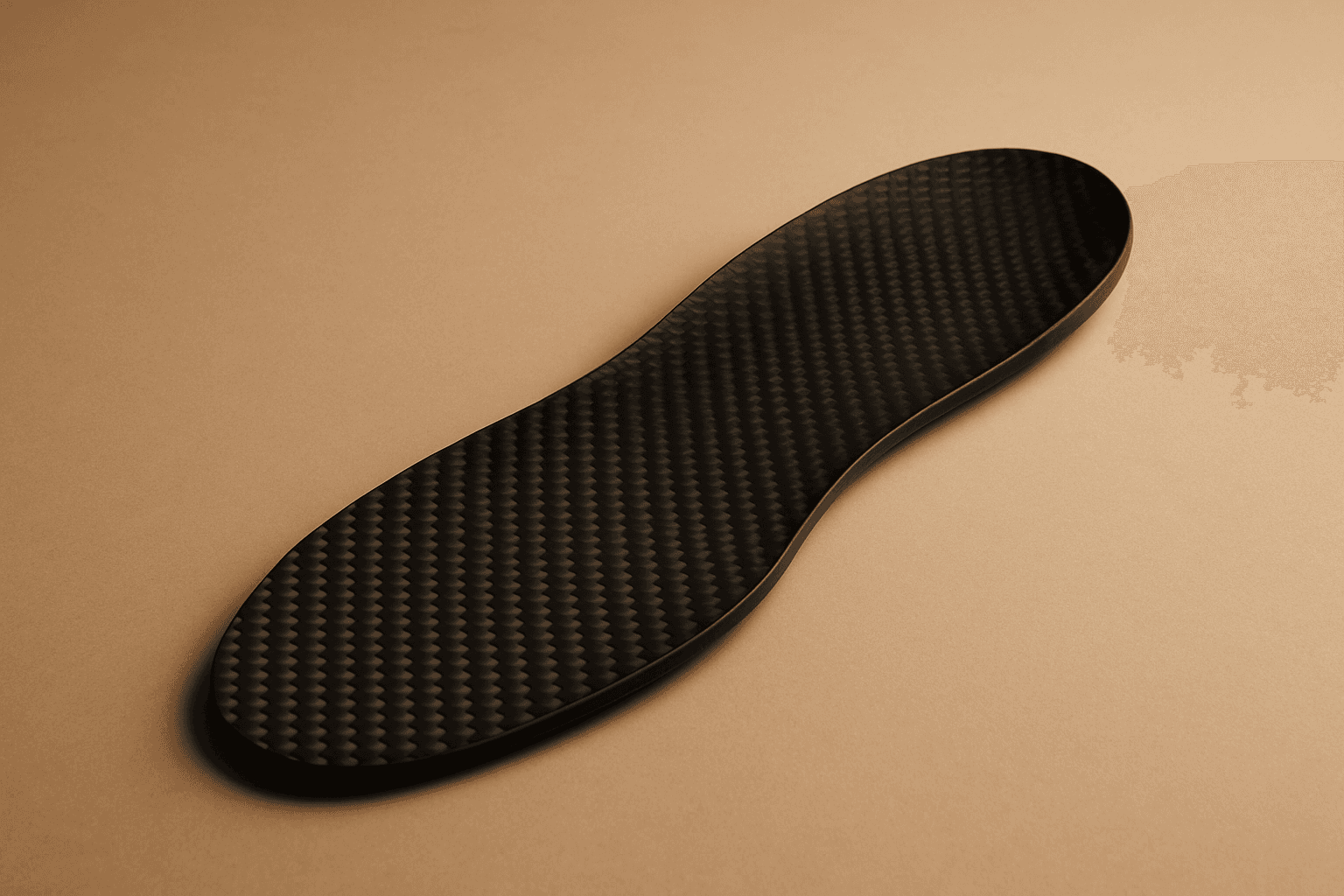
Third, a dense base that lasts. Dense EVA or a similarly firm foam holds its shape under repeated static load; softer foams and gel-only bases pack down within months in a work boot. Antimicrobial and moisture-wicking top layers matter more here than in a running shoe, because feet spend more hours inside a boot without the airflow of a stride — odor and skin softening build up otherwise. Skip the marketing (magnets, acupressure nodes, cooling gel dots); the arch, the heel cup and the base are what earn the recommendation.
Fitting an insole into a work boot without crowding the toe
Most work boots have vertical room for a full-length aftermarket insole once the factory pad comes out. Pull the factory insole; if it lifts clean, you have room for a full-length replacement. If the factory insole is glued in or lives under an inner lining, either work carefully around it or leave it in place and use a three-quarter-length insole (arch through mid-foot, no forefoot section) so you do not build up too much material under the toe box. A steel or composite toe boot is more sensitive to that build-up because the toe cap does not flex out of the way.
Trim to fit with the old insole as a template. Lay the new insole on the old one, trace the outline in permanent marker (or lay one on top of the other), and cut a little outside the line the first time so you can test the fit and shave more later. Boots hold shape better than sneakers and are less forgiving of an insole that is a hair too wide; err on the side of trimming a millimeter at a time rather than one confident cut.
Break in a new insole in the boots over a week. A half shift the first two days, then a full shift, then a long shift. Feet coming from flat factory pads often feel the arch working small muscles that had been coasting; that fades. If soreness in the arch or the top of the foot is sharp rather than achy, or has not settled within a week, drop back down a step and re-ramp more slowly. Break-in feeling in the boot is different from break-in feeling in a walking shoe because the boot itself does not flex — the insole is doing more of the shape work.
Rotation and replacement: getting through a season
Rotate two pairs if you can. Foam-based insoles recover most of their compression between shifts with twelve to twenty-four hours of no-load rest, so alternating pairs across two identical boots (or moving one pair between two pairs of boots) extends the useful life meaningfully. Rotating also gives each pair time to dry between shifts, which matters in a boot: enclosed leather with sustained foot moisture is the fastest way to break down insole foam and top layers.
Plan to replace a work-boot insole every six to twelve months of daily wear. The tell-tale signs the pair is done: the arch no longer feels distinct when you press it, the heel cup has flattened to a shallow disc, and end-of-shift fatigue creeps back to where it was before you installed the insole. Track it by writing the install month inside the boot with a paint marker; feet acclimate slowly and it is easy to forget how a fresh pair felt.
Pair the insole with the small habits that make the biggest end-of-day difference. Two or three real breaks off your feet across a shift beat one long lunch. Change out of the boots and socks the moment you get home so the skin dries. A frozen water bottle rolled under the arch for five minutes after the longest shift days is the standard clinician-passed trick. The pair we would install first for most work-boot readers is in our Akusoli insoles review; it hits the three-feature spec at a price you can rotate two of.
Common work-boot complaints and what fits each
Morning heel pain that stabs with the first steps out of bed and eases after ten minutes of walking is the classic plantar fasciitis pattern; our plantar fasciitis hub covers the full routine, and the insole answer is the firm-arch, deep-heel-cup profile above. Pair the insole with a bedside morning stretch and a supportive first shoe (not slippers on tile) and the first-steps difference shows up in a week.
Diffuse bruised-feeling pain across the whole heel pad, worst at the end of a shift rather than the start, is the fat pad talking. It responds best to cushioning under the heel with a deep cup rather than aggressive arch support — see the heel cups vs insoles walk-through if you are torn between the two tools. Some readers wear a silicone heel cup on top of an insole in the boot for the shifts that beat the pad up the most; there is usually enough vertical room in a boot to make that stack work.
Pain at the back of the heel, worst when the boot's stiff heel counter rubs, points at insertional Achilles or a Haglund's bump. A small heel lift inside the boot (some insoles include one; a stick-on heel lift is the cheap version) shortens the tendon's working length and takes pressure off the counter. Read our back of the heel walk-through if that is the pattern; the fix is different from the fascia routine.
When a work-boot complaint is not an insole problem
An insole is a comfort and support tool, not a treatment. Persistent heel, arch or foot pain that has not eased after four to six weeks of honest home care — a supportive insole in every shift boot, calf and fascia stretching morning and night, less time barefoot on hard floors at home, and cutting whatever activity tipped the tissue over — deserves an in-person exam by a doctor or podiatrist. So does pain that came with a specific fall or injury, or that comes with swelling, warmth, numbness, tingling, a color change, or that wakes you at night.
Numbness or burning in the toes after a long shift is not an insole problem either; that pattern points at a nerve issue (Morton's neuroma, tarsal tunnel, or a systemic cause) and belongs with a clinician, especially if it is progressive or bilateral. A crushing or dropped-object injury inside a boot, even one that felt survivable at the time, is worth an exam within a day or two — hairline fractures in the metatarsals and calcaneus hide well under a boot's stiffness. Match the tool to the pattern and work-boot shifts get a lot more livable; know when the pattern has stopped fitting the self-care lane.
The trim-to-fit insole we would install in a work boot
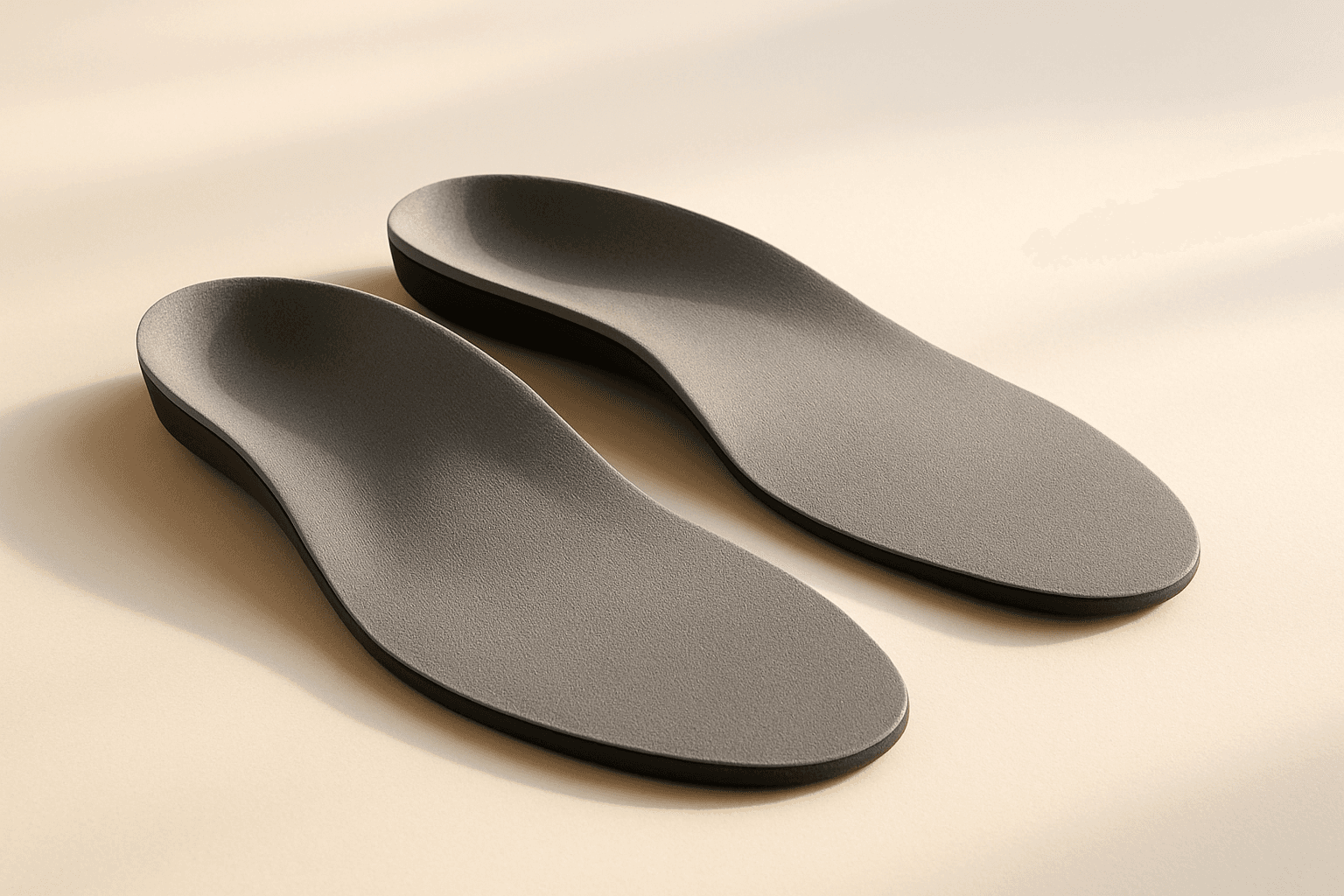
A firm arch, a deep heel cup and a dense EVA base — the three features a boot insole needs to still feel like one at hour ten.
The trim-to-fit insole we would install in a work boot →Frequently asked questions
Do I need to remove the factory insole before adding a new one?
Yes, for most boots. Factory insoles are usually flat pads of low-density foam without meaningful arch geometry, and stacking a supportive insole on top of one crowds the fit and raises the foot too high inside a steel-toe boot. Pull the factory pad and use it as a trimming template. If the factory insole is glued in or lives under an inner lining, a three-quarter-length insole that sits on top without adding forefoot height is the workaround.
Will a full-length insole fit inside a steel-toe boot?
In most work boots, yes — steel-toe boots have vertical room in the toe box because the toe cap is set above the foot rather than pressed onto it, and pulling the factory pad usually opens enough space for a full-length aftermarket insole. If your specific boot has a low-volume toe, or if the fit feels tight in the forefoot after installing a full-length pair, switch to a three-quarter length so no material adds under the toe cap.
How is a work-boot insole different from a running or walking insole?
The features overlap — firm arch, deep heel cup, dense base — but a work-boot insole is tuned for continuous static load on hard floors rather than the walking cycle. It prizes a base that holds its shape under sustained body weight, an arch stiff enough to survive twelve-hour shifts on concrete, and moisture-wicking or antimicrobial top layers because feet spend more hours inside a boot without airflow. A soft running insole tends to pack down faster in a work boot than in a runner.
How long do insoles last inside a work boot?
Roughly six to twelve months of daily wear on a standing job before the arch loses its firmness and the heel cup flattens. That is shorter than the same pair would last in a walking shoe because static load and boot moisture compress foam more thoroughly than intermittent load. Rotating two pairs of insoles between two pairs of boots meaningfully extends life; replace at the first sign that end-of-shift fatigue is creeping back to where it was before installation.
Should I use a heel cup instead of an insole in my work boot?
For fat pad pain across the whole heel pad, a silicone heel cup covers a lot of the same benefit and stacks on top of any insole without crowding the toe. For arch fatigue or plantar fasciitis-style morning heel pain, you want the firm medial arch of a full insole; a heel cup alone will not touch that. Many work-boot readers end up using both — a supportive insole for the arch and a silicone cup on top for the heel — because a boot has the vertical room for the stack.
Can I wash a work-boot insole?
Most foam insoles tolerate a gentle hand wash with mild soap and cool water, air-dried out of the boot for twenty-four hours; do not machine wash or tumble dry — heat and agitation break down the arch. Wipe the top layer with a damp cloth between deep washes to keep odor down, and pull the insole out at the end of every shift so both the insole and the boot dry through the night. A pair that dries between shifts lasts noticeably longer than one that lives inside a damp boot.
HeelCups is reader-supported. When you buy through links on our site we may earn an affiliate commission, at no extra cost to you. This article is general information about foot comfort and is not medical advice — see our medical disclaimer.