BRUISED HEEL
Bruised Heel or Stone Bruise? How to Tell, What Eases It and How Long It Usually Lasts
A sharp landing, a stray pebble or a long shift on concrete can leave the heel feeling like one big bruise. Here is how a bruised heel differs from plantar fasciitis, what tends to bring comfort, and when to get it looked at.
A bruised heel feels like a tender, deep ache right in the middle of the heel pad, usually worse when you press on it or land on it, and often traced back to a specific moment: a hard step off a curb, a jump, a stone under a thin sole, or a week of long shifts on concrete. Unlike the stabbing first-step pain of plantar fasciitis, it tends to hurt on every heel strike and builds as the day goes on.
Most bruised heels involve the fat pad, the cushion of tissue under the heel bone, and settle over a few weeks with rest from the trigger and a cushioned shoe. Podiatry sources describe bone bruises as slower, often taking several weeks to a few months. Those timelines come from clinic guides rather than controlled studies, so treat them as rough ranges rather than promises.
This page covers how to recognise a bruised heel, how it differs from its look-alikes, what usually brings comfort, and the signs that mean you should skip home care and see a clinician. It is general information, not a diagnosis.
What a bruised heel actually is
The heel is padded by a chamber of fat held in place by fibrous walls. It works like a shock absorber, and a hard or repeated impact can irritate that cushion or the heel bone beneath it. Healthline's bruised heel guide describes the same picture: pain in the pad of the heel, sometimes with swelling or visible discolouration, usually after an impact.
A deeper bone bruise involves the surface of the heel bone itself. It is a stronger injury than a pad bruise, hurts more and can take longer to settle, and it does not show on a standard X-ray, which is mainly used to rule out a fracture.
Bruised heel versus plantar fasciitis
Location and timing are the big clues. Plantar fasciitis hurts at the front-inside of the heel, where the fascia attaches, and is worst with the first steps after rest, easing as you warm up. A bruised heel hurts in the centre of the pad, is tender to a firm press, and does not follow the morning pattern as neatly. Our plantar fasciitis symptoms page lays out the full map.
If the pain is diffuse across the pad and worse late in the day on hard floors, it also overlaps with heel fat pad syndrome. The two are close cousins: a one-off impact points to a bruise, while a slow build with age or heavy standing points to fat pad wear.
What tends to bring comfort
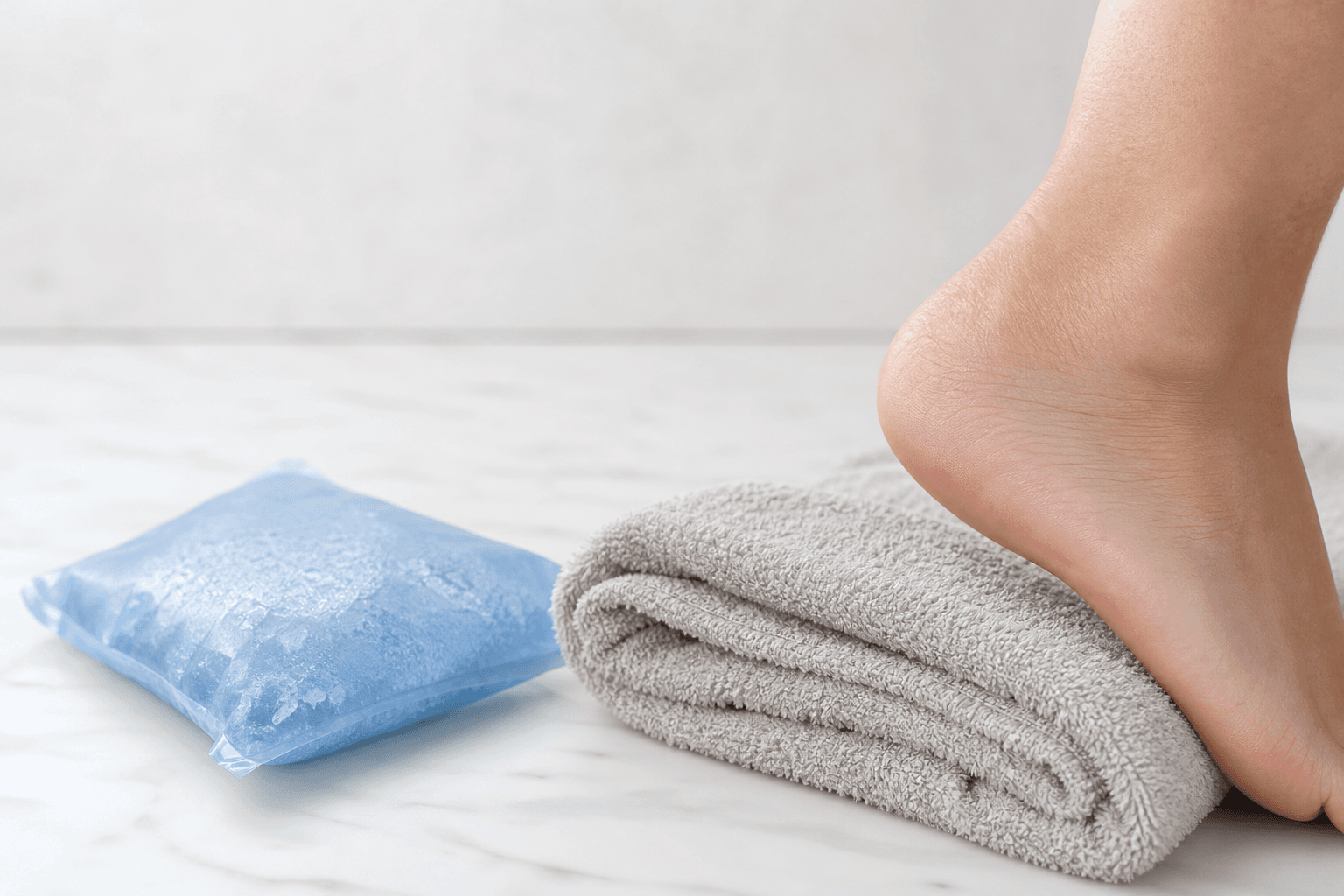
The first step is easing the load that caused it. Take a few days off running, jumping and long stretches barefoot on hard floors, and keep walking short and gentle. An ice pack wrapped in a cloth for ten to fifteen minutes after activity, and elevating the foot in the evening, are common comfort measures. Over-the-counter pain relievers are an option for some people, but ask a pharmacist or doctor whether they suit you.
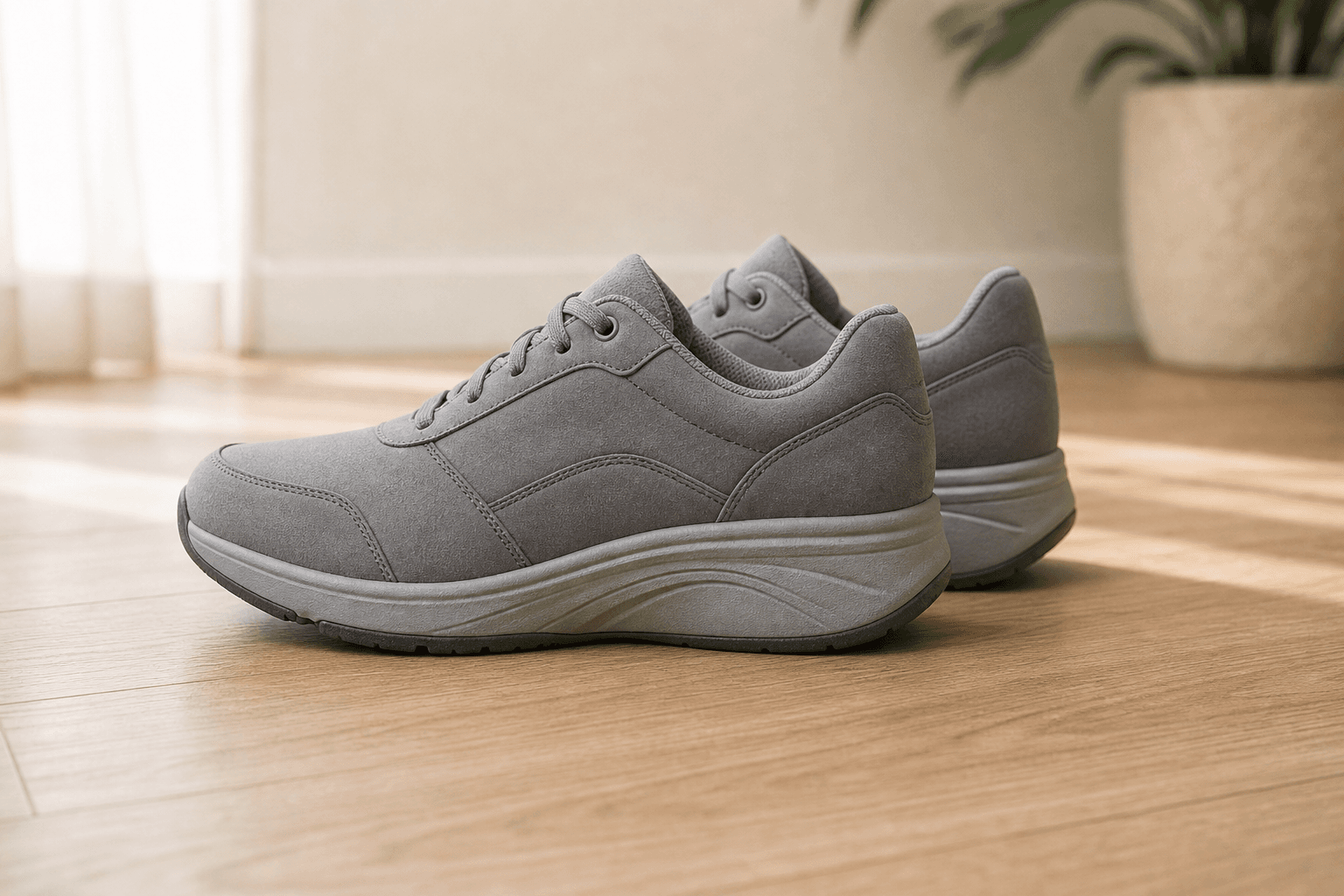
Cushioning does most of the practical work. A shoe with a thick, forgiving heel, or a soft heel cup that holds the pad in place under the bone, takes the sting out of each step. Our guide to gel vs silicone heel cups explains the differences, and how to use heel cups covers fit and wear-in. If you also want arch support for longer days, the Akusoli insoles review looks at one option that combines a heel cup with a supportive arch.
How long does it usually take?
Clinic guides commonly quote one to three weeks for a pad bruise and a few weeks to a couple of months for a bone bruise, with some people taking longer. Pain that is clearly improving week by week is a good sign. Pain that is flat or getting worse after two weeks of sensible rest is a reason to book an appointment.
Returning too soon is the usual reason a bruise lingers. Build back gradually: shorter walks first, then normal days, then impact activity, wearing cushioned shoes throughout.
Red flags: when it might not be a bruise
A heel that cannot take weight, looks swollen or misshapen, feels warm or red, or hurts deeply after a fall or jump could be a fracture and needs prompt imaging. Our page on heel stress fracture describes the more gradual version. Numbness, tingling, fever, or pain that wakes you at night also belong with a clinician rather than a home routine.
Anyone with diabetes or reduced foot sensation should have heel injuries checked early, since a bruise can be harder to judge when feeling is reduced.
Keeping it from coming back
Replace worn shoes whose heel foam has packed down, avoid thin-soled flats on concrete, and keep calf stretches going to take strain off the heel. If your job keeps you on hard floors, a cushioned insole is a sensible habit. The wider picture is in our heel pain hub.
Explore the heel pain hub
Map your pain by location and timing, then follow the page that fits.
Explore the heel pain hub →Frequently asked questions
How do I know if I have a bruised heel?
Typical signs are tenderness in the middle of the heel pad, pain on landing or when pressed, and sometimes swelling or discolouration, often after an impact or a stretch on hard floors. A clinician can confirm it and rule out a fracture.
How long does a bruised heel take to get better?
Podiatry guides commonly quote one to three weeks for a pad bruise and several weeks to a few months for a bone bruise. These are rough ranges, and pain that is not improving after two weeks deserves an exam.
Can I walk on a bruised heel?
Gentle, short walks in a cushioned shoe are usually comfortable. If you cannot put weight on the heel, or it hurts deeply after a fall, get it checked before walking on it.
Are heel cups good for a bruised heel?
Many people find a soft heel cup comfortable because it cushions and holds the heel pad under the bone. It is a comfort measure, not something that speeds up the bruise itself.
Is a stone bruise the same as a bruised heel?
A stone bruise is a bruise on the pad of the foot, often at the heel or ball, caused by stepping on something hard. A bruised heel is that same idea when it lands on the heel.
HeelCups is reader-supported. When you buy through links on our site we may earn an affiliate commission, at no extra cost to you. This article is general information about foot comfort and is not medical advice — see our medical disclaimer.