HEEL CUP MATERIALS
Gel vs Silicone Heel Cups: Which One Is Actually Better for Your Heel?
Both look nearly identical in the drugstore aisle — a small clear bowl for under your heel. What sets them apart is durability, firmness, and how long the cradle actually stays cupped after you open the box.

The drugstore aisle labels most small under-heel cushions as either a gel heel cup or a silicone heel cup, and the packaging often leaves it unclear which one is which. Both look like a small clear bowl. Both slide under the heel bone inside a shoe. Both cost between five and fifteen dollars a pair. The material genuinely matters, though — not because one is a fake and the other a real product, but because a soft gel and a firm medical silicone feel different underfoot, last for meaningfully different amounts of time, and suit different heel pain patterns. This page sorts the two honestly.
The short version: silicone is firmer, holds its shape longer under daily wear, and is the pick we would buy first for anyone using a heel cup daily in a work shoe or walking shoe. Gel is softer, cushions more on the first day, and packs down faster; it is the better pick for occasional wear, thin shoes where a firmer cup crowds the fit, and readers whose heel pain is mostly about cushioning rather than cradling. The long version is below.
Nothing here is medical advice. A heel cup is a comfort and support product, not a treatment. Persistent heel pain that has not eased after four to six weeks of honest home care deserves an in-person exam by a doctor or podiatrist. Every recommendation on this hub is written for comfort, support and relief.
What each material actually is
Medical-grade silicone is a synthetic rubber made from silicon, oxygen, and hydrocarbons. In a heel cup it is molded into a firm-but-yielding piece with a clear or slightly cloudy finish and a rubbery, slightly grippy feel. It resists compression well: press it hard with your thumb and it deforms, but it springs back the moment you release. Silicone is what most reusable medical-grade insole cups, prosthetic liners and specialist podiatry cushions are made from. Its properties are tuned across product families — a hardness scale called Shore A rates how firm each variant is — but the pair on the drugstore shelf is usually in a mid-range that balances cushioning and durability.
Gel, in the heel cup context, usually means a soft polyurethane or thermoplastic elastomer with a much softer feel — closer to a firm hair gel than to rubber. It compresses easily under thumb pressure and takes longer to spring back. The formulation is designed to feel cushioning on first contact and to conform to the shape of the heel more than silicone does. Cheaper gel cups are essentially the same material used in gel shoe insoles and gel wrist rests. More expensive gel formulations add fillers or laminated layers to slow the pack-down, but the base feel is softer than silicone across the board.
In practice, you can often tell the two apart before opening the pack. A silicone cup feels heavier and firmer in the hand, with a slightly tacky grip. A gel cup feels lighter and squishier, and often looks glossier. If the aisle label is unclear, the touch test settles it.
How each one feels under the heel
First-day feel favors gel. The softness cushions the initial heel-strike more, and the cup conforms more to the shape of the fat pad, so it feels immediately padded. Readers who have been walking on flat drugstore inserts often prefer gel on day one because the change from flat foam to soft gel is more dramatic than the change from flat foam to firm silicone. That first-day feeling is real, and it is what sells a lot of gel cups.
Long-day feel favors silicone. Under continuous load — a twelve-hour shift on concrete, a full day of walking, a long day of standing at a counter — the softer gel packs down within hours and the cradle flattens noticeably. Silicone holds the bowl shape through the whole day and still feels distinct at hour twelve. That difference is not marketing; it is the compression behavior of the two materials under sustained load. For anyone whose heel pain shows up in the second half of the day rather than the first hour, silicone is the more useful tool.
The proprioceptive tell — how present the cup feels under the heel — also differs. Silicone stays present as a distinct cradle you can feel with every step. Gel becomes invisible faster, which some readers prefer for comfort but also means the cradling job the cup was bought for is doing less work by lunchtime. If you want to notice the cup, silicone. If you want to forget it is there, gel.
Durability and replacement schedule
The durability gap is the single biggest practical difference. Silicone heel cups worn daily last roughly twelve months before the bowl loses its distinctness and the material starts to feel less springy. Gel heel cups worn daily last three to six months on the same use pattern; higher-end gel formulations edge toward six to nine, cheaper ones flatten by month three. Rotating two pairs across shoes extends both timelines by a few months because each pair has twelve to twenty-four hours of no-load rest between wears.
That replacement gap matters for total cost of ownership more than the sticker price does. A five-dollar gel pair replaced three times a year runs the same as a twelve-dollar silicone pair replaced once a year — and the silicone version delivers a more consistent cradle across those twelve months. For occasional wear (a travel pair, a spare in a work bag, a lunchtime walking-shoe upgrade a few times a week), gel is a reasonable buy. For daily wear in a specific work shoe or house shoe, silicone is the value pick over the year.
Both materials degrade faster in hot cars, in shoes that never dry between wears, and in dishwashers and clothes dryers. Air-dry both, wash both with warm water and mild soap, and skip any care instruction that involves heat. A pair kept in a work bag in a hot summer car flattens within weeks regardless of material.
Fit, trimming and cleaning
Both cup families come in a one-size-fits-most pattern and can be trimmed at the outer edge with sharp scissors to sit cleanly inside a shoe. Silicone cuts cleanly and holds the trimmed edge; gel is softer and can gum up the scissors on a hot day, so freeze the cup in the fridge for ten minutes before trimming if you need a precise cut. Trim conservatively — cut a little outside the line the first time and shave more later — because a cup trimmed too small slides forward inside the shoe and stops sitting under the heel bone. Our how to use heel cups walk-through covers placement in detail; the material choice does not change where the cup should sit.
Cleaning matters more for gel than for silicone because gel picks up more skin oils and lint over daily wear. Once a week, warm water plus mild dish soap and a fingertip rub down cleans either material; skip the soaks and skip the dishwasher for both. Silicone dries in twenty minutes; gel can take longer if it has picked up more surface moisture. Both live longer on a shoe with a moisture-wicking sock than in a shoe with a cotton sock that stays damp all day.
Depth is the single feature that matters more than material. A working heel cup — silicone or gel — has a bowl at least eight to twelve millimeters deep in the middle with a firmer rim around it. A shallow disc of either material is a cushioning pad rather than a cup and will not cradle the fat pad the way the shape is meant to. Check depth before you check material; a deep gel cup does more useful work than a shallow silicone one.
Which one to pick for your problem
For fat pad pain — the diffuse, bruised feeling across the whole heel pad worst at end of day — silicone is the pick. The pattern is exactly what a deep, firm cradle handles best, and the twelve-hour hold matters when the pain sets in during the second half of the day. Silicone is also the pick for anyone on their feet in a work shoe for a full shift, for readers whose heel pain is worse after standing than after walking, and for anyone wanting a set-and-forget tool that will hold up for the year.
For occasional cushioning — a comfort layer in a house slipper, a travel pair for a business trip, a spare in a work bag for an off day — gel is fine and often the more comfortable pick out of the box. Gel is also the better choice in a shoe whose heel counter is loose, where a firm silicone cup can rock in the space and irritate the outer heel; the softer gel conforms and rides quieter. Readers whose heel pain is mostly a mild fatigue rather than a specific fat pad or Achilles pattern often find a gel pair enough on its own.
For plantar fasciitis, neither is the right tool on its own. Plantar fasciitis wants an arch that unloads the fascia; a heel cup of either material stops at the front of the heel bone and does not touch the arch. Pair a heel cup with a supportive insole (or, better, use an insole with a built-in deep heel cup as one object) — the Akusoli insoles we recommend on the hub have both, and are the more useful buy for a plantar fasciitis reader than either gel or silicone cups alone. Our heel cups vs insoles walk-through covers the pick between them.
Common mistakes with both
Buying cushioning-first and calling it support. A soft gel pair feels great in the store and does less useful cradling work by month two. If the goal is daily support in a work shoe, spend the extra dollars on silicone and rotate two pairs so each dries between wears. If the goal is a nicer feeling in a house slipper twice a week, gel is fine and cheaper.
Skipping the depth check. Both materials come in shallow-disc versions marketed as heel cups, and neither shallow version is doing the cradling job. Look for a bowl at least the depth of a small teaspoon — a flat disc of either material is a cushioning pad only.
Wearing a cup in only one shoe. Wearing a cup under only the sore heel raises that heel slightly relative to the other and can trigger new soreness in the hip or knee within a few days. Wear a matching pair even when only one heel hurts. This holds for silicone and gel identically.
Stacking a cup on top of an insole that already has a deep heel cup. Nearly every good aftermarket insole has its own bowl; adding a silicone or gel cup on top raises the heel too much and slides inside the shoe. If you are wearing a supportive insole with a built-in cup, that is your heel cup.
The full insole with a built-in silicone-grade heel cup we would buy first
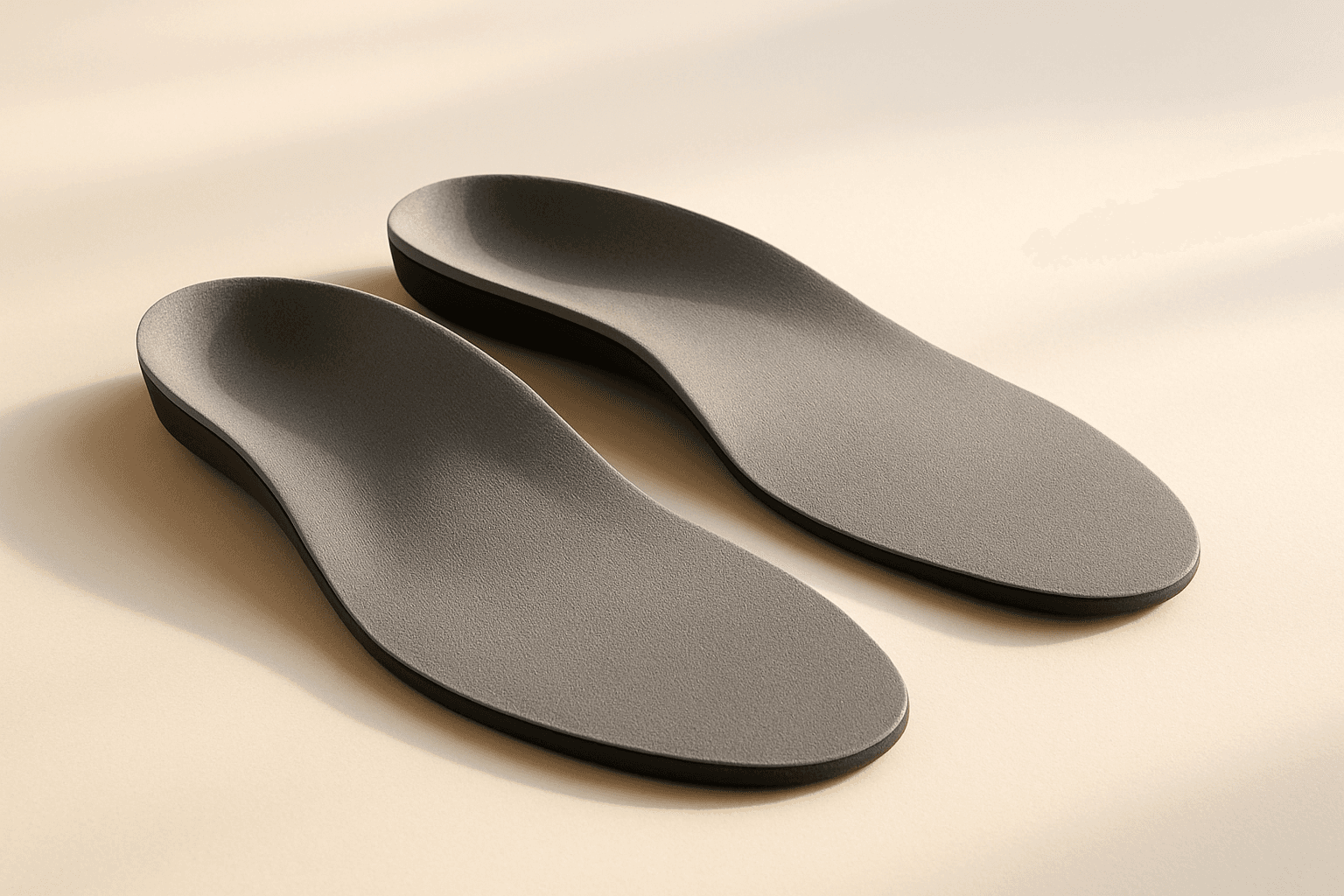
A trim-to-fit insole with a firm medial arch and a deep, cushioned heel cup — does both the cradle's job and the arch's job in one object, so you skip the standalone-cup pick entirely.
The full insole with a built-in silicone-grade heel cup we would buy first →Frequently asked questions
Are silicone heel cups better than gel?
For daily wear in a work shoe or walking shoe, yes — silicone holds its cradle shape longer under sustained load, feels more distinct at the end of a long day, and lasts about twelve months of daily use compared with three to six months for gel. For occasional wear, a travel pair, or a soft comfort layer in a shoe whose heel counter is loose, gel is a reasonable and cheaper pick. Match the material to the use pattern rather than defaulting to whichever the aisle label leads with.
How long do gel heel cups last?
Three to six months of daily wear, with higher-end gel formulations edging toward six to nine and cheaper gel packs flattening within three months. Rotation between two pairs extends the timeline; hot cars, dishwashers, clothes dryers and never-drying shoes shorten it. Replace when the bowl no longer feels distinct under your thumb — a gel cup that has packed down is a cushioning pad, not a cradle.
Can I wash silicone and gel heel cups?
Yes, and you should about once a week for daily-wear pairs. Warm water plus mild soap and a fingertip rub down cleans both. Skip dishwashers, clothes dryers and any care instruction involving heat — both materials degrade faster under heat than under daily wear. Air-dry rather than towel-dry so neither material picks up lint. Silicone dries in about twenty minutes; gel can take longer if it has picked up more surface moisture.
Do heel cup materials matter for plantar fasciitis?
Not really, because the material discussion is downstream of the bigger picture: neither silicone nor gel heel cups touch the arch, and plantar fasciitis is an arch-loading problem more than a heel-cradling one. If plantar fasciitis is your issue, pair a heel cup with a supportive insole — or, better, use one insole with a built-in deep heel cup as a single object. Our Akusoli insoles review covers the pair we would install first, and heel cups vs insoles covers the pick between them.
Which one is more comfortable on day one?
Gel, for most readers. The soft, conforming feel cushions the initial heel-strike more than a firmer silicone does, and the change from a flat drugstore insole to soft gel is more dramatic than the change from flat foam to firm silicone. That first-day comfort is real, and it is why gel outsells silicone in impulse purchases. Long-day comfort at hour eight or ten of a shift tends to favor silicone once you have used both for a week.
Are there any downsides to silicone heel cups?
The main one is the firmer first-day feel, which some readers describe as feeling like a raised rim under the outer edges of the heel. That sensation fades within days as the foot adapts to the new pressure pattern, but the first two to three days can be uncomfortable if you drop the cup into a full shift on day one. Ease the cup in over a week — a few hours the first two days, then a half day, then full days from day three — and the sensation resolves. If it does not, the cup is too deep for the shoe's heel volume; try a shallower pair.
HeelCups is reader-supported. When you buy through links on our site we may earn an affiliate commission, at no extra cost to you. This article is general information about foot comfort and is not medical advice — see our medical disclaimer.