DIABETIC SOCKS
Diabetic Socks: What Makes Them Different and Who They Help
Seamless toes, non-binding tops, moisture control and soft padding: what diabetic socks actually do, how to choose a pair, and the daily foot checks that matter more than any sock.
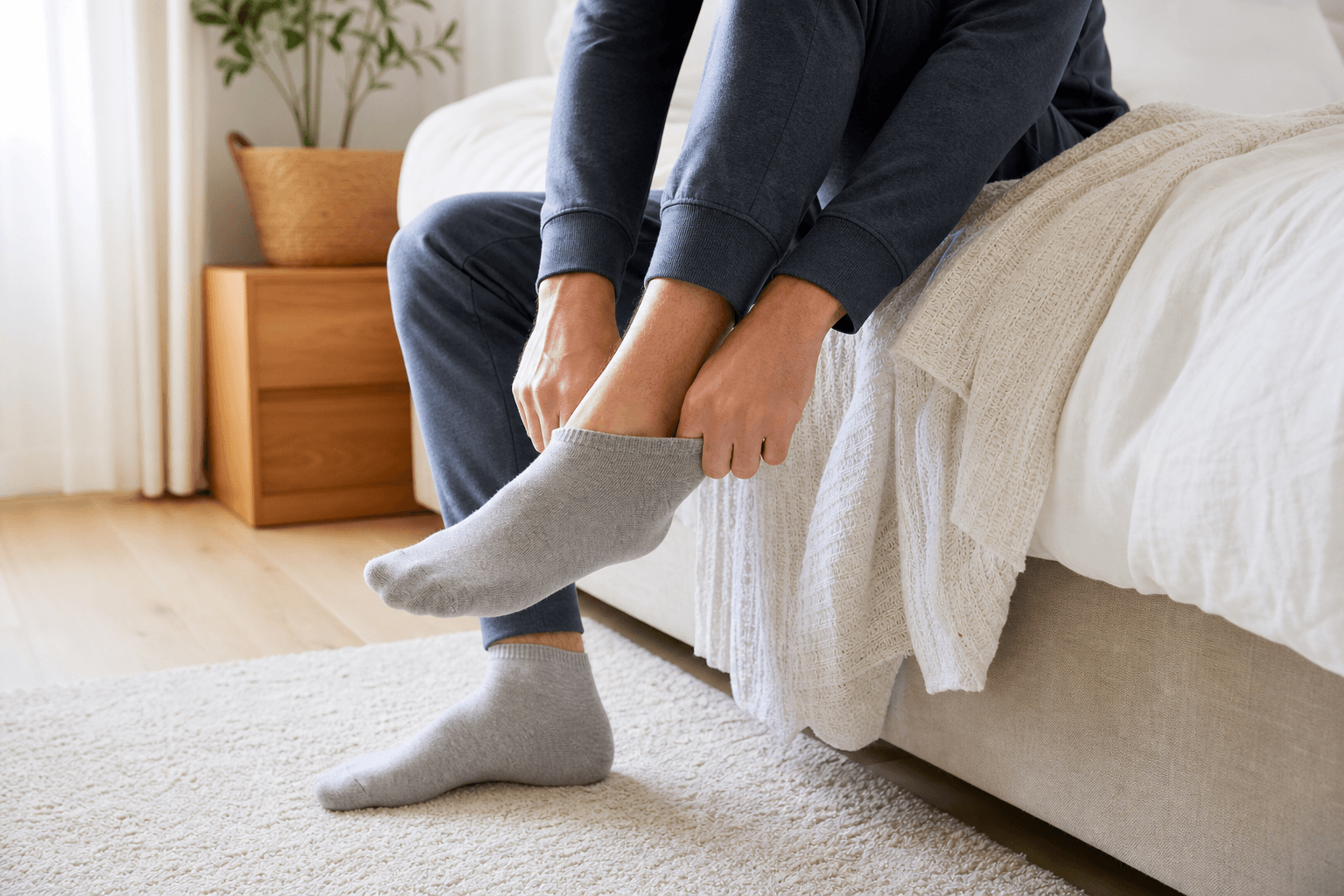
Diabetic socks are ordinary-looking socks designed to reduce friction, pressure and moisture on feet that may have reduced sensation or poor circulation. They usually have a seamless or flat-seam toe, a loose non-binding top band, soft padding and moisture-wicking fibres. They are a comfort and protection aid, not a treatment for diabetes or its complications.
The American Diabetes Association advises people with diabetes to check their feet every day, wear socks and well-fitting shoes, and never go barefoot, because nerve damage can hide blisters and rubbing until a small problem has become a wound. A good sock supports those habits; it does not replace them or a regular foot exam.
This guide explains what to look for, how diabetic socks differ from regular and compression socks, and when to talk to a clinician. For wider foot pages see the foot care hub, and for symptoms such as tingling or loss of feeling start with numb feet.
What makes a sock a diabetic sock
There is no single regulated standard, so features matter more than the label. Common ones are a smooth, seamless or flat-seam toe so nothing digs into the skin, a wide, stretchy top that does not leave a deep groove on the calf, light cushioning under the heel and ball of the foot, and a fabric blend that moves sweat away from the skin.
Many are white or light coloured, which makes it easier to notice a small spot of blood or fluid from a wound you cannot feel. Some use antimicrobial yarns; evidence that these prevent foot problems is limited, so treat that as a possible extra rather than a reason to buy.
Who may benefit
People with diabetic neuropathy, fragile skin, a history of foot ulcers, foot deformities such as bunions or hammer toes, or swelling that makes ordinary socks tight are the usual users. Anyone whose feet blister easily or sweat heavily may also like the soft, seamless build. Our pages on numb feet, swollen feet and hammer toes cover several situations where sock pressure matters.
Diabetes can also affect heel comfort; see heel pain and diabetes for how it fits into that picture.
Diabetic socks vs compression socks
They are not the same. Diabetic socks aim to avoid squeezing, while compression socks apply graduated pressure up the leg. If you have reduced sensation or poor arterial circulation, compression can be harmful, so do not put compression on without a clinician's advice. Our compression socks guide explains the pressure ranges, and the sleeping in compression socks page covers night use.
Some brands sell non-binding socks with very light support. If you are unsure which category you are looking at, ask your doctor or a podiatrist before relying on it.
How to choose and fit a pair
Look for a seamless toe, a top that holds up without gripping, and a fibre blend with some cotton, bamboo or wicking synthetic for moisture control. Avoid thick folds and rough stitching. Size by your actual foot length and width; a sock that bunches inside the shoe creates the very friction you are trying to avoid.
Try them with the shoes you wear most. A sock that fits fine at home can make a snug shoe tighter and create pressure points. Choose shoes with a roomy toe box and a smooth interior, and a supportive insole if you stand a lot; our Akusoli insoles review covers one option, though anyone with neuropathy should check with a clinician before adding inserts.
Daily habits that matter more than the sock
Check both feet daily, including between the toes and the soles; use a mirror or ask someone to help. Wash gently, dry carefully between the toes, and moisturise dry skin but not between the toes. Change socks daily, and more often if feet sweat, and shake out and feel inside shoes before putting them on.
Do not trim corns or calluses with blades or use medicated corn plasters; see corns and calluses for safer approaches, and ask a podiatrist about thick nails. Worn-out socks with thin patches or hardened seams should be replaced.
When to see a doctor or podiatrist
Contact a clinician the same week for any blister, cut, new redness, swelling, warmth, drainage or colour change on the foot if you have diabetes, and sooner if it looks infected or you feel unwell. Persistent tingling, numbness, burning or cold, pale feet also deserve a check. People with diabetes should have a professional foot exam at least once a year, or more often if they are at higher risk. This page is general information, not personal medical advice.
Explore the foot care hub
Socks, skin, nails and circulation guides in one place.
Explore the foot care hub →Frequently asked questions
Do I need diabetic socks if I have diabetes?
Not necessarily. Many people with diabetes are fine in well-fitting ordinary socks, but if you have reduced sensation, swelling or fragile skin, seamless non-binding socks are a reasonable comfort measure. Ask your care team what suits your risk level.
Are diabetic socks the same as compression socks?
No. Diabetic socks are meant not to squeeze. Compression socks apply pressure and should only be used with advice if circulation or sensation is affected.
What colour should diabetic socks be?
Light colours such as white make it easier to spot staining from a wound you might not feel, although colour is a convenience rather than a medical requirement.
How often should I replace them?
Replace them when they thin, stretch out or develop rough seams or holes, which can happen within several months of regular washing.
Can diabetic socks prevent foot ulcers?
No sock can promise that. They can reduce friction and moisture as part of daily foot checks, good shoes and regular exams, which are what protect against problems.
HeelCups is reader-supported. When you buy through links on our site we may earn an affiliate commission, at no extra cost to you. This article is general information about foot comfort and is not medical advice — see our medical disclaimer.