COMPRESSION SOCKS
Can You Sleep in Compression Socks? When It Is Fine and When to Ask First
Daytime compression socks are common, but nighttime is a different question. What changes when you lie down, who should skip it, and how long to wear them.
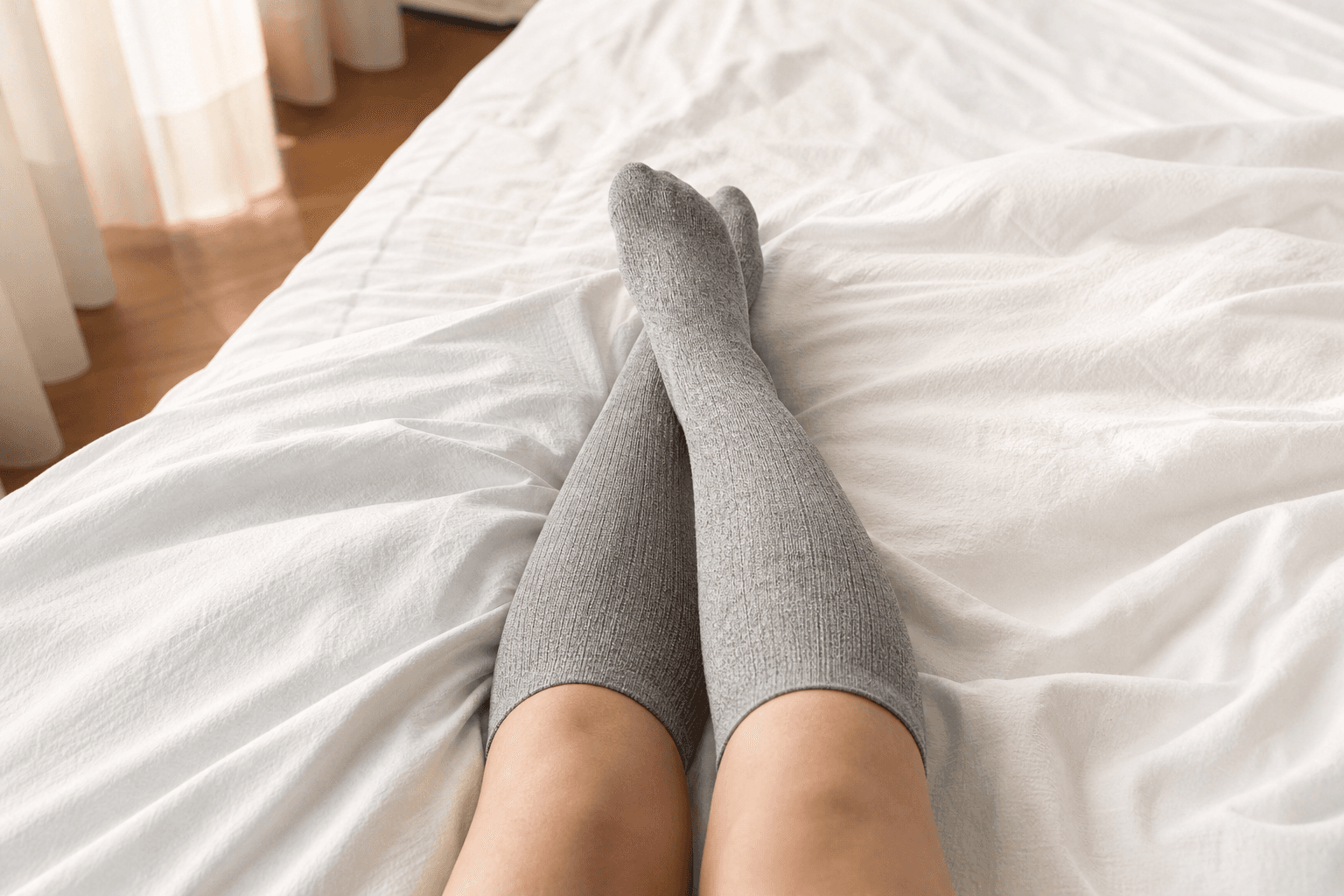
Many people with healthy legs can sleep in light compression socks without trouble, but it is not a default recommendation. Graduated compression is designed to work while you are upright, when blood has to travel up from the feet against gravity. Lying flat, most of that job disappears, so you may not need the squeeze at all.
There are exceptions. A clinician may recommend wearing compression, including overnight, after a procedure or for a specific vein condition. If a doctor gave you that instruction, follow it. If you are choosing for yourself, treat sleeping in socks as something to test gently and stop if they are uncomfortable.
Below we cover why the answer changes with the situation, who should check with a doctor first, what to look for if you try it, and how long to wear socks in the day. For choosing a pair in the first place, our compression socks guide goes through fit and strength.
Why daytime and night-time differ
Graduated compression socks are tighter at the ankle and looser up the leg, which helps push blood and fluid back toward the heart while you stand or sit. When you lie down, gravity no longer pools fluid in the feet, so swelling tends to settle on its own. That is why many people notice their feet are less puffy in the morning.
For that reason, most people who wear compression for long days on their feet simply put the socks on in the morning and take them off at bedtime. Our guides on swollen feet and tired feet describe the daytime pattern.
Who should ask a doctor first
Check with a doctor before sleeping in compression, or before wearing it at all, if you have peripheral artery disease or other circulation problems, diabetes with reduced feeling in the feet, a history of blood clots, heart failure, skin infection or fragile skin, or numbness in the legs. Tight socks can reduce blood flow to a limb that already has limited supply, and reduced sensation means you might not notice a sock cutting in.
Sudden one-sided leg swelling, calf pain, warmth or redness needs urgent medical assessment and is not something to manage with socks.
If you want to try it
Choose a light level of compression, usually labelled as a lower mmHg range, and a size that matches your ankle and calf measurements. A sock that is too small or has a rolled top band can dig in and create more problems than it solves. Smooth the fabric before bed so there are no folds.
Notice how your toes look and feel. They should stay warm and normal in colour. Tingling, numbness, throbbing, a cool or pale foot, or a deep red band mark when you remove the sock are signs to take them off and speak with a clinician if they persist.
How long to wear them in the day
There is no single time limit that suits everyone. People commonly wear compression socks for a working day, then remove them to let the skin rest, check for marks and wash them. Wearing the same socks for several days without washing can irritate the skin; if you have sensitive skin, a thin liner or moisturiser used in the evening may help.
If you are wearing them to ease a long flight (see our guide to compression socks for flying) or a day on your feet, putting them on before the day starts, when swelling is lowest, generally fits better than putting them on after the feet have already puffed up.
Socks, sleep and plantar fasciitis
Some people with morning heel pain wear a light sock or a night splint overnight; these are different from graduated compression and have a different job, which is to hold the foot in a gentle position. Our night splint guide explains how that works. A compression sleeve can add a feeling of support to the arch for some people, but it is a comfort aid and does not replace stretching or supportive shoes.
Alternatives for night-time comfort
If your feet feel heavy or achy in the evening, elevating them on a pillow for fifteen to twenty minutes, a short walk, gentle ankle pumps and a warm foot soak can all help. Loose, soft socks can keep feet warm in bed without any pressure, which suits people who get cold feet at night; see our heated socks page for a warmer option.
When to see a doctor
If swelling is persistent, affects one leg more than the other, comes with shortness of breath, calf pain or skin changes, or if compression is uncomfortable or leaves deep marks, talk to a doctor before continuing. This article is general information, not personal medical advice.
Read the compression socks guide
How to choose strength, size and fit for the daytime.
Read the compression socks guide →Frequently asked questions
Is it safe to sleep in compression socks?
For many healthy people, light compression is fine for sleep, but it is usually unnecessary. People with circulation problems, diabetes with reduced feeling or other conditions should ask a doctor first.
How long should you wear compression socks each day?
Many people wear them for the waking day and take them off at bedtime. Follow any instruction from your clinician, and remove them if you notice numbness, pain or colour change.
Can compression socks cut off circulation?
Socks that are the wrong size, folded or too tight can restrict flow. A correctly sized graduated sock should feel snug but not painful, and your toes should stay warm and normal in colour.
Do compression socks help swollen feet at night?
Swelling usually eases when you lie flat, so night-time compression is less often needed. Elevating the feet is a simple alternative. Persistent swelling should be checked by a doctor.
What is the difference between compression socks and night splints?
Compression socks apply graduated pressure to support circulation, while a night splint holds the foot in a gentle stretch, typically for morning heel pain. They do different jobs.
HeelCups is reader-supported. When you buy through links on our site we may earn an affiliate commission, at no extra cost to you. This article is general information about foot comfort and is not medical advice — see our medical disclaimer.