FOOT BLISTERS
Blister on the Bottom of the Foot: What to Do, What Not to Do and How to Prevent the Next One
Whether to pop it, how to cover it, why sole blisters keep coming back and the signs that a blister needs a clinician.
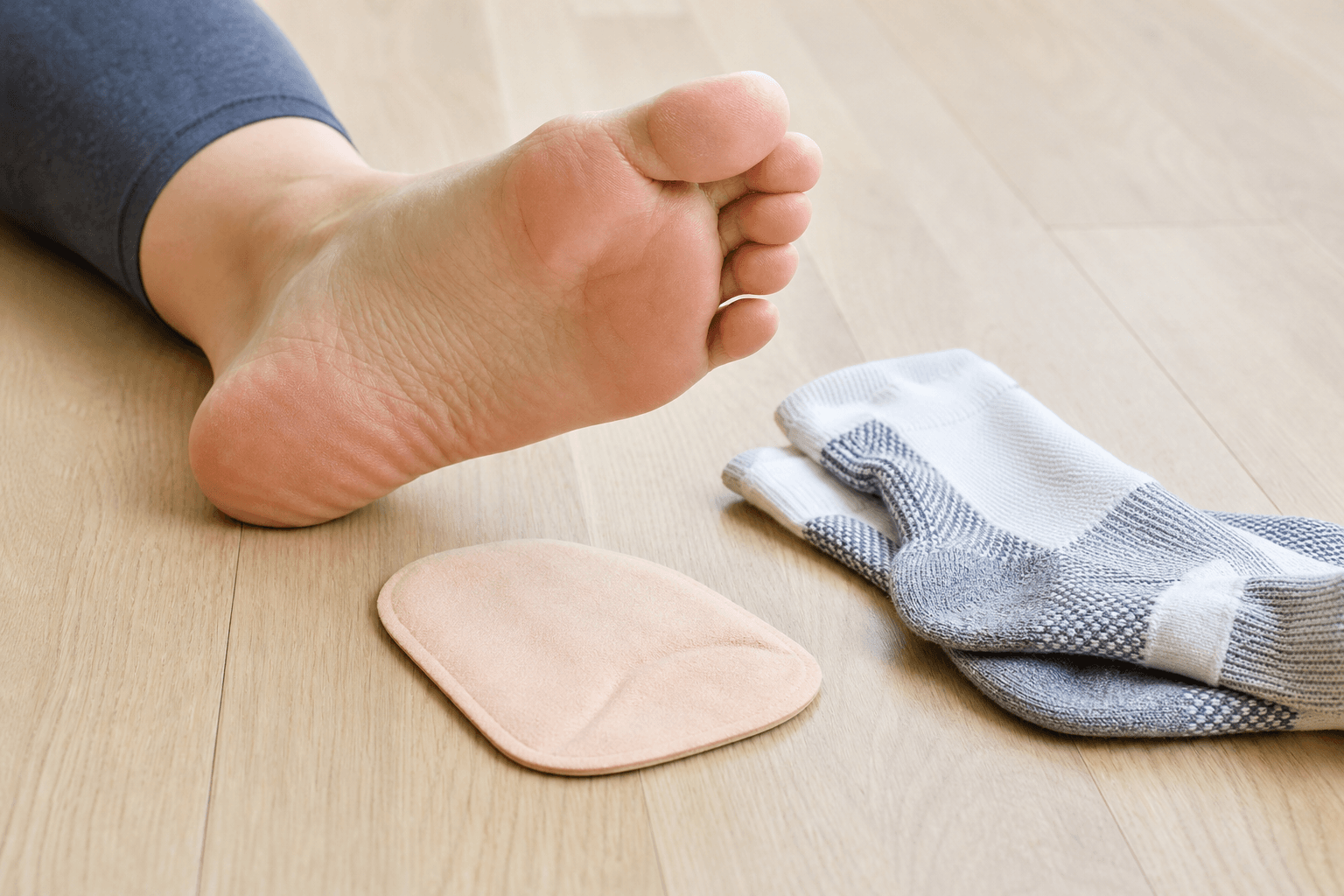
A blister on the sole is a pocket of fluid that forms when friction, heat and moisture separate the top layers of skin. The usual advice from the American Academy of Dermatology is to leave an intact blister alone if you can, because the skin on top is a natural, sterile cover that protects the tender skin beneath while it heals.
On the bottom of the foot, a blister is under constant pressure, so protecting it from further rubbing is the main job. A padded ring, a hydrocolloid blister plaster and a clean sock change often make walking much more comfortable. Most friction blisters settle within one to two weeks.
Below we cover what to do today, when and how to drain one safely if it is too painful to leave, how to stop recurrences, and which blisters are not ordinary friction blisters. For other foot skin pages see the foot care hub.
First: is it a friction blister?
A friction blister appears where you rubbed: the heel edge, ball of the foot, arch or under the toes after new shoes, a long walk or a sweaty day. It is round or oval, clear fluid inside, and tender but not hot.
Several look-alikes need different care. Itchy, peeling skin with small fluid-filled bumps between the toes or on the sole can be a fungal problem; see athlete's foot. Hard, thick patches are calluses or corns; see corns and calluses. A cluster of small rough spots may be plantar warts. Blisters with no obvious friction, many at once, burns or blisters in someone with diabetes should be looked at by a clinician.
What to do with an intact blister
Wash around it gently with soap and water and pat dry. Cover it with a hydrocolloid blister plaster, or with a doughnut-shaped pad of soft foam or moleskin with a hole cut over the blister so pressure is spread around it rather than on it. Check and change the dressing daily and whenever it gets wet or dirty.
Wear clean, dry socks and roomier shoes if possible, and swap to cushioned footwear until it settles. If you must stand or walk a lot, a supportive insole can spread load across the sole; our Akusoli insoles review covers one, but it is not a treatment for a blister.
If it is too painful or likely to burst
Sources such as the AAD describe a careful drain method only when a blister is large, painful or in a spot where it will certainly burst. Wash your hands and the blister, wipe a needle with rubbing alcohol, make a small hole at the edge, let the fluid drain, and leave the roof of skin in place. Cover it with a clean dressing. Do not peel the skin off.
Never drain a blister if you have diabetes, poor circulation, reduced sensation or a weakened immune system; see a clinician instead. Do not drain a blister that looks infected.
If the blister has already burst
Clean the area with mild soap and water, smooth the flap of skin back over the raw area if it is still attached, and cover it with a non-stick dressing or hydrocolloid plaster. Trim away only loose dead skin with clean scissors if it is tearing. Change the dressing daily and watch for signs of infection.
Keep pressure off the area with padding, and avoid soaking it for long periods, which can macerate the skin.
How to stop sole blisters coming back
Moisture and friction are the two levers. Choose well-fitting shoes with a little thumb's width of space beyond the longest toe, break new shoes in gradually, and wear moisture-wicking socks rather than thick cotton. Lace shoes to hold the heel in place so the foot does not slide forward; our heel lock lacing guide shows one method.
For sweaty feet, change socks during the day, rotate shoes and use a foot powder. See smelly feet for moisture control ideas. Runners and walkers can try a thin liner sock or a dab of anti-friction balm on known hot spots. Heel-specific blisters are covered in heel blisters.
When to see a doctor or podiatrist
Seek care for a blister with spreading redness, warmth, pus, red streaks, fever, or increasing pain; for blisters caused by burns, allergic reactions or chemicals; for recurring blisters without friction; and for any blister in a person with diabetes or reduced foot sensation. A blister that will not heal after a couple of weeks should also be checked. This page is general information, not personal medical advice.
Explore the foot care hub
Skin, nail and everyday foot comfort guides in one place.
Explore the foot care hub →Frequently asked questions
Should I pop a blister on the bottom of my foot?
Usually not. An intact blister is protected by its own skin. Only a large, painful blister that will certainly burst may be drained, using a clean, careful method, and never if you have diabetes or poor circulation.
How long does a blister on the sole take to heal?
Most friction blisters settle within about one to two weeks if you keep pressure off and the area clean. Thick sole skin can slow the process a little.
What is the best way to cover a blister on the bottom of the foot?
A hydrocolloid blister plaster or a doughnut pad of foam or moleskin with a hole over the blister spreads pressure and reduces rubbing. Change it daily.
Why do I keep getting blisters on my soles?
Common reasons include shoes that are too tight or too loose, damp socks, a new activity or long walks, and heat. Better-fitting shoes and wicking socks are the first steps.
How do I know if a blister is infected?
Increasing pain, warmth, spreading redness, pus, a bad smell or fever suggest infection. See a clinician promptly, especially with diabetes.
HeelCups is reader-supported. When you buy through links on our site we may earn an affiliate commission, at no extra cost to you. This article is general information about foot comfort and is not medical advice — see our medical disclaimer.