SMELLY FEET
Smelly Feet: Why They Happen and the Simple Routine That Keeps Odor Down
Foot odor is bacteria plus sweat plus a shoe that never dries. Fix those three and most people notice a real difference within a couple of weeks.
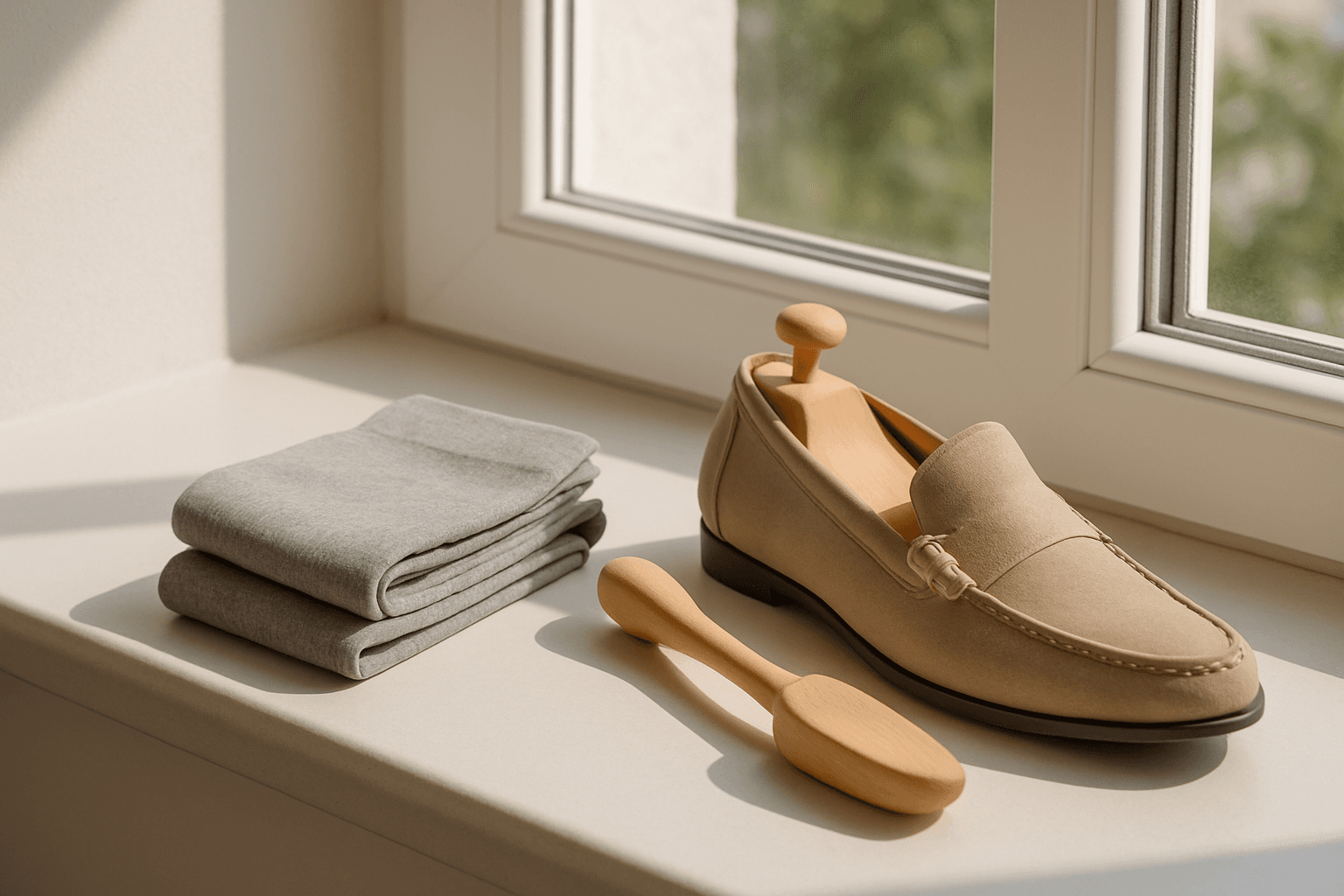
Foot odor, known clinically as bromodosis, is very common and almost never a sign of poor character. Your feet carry a large number of sweat glands, and a closed shoe traps that moisture against warm skin. Bacteria that live on the skin feed on sweat and dead skin cells, and the by-products of that feast are what you smell.
That means the plan is straightforward: reduce moisture, reduce the bacteria's food supply, and let your shoes dry out. This page walks through the daily routine, the sock and shoe choices that help, the role of insoles, and the few cases where smell points to something that deserves a clinician, such as athlete's foot or excessive sweating.
Nothing here is medical advice, and persistent odor, skin changes or pain in the feet is worth a conversation with a doctor or podiatrist.
Why feet smell in the first place
The skin on the soles has some of the densest sweat glands on the body. Sweat itself is almost odorless; the smell appears when skin bacteria break it down. Add a sock and a shoe and you have a warm, damp, dark environment where bacteria thrive.
Things that make it worse include synthetic socks that hold moisture, wearing the same shoes day after day, and not drying properly between the toes. Stress, hormonal changes and some medicines can increase sweating too. A fungal infection such as athlete's foot can add its own smell, so see our guide to athlete's foot if you also have peeling, itching or red skin.
The daily wash and dry routine
Wash your feet once or twice a day with mild soap and water, paying attention to the spaces between the toes. Dry them thoroughly afterwards, using a separate towel if you have had athlete's foot, because lingering dampness is what the bacteria want.
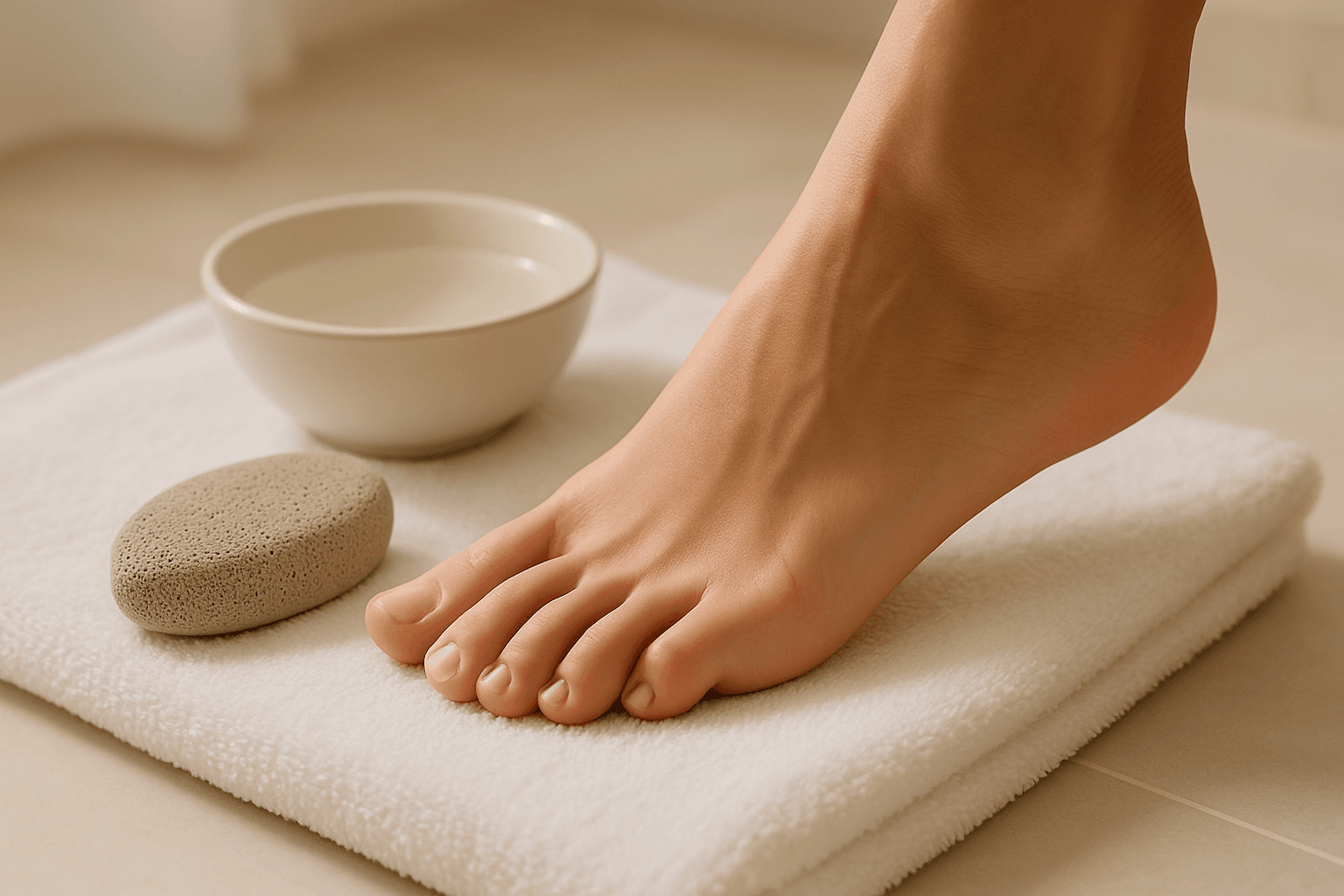
Keep toenails trimmed straight across and clean under them, and gently remove built-up dead skin with a pumice stone, since thick callus holds moisture and bacteria. Our guide to corns and calluses covers safe smoothing.
Socks that actually help
Fabric matters more than most people expect. Cotton absorbs moisture but stays wet; wool blends and moisture-wicking synthetic fibres pull sweat away from the skin and dry faster. Choose a seamless, well-fitted pair and change them midday if your feet sweat heavily.
Put on a fresh pair every day, and wash socks at the temperature on the label. Wearing no socks with closed shoes is a common cause of odor, because the insole soaks up sweat directly.
Shoes and insoles need to dry out
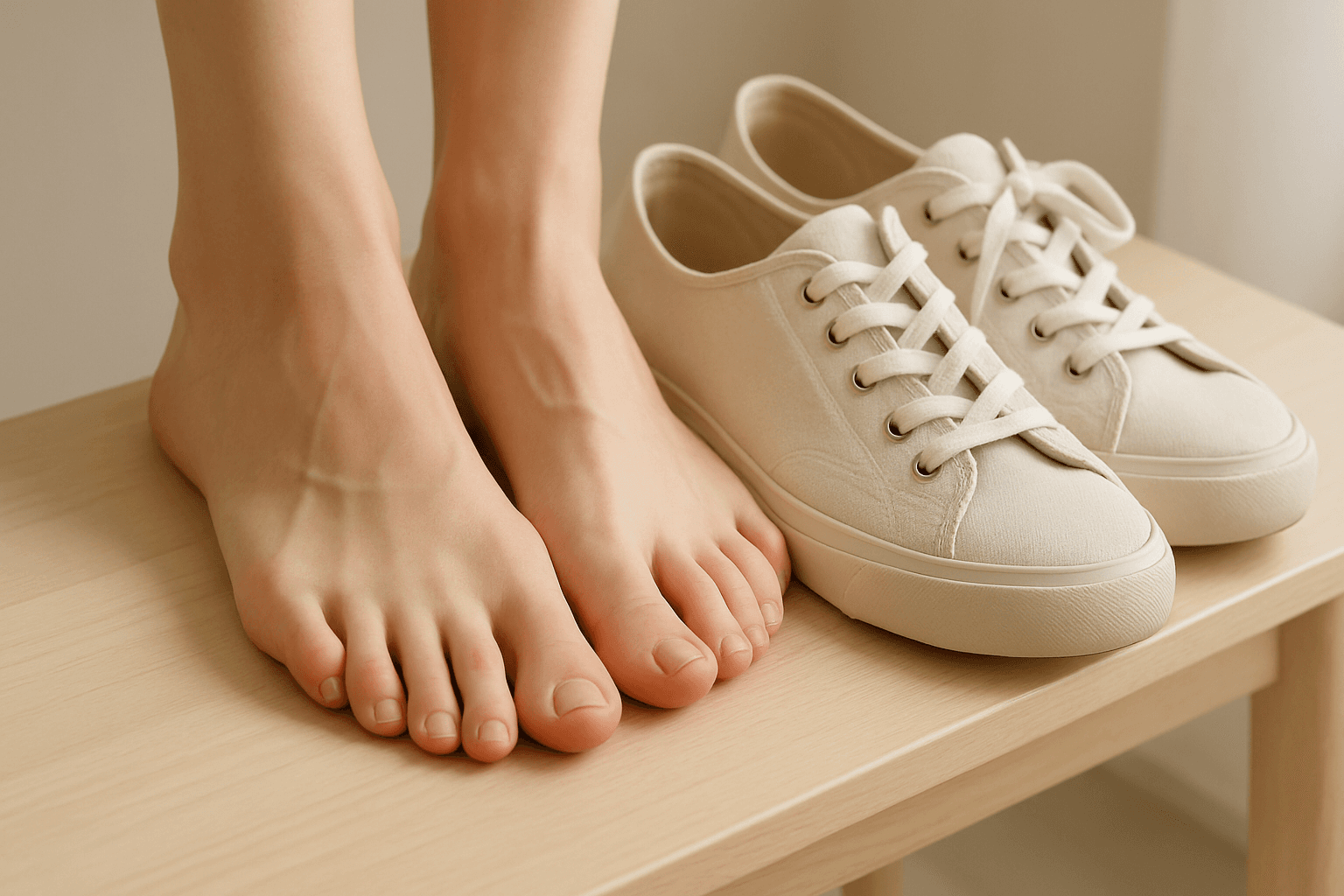
The single most useful shoe habit is rotation. Leaving at least 24 hours between wears gives a shoe time to dry fully, so alternate between two pairs where you can. Remove the insole when you take shoes off and let both air out, away from direct heat.
Leather and breathable mesh uppers generally let moisture escape better than sealed plastic. Many insoles can be washed gently by hand with mild soap and left to air-dry; check the maker's care label. Replace insoles that have flattened or stay damp, and if you use heel cups, take them out at night too. Our guide on how to use heel cups covers wearing and cleaning them.
Soaks, powders and sprays: what to expect
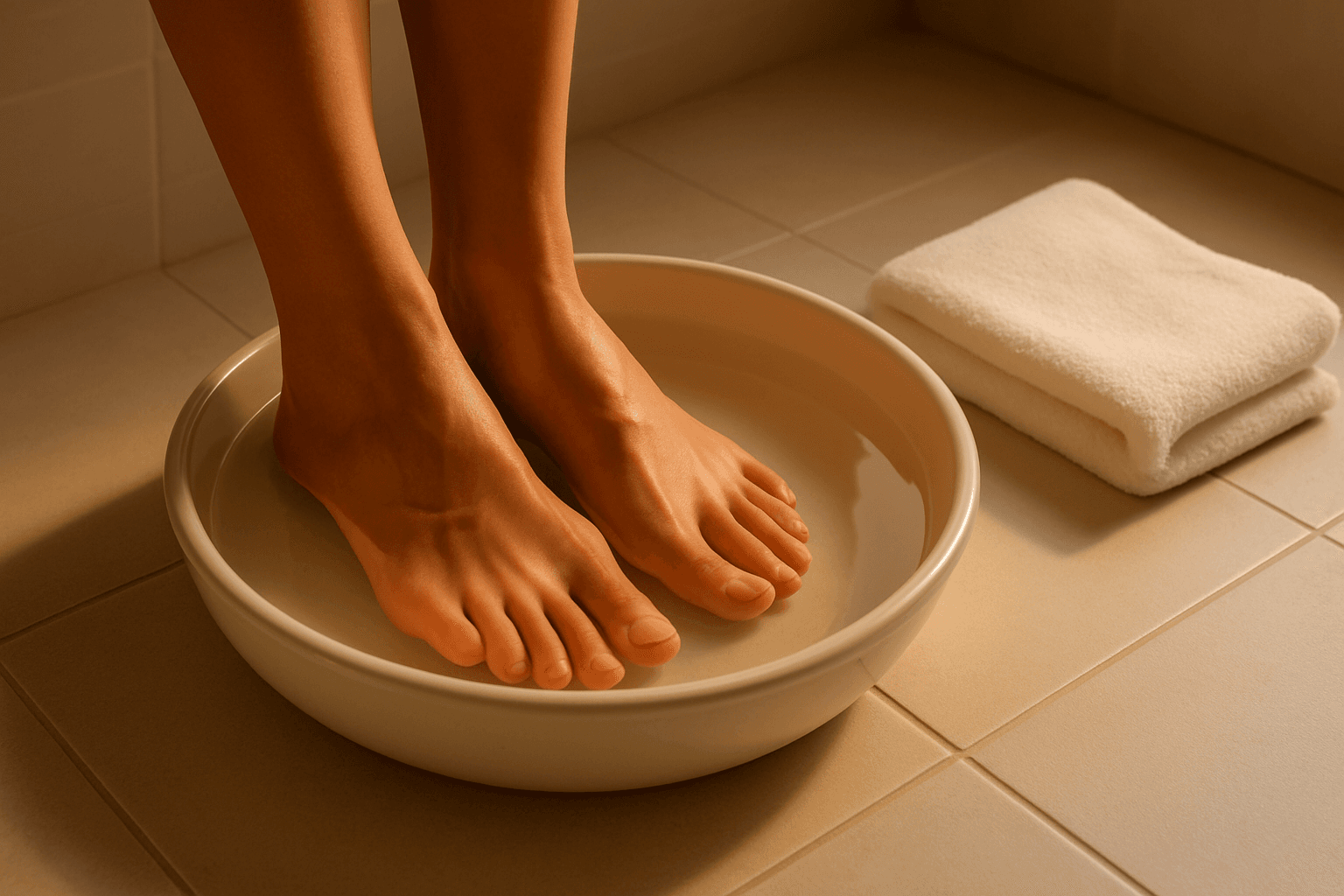
A warm soak in diluted vinegar or with baking soda is a popular home routine. It is gentle, but it only helps briefly, and it will not replace drying shoes and fresh socks. Our page on foot soaks explains who should skip them, including anyone with diabetes or open skin.
Foot powder and antiperspirant sprays designed for feet can reduce dampness during the day. Patch-test first, and stop if your skin becomes red or irritated. Treat these as a supporting step rather than the whole plan.
When odor is a reason to see someone
See a doctor or podiatrist if the smell persists despite two weeks of consistent hygiene, if sweating soaks through socks, if the skin is peeling, cracked or has sores, or if there is pus or a sudden change in smell. Anyone with diabetes or poor circulation should have any new foot smell checked promptly, because infection can develop without much pain. Persistent foot problems of any kind deserve a professional opinion.
Explore the foot-care hub
Socks, soaks, skin and nail care explained without the hype.
Explore the foot-care hub →Frequently asked questions
Why do my feet smell even when I wash them?
Washing helps, but bacteria return quickly if socks and shoes stay damp. Drying between the toes, changing socks and rotating shoes matter as much as the wash.
Do some socks reduce foot odor?
Moisture-wicking fabrics such as merino wool or technical synthetics generally keep feet drier than cotton, which gives bacteria less to work with.
Can I wash my insoles?
Many can be hand-washed gently with mild soap and air-dried away from direct heat. Check the care label, and replace insoles that stay damp or smelly.
Is foot odor a sign of infection?
Usually it is just sweat and bacteria, but athlete's foot or a skin infection can add smell. Peeling, itching, redness or sores are reasons to see a clinician.
How long does it take to improve?
Many people notice a difference within one to two weeks of washing daily, drying thoroughly, wearing fresh socks and rotating shoes. If nothing changes, ask a podiatrist.
HeelCups is reader-supported. When you buy through links on our site we may earn an affiliate commission, at no extra cost to you. This article is general information about foot comfort and is not medical advice — see our medical disclaimer.