SEVERE FLARE
Plantar Fasciitis So Bad You Can't Walk: What to Do Today and When It Is Urgent
Severe heel or arch pain that makes every step a struggle is a reason to slow down, not to push through. Here is how to get through the day, and which signs mean you should be seen promptly.
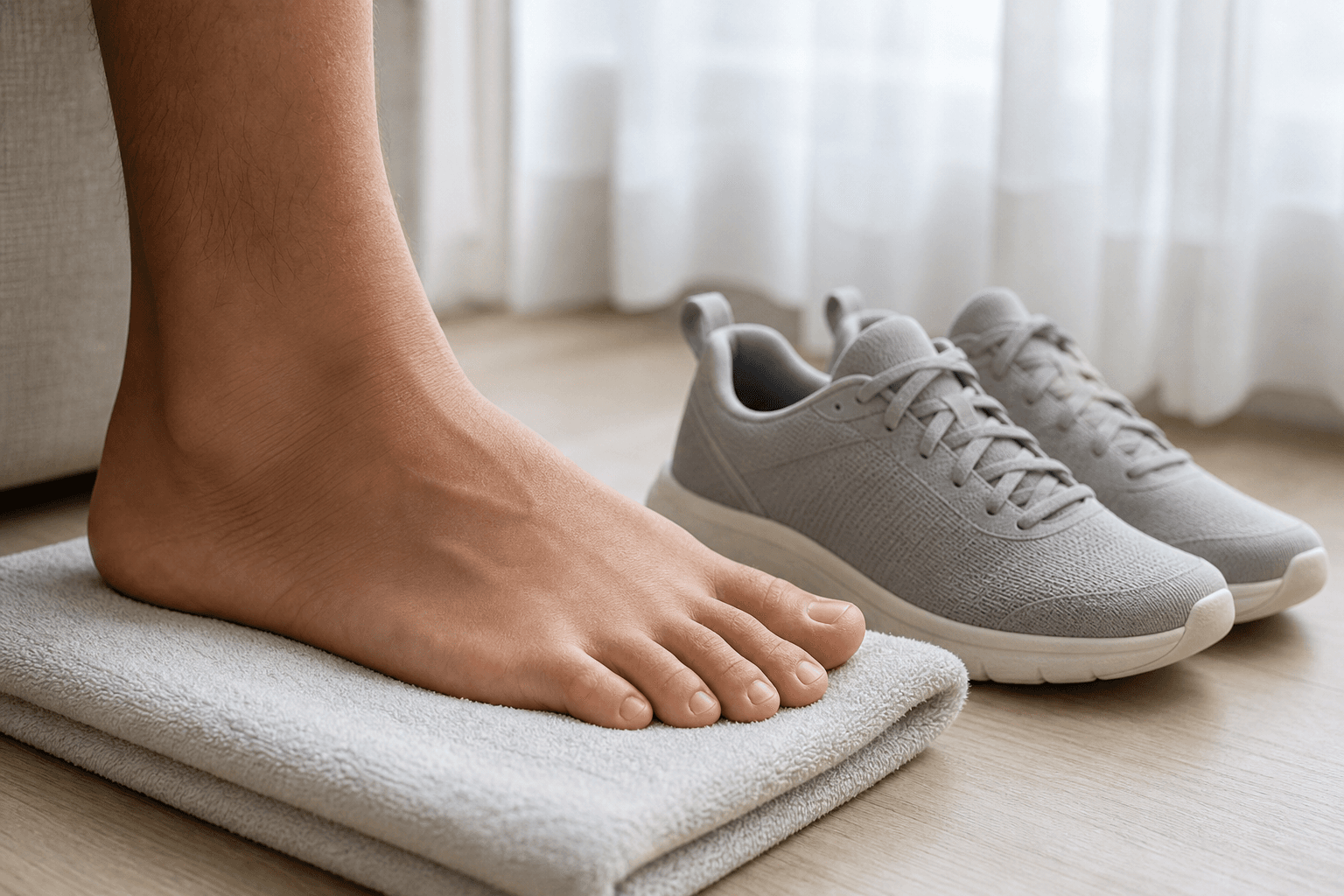
If plantar fasciitis has flared so badly that you are limping, hopping or avoiding putting weight on the foot, the first job is to reduce load for a few days and get supportive footwear on. That means resting from running, long walks and barefoot time, using cushioned shoes indoors, and easing the fascia with gentle, pain-limited movement. Most severe flares are an irritated plantar fascia that has been overloaded, and they usually calm with a few days of lower load.
The exception matters, though. Pain that began with a sudden pop, a jump or a blow, bruising along the arch, swelling, or a foot you truly cannot bear weight on is not a typical flare. Podiatry sources describe a plantar fascia tear as abrupt arch pain, often with bruising and trouble standing on the foot, and they advise getting examined promptly. Corticosteroid injections and long-standing plantar fasciitis are listed among the risk factors.
Below is a practical plan for today, a list of red flags, and what to try over the next week. If your heel pain has been around for a while, our plantar fasciitis treatment ladder shows the longer game.
First, check the red flags
Seek same-day care (urgent care, or an emergency department if it is severe) if you cannot put any weight on the foot, if pain started suddenly with a pop or tearing sensation, if there is marked swelling or bruising, if the foot looks deformed, or if you also have fever, spreading redness or warmth. Calf pain with swelling and warmth in the leg can point to a clot and also needs urgent assessment.
Make a prompt appointment (within days) if you have diabetes, numbness, poor circulation, or if the pain follows a fall or a heavy landing. A clinician can examine the foot, and may use ultrasound or MRI if a tear or stress fracture is possible. Our page on calcaneal stress fractures explains one look-alike that can also make walking hard.
What to do today
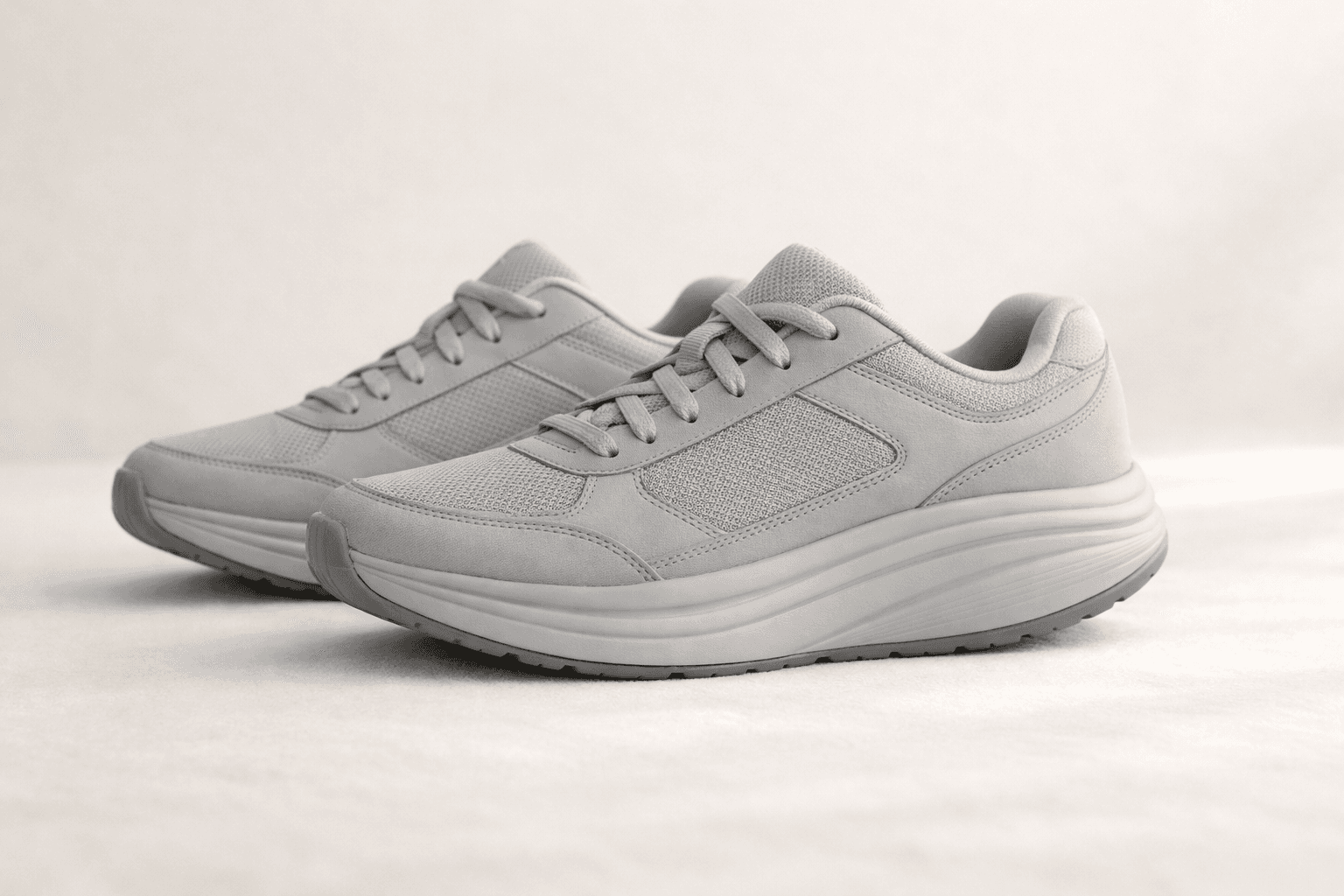
Cut the load. Skip the run, the long shift on concrete if you can, and the walk to nowhere in socks. Short trips are fine; keep them on a supportive surface. Wear shoes with a firm, slightly rockered or cushioned sole and a supportive arch, even indoors. Going barefoot on hard floors or wearing flat sandals is a reliable way to extend a flare.
Add support under the heel and arch. A well-fitted insole or heel cup spreads pressure and can take some strain off the fascia with each step. If you are using an insole already, check that it is not worn flat. See our Akusoli insoles review for how a cushioned, supportive insole handles a sore heel.
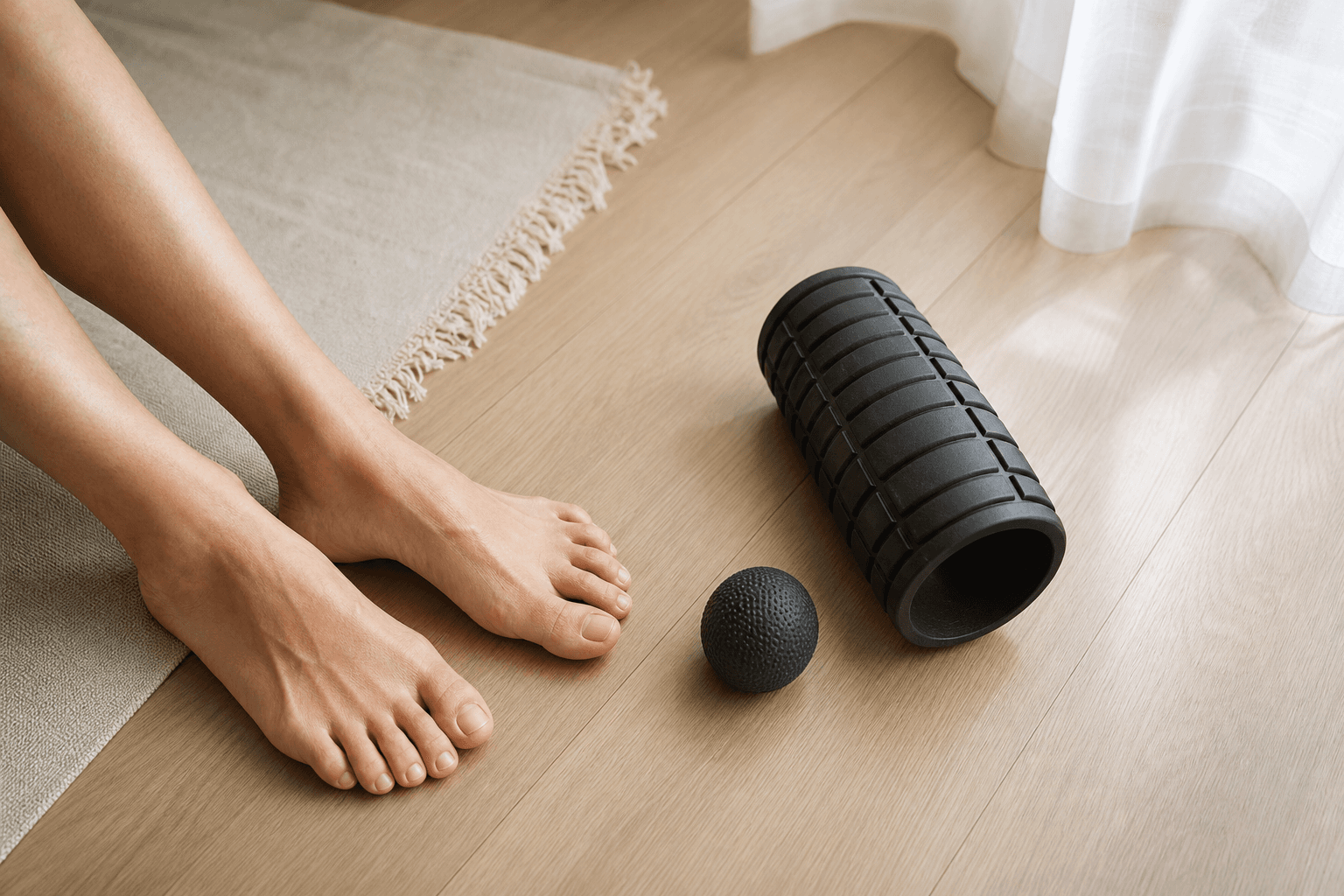
Use ice or warmth, whichever feels better. A frozen water bottle rolled under the arch for about 10 minutes is a common, simple choice. Our ice or heat guide covers the trade-offs.
Gentle moves that usually help
When weight-bearing is possible but painful, gentle stretching of the calf and the fascia is a standard first-line suggestion in patient guidance such as that from Harvard Health. Before you stand up in the morning, pull your toes toward you with a towel or your hand and hold for 20 to 30 seconds. Repeat a few times. Stay within a stretch you can tolerate; sharp pain means back off.
Skip aggressive deep massage or hard stretching on a foot that is bruised or that may have a tear. Try the gentler options on our plantar fasciitis stretches page once the sharpest pain has eased.
Pain relievers and boots
Over-the-counter pain relievers can take the edge off for a few days but do not change the load on the tissue, and they are not suitable for everyone. Check with a pharmacist or doctor, especially if you have stomach, kidney or heart conditions or take blood thinners. Our plantar fasciitis medication guide covers what they can and cannot do.
If a flare will not settle and walking is genuinely difficult, a clinician may suggest a short period in a walking boot. That is best decided with an exam, because boots are used for several different foot problems and are not meant for open-ended use.
The next seven days
Aim to bring activity back gradually: short, flat walks first, then longer ones, only if pain the next morning is no worse. Keep the supportive shoes and insole on from the moment you get up. A night splint can reduce the sharp first steps for some people; see our night splint guide.
If after about a week of lower load and good footwear you still cannot walk comfortably, or the pain is climbing, book an appointment with a doctor or podiatrist. Persistent pain, numbness, tingling or discolouration also deserves an in-person exam. This article is general information, not personal medical advice.
See how a supportive insole handles heel pain
Read our review of a cushioned insole with a deep heel cup and firm arch.
See how a supportive insole handles heel pain →Frequently asked questions
Why does my plantar fasciitis hurt so much I can't walk?
A flare often follows a jump in standing, walking or running, or a spell in unsupportive shoes. The overloaded fascia can be very sore with each step. If the pain began suddenly with a pop or comes with bruising or swelling, a tear or another injury is possible and you should be examined.
Is it okay to keep walking on severe plantar fasciitis?
Short, necessary walking in supportive shoes is usually fine. Pushing through long walks, running or barefoot time tends to prolong a flare. If you cannot bear weight at all, get medical care.
How long does a severe flare last?
It varies. Many flares ease noticeably within days to a couple of weeks once load is reduced and footwear is supportive, but plantar fasciitis as a whole can take months. Our how long plantar fasciitis lasts guide covers timelines.
Could it be a torn plantar fascia or a stress fracture?
Possibly. Sudden onset, bruising, swelling and an inability to bear weight are the clues that call for an exam and possibly imaging.
When should I see a doctor about foot pain that stops me walking?
Same day if you cannot bear weight, heard a pop, or have marked swelling or bruising. Within days if the pain is severe but you can walk, and sooner if you have diabetes or numbness. Any pain lasting more than a few weeks of home care should be checked too.
HeelCups is reader-supported. When you buy through links on our site we may earn an affiliate commission, at no extra cost to you. This article is general information about foot comfort and is not medical advice — see our medical disclaimer.