BRACES & SUPPORTS
Plantar Fasciitis Brace: Which Types Exist, What Each Does and Who Tends to Get Comfort From One
Sleeves, straps, night boots and walking braces all get sold for heel pain. Here is what each style actually does, what the evidence supports, and how to choose without over-buying.
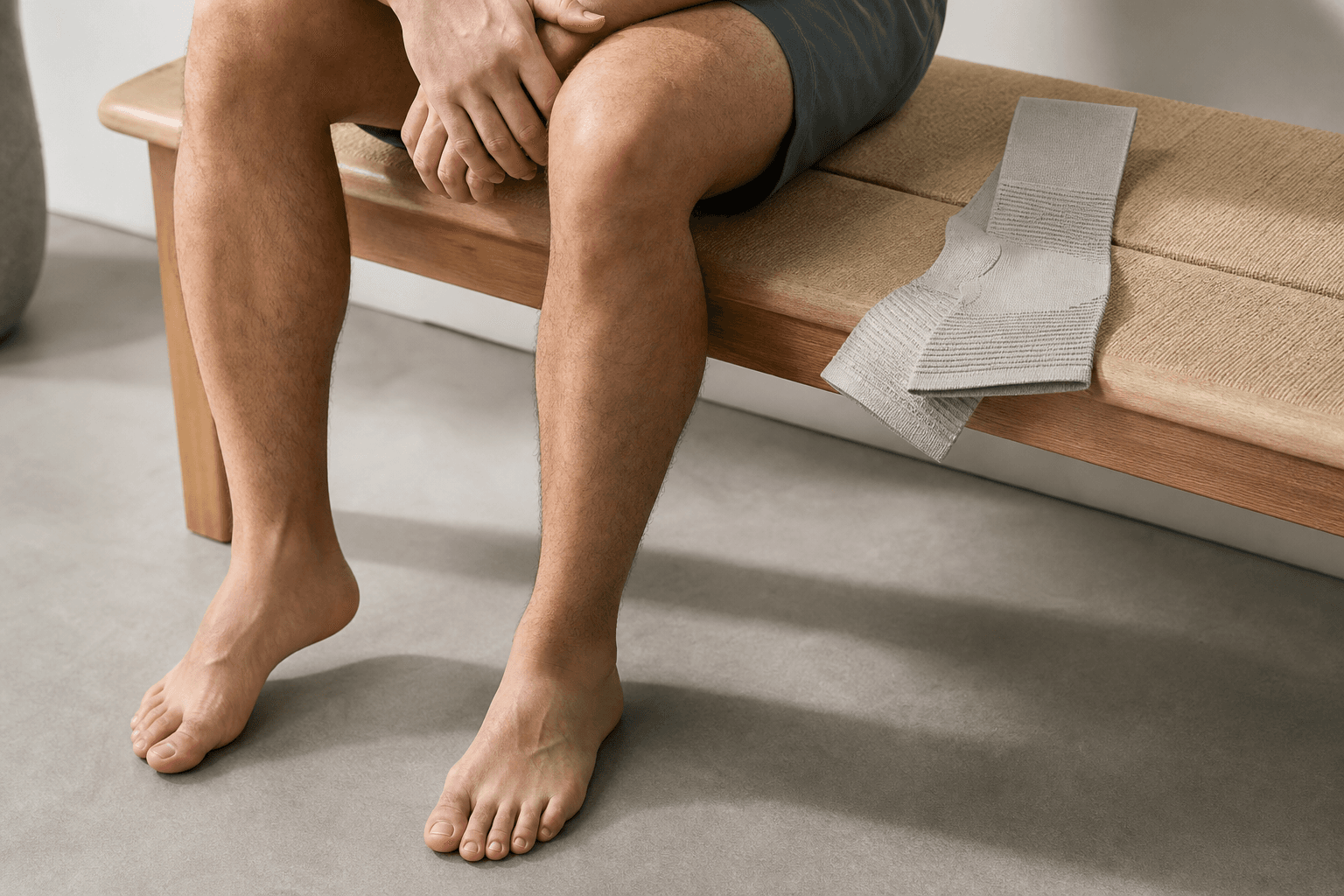
A plantar fasciitis brace can bring real comfort for some people, but the word covers four quite different products, and picking the wrong one is the usual reason a brace ends up in a drawer. Compression sleeves warm and gently support the arch, strap-style braces lift the arch and take a little tension off the fascia, night splints hold the foot gently flexed while you sleep, and walking boots limit motion after a flare that is hard to settle.
None of these is a stand-alone answer. Orthopaedic and podiatry groups such as the American Academy of Orthopaedic Surgeons describe plantar fasciitis as a condition managed with a combination of stretching, supportive footwear or inserts, load management and time, with braces and splints as optional extras for people who need them. Used that way, a brace is a support tool, not a remedy.
Below we separate the styles, explain which symptom pattern each one suits, and flag when a brace is the wrong move. If you are still working out whether this is plantar fasciitis at all, start with our guide to plantar fasciitis symptoms.
The four main types of plantar fasciitis brace
Compression sleeves are the lightest option: a stretchy tube or half-sock that wraps the arch and ankle. They add gentle compression and warmth and some feeling of support, which many people find soothing at the end of a long day. They do not hold the arch up in any structural way, so think of them as comfort, not correction. Our page on plantar fasciitis socks covers the sleeve and sock styles in more detail.
Strap or wrap braces use a firmer band, often with an arch pad or a figure-eight strap, to lift the arch and limit how far the fascia stretches with each step. They are worn in shoes during the day. They are a middle ground between a sleeve and an insole, and for people who cannot wear an insole in a tight shoe they can be a workable alternative.
Night splints and sleeping boots hold the ankle gently flexed so the calf and fascia are not allowed to shorten overnight. The goal is to ease that sharp first-step pain in the morning. Our full guide to night splints covers sock-style versus boot-style versions and how to get used to sleeping in one.
Walking boots, also called CAM boots, are a rigid brace reserved for severe flares or after certain procedures, normally on a clinician's advice. They are not a casual purchase, and we explain when they are used in walking boot for plantar fasciitis.
What the evidence supports, and what it does not
Research on braces specifically is thinner than for stretching and footwear. Reviews of night splints suggest they may help some people with long-lasting morning pain, while many others find them hard to tolerate. Arch supports and taping have short-term evidence for reducing pain, which is why strap braces and inserts are often tried early. Compression sleeves have the least direct evidence, though they are inexpensive and low risk for most people.
Honest framing matters here. No brace is shown to repair the fascia itself. What a brace can do is reduce the load on irritated tissue while it settles, which is the same job a good insole or taping does. If a product page implies a brace will cure or fix plantar fasciitis, treat that as a marketing claim, not a medical one.
Matching the brace to your symptoms
If the worst pain is the first steps out of bed or after a long sit, a night splint or a stretching routine is the most directly aimed. If pain builds through a day on your feet, daytime arch support is more relevant, either a strap brace or, for most people, a good insole. If your arch just feels tired and achy by evening, a sleeve is a low-cost thing to try.
If you are weighing a brace against an insole, remember they can overlap. A supportive insole does the arch-lifting job inside the shoe without extra straps, and our guide to insoles for plantar fasciitis explains what features matter. We also review one option in depth: see our Akusoli insoles review for how it handles arch support and heel cushioning.
How to get fit and wear right
Size by your actual measurements, not your shoe size alone, because most brands use their own charts. Put a strap brace on with the foot relaxed, snug but not tight enough to leave deep marks or cause tingling. A brace that causes numbness, colour change or a throbbing foot is too tight and should come off.
Build wear time slowly. Start with an hour or two in the first days and add time as your skin and foot tolerate it. For a night splint, many people begin by wearing it for a short nap before trying a whole night. Keep stretching and keep wearing supportive shoes; a brace works best as part of a routine like the one in our plantar fasciitis treatment ladder.
When a brace is the wrong tool
Sudden severe pain after a pop or a hard landing, bruising, or trouble bearing any weight needs an exam rather than a brace. The same goes for pain with numbness, burning or tingling, which can point to a nerve problem, and for swelling or redness that is warm to the touch. People with diabetes, poor circulation or reduced foot sensation should ask a clinician before wearing any compressive or restrictive device, because skin damage can go unnoticed.
If you have used a sensible routine for six to eight weeks and the heel is not improving, see a podiatrist or sports medicine doctor. They can confirm the diagnosis, check for look-alikes and discuss custom orthotics, physical therapy or other options. Persistent heel pain deserves a professional opinion rather than a fifth product. Our plantar fasciitis hub collects the full routine.
Read our Akusoli insoles review
If a brace feels like too much, see how a supportive insole handles arch support and heel cushioning.
Read our Akusoli insoles review →Frequently asked questions
Does a brace help plantar fasciitis?
Some people find braces comfortable and supportive, especially night splints for morning pain and strap braces for daytime arch support. They are one part of a routine alongside stretching and good footwear, and the evidence for any single brace is modest.
Should I wear a plantar fasciitis brace all day?
Most people wear strap braces or sleeves for part of the day and build up gradually. Night splints are worn while sleeping. If a brace causes numbness, tingling or skin irritation, remove it and ask a clinician.
Is a brace better than an insole?
They do overlapping jobs. An insole supports the arch inside the shoe, while a strap brace does it outside with a band. Many people prefer insoles for daily wear and use a night splint separately for morning pain.
Can I sleep in a compression sleeve for plantar fasciitis?
Light sleeves are often worn at night for warmth and comfort, but they do not hold the foot flexed like a night splint. Choose a loose fit and take it off if it feels tight.
How long does it take for a brace to make a difference?
Some people notice more comfort within days, but plantar fasciitis commonly takes weeks to months to settle regardless of the product. See a podiatrist if there is no improvement after six to eight weeks.
HeelCups is reader-supported. When you buy through links on our site we may earn an affiliate commission, at no extra cost to you. This article is general information about foot comfort and is not medical advice — see our medical disclaimer.