TOE SEPARATORS
Toe Separators: Who They Help, What the Research Shows and How to Wear Them
Silicone toe spacers are sold for bunions, crowded toes and hammer toes. Here is what they can realistically do, who tends to like them and how to start without making things worse.
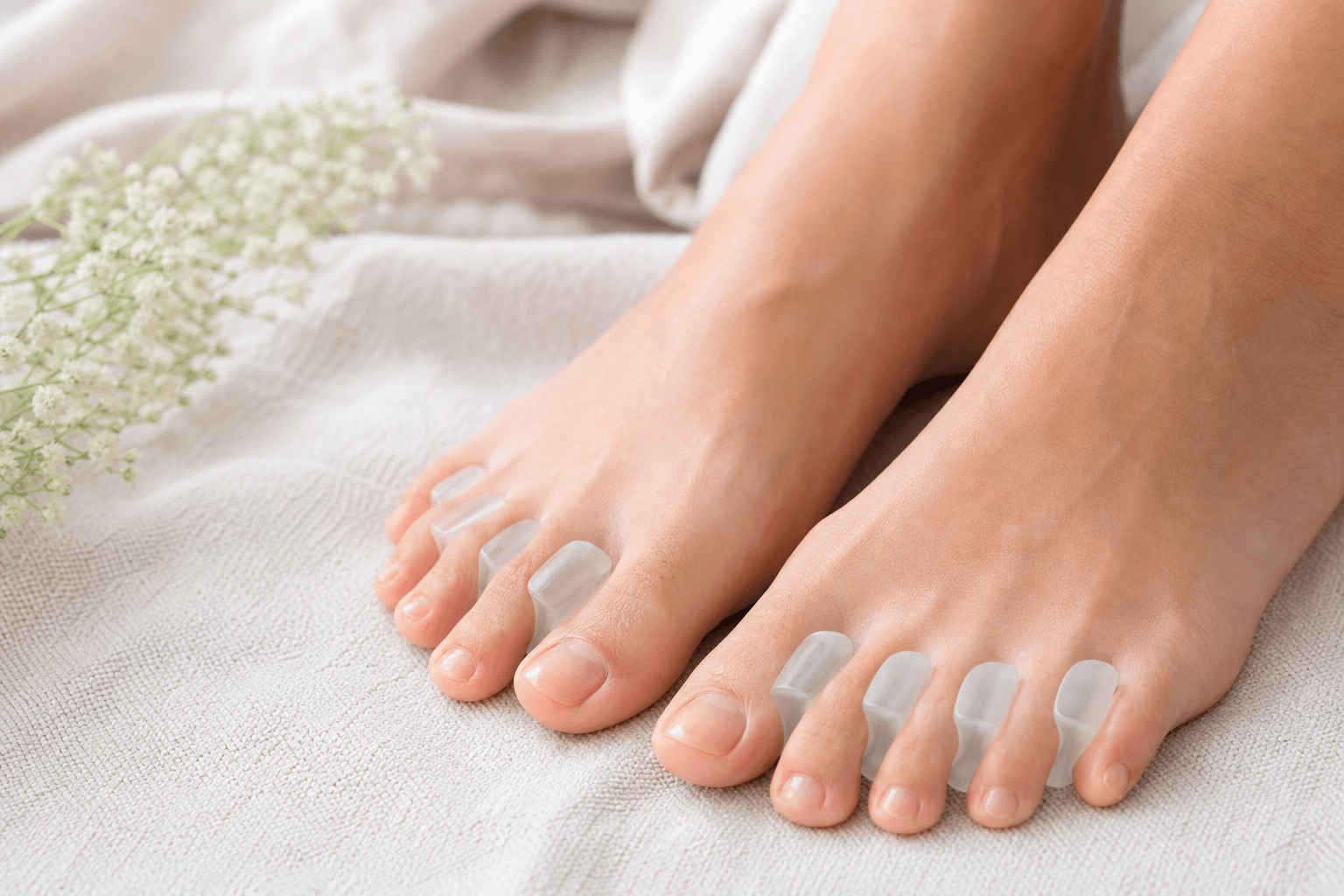
Toe separators are soft silicone or gel spacers worn between toes. They tend to help people whose toes feel squeezed, overlapping or rubbed, including those with a bunion, crowded toes, or sore skin between the toes. They are best seen as a comfort aid and a gentle spacing tool, not a way to rebuild bone alignment.
The research is encouraging but small. A 2021 BMJ Open systematic review and meta-analysis of hallux valgus orthoses reported that those with a toe separator had the strongest effect on reducing the bunion angle, and a 2024 Journal of Clinical Medicine review concluded that separators can be a useful conservative option while noting that the studies are small and differ in design.
Below: who they suit, how to start, shoe fit and when to skip them. Related reading: bunion correctors and bunions. The foot care hub has more.
What toe separators do
A separator sits between two toes and holds them slightly apart, which reduces side-to-side pressure and lets the toes sit in a more natural fan shape. Some are single wedges for the big toe, others are four-gap combs, and some are loops that hook around a toe. Wearing them while barefoot or in roomy shoes lets the toes spread, and some people also use them during stretches.
Realistic effects are mostly comfort: less rubbing, less squeezing and a feeling of space. Evidence that they change bone position over the long term is limited, so do not expect a bunion to disappear.
Who tends to benefit
People with a mild or early bunion often use a spacer between the big toe and second toe to reduce squeeze, as in our bunions guide. Those with overlapping or crowded toes, a sore corn between toes (soft corns), or toes that rub in tight shoes may find the spacing helpful. People with hammer toes sometimes use loop-style versions, though fit is fiddly. Some runners and yoga practitioners like spreading toes during activity.
Some people use them while stretching: sitting with spacers in for a few minutes while gently lifting and spreading the toes can make a long day on your feet feel easier. They are also popular after a day in narrow shoes, when toes feel pressed together and tired.
Toe separators may also feel good after a long day for people with tired, cramped feet, and some physiotherapists use them as part of toe-spreading exercises, though research there is early.
How to start without irritating your feet
Begin with 10 to 15 minutes at home, barefoot or in socks, once a day, and build slowly over a couple of weeks. A mild stretch or sense of pressure is normal; sharp pain, tingling or numbness means take them out. Pick a soft, flexible material and a size that fits comfortably, since overly thick spacers can pinch.
Material matters. Soft gel spacers conform to the toes and are comfortable for long wear; harder plastic ones can leave marks. Spacers with a hole or loop stay put better, while plain wedges can slide out. If you have a bunion, a single wedge in the big-toe gap is usually all you need, and more spacers than necessary add pressure instead of relief.
Keep them clean and dry: wash with mild soap, dry fully and check skin between the toes, because moisture can encourage rashes such as athlete's foot.
Wearing them in shoes
Only wear spacers in shoes that already have a wide toe box. Adding a spacer to a narrow shoe squeezes the foot from the sides and can cause more pain. Slim, flexible spacers made for shoe wear are different from thick sleeping versions.
If shoes are the underlying problem, fixing the fit often matters more than any accessory. Roomy toe boxes, flexible soles and supportive insoles together do more than a spacer alone; one option we reviewed is in our Akusoli insoles review.
When to skip them
Avoid separators on broken, infected or inflamed skin, and be cautious with diabetes, neuropathy or poor circulation, where a pressure spot can go unnoticed; check with a clinician first. Stop if toes turn pale, tingle or go numb. They are not a substitute for care of a stiff, painful big toe joint; see big toe joint pain.
When to see a doctor or podiatrist
See a podiatrist or doctor if a bunion or toe deformity is getting worse, hurts despite roomy shoes, makes walking difficult, or if you have redness, warmth, swelling or open skin. A professional can check whether a custom device, taping or other options suit you, and persistent foot pain should always be assessed.
Explore the foot care hub
Toes, nails, skin and everyday foot comfort in one place.
Explore the foot care hub →Frequently asked questions
Do toe separators work for bunions?
They can ease squeezing and soreness. A 2021 BMJ Open meta-analysis reported orthoses with a toe separator had the strongest effect on bunion angle among the designs reviewed, but the studies are small and results vary, so expect comfort rather than a change in bone structure.
How long should I wear toe separators each day?
Start with 10 to 15 minutes and build up slowly. Many people wear them at home while resting, and only wear thin versions in wide shoes.
Can I sleep in toe separators?
Some people do with soft versions, but start with short daytime wear first and stop if you get numbness or pain.
Are toe spacers the same as bunion correctors?
Toe spacers are one type of bunion corrector. Others include splints and sleeves; our bunion correctors guide compares them.
Who should not use toe separators?
Anyone with broken or infected skin, and people with diabetes, neuropathy or poor circulation should check with a clinician first.
HeelCups is reader-supported. When you buy through links on our site we may earn an affiliate commission, at no extra cost to you. This article is general information about foot comfort and is not medical advice — see our medical disclaimer.