BUNIONS
Do Bunion Correctors Work? What They Can Ease, What They Cannot Change and How to Choose
Splints, spacers and sleeves promise to straighten the big toe. Here is the honest picture of what they do for comfort, what they do not do for the bump, and when to see a podiatrist.
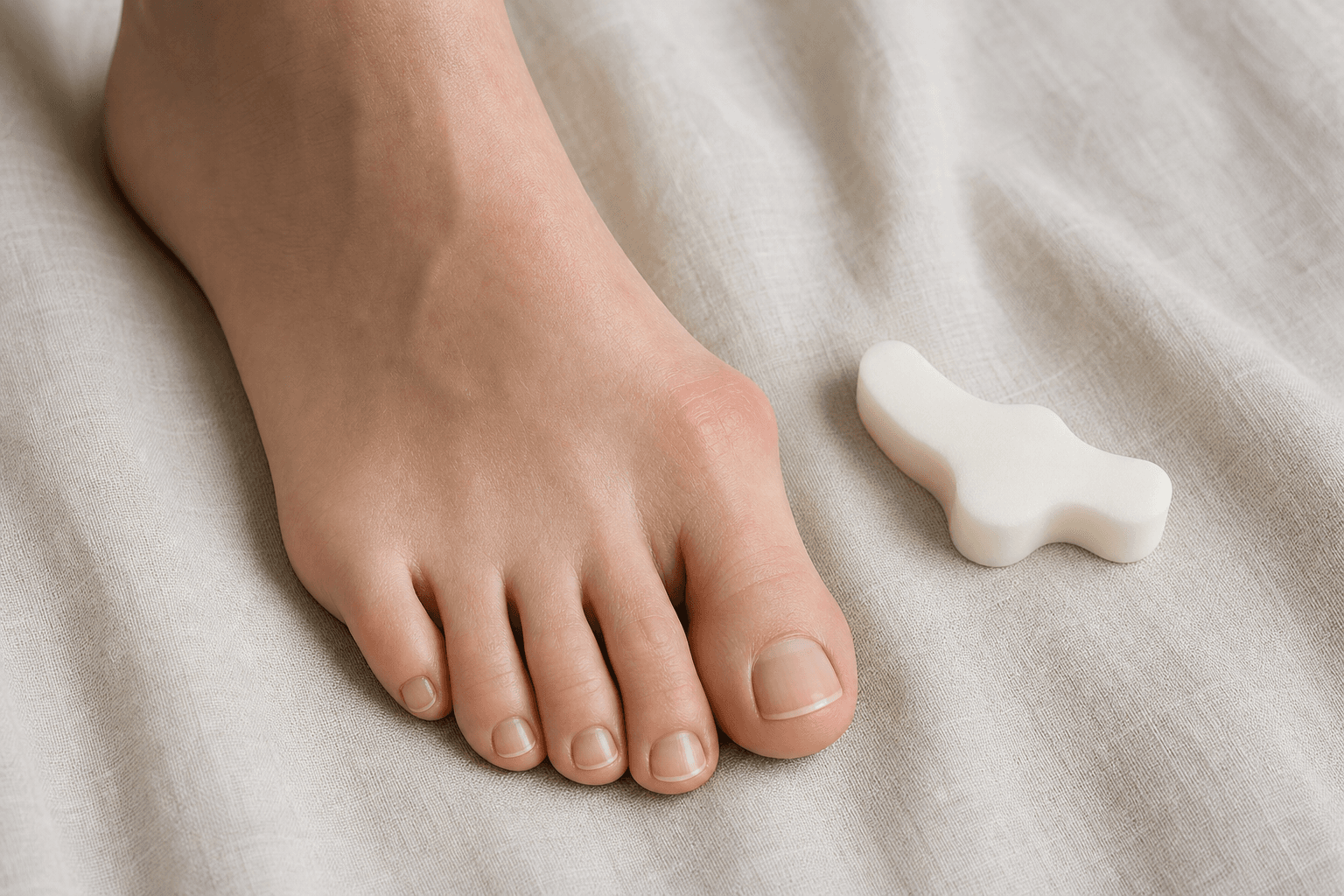
Bunion correctors can make a sore bunion more comfortable, but there is no good evidence that they permanently straighten the toe or shrink the bump. That is the short answer, and it matches how foot and ankle surgeons describe it: the American Academy of Orthopaedic Surgeons notes that nonsurgical measures can relieve pressure and pain but cannot reverse the deformity, which is a shift in the bones of the big toe joint.
So the useful question is what a corrector can do for you. A cushioning sleeve can stop a shoe rubbing. A spacer can ease the squeeze between the big toe and second toe. A night splint holds the toe in a straighter position for a few hours, which some people find soothing. Those are comfort goals, and for plenty of people they are worth it.
This guide walks through the types, what to expect, and how to pick one without falling for before-and-after photos. For the bigger picture on the bump itself, see our guide to bunions.
What a bunion is, and why straightening is hard
A bunion, or hallux valgus, is a bony prominence at the base of the big toe where the first metatarsal drifts inward and the toe angles toward the others. Genetics and foot shape play a large role, and tight footwear can aggravate it. Because the change is in the skeleton, a soft device worn for a few hours cannot be expected to move bone back into place. Some people have a mild or flexible bunion and may feel the toe straighten when a splint is on, but that tends to reflect the device holding it there, not a lasting change.
The main types of corrector
Bunion sleeves and pads are gel or fabric cushions that cover the bump. They reduce friction and rubbing inside a shoe, which is often the main source of daily pain, and they are the easiest style to wear all day.
Toe separators and spacers sit between the big toe and the next toe. They ease the crowding and can make the toe feel less squeezed. Foot-care groups often suggest them for comfort, although the research on them correcting alignment is limited.
Splints and night braces use a rigid or semi-rigid bar and straps to hold the big toe straighter, usually while resting or sleeping. A small number of studies suggest night splints may reduce pain in some people, but they have not been shown to change the angle of the bone for the long term.
Daytime straightening braces are worn inside shoes and are bulkier. They may not fit in many shoes, and some people find them irritating if they press on the bump.
What to expect honestly
If you want less rubbing and less soreness, a sleeve, spacer or night splint may help you feel more comfortable within days. If you want the bump to look smaller, no corrector has strong evidence for that. Beware of marketing that uses phrases like 'corrects' or 'realigns' with dramatic photos; those are claims, not clinical findings. Only surgery changes the bone position, and it is generally considered when pain limits walking or shoes despite conservative steps.
Shoes matter more than any gadget
The best ally for a bunion is a roomy toe box. A shoe that is too narrow squeezes the joint, and no corrector can offset that. Look for a wide front section, soft uppers and a heel that is not tall. We cover this in our guides to hammer toes, which often come with bunions, and corns and calluses, which form where shoes press the joint.
Cushioning underfoot can also help. Many people with bunions feel pressure shift to the ball of the foot, and a supportive, cushioned insole can spread that load. See our Akusoli insoles review for one option that suits shoes with enough depth.
How to choose and use one
Pick the device that matches your goal. For rubbing, choose a soft sleeve. For crowding, try a spacer. For night comfort, a splint may be worth a trial. Start by wearing any device for short periods and check the skin afterwards. Redness that does not fade, numbness, blisters or toes that go pale mean the device is too tight or in the wrong place.
Wash gel pads, let skin dry and avoid wearing a splint over broken skin. If you have diabetes, poor circulation or reduced foot sensation, speak to a clinician before using any strapping device, because pressure injuries can develop without being felt.
When to see a podiatrist
Book an appointment if the joint is red, hot and swollen, which may be gout or an inflamed joint rather than a plain bunion, or if the toe is getting steadily more crooked, you cannot find shoes that fit, or pain interferes with walking despite sensible shoes and padding. A podiatrist or orthopaedic foot specialist can examine, take an X-ray, discuss custom orthotics and talk through whether surgery is worthwhile. Persistent pain deserves a professional opinion, not another gadget. More guides are in our foot care hub.
Explore the foot care hub
More guides on toes, shoes and everyday foot comfort.
Explore the foot care hub →Frequently asked questions
Do bunion correctors really work?
They can ease rubbing, crowding and soreness, which is real comfort. There is no strong evidence that they permanently straighten the toe or reduce the bump.
Can a bunion splint reverse a bunion?
Foot and ankle groups such as the American Academy of Orthopaedic Surgeons state that nonsurgical measures cannot reverse the deformity. A splint may hold the toe straighter while worn.
Is it okay to wear a bunion corrector all day?
Soft sleeves and spacers are often worn through the day if they fit in your shoes. Rigid splints are more commonly used at rest or overnight. Stop if there is numbness, colour change or marked redness.
Do toe spacers help bunions?
Many people find spacers more comfortable because they reduce crowding between the first and second toes. Research on realigning the bone is limited.
When should I think about bunion surgery?
Surgery is generally discussed when pain limits daily activity despite wide shoes, padding and other conservative steps. A podiatrist or orthopaedic specialist can advise based on an X-ray and exam.
HeelCups is reader-supported. When you buy through links on our site we may earn an affiliate commission, at no extra cost to you. This article is general information about foot comfort and is not medical advice — see our medical disclaimer.