COMPRESSION SOCKS FOR FLYING
Compression Socks for Flying: What the Evidence Says, Which Strength to Pick and How to Wear Them
Long flights leave many people with heavy, swollen ankles. Here is what compression socks can realistically do in the air, how to size them and when to talk to a doctor first.
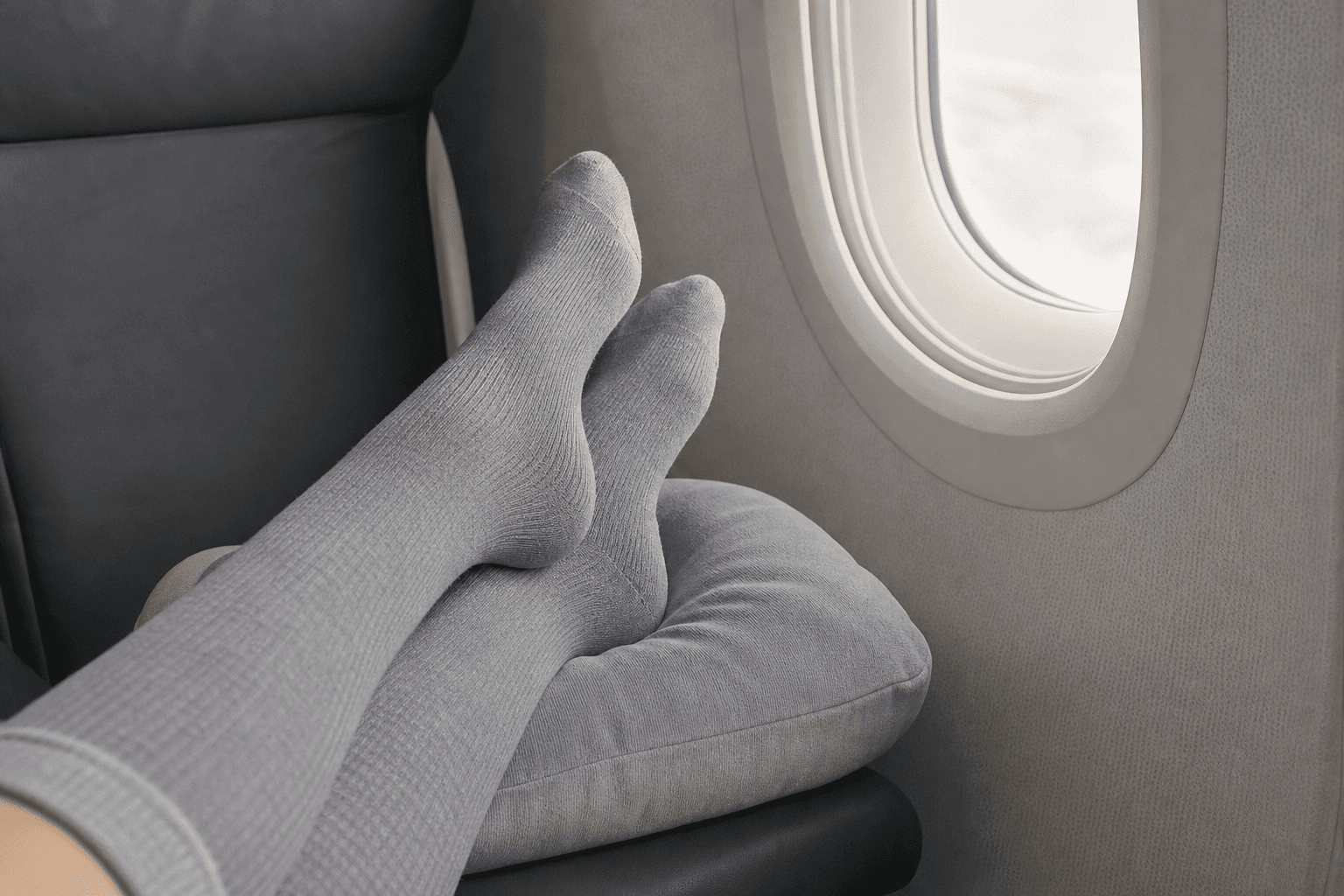
Yes, compression socks are worth considering for a long flight, mainly for comfort. Sitting still for hours lets fluid pool around the ankles, and graduated socks, which are snug at the ankle and looser toward the knee, help ease that heavy, puffy feeling. A Cochrane review of airline passengers found that wearing compression stockings reduced swelling and also reduced symptomless clots in the legs on flights of about four hours or more.
What they are not is a guarantee, and they are not a substitute for medical advice if you carry a higher clot risk. The same review could not say whether stockings change the rarer, more serious outcomes, because those events did not occur in the trials. If you have had a clot before, are pregnant, recently had surgery or take hormone therapy, ask your doctor what is right for you before you fly.
Below: what the research found, what strength and length to buy, how to put them on, what else helps in the seat, and when socks are the wrong tool. For the basics of how these socks work, see our compression socks guide and the foot care hub.
What the research actually shows
The Cochrane review on compression stockings in airline passengers pooled 12 randomised trials with 2,918 participants. Among people who wore stockings on both legs, 3 of 2,637 with follow-up data developed a symptomless deep vein clot, compared with 47 among those who did not wear them. The reviewers rated the evidence for that finding as high certainty. They also reported, with lower certainty, that stockings reduced leg swelling.
There are limits worth knowing. The trials involved healthy volunteers on long flights, and the review could not assess symptomatic clots, pulmonary embolism or death, because none occurred. So the honest summary is: good evidence that stockings help with swelling and with small, silent clots, and no firm evidence about the rare serious events. The American Heart Association has made a similar point in its public guidance, noting that socks are one option among several and that moving around matters too.
Which strength and size to choose
Most travel socks sit in the 15 to 20 mmHg or 20 to 30 mmHg range. Lighter compression is easier to put on and more comfortable for an otherwise healthy traveller who simply wants less swelling; firmer compression is usually chosen when a clinician has suggested it. If you are unsure, start with the lighter end, and see our guide on what the mmHg numbers mean before buying.
Fit matters more than the number on the packet. Measure your ankle and calf circumference in the morning, before swelling builds, and match them to the maker's size chart rather than your shoe size. A sock that is too tight can dig in behind the knee or squeeze the toes; one that is too loose does nothing. Knee-high is the usual choice for flights, because the trials used knee-length stockings.
Look for a smooth seam at the toes, a flat top band that does not roll, and a fabric that breathes. If you have sensitive skin or dry, cracked heels, check there is no rough patch that will rub for eight hours.
How and when to put them on
Put them on before you leave for the airport, not after your feet have swollen on the way. Do it while sitting, with the sock turned inside out to the heel, slide the foot in, then roll the sock up the leg and smooth out wrinkles. Rubber gloves help with grip. A bunched band behind the knee can act like a tourniquet, so check there are no folds.
Wear them through the flight and for a while after landing, then take them off and check your skin. Mild marks are normal. Numbness, pale or bluish toes, pain or deep red grooves mean the socks are too tight or the wrong fit, so take them off. Wearing them to bed is a separate question, covered in our guide to sleeping in compression socks.
What else helps in the seat
Socks work best alongside movement. Walk the aisle every hour or two when the seatbelt sign allows, and in your seat flex and point your feet, rotate the ankles and press the balls of your feet into the floor. Choose an aisle seat if you expect to get up often, avoid crossing your legs for long stretches and keep water handy, since a dry cabin can leave you thirsty.
Shoes matter too. Feet swell in the air, so wear roomy, easy-on shoes you can loosen, and consider slip-ons you can take off. Our guide to swollen feet covers everyday causes of puffy ankles and what tends to ease them.
When socks are not enough or not advisable
Compression socks are not suitable for everyone. If you have peripheral artery disease, numb feet, a skin infection, a leg wound or severe leg swelling that has appeared suddenly, ask a doctor before wearing them. People with diabetes should also check first, because reduced feeling can hide pressure damage; see diabetic socks for a gentler option.
Seek urgent medical help if, during or after a flight, one leg becomes swollen, red, warm or painful, or if you have sudden shortness of breath or chest pain. Those are not foot-care aisle problems.
When to see a doctor or podiatrist
Talk to your doctor before a long trip if you have had a clot, have heart, vein or circulation problems, are pregnant or recently had surgery. Persistent swelling that does not settle after a flight, or foot pain that keeps returning, deserves a visit to a doctor or podiatrist.
Read the compression socks guide
How graduated compression works, sizing and who should check with a doctor first.
Read the compression socks guide →Frequently asked questions
Do compression socks really help on long flights?
A Cochrane review of 12 randomised trials found stockings reduced leg swelling and symptomless clots on long flights. It could not assess the rarer serious outcomes, so socks are a comfort and risk-reduction aid, not a guarantee.
What compression level is best for flying?
Many travellers choose 15 to 20 mmHg for comfort; 20 to 30 mmHg is usually chosen on a clinician's advice. Fit matters as much as the number.
How long before a flight should I put them on?
Put them on before leaving for the airport, ideally in the morning before swelling builds, and wear them through the flight.
Can I wear compression socks all day after landing?
Many people wear them for the rest of the travel day. Take them off if you notice numbness, pain, colour change or deep grooves in the skin.
Who should not wear compression socks on a plane?
Anyone with peripheral artery disease, reduced foot sensation, skin infection or sudden one-sided leg swelling should ask a doctor first.
HeelCups is reader-supported. When you buy through links on our site we may earn an affiliate commission, at no extra cost to you. This article is general information about foot comfort and is not medical advice — see our medical disclaimer.