RUNNING SHOES FOR FLAT FEET
Running Shoes for Flat Feet: How to Choose Without Falling for the Pronation Myth
Flat feet do not automatically need a stability shoe. Here is what the research says, what to test in the shop, and when insoles or a clinician's advice are worth adding.
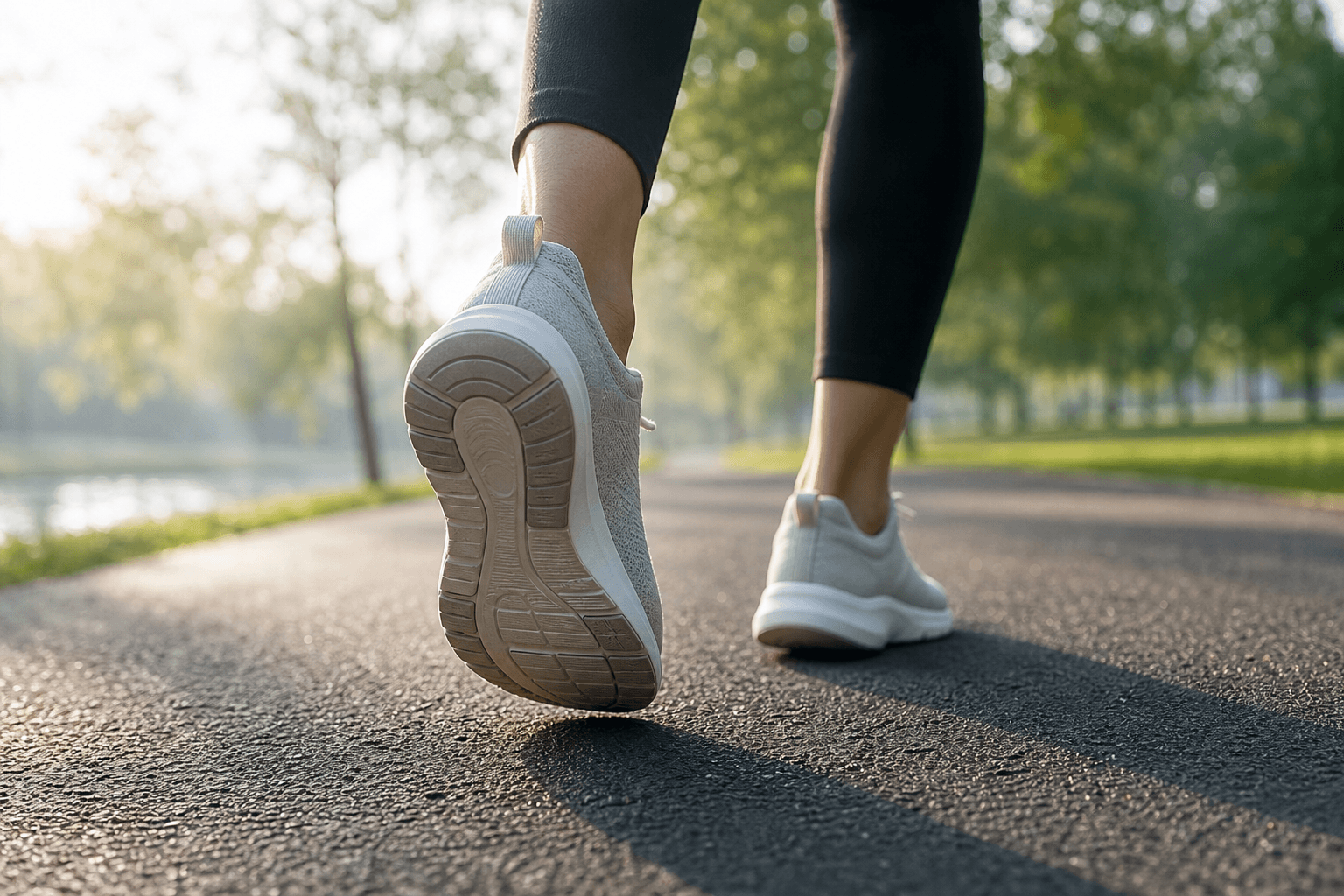
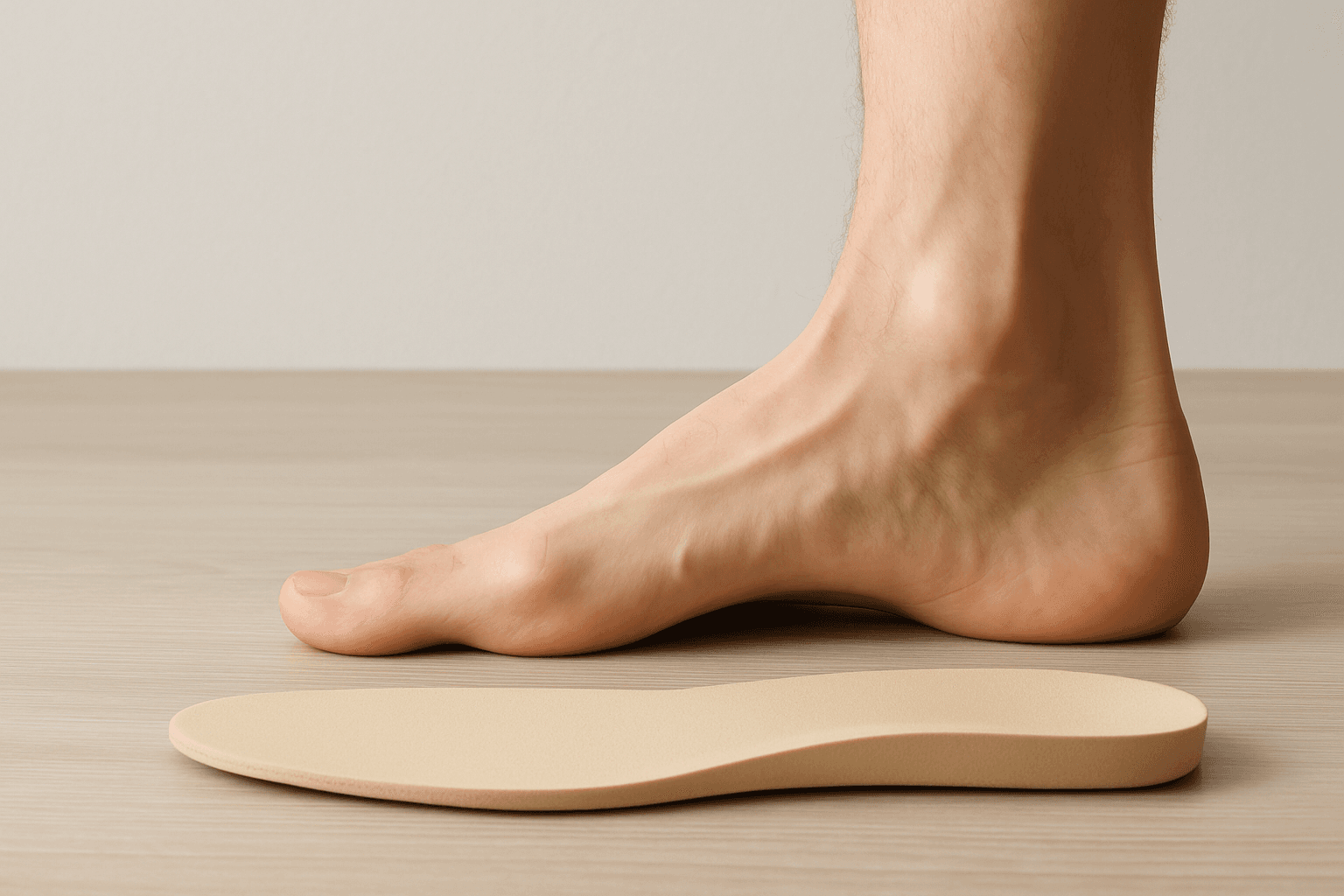
The shoe that feels most comfortable on your run is usually the best starting point for flat feet, and many flat-footed runners do well in an ordinary neutral trainer. A stability shoe is worth trying if your arches collapse clearly and you have had repeated aches on the inside of the shin, knee or arch, but it is not a rule.
Shop advice has long been to match arch height to shoe type. The evidence is less tidy, and this page walks through what is known, a shop-floor checklist, and where insoles fit in. Our wider guide to insoles for flat feet covers daily support off the run.
Nothing here replaces advice from a podiatrist or physical therapist, especially if running hurts. See the insoles hub for related guides.
What the research says about arch type and shoes
Two lines of research are worth knowing. A large trial of US military recruits reported that assigning shoes by arch height did not lower injury rates compared with everyone wearing the same stability shoe. And a 2016 trial by Malisoux and colleagues reported that motion-control shoes seemed to help only clearly pronated runners, whose injury risk was lower in the motion-control version, while neutral and high-arched runners saw no difference. These are secondary summaries we read through web search, so check the original papers if the detail matters to you.
A review by Benno Nigg and colleagues is often cited for the idea that choosing shoes by arch type lacks scientific support and that comfort should come first. Taken together, the picture is that flat feet alone are not a reason to buy corrective shoes, but a clearly collapsing arch with recurring problems is a reasonable reason to try one.
Neutral, stability and motion control: what the labels mean
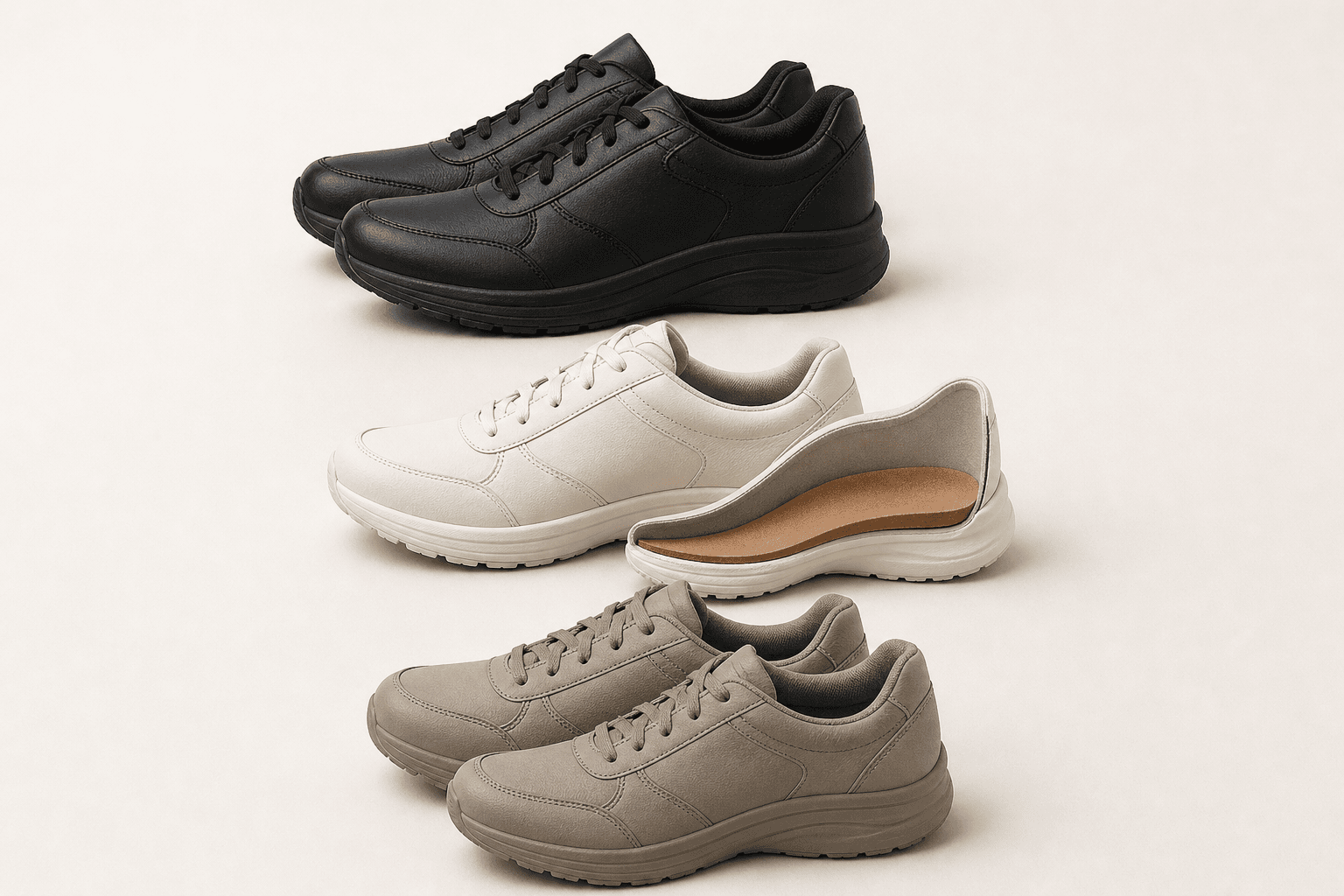
Neutral shoes have a uniform cushioned midsole. Stability shoes add a firmer or wider section on the inner side or a guide rail to limit how far the foot rolls inward. Motion-control shoes are the firmest and widest, built for severe collapse. The labels differ between makers, so judge by feel instead of the name.
Higher stack shoes with soft midsoles can feel wobbly under a flexible foot. A wider base or a firmer midsole often feels steadier.
A shop-floor checklist
Shop late in the day, when feet are at their largest, wearing your running socks and any insole you use. Check the fit first: a thumb's width at the toe, a heel that stays put and no pinching in the midfoot. Twist the shoe gently; a shoe that folds like a towel in the middle is usually less supportive than one that resists twisting.
Then jog on the spot or on the store's treadmill. Notice whether the arch of the shoe lines up with your arch or presses uncomfortably. Standing in a pair that feels fine for two minutes can feel different after two miles, so buy where returns are allowed and run short distances first.
Replace trainers when the cushioning feels flat or the midsole shows creases and uneven wear, commonly after several hundred miles, and rotate pairs if you run often.
Where insoles fit in
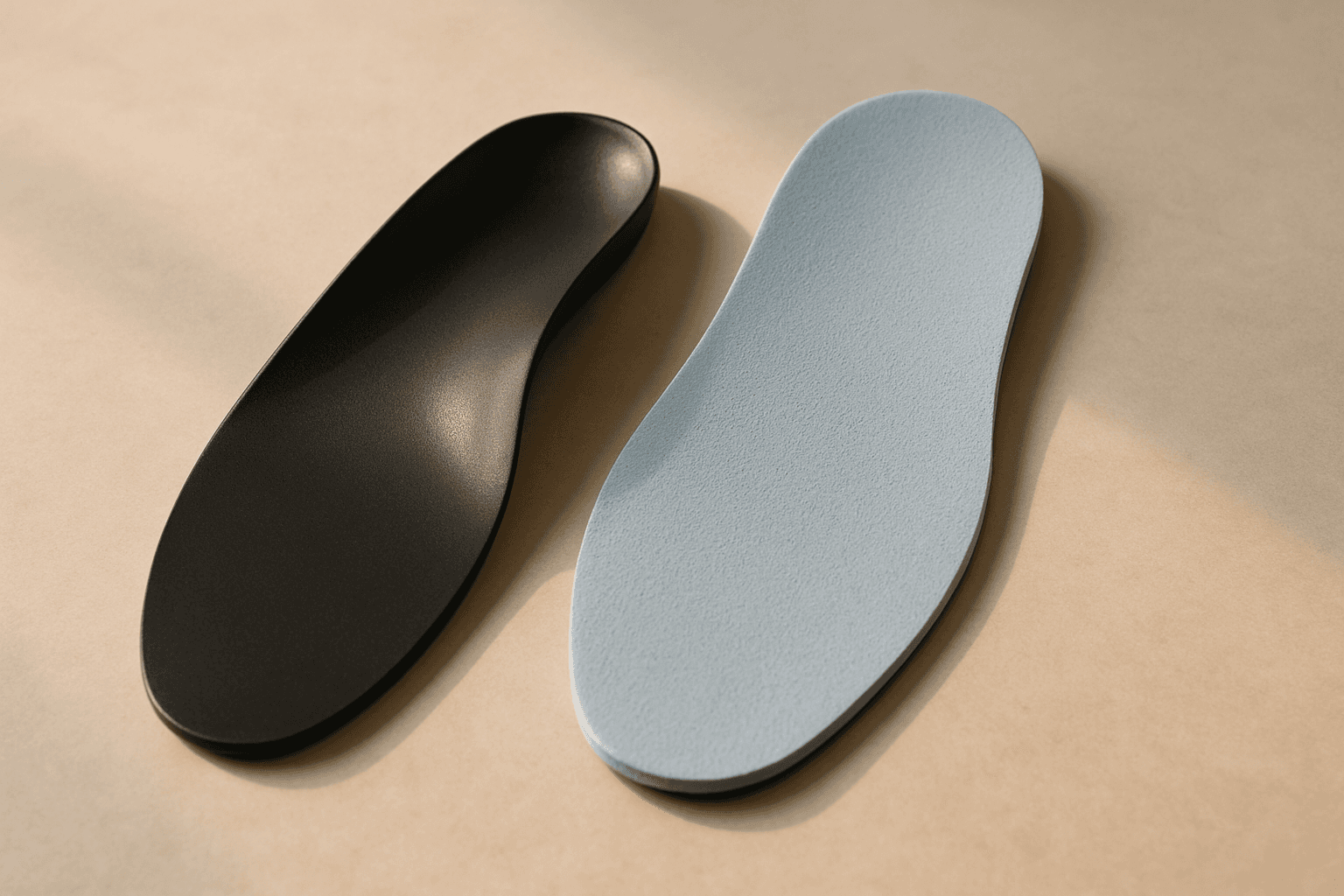
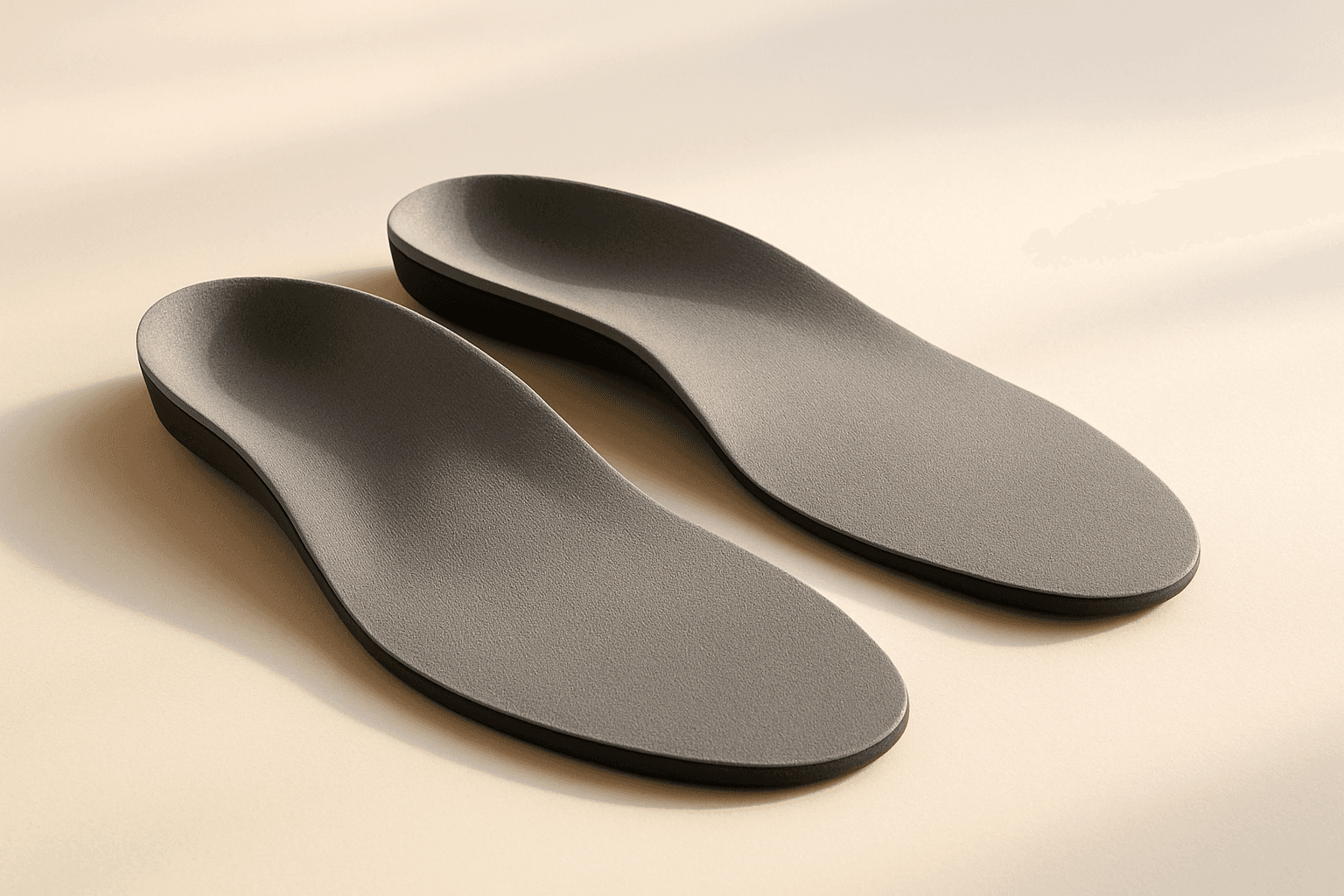
Some flat-footed runners prefer a neutral shoe with a supportive insole they can move between pairs. Choose one with a firm, contoured arch and a deep heel cup, and check it does not lift your foot so high that the shoe feels tight. A rigid arch that feels like a pebble is the wrong shape; start with short runs. One option we reviewed is in our Akusoli insoles review; custom orthotics from a clinician are a separate route, explained in orthotics vs insoles.
Insoles are comfort and support aids; they do not rebuild an arch.
Whatever you choose, give a new setup a fair trial of two to three short runs before judging it, and keep notes on how the arch, heel and shin feel afterwards. If a shoe feels wrong in the first mile, believe it; there is no benefit in running through a pair that does not suit you, however well it is reviewed.
Easing in and caring for flat feet while running
Change one thing at a time and build mileage slowly. Calf stretching and foot-strengthening drills such as short-foot and heel raises are common additions, and if you get heel pain, our guide to running with plantar fasciitis explains how to decide whether to run.
Strength work can sit alongside shoe choice. Short-foot drills (gently drawing the ball of the foot toward the heel without curling the toes), calf raises and single-leg balance work are common suggestions from physical therapists for people with flexible flat feet, built up gradually. They are supportive habits rather than a promise of a higher arch.
Flat feet that suddenly become painful or collapse in an adult, especially on one side, can reflect tendon trouble; see posterior tibial tendonitis.
When to see a doctor or podiatrist
See a podiatrist or doctor if running causes pain that lasts more than a couple of weeks, if one arch has recently dropped, or if you notice swelling along the inner ankle, numbness, or pain at night. A gait assessment can guide shoe and insole choices, and persistent pain deserves a proper diagnosis.
Explore the insoles hub
Guides to insoles, heel cups and support for every foot type.
Explore the insoles hub →Frequently asked questions
Do flat feet need stability running shoes?
Not automatically. Research summaries suggest stability or motion-control shoes seem to help clearly pronated runners most, while mildly flat or neutral feet often do fine in a comfortable neutral shoe.
What is the best way to choose running shoes for flat feet?
Start with comfort and fit, then check how firmly the midsole and heel hold the foot. Try short runs before committing and use your own socks and insoles in the shop.
Should I wear insoles in running shoes if I have flat feet?
Many runners do, as a comfort aid. Pick a contoured, firm arch and check the shoe still fits.
Can running shoes fix flat feet?
No. Shoes and insoles support the foot while you wear them; they do not rebuild the arch.
How often should I replace running shoes?
Common guidance is every several hundred miles, or sooner if the cushioning feels flat or the midsole is creased and worn unevenly.
HeelCups is reader-supported. When you buy through links on our site we may earn an affiliate commission, at no extra cost to you. This article is general information about foot comfort and is not medical advice — see our medical disclaimer.