ARCH SUPPORT SHOES
Arch Support Shoes: What to Look For (and What a Label Cannot Tell You)
A practical checklist for judging a shoe's support in the store: the bend test, the twist test, the heel counter and the fit details that matter more than the word 'supportive'.
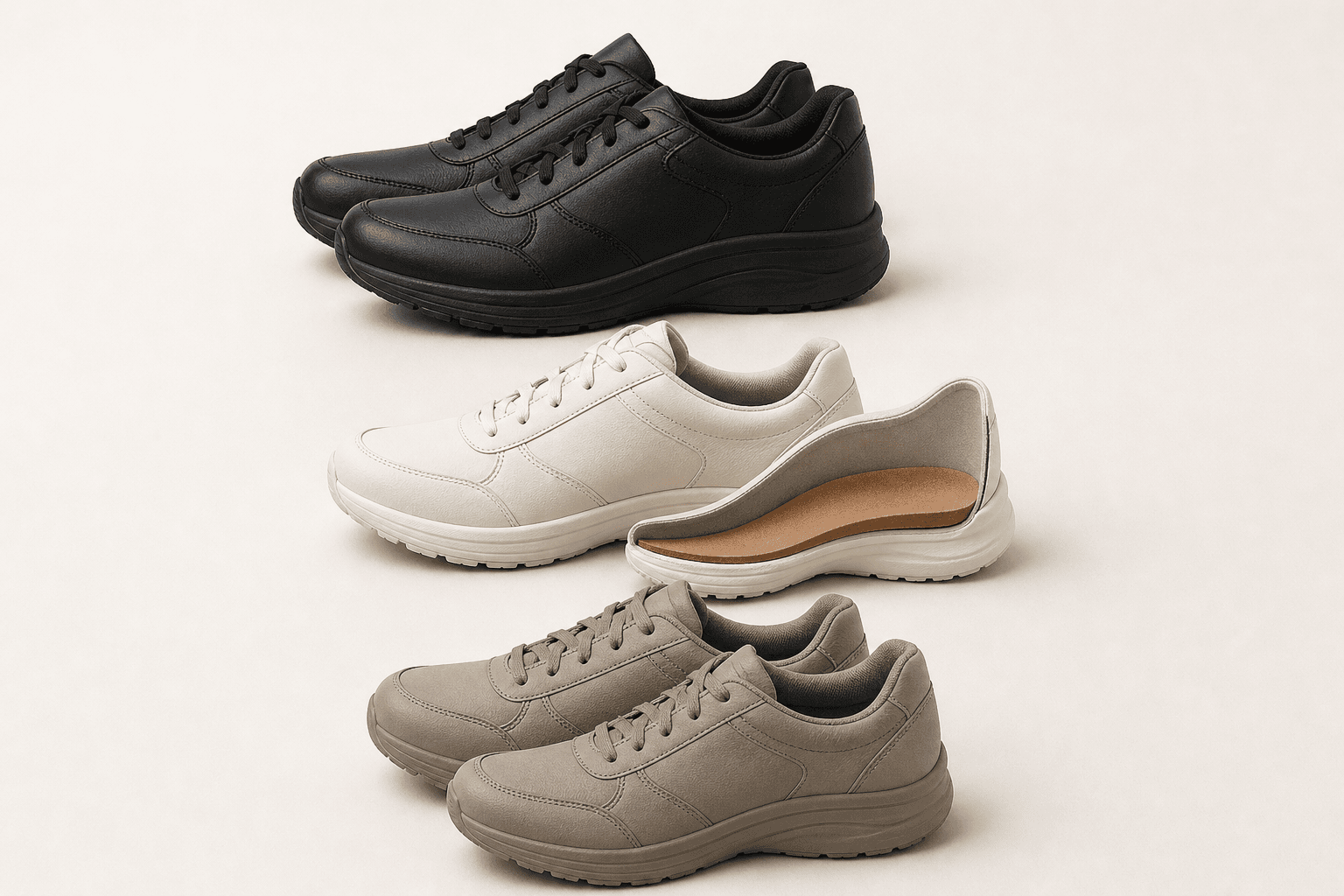
A shoe with good arch support has a firm, contoured midsole under the arch, a stiff heel cup that holds the heel in place, and a body that bends where your toes bend rather than in the middle. Those are things you can check yourself in a couple of minutes, which is useful because 'arch support' on a box is a marketing phrase, not a measurement.
Podiatry and physical therapy sources generally agree on the same short list: a firm heel counter, a midsole that resists twisting, a flex point at the ball of the foot, and enough width that the foot is not squeezed. Moderate, contoured support suits most people. Very aggressive arches can feel uncomfortable, especially if your own arch is low, so more is not automatically better.
Below is a store checklist, how to match a shoe to a flat, neutral or high arch, where an insole fits in, and when it is time to see a clinician. This is general information, not medical advice. If you want the plantar fasciitis angle, see our guide to doctor-recommended shoes; for the wider picture on support products, see the insoles hub.
The three-minute store test
Pick the shoe up before you try it on. First, the bend test: hold the heel and toe and fold the shoe. A supportive shoe bends at the ball of the foot, where your toes naturally flex, and resists folding in the middle. A shoe that folds in half like a taco offers little structure under the arch.
Second, the twist test: hold the heel in one hand and the toe in the other and wring it like a towel. A shoe that twists easily lets the foot rotate with every step; one that resists is described by footwear sources as having torsional stability. Third, squeeze the back of the heel. A firm counter should not collapse under your thumb.
Heel counter and midsole: the parts that do the work
The heel counter is the rigid cup around the back of the heel. Podiatrist-quoted guides, including a feature in Yahoo Health's foot health coverage, recommend a firm counter with a deepened heel cup because it keeps the heel bone centred over the sole instead of rolling in or out.
The midsole is the layer between the outsole and your foot. Firm but not hard is the aim: enough density that the arch is not sinking with each step, with enough cushion that the shoe is comfortable for hours. Some stability shoes add a firmer wedge on the inner edge of the midsole to limit inward roll, which people with flat feet often find helpful.
Match the shoe to your arch
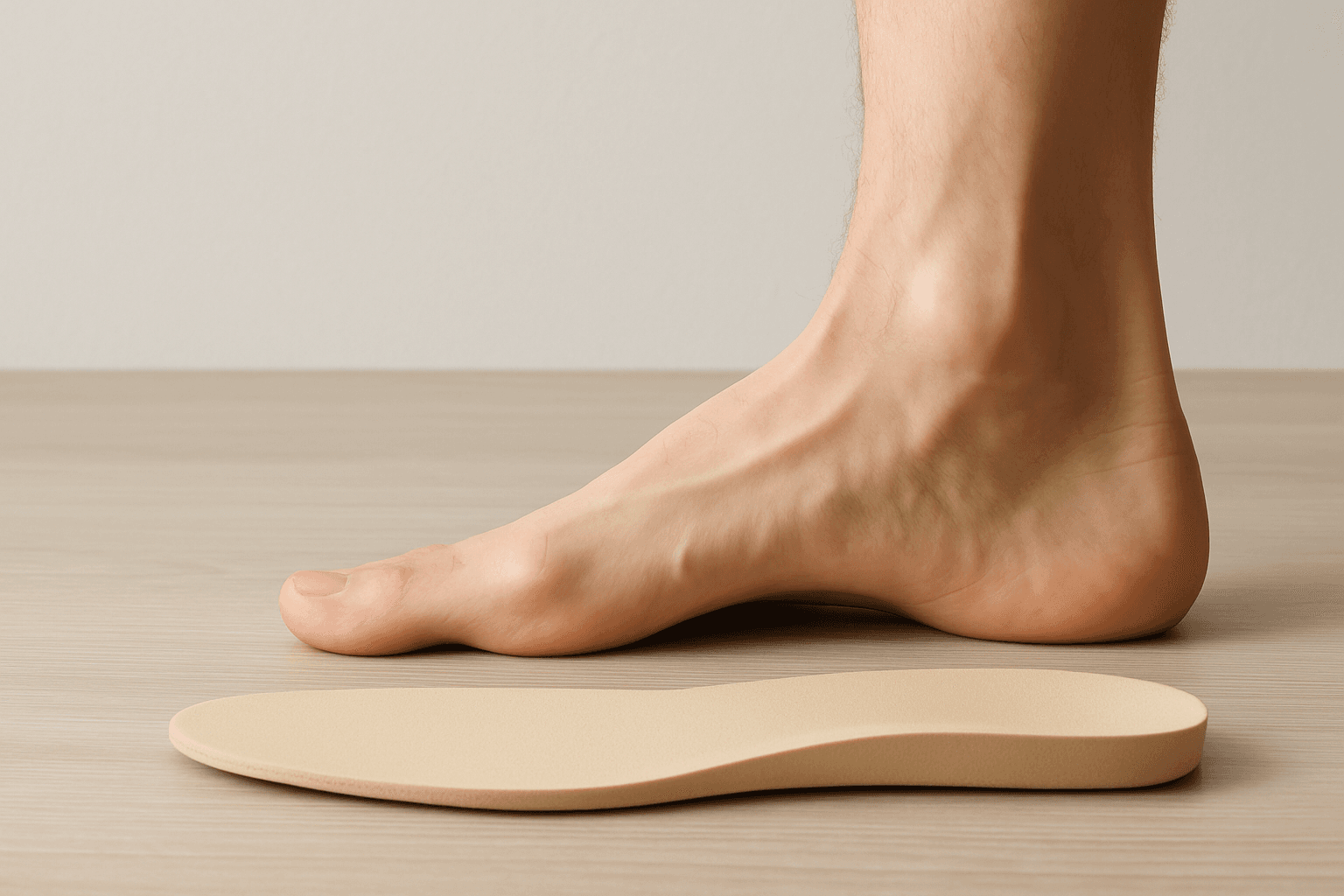
To get a rough read of your arch, wet your foot and step on a dark piece of paper. A nearly full footprint suggests a low arch, a thin band along the outside suggests a high arch, and something in between is neutral. It is a rough guide, not a diagnosis.
Lower arches usually do best with a stable, slightly wider shoe with a firm midsole. Our guides to flat feet and running shoes for flat feet cover that in more detail. High arches tend to be stiff and shock-absorbing poorly, so cushioning and a roomy heel matter more; see high arches. Neutral arches have the most freedom, so fit and comfort should lead.
Common mistakes when shopping for support
The most frequent mistake is buying for the arch and ignoring the rest of the shoe. A dramatic arch bump on a narrow, flimsy upper still leaves the foot unstable. Another is trusting a brand name or a clinical-sounding label instead of testing the shoe in your hands. Marketing terms such as 'orthopedic' or 'comfort' are not regulated measurements of support.
A third mistake is sizing up to get more room. A longer shoe lets the foot slide forward and puts the arch in the wrong place. If the forefoot is tight, look for a wider width in the same length rather than a bigger number. Finally, avoid judging a shoe in the first thirty seconds: walk around for several minutes and notice whether the arch, heel or toes start to complain.
Fit still beats features
A well-built shoe in the wrong size will not help. Try shoes in the afternoon, when feet are at their largest, wear the socks you actually use, and leave about a thumb's width in front of the longest toe. Stand on the shoe's insole once it is out: if your forefoot spills over the edges, the shoe is too narrow no matter what the label says.
Check that the arch of the shoe lands where your arch is. If the bump presses on the wrong spot, it will feel like a pebble, and no amount of break-in changes the position. Walk on a hard floor, not just carpet, and pay attention to the first ten steps.
Work shoes, walking shoes and sandals
The same checks apply across shoe types. For standing jobs, a firm midsole and a roomy toe box usually matter more than a soft top layer, which can feel nice at first and flatten by midday. For walking, look for a gently rocking forefoot and a stable heel. Sandals are harder to judge: the best ones have a contoured footbed, a heel cup and an ankle or heel strap, while thin flat flip-flops give almost no structure, as our guide to flip-flops and plantar fasciitis explains.
Slippers deserve a thought too. Many people go from supportive shoes straight to flat barefoot time on hard floors, and the arch gets no relief all evening. A pair with a contoured footbed for indoor use is a low-cost way to extend the support.
Where insoles fit in
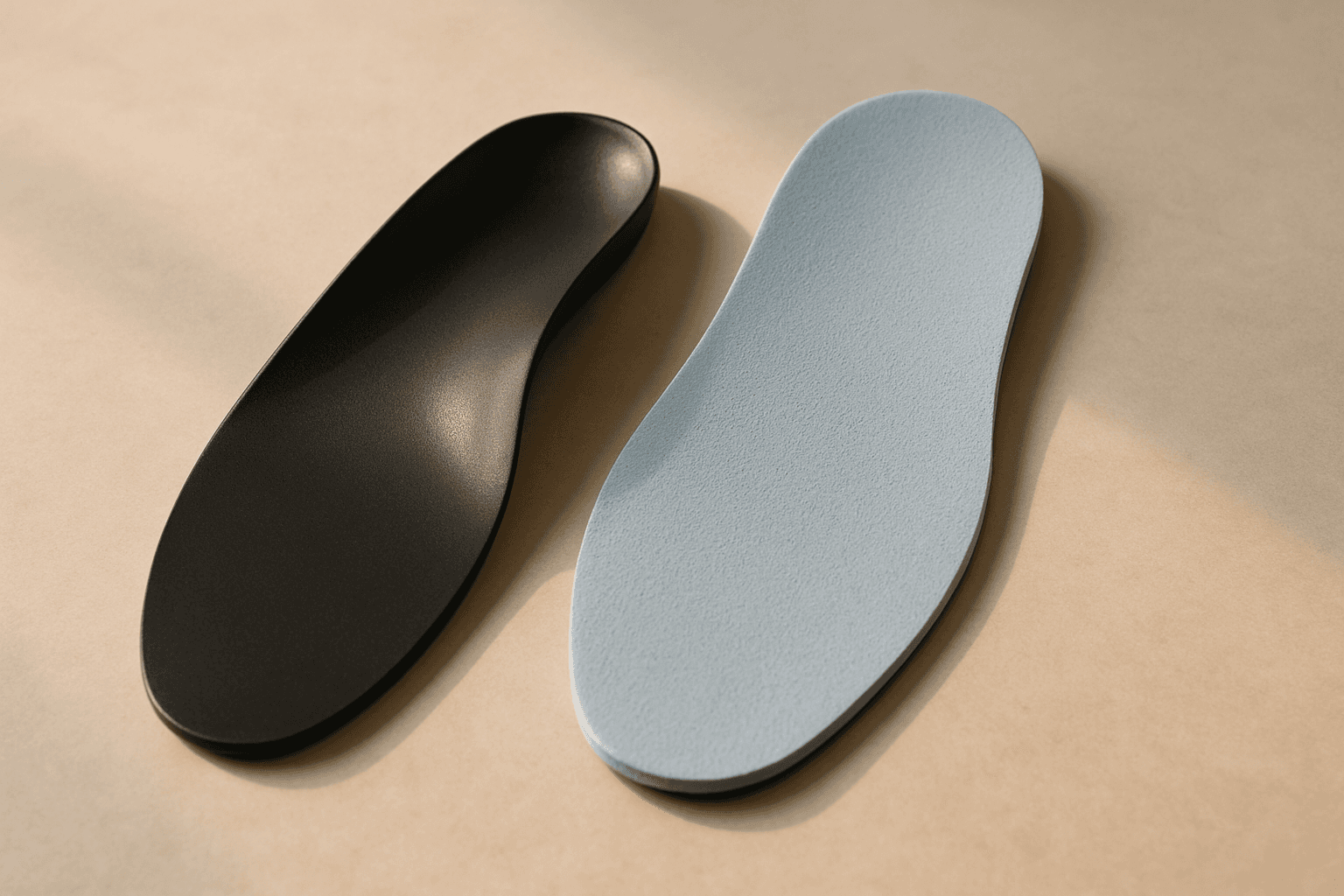
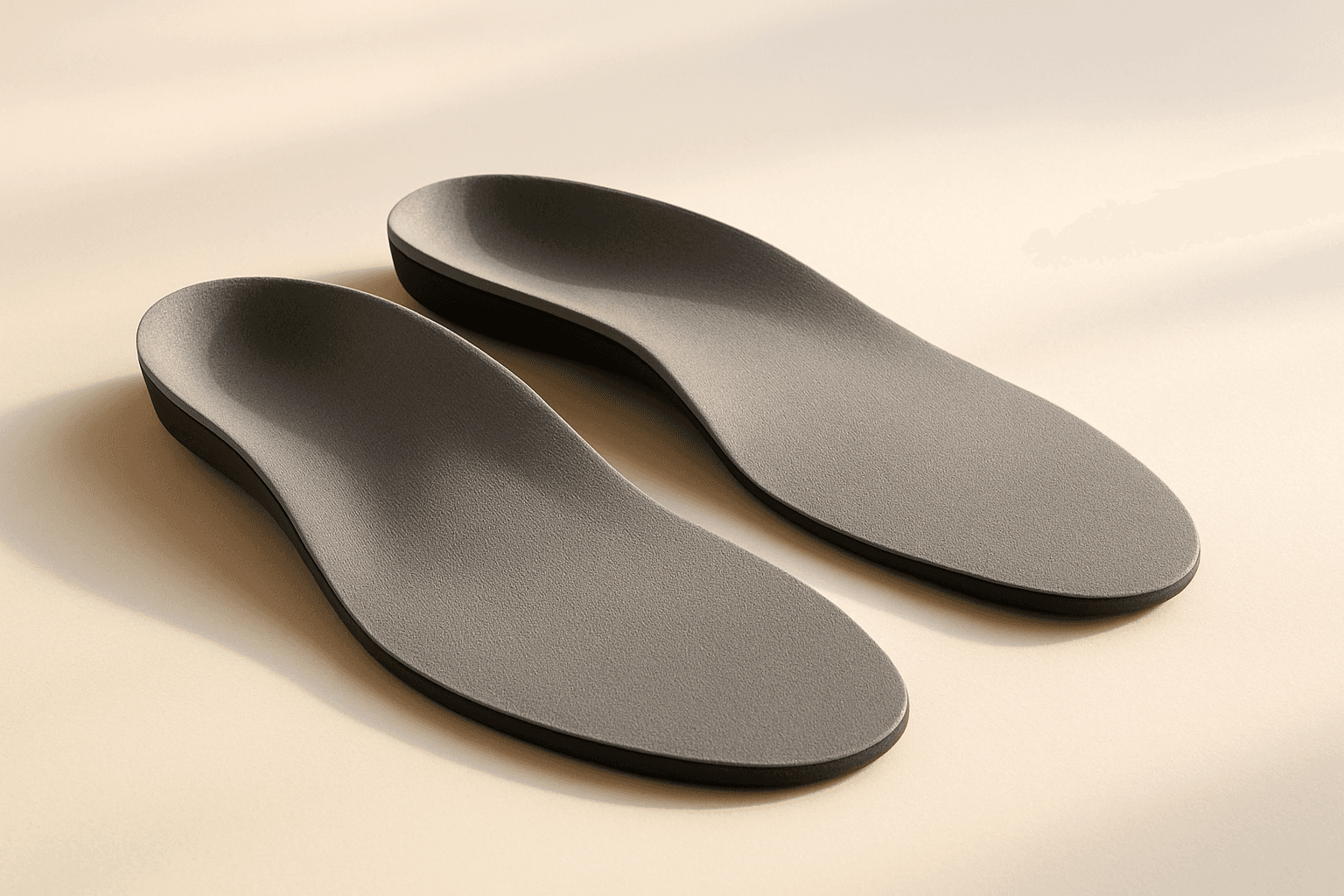
If a shoe is otherwise a good fit but the footbed is flat, a separate insole can add contour. Remove the factory insole first rather than stacking two inside a snug shoe. Over-the-counter inserts and prescribed custom orthotics solve different problems, and our orthotics vs insoles page explains how to decide.
Expect an adjustment period. Many insole makers suggest wearing new support a few hours at a time for the first week or so. Discomfort that builds rather than settles is a reason to stop and get advice.
Shoes wear out, and so does support
Midsoles compress with use. Check a pair by pressing the midsole with your thumb and looking at the heel from behind: if the shoe tilts inward or outward on a flat surface, or the cushioning feels dead, the structure has gone. Running-shoe guidance commonly cites several hundred miles as a typical lifespan, though it varies with body weight and surface. Daily-wear shoes used on concrete for long shifts can fade sooner than the tread suggests.
When to see a podiatrist
See a doctor or podiatrist if one arch has gradually flattened, if pain sits on the inner ankle or arch, if there is swelling, or if heel or arch pain has lasted more than a few weeks despite good footwear. Acquired flat feet in adults can come from tendon problems that need a proper assessment, and shoes cannot substitute for that.
Read our Akusoli insoles review
If your shoes fit but the footbed is flat, see how a contoured insole compares.
Read our Akusoli insoles review →Frequently asked questions
How can I tell if a shoe has enough arch support?
Check that it bends at the ball of the foot rather than the middle, resists being twisted, and has a firm heel cup. The contour under your arch should feel like gentle contact, not a lump.
Is more arch support always better?
No. Moderate, contoured support suits most people. Very high or rigid arches can be uncomfortable, particularly if you have flat feet, so comfort should guide the choice.
Do I need arch support if I have flat feet?
Many people with flat feet find a stable shoe with a firm midsole and contoured footbed more comfortable on long days, but it varies. If you have pain, a clinician can advise whether support will help.
Can I add an insole to any shoe?
Most shoes with a removable footbed take an insole well. Take out the factory insole first and make sure the shoe still has room, since a crowded shoe can create new pressure points.
How often should I replace supportive shoes?
When the midsole feels flat, the heel counter softens or the shoe tilts when placed on a table. Running guidance often mentions several hundred miles, but heavy daily use can wear them sooner.
HeelCups is reader-supported. When you buy through links on our site we may earn an affiliate commission, at no extra cost to you. This article is general information about foot comfort and is not medical advice — see our medical disclaimer.