RUNNING INSOLES
Running Insoles: What They Can Change, What the Research Says and How to Choose a Pair
Insoles for running are not magic, but a well-fitted pair can add comfort and support. Here is what the evidence shows, which features matter and how to break a pair in without flaring a sore spot.
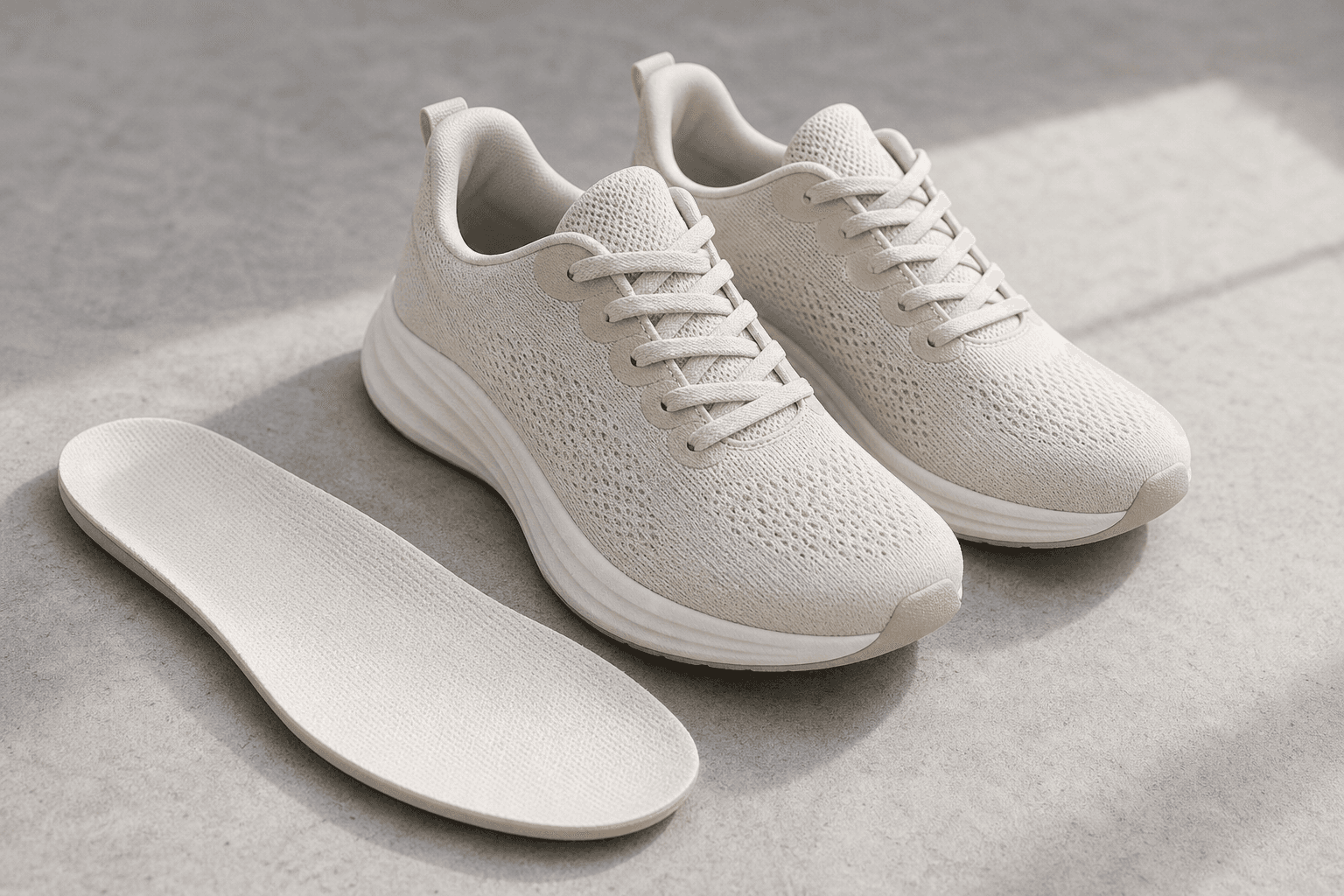
Running insoles can make a shoe feel more supportive and more comfortable, and for some runners they are a useful part of managing recurring aches. They are not a guaranteed injury shield. The research is mixed: a 2024 scoping review in Sports Medicine – Open reported that wearing foot orthoses while running was linked to reductions in pain from overuse problems, while also noting that more injury-specific research is needed. A fit that suits your foot and your shoe matters more than any label.
The simplest way to choose is to start from the complaint rather than the product. If your arch feels tired by mile five, look at a firm, contoured arch. If your heel feels bruised on hard roads, look at a deep heel cup and a dense, resilient base. If the shoe already fits well and feels fine, you may not need an insole at all, and swapping the footbed is not a way to rescue a shoe that has simply worn out.
This page is general information, not medical advice. Pain that changes your stride, wakes you at night or does not ease after a couple of weeks of reduced mileage deserves a look from a doctor or podiatrist.
What the research actually says
Two lines of evidence are worth knowing. A 2016 meta-analysis of foot orthoses for preventing running-related injuries pooled 11 trials and found fewer injuries overall and fewer stress fractures, but no clear effect on soft-tissue injuries. It also found no benefit from shock-absorbing insoles, and it flagged that trial quality varied a lot. A more recent systematic review of runners reported lower injury risk with orthoses, but rated the evidence as moderate quality at best.
The takeaway is cautious. Insoles may help some runners, especially where bone stress is a concern, but the studies often involve military recruits or mixed groups rather than recreational runners. Treat any promise of preventing injury with suspicion, and think of an insole as one comfort and support tool alongside training load, strength work and shoe choice.
Features that matter on the run
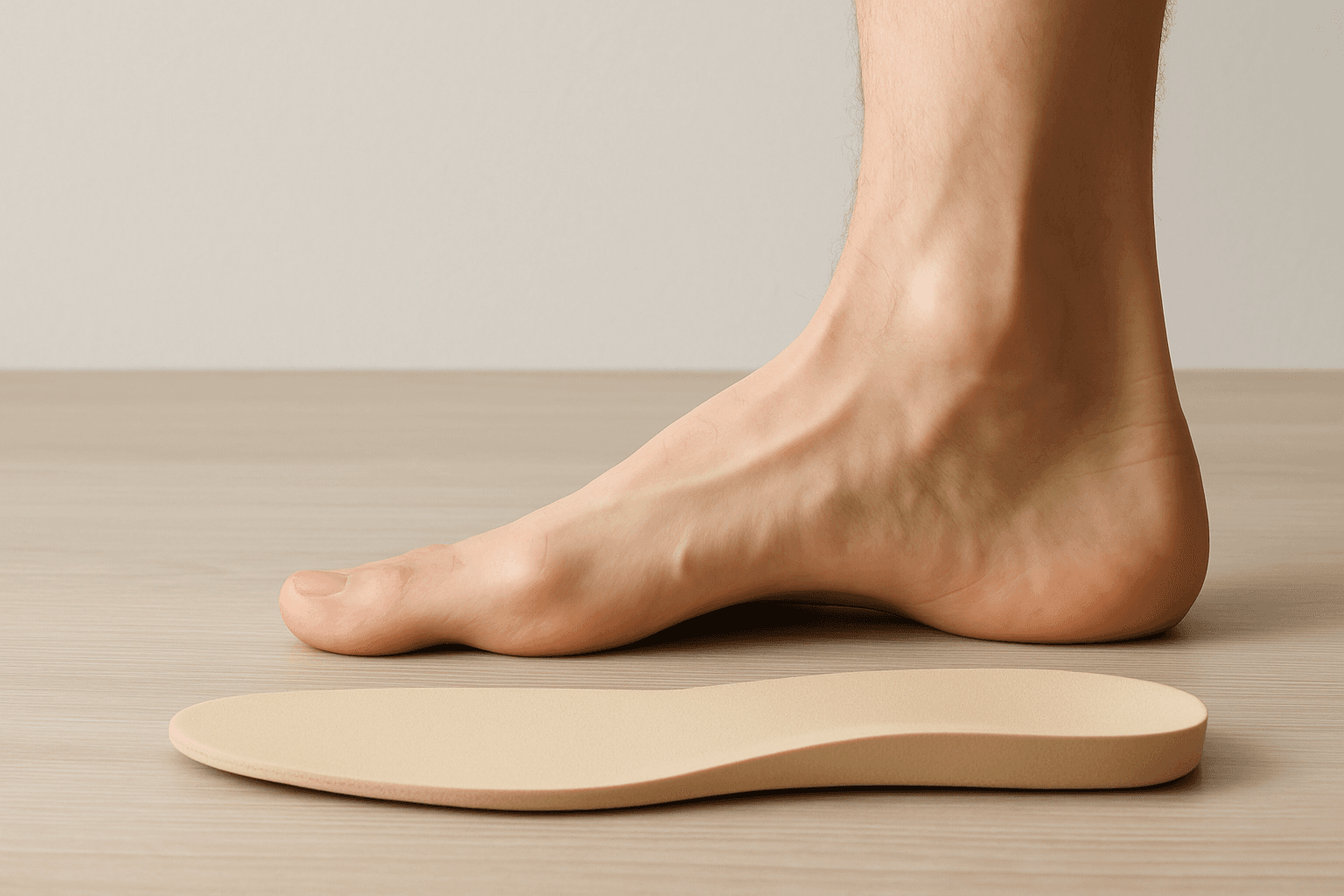
Arch shape: a contoured arch that matches the height of your own arch gives the foot something to rest on. Too much lift can feel like a pebble under the arch by mile three, so err toward moderate if you are unsure. Our guide to flat feet insoles and the page on high-arch insoles explain how the choice shifts with arch height.
Heel cup: a defined cup helps hold the heel pad under the bone and steadies the rear of the foot. Base material: a firm-but-springy foam suits road running better than a soft gel that compresses flat. Thickness and length: running shoes are often snug, so a thick full-length insole can crowd the toes. A thinner or three-quarter design may leave more room.
Insole or orthotic?
Over-the-counter insoles are sold ready-made and generally cost far less than custom orthotics, which are made from a mould or scan after an assessment. Custom devices can make sense for complex or persistent problems, but most runners try a ready-made pair first. The difference is explained in our page on orthotics vs insoles.
Fitting one into a running shoe
Remove the shoe's own insole and compare the two. Many running shoes have a thin removable footbed, and the replacement should sit flat without folding at the heel or bunching at the toe. If you need to trim, use the original as a template and cut a little outside the line, then test it. Check that your heel does not lift out of the shoe, which can happen when an insole raises the foot too high in a low-volume shoe.
Also check the shoe itself. A midsole that is creased, compressed or more than several hundred miles old may be the real culprit, and a new insole will not fix that. Many runners use a mileage log to decide when a shoe is due for replacement.
Breaking a pair in
Introduce an insole gradually: walk in it for a few hours, then try a short easy run, then build up over one to two weeks. A new arch can feel strange because muscles are used to working harder. Mild awareness is normal; sharp or increasing pain is a signal to stop and reassess.
Do not change shoes, insoles and mileage in the same week. If something starts to ache, you will not know which change caused it.
When an insole is not the answer
Heel pain that is worst with the first steps of the morning may point towards plantar fasciitis, and our page on running with plantar fasciitis covers pacing and setup. Pinpoint bony tenderness that builds during a run can be a stress fracture, which needs a clinician rather than a new insole. For a shoe-first approach, see our guide to running shoes for flat feet.
If you are looking at a contoured insole for daily wear, you can read our Akusoli insoles review to see how we assess arch and heel support, but remember that a running shoe's fit and wear come first.
When to see a doctor or podiatrist
See a doctor or podiatrist if pain persists beyond a couple of weeks of rest and easier training, if you have swelling, numbness or tingling, if pain follows a specific injury, or if you have diabetes or circulation problems. Persistent pain should be examined rather than managed with insoles alone.
Browse the insoles buyer's guide
Compare insole types by arch height, heel cup and shoe fit before you buy.
Browse the insoles buyer's guide →Frequently asked questions
Do I need insoles for running?
Not necessarily. If your shoes fit well and your feet feel fine, you may not. Insoles are most often tried for comfort, arch fatigue or a recurring ache.
Can insoles prevent running injuries?
The evidence is mixed. A 2016 meta-analysis found fewer injuries and stress fractures with orthoses but no clear effect on soft-tissue injuries, and shock-absorbing insoles showed no benefit.
How long does it take to get used to running insoles?
Many people build up over one to two weeks, starting with walking and short easy runs. Sharp or worsening pain is a reason to stop and get advice.
Should I replace the insole that came with my running shoes?
Only if it is worn out or the shoe leaves your foot without enough support. Check that the shoe itself is not the problem first.
Are custom orthotics better than ready-made insoles for runners?
They suit some complex or persistent problems, but most people try a ready-made pair first. A podiatrist can advise which route fits your foot.
HeelCups is reader-supported. When you buy through links on our site we may earn an affiliate commission, at no extra cost to you. This article is general information about foot comfort and is not medical advice — see our medical disclaimer.