MASSAGE & RECOVERY
Foot Massagers: Types, Who Tends to Get Comfort From Them and Who Should Check First
Rollers, shiatsu machines, heated kneaders and EMS pads all promise tired-foot relief. Here is how each works, what the evidence honestly shows, and the safety points.
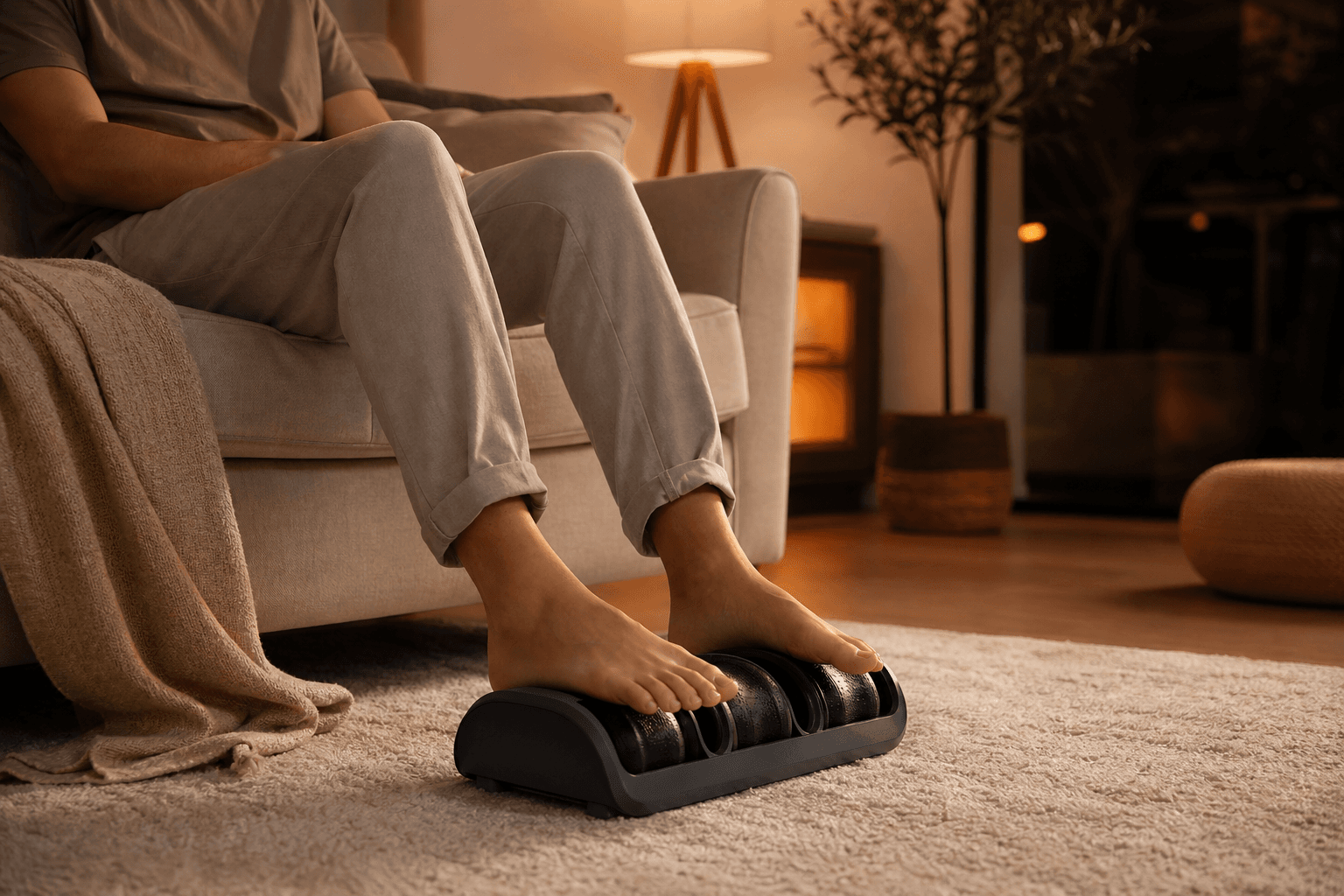
A foot massager can feel wonderful after a long day, and for tired, achy feet that comfort is a perfectly good reason to buy one. What the evidence does not show is that any machine repairs a foot condition. Independent research on foot massage devices is thin, and most of what you read online comes from sellers.
Foot massagers fall into four types: manual rollers and balls, shiatsu or air-compression machines, heated units, and EMS (electrical muscle stimulation) pads. Each suits a different need, and EMS carries extra safety questions, especially if you have diabetes, neuropathy or an implanted device.
Below we compare the types, say who may benefit, and flag who should check with a clinician first. If your pain sits mainly at the heel, our guide to plantar fasciitis massage is more specific.
Manual rollers, balls and spiky massagers
A lacrosse ball, firm roller or ridged foot roller lets you control pressure with your body weight. They are inexpensive, durable and easy to scale up or down. Rolling the arch for a minute or two can feel good and loosen a stiff sole. Start gently, because pressing hard on a tender spot is a common way to aggravate sore tissue.
Frozen bottle rollers combine pressure and cold, which some people prefer after a long day or hard exercise.
Shiatsu and air-compression machines
These plug-in units use rotating nodes and inflating air bags around the foot and sometimes the calf. They suit people who want a hands-off session while sitting down, and many find them soothing for tired feet. Claims about circulation or detox are mostly marketing; we found no strong independent trials showing disease-level benefits.
Check intensity settings, noise, and whether the machine fits your foot size. If your skin is fragile or you bruise easily, choose a gentler setting.
Heated massagers
Warmth relaxes muscle and feels comforting on cold feet. Heat is fine for most people, but anyone with reduced sensation must be careful, because a burn may go unnoticed. See our pieces on foot soaks and heated socks for related options and cautions.
EMS foot massagers
EMS pads send small electrical pulses through the foot and lower leg muscles, causing them to contract and relax. Marketing often targets neuropathy and plantar fasciitis, but the independent evidence we found was limited, and many pages are retailer copy. Some people feel temporary relief; that is not the same as a proven therapy.
Do not use EMS if you have a pacemaker or other implanted device, are pregnant, or have a history of blood clots, unless a doctor has cleared it. If you have diabetes or numb feet, speak with a clinician first; our guide to numb or tingling feet explains why sensation changes matter.
How to choose and use one
Match the type to your goal: a roller for stiff arches, a shiatsu unit for evening relaxation, heat for cold feet. Keep sessions to roughly 10 to 20 minutes, stop if you feel sharp pain, numbness or skin irritation, and avoid massaging over open sores, swelling or suspected clots. A massager is a comfort tool, so keep up supportive footwear; our Akusoli insoles review looks at cushioning and arch support.
What the research does and does not show
Studies of massage in general suggest it can reduce muscle tension and short-term soreness, and people commonly report feeling more relaxed. Studies of foot massage machines specifically are small, short, and often funded or promoted by manufacturers. Claims that a device boosts circulation, flushes toxins or reverses neuropathy go well beyond what we could find supported by independent sources.
A fair expectation is therefore modest: ten minutes of pleasant pressure, maybe looser calves and arches, and an easier evening. If a product page promises more than that, be sceptical.
Features worth checking before you buy
Look for adjustable intensity, an automatic shut-off timer, removable washable covers, and a design that fits your shoe size without squeezing your toes. Read the safety instructions for contraindications, and check the return policy, because comfort is personal. Avoid any product that claims to treat diabetes, neuropathy or plantar fasciitis outright; honest brands describe relaxation and comfort.
If you stand all day, pair a massager with better daily support. Our guide to tired feet at the end of the day covers footwear, breaks and simple habits that make a bigger difference than any gadget.
When to see a doctor
Persistent foot pain, swelling in one leg, a hot red calf, numbness, or skin changes should be examined rather than massaged. Pain that continues beyond several weeks of sensible self-care deserves a podiatrist's opinion. This article is general information, not personal medical advice.
Frequently asked questions
Do foot massagers actually work?
They can feel relaxing for tired feet. Independent evidence that they improve specific foot conditions is limited, so treat them as a comfort tool.
Are EMS foot massagers safe?
They suit many healthy adults, but avoid them with a pacemaker or implanted device, pregnancy, or a clot history unless cleared by a doctor. People with diabetes or numbness should ask first.
Can a foot massager help neuropathy?
Some people report temporary comfort, but we found little independent evidence, and reduced sensation raises the risk of injury. Check with a clinician before using one.
How long should I use a foot massager?
About 10 to 20 minutes is common. Stop if you feel sharp pain, numbness or irritation.
Is a roller or a machine better for plantar fasciitis?
A roller gives you control over pressure, which many prefer for heel and arch soreness. See our plantar fasciitis massage guide for technique.
HeelCups is reader-supported. When you buy through links on our site we may earn an affiliate commission, at no extra cost to you. This article is general information about foot comfort and is not medical advice — see our medical disclaimer.