COMPRESSION SOCK SIZING
Compression Socks for Women and Men: How to Measure, Size and Choose the Right Pair
Most compression sock problems are sizing problems. Here is how to measure your ankle and calf, what the mmHg label means, and the differences that actually matter between women's and men's cuts.
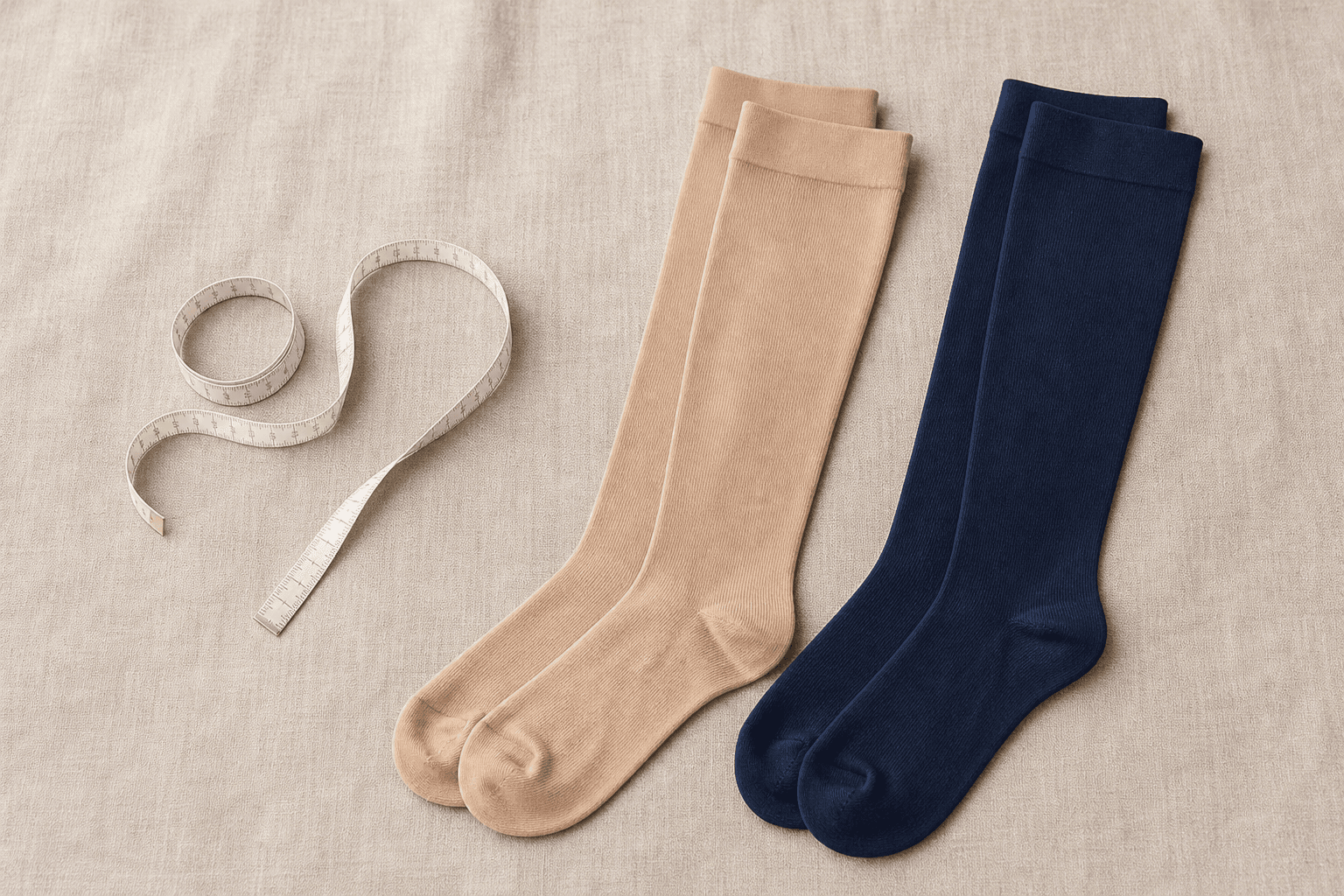
The right size is the one that matches your ankle and calf measurements on the maker's chart, not your shoe size and not the label that says women's or men's. Compression socks work by being snug at the ankle and easing off toward the knee, so a pair that is too loose does very little and a pair that is too tight can dig in, tingle or leave deep grooves. Measuring takes two minutes and a soft tape.
Women's and men's compression socks are usually the same technology cut for different average proportions: women's pairs often run narrower through the ankle and fuller at the calf, men's pairs tend to be wider through the foot and have a larger calf range. Plenty of people fit better in the other cut. Treat the label as a starting point and let the size chart decide.
Below: how to measure, how to read the strength rating, what to look for in a sock, how to get them on, and who should check with a clinician first. For how these socks work in general, see our compression socks guide, and for everything else on skin, nails and socks visit the foot care hub. This is general information, not medical advice.
How to measure your ankle and calf
Retailer and clinic fitting guides agree on the basics. Measure the ankle at its narrowest point, just above the ankle bone, and the calf at its widest point. Many guides add that the calf figure is the one that most often decides which size you land in. Use a soft tape (or a piece of string you then lay against a ruler), keep it snug but not pinching, and write the numbers down in the same unit the size chart uses, because inches and centimetres are easy to mix up.
Measure both legs and size to the larger one if they differ. Measure first thing in the morning, before the day's swelling builds; a Mayo Clinic store fitting page makes this point too. If your legs swell a lot during the day, a pair sized on evening measurements can be too loose in the morning and a pair sized on a swollen leg will be too tight at breakfast. Morning measurements are the usual advice.
Some brands also ask for shoe size or leg length so the foot and the top band land in the right place. Follow the specific chart for the specific pair you are buying, because sizes are not standardised between brands.
What the mmHg number means
Compression strength is printed in millimetres of mercury (mmHg) and describes the pressure at the ankle. Most everyday and travel socks come in 15 to 20 mmHg or 20 to 30 mmHg. Manufacturer guides, such as Sigvaris's compression-level overview, describe the lighter ranges as suited to tired, mildly swollen legs and the firmer ranges to more noticeable swelling, and note that firmer levels are generally used under medical guidance.
A sensible rule for an otherwise healthy person is to start at the lighter end. Anything above 20 mmHg is commonly described as something to run past a doctor or pharmacist who has looked at your legs and circulation first, and 30 mmHg and up is clearly in clinician territory. Our guide to what the mmHg numbers mean goes through the ranges in more detail.
Sizing and strength interact: a sock labelled 15 to 20 mmHg only delivers that pressure if it fits. Too large and the real pressure falls below the label; too small and it rises above it.
Women's vs men's cuts: what really differs
Beyond colour and styling, the differences are mostly dimensional. Women's lines commonly cover smaller ankle sizes and a calf range that grows quickly between sizes, and many offer a wide-calf version. Men's lines usually start at a larger ankle size, have a larger foot, and top out at bigger calf measurements. Pregnancy changes the picture, and that deserves its own conversation with a midwife or doctor.
If you fall between sizes, choose by calf measurement and then check the ankle: the ankle should land inside the chart range for that size too. If your calf and ankle fall in different sizes, look for a brand with a wide-calf or tall option rather than forcing one size.
Features worth looking for
Knee-high is the most practical length for tired feet and standing days. Look for a flat seam across the toes, a smooth top band that stays put without rolling, a cushioned or seamless heel, and a breathable fabric. If you are on your feet all day, a little cushioning under the ball and heel adds comfort that pairs well with a supportive insole such as the one in our insole review.
Closed toe or open toe is personal preference. Open-toe styles suit people who find a closed toe too tight or who wear them with sandals; closed-toe styles are warmer and easier to keep in place.
Putting them on, and signs the fit is wrong
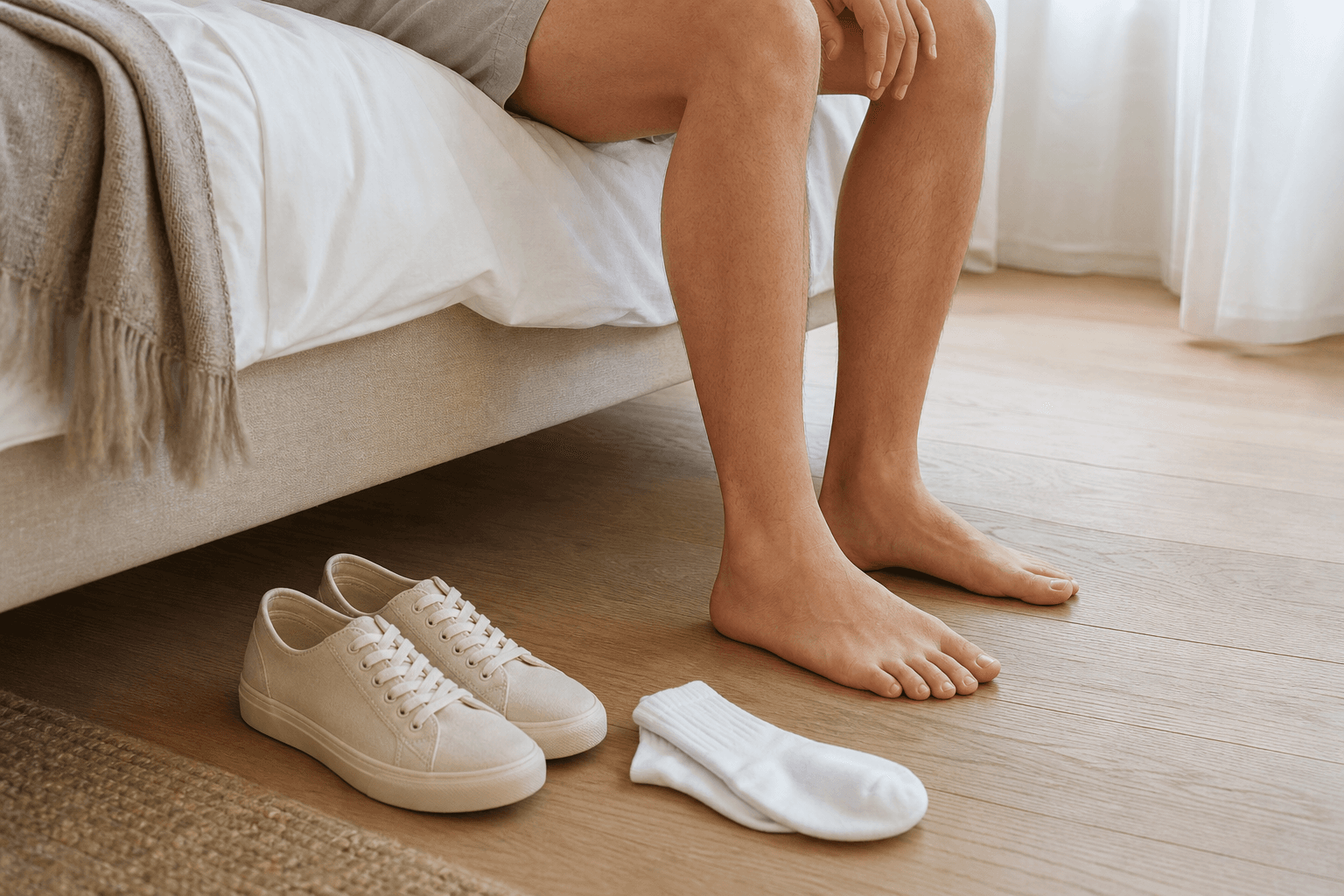
Put them on in the morning while sitting. Turn the sock inside out down to the heel, slide the foot in, then roll the sock up the leg a section at a time, smoothing wrinkles. A bunched band can act like a tight cuff, so check the top sits flat. Rubber dish gloves help with grip.
Pain, numbness, tingling, cold or pale toes, or deep red grooves that last long after you take them off mean the fit is wrong or the strength is too high. Take them off. A sock that slides down, wrinkles at the ankle or rolls at the top is usually too large. If you plan to wear them overnight, read sleeping in compression socks first.
Who should check with a clinician first
Compression is not suitable for everyone. Guidance summarised from medical-supply and clinic sources says people with peripheral artery disease or other circulation problems in the legs, certain heart conditions, a skin infection or open wound on the leg, or reduced foot sensation should get medical advice before using firm compression. People with diabetes should ask first and may be steered toward gentler diabetic socks.
Sudden swelling in one leg, especially with pain, warmth or redness, is not a sock-aisle problem and needs medical attention the same day. Swelling that keeps returning is worth a conversation with a doctor; see swollen feet for everyday causes. If foot pain or swelling persists, see a doctor or podiatrist.
Read our insole review
Socks help with the leg; a supportive insole helps the heel and arch. See how the pieces fit together.
Read our insole review →Frequently asked questions
How do I know what size compression socks to get?
Measure the narrowest part of your ankle and the widest part of your calf, ideally in the morning, and match both to the maker's size chart. Use the larger leg if they differ, and do not size by shoe size alone.
Are women's and men's compression socks different?
The technology is the same. Cuts differ in average ankle, calf and foot dimensions, so choose by your measurements and the size chart rather than the label.
Which mmHg is best for everyday wear?
Many healthy adults start with 15 to 20 mmHg for tired legs. Anything firmer is generally chosen with a doctor or pharmacist's advice.
Should compression socks feel tight?
Snug at the ankle, yes; painful, numbing or tingling, no. Deep grooves or cold, pale toes mean the sock is the wrong size or strength.
When should I measure my legs?
In the morning before swelling builds. Measuring a swollen leg can lead to a size that is too tight at the start of the day.
Who should not wear compression socks without asking first?
People with peripheral artery disease, some heart conditions, leg wounds or infections, reduced sensation or diabetes should check with a clinician first.
HeelCups is reader-supported. When you buy through links on our site we may earn an affiliate commission, at no extra cost to you. This article is general information about foot comfort and is not medical advice — see our medical disclaimer.