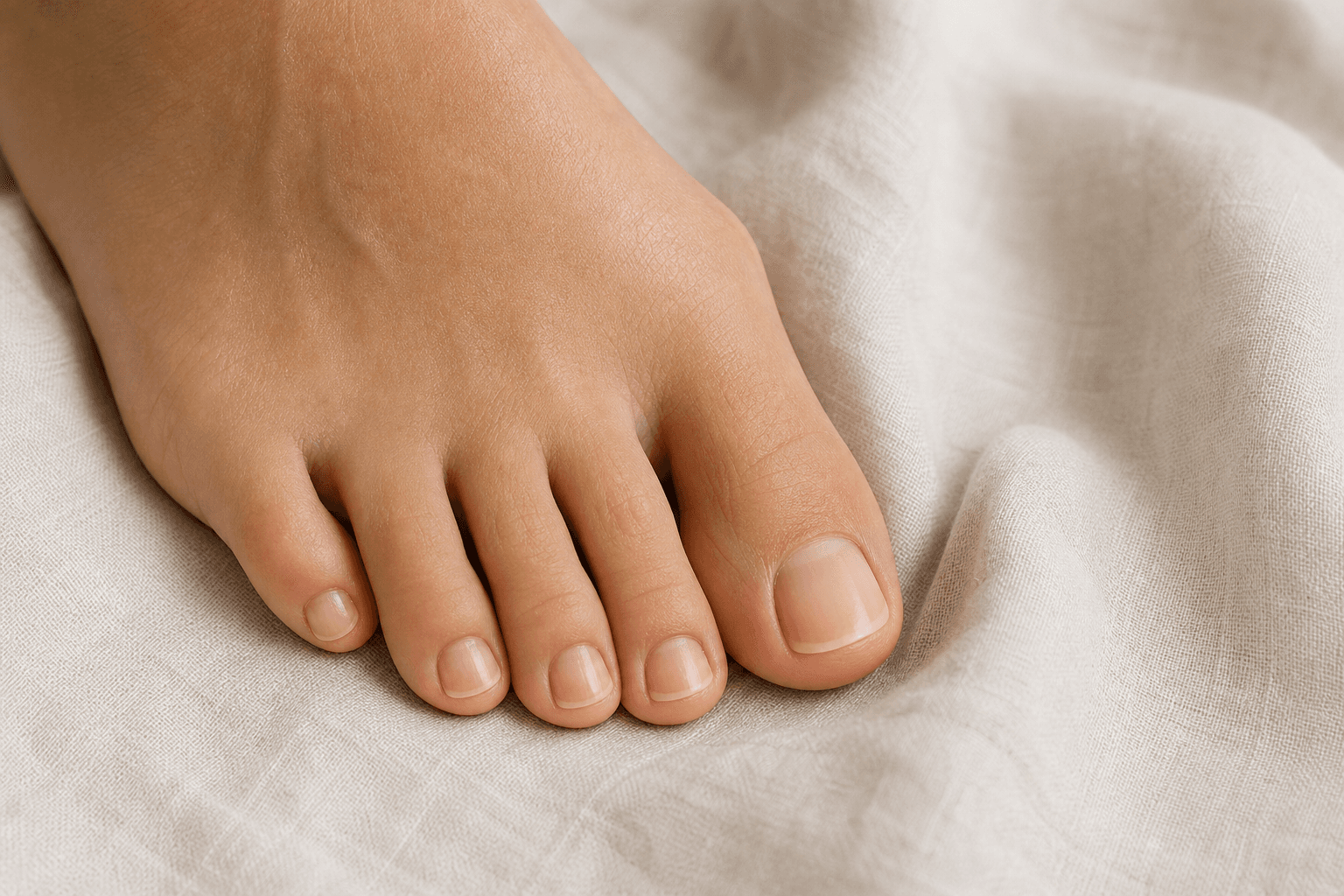
TOENAIL FUNGUS TIMELINE
What Kills Toenail Fungus Fast? The Honest Answer, and What Actually Moves the Needle
Nothing clears a fungal nail overnight. Here is what each option realistically does, how long a nail takes to grow out, and which kinds of products to be wary of.

The honest answer is that nothing kills toenail fungus fast. The infection sits in and under a thick nail plate, and even when the fungus is gone, the damaged nail has to grow out. A toenail can take roughly a year or more to be replaced, so the realistic question is not what works quickly but what gives you the best odds over months.
Clinical reviews, including the American Academy of Family Physicians' evidence review on onychomycosis, describe prescription oral terbinafine as the most effective option, usually taken daily for about 12 weeks. Even so, clearing the fungus on a lab test is more common than a fully clear-looking nail, and the nail still needs many months to grow out. Topical prescription solutions have lower complete-clearance rates in trials, which is why they are generally suggested for milder cases.
This page walks through what to expect from each approach, what you can do at home for comfort and to reduce spread, and when to see a doctor or podiatrist. For the wider overview, read our toenail fungus guide. This is general information, not medical advice.
Why it is slow
Fungus feeds on keratin, the protein in the nail, and lives beneath the plate where creams struggle to reach. The nail itself grows slowly, often cited at around a millimetre a month, so a big toenail needs well over a year to grow from base to tip. Any nail that looks better in a week has probably had its surface cleaned up rather than its infection cleared.
That is also why judging a product by how the nail looks after two weeks is misleading. Real progress shows as a clear band of healthy nail growing out from the cuticle.
Prescription options, in plain terms
Oral antifungals, such as terbinafine, are prescribed by a doctor and are generally considered the most effective choice for moderate or severe cases. They are not suitable for everyone, and clinicians usually check other medicines and sometimes liver function first.
Prescription topicals, such as efinaconazole, are painted on daily for many months. In published trials the proportion of people with complete cure was modest, under 20 percent, which is why they tend to be used for mild to moderate disease or for people who cannot take pills. Some clinicians combine approaches. Which one suits you is a conversation for a doctor or podiatrist.
Laser, light and 'natural' devices
Laser and light treatments are offered by some clinics for nail fungus. Published results are mixed, many studies are small, and costs are usually out of pocket. Ask a clinician what outcomes they have actually seen and whether the approach has independent evidence for your type of nail change, and keep in mind that a nail still needs months to grow out whichever route you choose.
Medicated lacquers and 'nail repair' liquids sold over the counter vary widely. Some are antifungal and some only coat the nail. Reading the active ingredient and the stated timeline helps: anything claiming to work in days is selling comfort, not nail replacement.
Home remedies and gadgets: manage expectations
Vinegar soaks, tea tree oil, hydrogen peroxide and similar home remedies are popular, but strong clinical evidence for clearing nail fungus is limited. A soak may soften a thick nail and make trimming more comfortable, which is a real benefit, but it should not be treated as a way to remove the fungus. Our page on hydrogen peroxide foot soaks explains why.
Be sceptical of anything promising results in days or a 'permanent cure'. If a product claims to work in a week, the nail biology says otherwise.
What you can do that does help
Keep nails trimmed straight and short, and file down thick areas gently so shoes press less. A sturdy tool makes this easier; see our toenail clippers guide. Wash and dry feet, change damp socks, and let shoes dry fully between wears.
Treat athlete's foot at the same time, because fungus on the skin can reinfect the nail. See our guide to athlete's foot creams for how to choose an over-the-counter antifungal. Avoid sharing clippers and wear sandals in shared showers and pool areas.
A realistic timeline to plan around
Think in seasons. In the first weeks you might notice nothing, or only that the nail is easier to trim. Around the three-month mark, people on oral treatment have usually finished the course, and a band of clearer nail may be forming at the cuticle. By six months a visible portion of new nail can be present on a big toe, though the old, damaged part is still growing out. Replacement of the whole nail commonly takes closer to a year, and sometimes longer for the big toe.
Photograph the nail every month in the same light. A simple photo log helps you and your clinician see whether the clear area at the base is advancing, and it removes the guesswork that makes people abandon a sensible plan after six weeks.
Protecting the new nail matters as much as the first push. Keep shoes dry, do not share tools, and treat any athlete's foot promptly. Many recurrences come from the same damp shoes that allowed the first infection.
Confirm it is fungus first
Not every thick or discoloured nail is fungal. Injury, psoriasis and years of pressure from tight shoes can look similar. Clinicians often confirm fungus with a nail clipping before suggesting a medicine, which prevents months of treating the wrong thing. Our guide to the types of toenail fungus shows the patterns to look for.
A dark streak running the length of one nail, especially if it widens or the skin near it darkens, is not a fungus pattern and should be checked promptly by a doctor.
When to see a doctor or podiatrist
Book a visit if the nail is painful, the skin around it is red or swollen, the infection is spreading to other nails, or you have diabetes, poor circulation or a weakened immune system. In those groups, nail problems can lead to bigger foot problems, and early advice matters.
Explore the foot care hub
More guides on nails, skin and everyday foot comfort.
Explore the foot care hub →Frequently asked questions
What is the fastest way to get rid of toenail fungus?
There is no instant option. Prescription oral antifungals are generally considered the most effective, but treatment takes around 12 weeks and the nail then needs months to grow out.
How long until a fungal toenail looks normal?
A big toenail commonly takes a year or more to grow out fully, even after the fungus is gone, so progress is judged by new clear nail at the base.
Do home remedies like vinegar or tea tree oil work?
Evidence that they clear nail fungus is limited. They are not a substitute for confirmed medical care, and some can irritate the skin.
Can toenail fungus come back?
Yes. Damp shoes, untreated athlete's foot and shared tools can all reintroduce it, so keeping feet dry and shoes aired matters after nails clear.
Should I see a doctor for toenail fungus?
It is sensible if the nail hurts, spreads or you have diabetes or circulation problems. A clipping can confirm whether fungus is really the cause.
HeelCups is reader-supported. When you buy through links on our site we may earn an affiliate commission, at no extra cost to you. This article is general information about foot comfort and is not medical advice — see our medical disclaimer.