TOENAIL CLIPPERS
Toenail Clippers for Thick or Ingrown Nails: How to Choose and Use Them Safely
Thick toenails can defeat ordinary clippers, and a bad cut can lead to an ingrown nail. Here is what to look for in a tool and how to trim without making things worse.
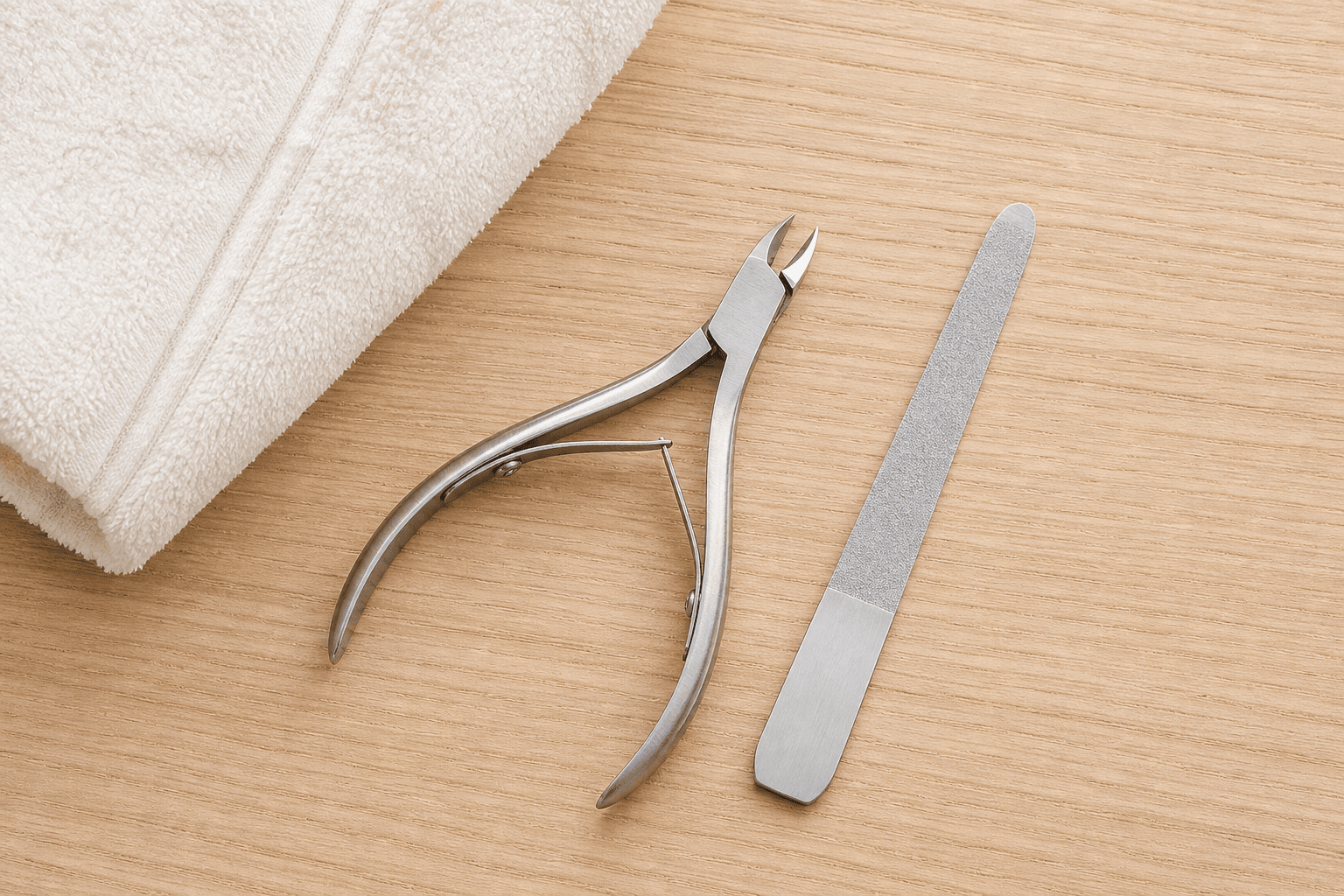
For thick toenails, a long-handled nail nipper with sharp, straight jaws usually works better than a standard fingernail clipper. Mayo Clinic advises nippers for thickened toenails because they are easy to grip and control, and recommends soaking first so the nail softens. The cut itself matters as much as the tool: straight across, in small bites, without rounding the corners.
A better tool will not fix the reason a nail is thick. Thickening can come from age, repeated pressure from shoes, injury or fungus, and tight, curved or painful nails can lead to the problems we cover in our ingrown toenail guide. If trimming hurts, or you have diabetes or poor circulation, see a podiatrist rather than wrestling with it at home.
Below: what to look for, how to trim step by step, what to avoid, and how to clean your tools. Our foot care hub has more on nails and skin.
What to look for in a clipper or nipper
Blade shape: for thick nails, choose jaws that are straight across rather than curved, since a curved edge encourages you to round the corners, which is a common contributor to ingrown nails. Size: standard fingernail clippers are small and can crack or splinter a thick toenail. Toenail clippers have a wider jaw, and nippers have longer handles that give more leverage.
Material: stainless steel holds an edge and cleans easily. Handle: choose a comfortable, non-slip grip you can control with both hands if needed. A lock or spring keeps the tool tidy, but a stiff spring tires the hand. If you have arthritis or reduced grip, a long-handled nipper or an ergonomic design is worth the extra cost.
You do not need a heavy-duty podiatry tool for ordinary thickening. Very large nippers can be harder to control, and a slip near the skin is the main risk. Inspect the jaws before buying if you can: they should meet cleanly with no gap.
Soften first, then trim
Mayo Clinic suggests soaking the feet in warm water for 5 to 10 minutes before trimming, then drying the feet and nails. Softer nails cut more cleanly and are less likely to splinter. Trimming after a bath or shower is a simple habit. Our foot soaks guide covers what a soak can and cannot do.
Sit with good light and put your foot on a stable surface or across the opposite knee. Check the skin around the nail for cuts, redness or swelling first. If any of that is present, leave the nail alone.
How to cut thick toenails
Make small cuts, starting at one side and working across, rather than trying to bite through the whole nail in one go. Small cuts reduce splintering and cracking. Keep the line straight across, and leave the nail slightly long enough that the edge clears the skin, rather than cutting down into the corners.
Do not round the corners, and do not dig into the sides. File any sharp edges with an emery board or file. NHS patient guidance for thick nails suggests filing across the thickness of the nail rather than only the edge, which can make the nail feel less bulky in shoes.
Cut little and often. Trimming a little every few weeks is easier on the nail than one aggressive session, and it avoids cutting too short, which is one of the usual causes of ingrown nails.
Nails that are curved, painful or ingrowing
If the edge of a nail has already started to dig in, do not try to cut a deep notch or trim far down the side. That can leave a spike that grows back into the skin. A soak and a gentle lift with cotton can ease mild cases at home, as described in our ingrown toenail guide, but a red, swollen, draining or very painful nail needs a clinician.
Very curved nails that pinch the skin from both sides are a different problem; see pincer toenails. Thick, yellow, crumbly nails may be fungal, and no clipper changes that. Our toenail fungus page explains the options.
Keep your tools clean
Wipe clippers with rubbing alcohol after use, and do not share them. Dirty tools can carry fungus from one nail or person to another. Keep a separate set for any nail you suspect is infected. Replace tools that rust or no longer cut cleanly, because a dull edge crushes rather than cuts.
When to see a doctor or podiatrist
Have your nails trimmed by a podiatrist if you have diabetes, numb feet, poor circulation, vision problems or cannot reach your feet. Also see a clinician if a nail is painful, discoloured, suddenly thickens, or if the skin around it is red or draining. Persistent nail or foot pain deserves a professional look.
Explore the foot care hub
Nails, skin, socks and everyday foot comfort in one place.
Explore the foot care hub →Frequently asked questions
What kind of clipper is best for thick toenails?
A toenail clipper with a wide, straight jaw or a long-handled nail nipper. Mayo Clinic suggests nippers for thickened nails because they are easy to grip and control.
Should I cut toenails straight across?
Yes. Straight across without rounding the corners is the usual advice, because cutting into the corners or too short can contribute to ingrown nails.
Is it better to cut toenails after a bath?
Yes, soaking feet in warm water for 5 to 10 minutes softens the nail so it cuts more cleanly with less splintering.
How do I trim an ingrown toenail?
Do not cut a notch or dig out the corner yourself. Mild cases may ease with soaking and careful care, but a painful, red or swollen nail should be seen by a clinician.
Can I use fingernail clippers on toenails?
They are too small for most toenails and can crack thick ones. Use a toenail clipper or nipper instead.
HeelCups is reader-supported. When you buy through links on our site we may earn an affiliate commission, at no extra cost to you. This article is general information about foot comfort and is not medical advice — see our medical disclaimer.