ATHLETE'S FOOT CREAMS
Athlete's Foot Creams and Sprays: How to Choose an Over-the-Counter Antifungal
Cream, spray, powder or gel? Here is how the common active ingredients differ, how long to use them, and when it is time to ask a pharmacist or doctor.
For athlete's foot, most people choose an over-the-counter antifungal in the form that suits their skin: a cream for dry, scaly skin, a spray or powder for moist, sweaty feet, and a gel or solution for hard-to-reach gaps. The active ingredient matters more than the form, and so does using it for the full length of time on the label, even when the itch fades early.
Pharmacy and clinic guidance generally points to a few common ingredients: terbinafine, which is usually used for about a week, and the azoles such as clotrimazole and miconazole, which are typically used for two to four weeks. Check the box for the exact directions, because they vary by product.
Below: how to match the form to your skin, what to expect from each ingredient, how to apply it, and when to stop and get advice. To recognise the rash first, see our athlete's foot guide. This is general information, not medical advice.
Cream, spray, powder or gel: matching the form
Creams are the usual choice for dry, flaky or cracked skin because they moisten as they work. Sprays and powders suit sweaty, damp feet and can be applied inside shoes, though sprays can sting on cracked skin. Gels and solutions dry quickly and are easy to use between toes. Whatever form you choose, the goal is the same: get the antifungal onto clean, dry skin and keep the area dry afterwards.
If the skin is weeping, very red or blistered, or you suspect eczema or a shoe allergy, ask a pharmacist before putting an antifungal on it, since the look-alikes need different care.
Common active ingredients and typical durations
Terbinafine is an allylamine antifungal. Several pharmacy and clinic guides describe a typical course of about one week, applied once or twice a day depending on the product, with improvement often noticeable within a few days. Clotrimazole and miconazole are azoles. Guides typically describe two to four weeks of twice-daily use, and some advise finishing the full course even after symptoms clear.
These durations come from pharmacy, clinic and retail health pages, not from a single authority, so treat them as typical rather than universal and follow the label on the product you buy. Using a cream for a shorter time than directed is a common reason the rash comes back.
How to apply it so it works
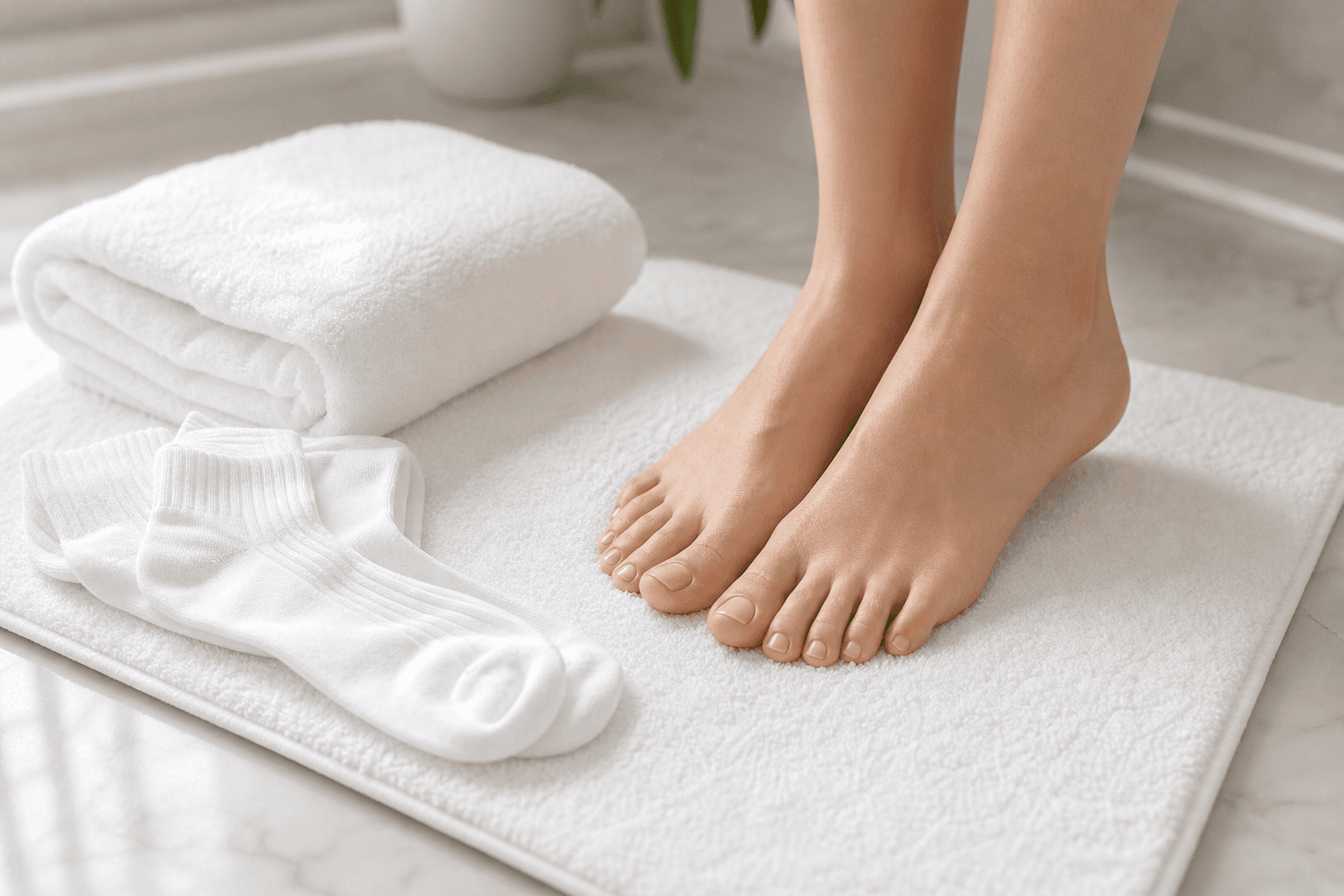
Wash and dry the feet well, especially between the toes. Apply a thin layer to the rash and a little beyond its edge, because the fungus extends past the visible patch. Wash your hands afterwards so you do not spread it to other skin. Put on clean cotton or moisture-wicking socks, and change them at least once a day.
Rotate or air out shoes between wears, since fungus survives in damp footwear. A powder or spray in the shoes can help keep them dry. If you also have thickened or yellow nails, the nail may be a source of reinfection; see our toenail fungus guide. Sweaty feet are an extra risk; good sock choices can help.
Choosing by situation
Between the toes, where skin stays damp, a quick-drying gel, solution or thin cream is easier to keep dry than a thick one. Across a dry, scaly sole, a cream is usually the more comfortable option, and it needs working in thoroughly because that skin is thick. If the sole is dry and scaly in a moccasin pattern around both feet, it can be easy to mistake for dry skin and slow to respond, which is a good reason to ask a pharmacist or doctor if a full course has not helped.
If you are choosing for a family member, check the label for age limits, and avoid using products on children or during pregnancy without asking a pharmacist first. Also check ingredient lists if you have sensitive skin or known allergies, since fragrance and alcohol can sting cracked skin.
Why it comes back
Reinfection is common. Stopping the cream as soon as the itch fades, wearing the same damp shoes, going barefoot in locker rooms and showers, and leaving fungal nails untouched all keep the cycle going. Wear flip-flops or shower shoes in communal wet areas, dry between the toes and avoid sharing towels.
When to stop and ask a pharmacist or doctor
If there is no improvement after about two to four weeks of consistent use, a clinician should look at the rash; it may be another condition, or a different treatment may be needed. See a doctor sooner for spreading redness, warmth, pus, fever, or if the rash covers the sole in a moccasin pattern. People with diabetes, poor circulation, reduced sensation or a weakened immune system should ask a clinician early rather than self-managing; broken skin is a gateway for infection. Our diabetic socks guide explains one part of daily foot care.
If foot symptoms persist, keep coming back or are painful, see a doctor or podiatrist.
Browse foot care guides
Skin, nail and sock guidance for the whole foot, written for comfort and support.
Browse foot care guides →Frequently asked questions
Which is better for athlete's foot: cream or spray?
Cream is usually favoured for dry, scaly skin and spray or powder for sweaty, damp feet. The active ingredient and finishing the full course matter more than the form.
How long should I use an athlete's foot cream?
Check the label. Pharmacy and clinic guides commonly describe about one week for terbinafine and two to four weeks for clotrimazole or miconazole.
Why did the itch stop but the rash returned?
Stopping early is a common reason. The fungus can linger after symptoms fade, so finish the full course and keep feet dry.
Can I use athlete's foot cream on my toenails?
Skin creams generally do not reach fungus under a thickened nail. See our toenail fungus guide and ask a clinician.
When should I see a doctor?
If there is no improvement after two to four weeks, the rash spreads, or there are signs of infection. People with diabetes should check early.
HeelCups is reader-supported. When you buy through links on our site we may earn an affiliate commission, at no extra cost to you. This article is general information about foot comfort and is not medical advice — see our medical disclaimer.