SHOES FOR BUNIONS
Shoes for Bunions: How to Choose a Pair That Gives the Bump Room
Toe box shape, sole stiffness, materials and fit tests: what to look for in shoes when you have a bunion, and what to avoid.
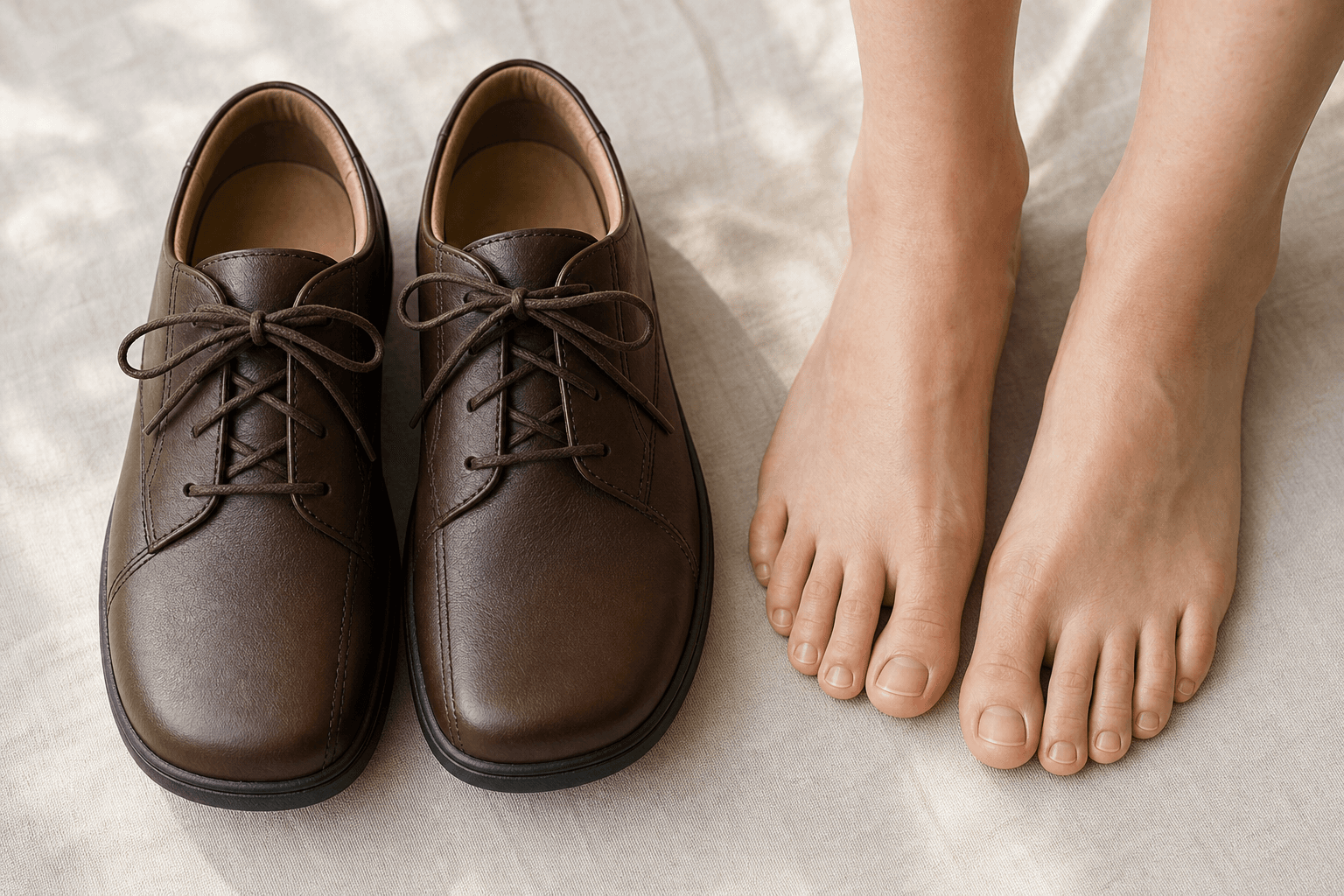
The best shoes for bunions are the ones that leave room where the bump sits. Look for a wide, deep toe box that lets your toes spread, soft or stretchy material over the joint, a firm sole with some cushioning and a secure fit through the heel and midfoot. Shoes will not make a bunion disappear, but the wrong pair can rub and inflame it, and the right pair can make walking noticeably more comfortable.
Most advice about bunion footwear comes down to one idea: shoes should be shaped like feet, not the other way round. The American Academy of Orthopaedic Surgeons (through its OrthoInfo patient site) and the NHS both advise choosing shoes with a wide toe box and avoiding narrow, pointed or high-heeled styles, because squeezing the forefoot is the main thing that makes a bunion sore.
This page is general information, not medical advice. If a bunion is painful most days, is changing shape or is stopping you doing normal things, a doctor or podiatrist can assess it and talk through options.
Start with the toe box, not the size number
Trace your bare foot on paper while standing, then compare the outline with the inside of the shoe. The widest part of the shoe should be at least as wide as your forefoot at the bunion, and the toe area should be tall enough that nothing presses on the top of the big toe. Many people with bunions end up in shoes that are the right length but too narrow, so they buy half a size up and then slip at the heel.
Look for brands that sell wide or extra-wide widths, and check the shape rather than the label. A shoe that tapers inward from the ball of the foot will squeeze a bunion however roomy it looks from above. Try shoes on in the afternoon, when feet are at their largest, and wear the socks you normally wear.
Materials that give a little
Soft leather, knit fabric and stretch mesh over the bunion joint can mould to the bump instead of pushing against it. Avoid stiff seams, overlays or stitched toe caps across the joint, because these create a hard line right where the skin is already tender.
If you love a pair that is nearly right, a shoe repair shop can sometimes stretch the leather at the bunion. This is a comfort fix for a good-fitting shoe, not a way to rescue a pair that is far too narrow.
Sole and support
A cushioned but fairly firm sole that does not bend in the middle of the shoe tends to be more comfortable than a floppy one, because it reduces the amount the big toe joint has to flex with each step. Some people find a mild rocker sole, which rolls the foot forward, takes pressure off the joint. Keep heels low: heels above roughly an inch and a half push body weight onto the forefoot and squash the toes into the front of the shoe.
The sole should also hold your heel and arch securely. A shoe that lets the foot slide forward will jam the toes even if the toe box is generous. Laces, straps or a hook-and-loop closure let you adjust the fit across the top of the foot without squeezing the bump. For more on how arch support shoes work, see our guide to arch support shoes.
Shoes to be careful with
Pointed-toe flats and heels are the classic problem, but some fashionable trainers and sandals can also be narrow at the front. Thong-style flip-flops put pressure on the big toe and offer little support. Very thin, flat shoes give no cushioning, and narrow work boots with a steel toe can be tough if the bump presses on the cap.
Rather than banning all of these, think about how long you wear them. A narrow shoe for an hour at an event is a different proposition from a narrow shoe for an eight-hour shift. When you do wear tight footwear, take breaks to slip them off.
Add-ons: pads, spacers and insoles
A soft gel or foam bunion pad can cushion the bump inside a shoe that has the room for it, but a pad in a tight shoe just makes it tighter. Toe spacers sit between the big toe and the second toe and some people find them comfortable; evidence that they change the angle of the bunion is limited. Our page on bunion correctors explains what these products can and cannot do.
An insole with a supportive arch may help if your feet roll inward, which can load the big toe joint, but it needs room in the shoe to work. If you are choosing one, our Akusoli insoles review shows how we judge arch and heel support. Remove the shoe's own footbed first so the insole does not crowd the toes.
When to see a doctor or podiatrist
See a doctor or podiatrist if the bunion hurts even in roomy shoes, if the skin over it is broken, red and hot, if you have diabetes or poor circulation, or if the bump is growing quickly. A clinician can check the joint, review footwear and discuss whether padding, orthotics or surgery are worth considering. For the bigger picture, see our overview of bunions.
Browse the foot care hub
More guides on bunions, toe pain and everyday foot comfort.
Browse the foot care hub →Frequently asked questions
What is the best type of shoe for bunions?
A shoe with a wide, deep toe box, soft upper material over the joint, a cushioned sole and a secure heel. Brand matters less than shape and fit.
Should I buy a bigger size if I have a bunion?
Usually it is better to buy a wider width in your normal length. Going up a size can make the heel slip and still leave the forefoot too narrow.
Are sandals good for bunions?
Sandals with a soft, wide strap and a supportive footbed can work well. Thong-style flip-flops put pressure on the big toe and tend to be less comfortable.
Can the right shoes make a bunion go away?
No. Shoes can reduce rubbing and discomfort but they do not reverse the bone shape. A podiatrist can talk through other options if the bunion limits your day.
Are high heels always a problem for bunions?
Heels push weight onto the forefoot and squeeze the toes together, which tends to aggravate a bunion. Low, wide-toed shoes are usually more comfortable.
HeelCups is reader-supported. When you buy through links on our site we may earn an affiliate commission, at no extra cost to you. This article is general information about foot comfort and is not medical advice — see our medical disclaimer.