SOCKS FOR SWEATY FEET
Socks for Sweaty Feet: Which Fabrics Keep Feet Drier and Why
Cotton, merino wool, synthetics and bamboo compared, plus the sock, shoe and routine habits that make damp feet more comfortable.
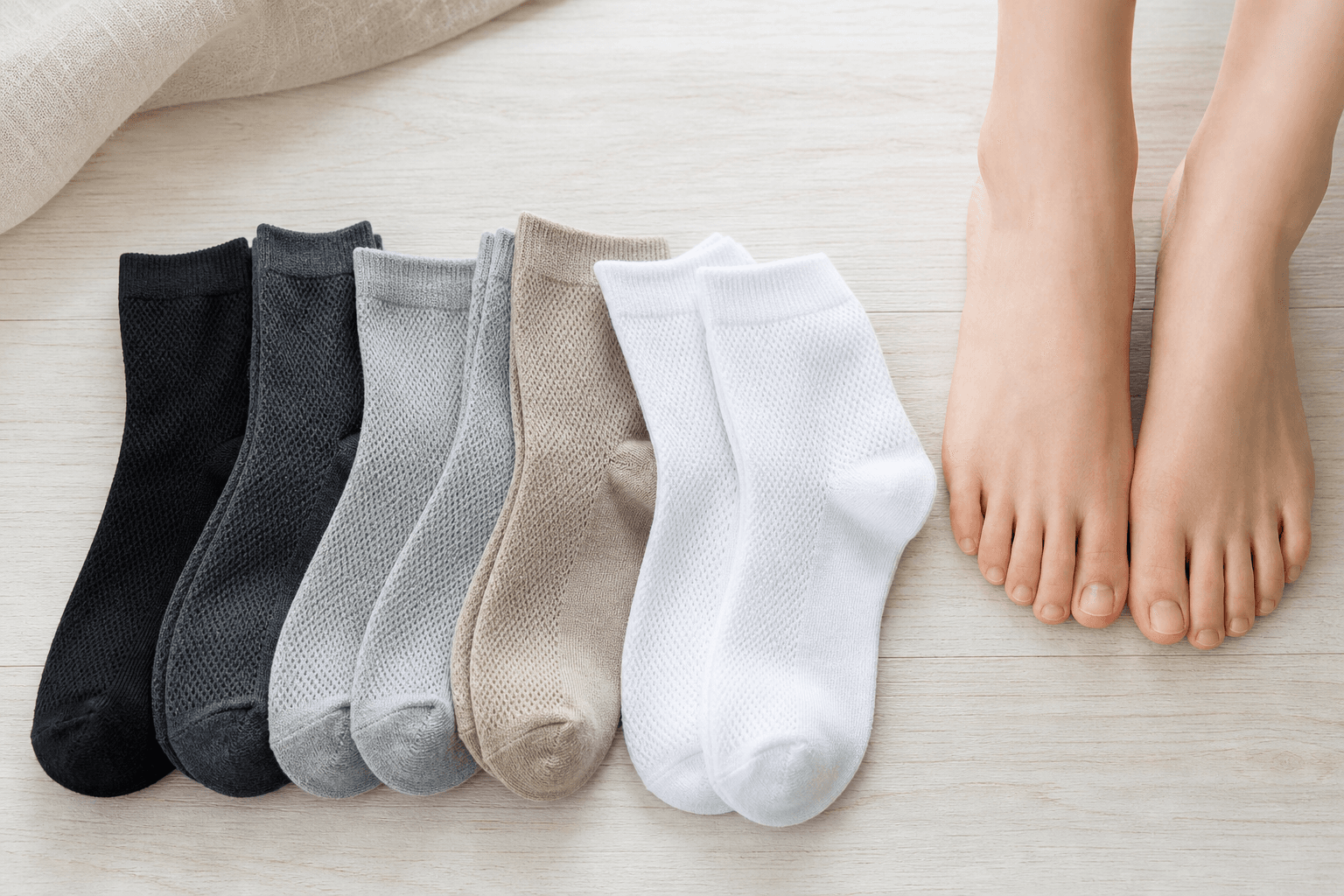
For sweaty feet, choose socks made from moisture-wicking fibres such as merino wool or a synthetic performance blend, and avoid plain cotton. Cotton soaks up sweat and holds it against the skin, while wool and synthetics move moisture away from the foot so it can evaporate. The right socks will not stop feet sweating, but they can keep them noticeably drier and more comfortable.
Feet have a high density of sweat glands, and some people simply sweat more than others. Damp skin inside a closed shoe can soften, blister and become a home for bacteria and fungi, which is why sweaty feet often come with odour and athlete's foot. Socks are one part of the answer, alongside shoes that breathe and a few daily habits.
This page is general information, not medical advice. Sweating that is heavy, sudden or comes with other symptoms deserves a conversation with a doctor.
Fabrics compared
Merino wool: absorbs a fair amount of vapour before it feels damp and tends to feel comfortable across a range of temperatures. It can cost more and may be less durable unless it is blended with nylon.
Synthetics (polyester, nylon, polypropylene): designed to pull moisture off the skin and dry quickly. They suit sport and hot weather, though some hold odour more than wool.
Bamboo and other cellulose blends: soft and fairly absorbent, but they can hold moisture longer than wool or true wicking synthetics.
Cotton: comfortable when feet are dry, but it holds sweat and stays wet. It is the fabric to avoid for long days or exercise.
Construction features that help
Look for mesh panels over the top of the foot, a seamless toe that reduces rubbing, and light cushioning at the heel and ball. A snug fit stops the sock bunching, which causes friction and blisters. Sock height should match the shoe: a low cut sock in a boot rubs at the ankle, while thick socks in a snug shoe raise pressure and increase sweating.
Some socks are marketed as antimicrobial or odour-controlling. The treatment may reduce odour but it does not remove the need to change socks regularly.
Shoes matter as much as socks
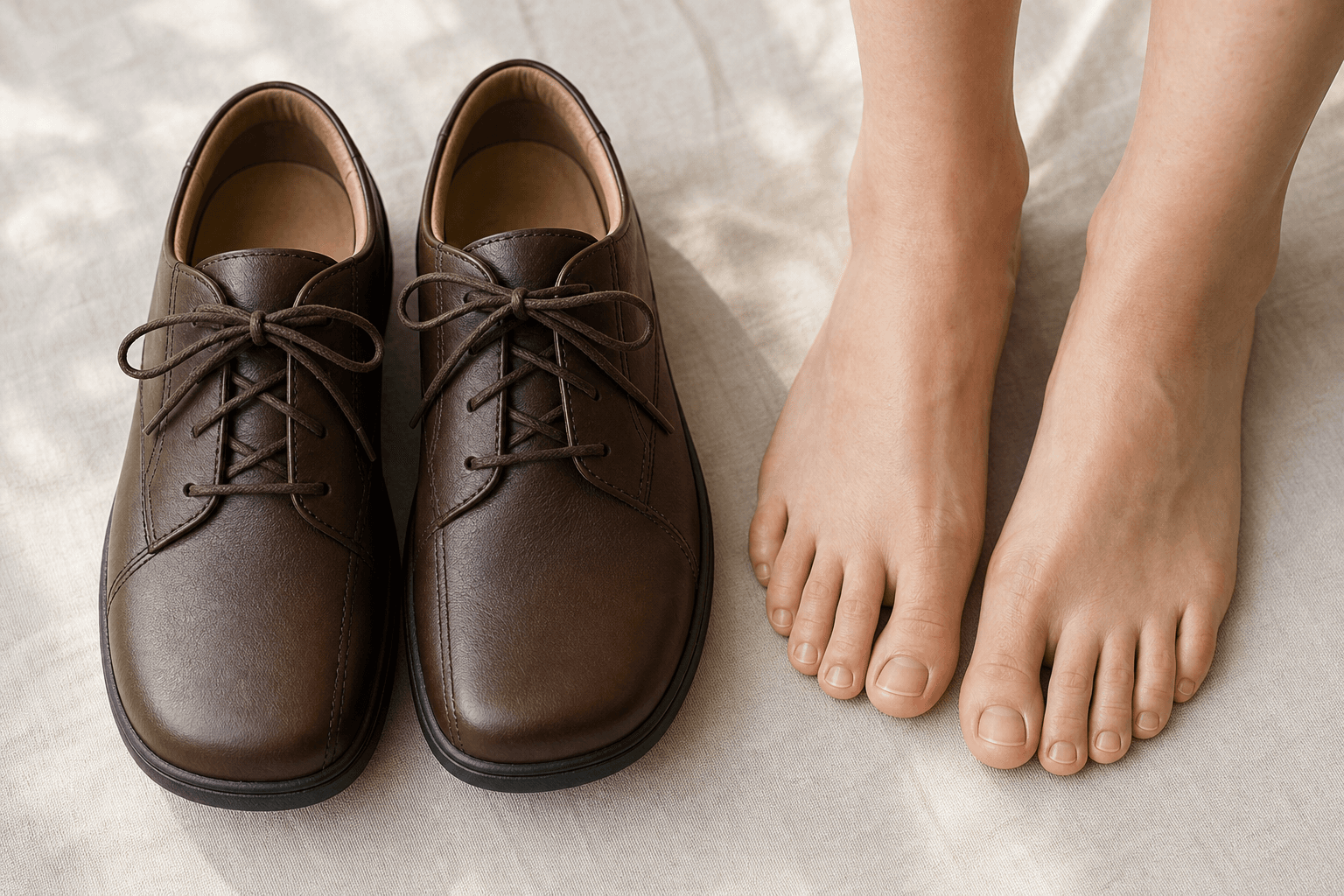
Leather, knit and mesh uppers allow more airflow than plastic or synthetic leather. Rotate shoes so each pair has a full day to dry out, and take out the insoles to air between wears. If you use an insole, pick one with a breathable top layer, and replace it when it is worn. Our guide to smelly feet covers shoe care and odour in more detail.
Daily habits for drier feet
Wash feet daily and dry thoroughly, especially between the toes. Change socks midday if they feel damp and carry a spare pair if you are on your feet all day. Some people use foot powder, and some use an antiperspirant on the soles; the American Academy of Dermatology Association suggests antiperspirants as one self-care option for sweaty feet. Test a small area first, because they can irritate skin.
Shoes and socks work as a pair, so try one change at a time. If you switch fabric, wear the new socks for a week of normal days before judging them, and note whether your feet feel damp by midafternoon. Wash socks in warm water and dry them fully, since a sock that never dries between wears picks up odour quickly. Replace socks once the heel and toe thin out, because worn patches rub and trap moisture against the skin.
Give your feet air at home. Going barefoot or wearing open sandals indoors lets skin dry. Keep nails trimmed and look out for peeling or itchy skin between the toes, which may be athlete's foot; see our guide to athlete's foot.
When sweating is more than just sweating
Hyperhidrosis is the medical term for sweating more than the body needs to cool down. It can run in families and may affect the palms and soles. Sudden new heavy sweating, night sweats, weight loss, or sweating with chest pain or dizziness can have other causes and should be assessed by a doctor.
Persistent sweating that is bothering you can often be helped by prescription-strength antiperspirants or other options a clinician can discuss. People with diabetes should check their feet daily, because damp skin can break down; our guide to diabetic socks explains what to look for.
When to see a doctor or podiatrist
See a doctor or podiatrist if the skin is cracked, peeling, red or smelly despite good hygiene, if you suspect a fungal infection, or if heavy sweating limits daily life. If you have diabetes or circulation problems, have any skin change checked promptly.
Browse the foot care hub
More guides on socks, skin and everyday foot comfort.
Browse the foot care hub →Frequently asked questions
What are the best socks for sweaty feet?
Merino wool or moisture-wicking synthetic blends usually keep feet drier than cotton. Fit and a seamless toe also matter.
Is cotton bad for sweaty feet?
Cotton absorbs sweat and stays wet against the skin, so it tends to be a poor choice for long days or exercise.
How often should I change socks if my feet sweat a lot?
Changing at midday, or whenever they feel damp, helps. Carrying a spare pair is an easy habit.
Can sweaty feet cause athlete's foot?
Warm, damp skin makes it easier for fungi to grow, so persistent moisture raises the odds. Keeping feet dry and rotating shoes helps.
When should I see a doctor about sweaty feet?
If sweating is sudden, extreme, comes with other symptoms or causes skin problems, a doctor can check for causes and discuss options.
HeelCups is reader-supported. When you buy through links on our site we may earn an affiliate commission, at no extra cost to you. This article is general information about foot comfort and is not medical advice — see our medical disclaimer.