COMPRESSION LEVELS
20-30 mmHg Compression Socks: What the Numbers Mean and Who Should Ask First
The mmHg rating tells you how firmly a sock squeezes at the ankle. Here is how the common levels differ, where 20-30 mmHg fits and why it is worth a conversation with a clinician.
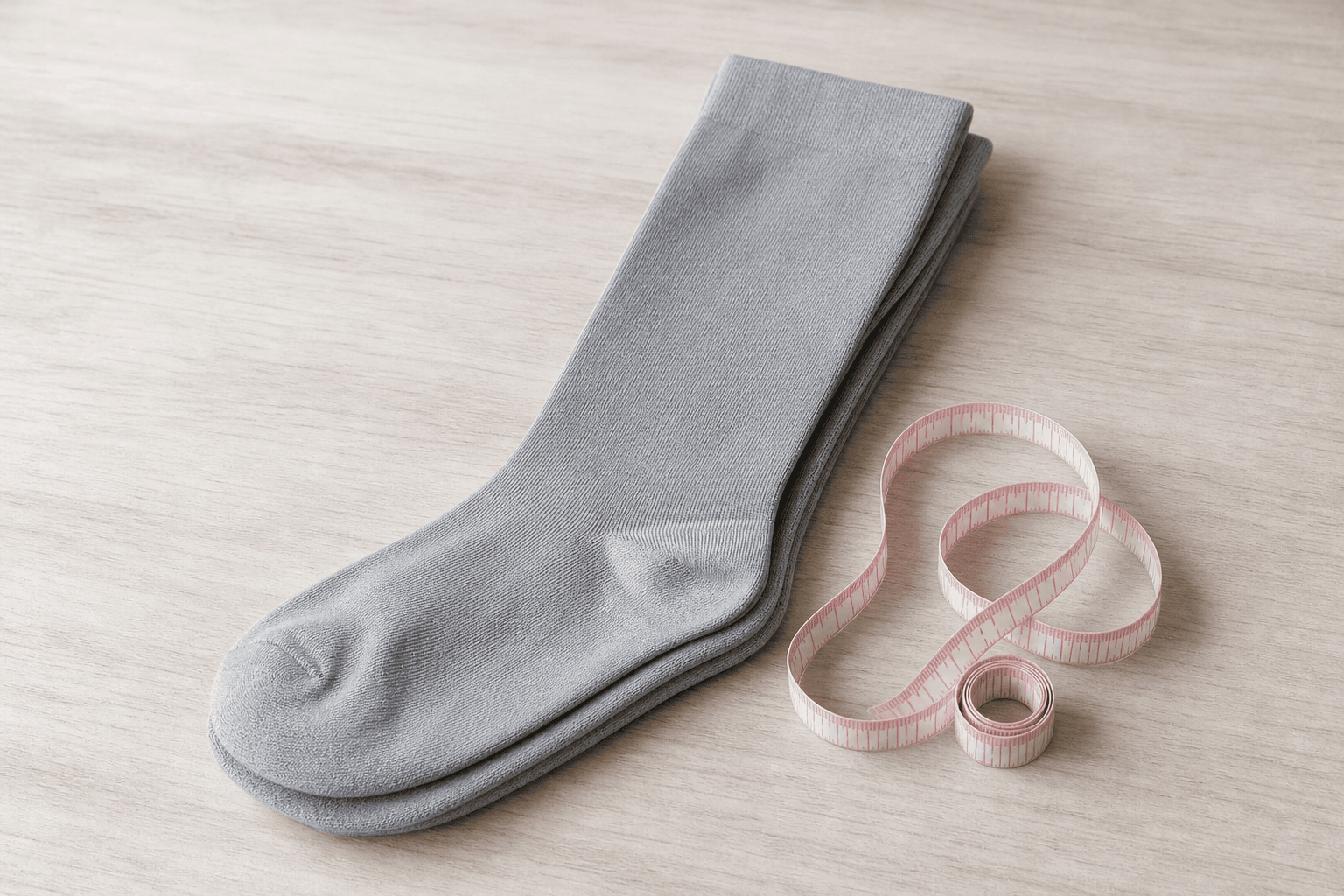
The mmHg on a compression sock is the pressure it applies at the ankle, measured in millimetres of mercury. Higher numbers mean a firmer squeeze, and the pressure is designed to ease off as the sock moves up the leg. A 20-30 mmHg sock is a firm, medical-grade level, noticeably tighter than the 15-20 mmHg pairs most people buy for travel or long days on their feet.
Mayo Clinic's own store guide on compression levels notes that because 20-30 mmHg applies substantially more pressure than mild compression, it is sensible to discuss it with a clinician when you are dealing with an ongoing medical issue. Clinicians commonly use this range for diagnosed swelling, varicose veins or venous insufficiency, though your own prescription may differ.
If you are choosing a pair for comfort and are unsure which strength to start with, read this alongside our guide to compression sock sizing, because a correct fit matters as much as the number. Nothing here replaces advice from your own doctor.
What mmHg actually measures
Compression ratings describe pressure at the ankle, where the sock is tightest. A range such as 20-30 reflects the fact that the exact pressure varies with ankle size and how the sock is worn. Brands test and label differently, and a 20-30 sock from one maker can feel different from another's, so the number is a guide rather than a precise dose.
That variation is a reason to start with the mildest level that does the job and to see how it feels over a few hours.
The common levels in plain terms
Retail guides generally group the ranges like this. Around 8-15 mmHg is very light and mostly a snug, comfortable sock. Roughly 15-20 mmHg is mild to moderate and the usual over-the-counter choice for travel, standing jobs and tired legs. About 20-30 mmHg is firm and aimed at noticeable swelling or varicose veins. Above 30 mmHg is typically prescribed and fitted.
Most of those descriptions come from sock sellers, so treat the boundaries as rough. The pattern, though, is consistent: more pressure should come with more medical oversight.
Who may be offered 20-30 mmHg
Clinicians may suggest this level for people with persistent leg swelling, varicose veins, or after certain vein or leg procedures, and some choose it for long flights when advised. It is firm enough that putting the socks on can take effort, which is one reason many people use a donning aid or rubber gloves.
For a long journey, lighter pressure is usually enough for most healthy people, as our guide to compression socks for flying explains.
Who should check first
Several sources agree that people with diabetes, peripheral artery disease, neuropathy or poor circulation should speak with a clinician before wearing firm compression, because a tight sock can hide numb areas or restrict blood flow that is already limited. Our pages on diabetic socks and peripheral neuropathy cover why feet with reduced feeling need extra care.
Take the socks off and call your clinician if you notice numbness, tingling, increasing pain, a bluish or very pale colour in the toes, or skin that is marked or broken.
Wearing them well
Put compression socks on in the morning, before swelling builds, and smooth out wrinkles so no band cuts into the skin. Wear them during the day unless a clinician says otherwise, and check your feet when you remove them. Whether they are safe overnight depends on the level and your health, which we cover in sleeping in compression socks.
Replace socks when they lose their stretch, usually after a few months of regular wear, because worn-out compression gives less support than the label suggests.
Compression is a comfort and support tool, not a way to manage a medical condition on its own. If swelling is persistent, affects only one leg, or comes with pain, redness or breathlessness, see a doctor rather than moving up to a firmer sock. A clinician can check for causes such as vein disease or a clot before you commit to a level, and can measure you properly for a fitted pair if you need one.
Back to the foot care hub
Socks, circulation, skin and nails, with guides for each problem.
Back to the foot care hubFrequently asked questions
What does 20-30 mmHg mean on compression socks?
It is the pressure the sock applies at the ankle, in millimetres of mercury. 20-30 mmHg is a firm level that is generally aimed at noticeable swelling or varicose veins and is often discussed with a clinician first.
Is 20-30 mmHg too tight for everyday wear?
It is noticeably firm, and many people find 15-20 mmHg more comfortable for daily wear. Choose the strength a clinician suggests for your situation, and try new socks for a few hours before a full day.
Do I need a prescription for 20-30 mmHg socks?
Many retailers sell this level without one, but several sources advise talking to a clinician first if you have diabetes, circulation problems or an ongoing medical condition.
What is the difference between 15-20 and 20-30 mmHg?
15-20 mmHg is milder and common for travel and standing jobs. 20-30 mmHg is firmer and aimed at more noticeable swelling or vein concerns.
When should I take compression socks off?
Remove them if you notice numbness, tingling, worsening pain, colour changes in the toes or marks that dig into the skin, and contact a doctor if the symptoms do not settle.
HeelCups is reader-supported. When you buy through links on our site we may earn an affiliate commission, at no extra cost to you. This article is general information about foot comfort and is not medical advice — see our medical disclaimer.