PREGNANCY SOCKS
Compression Socks During Pregnancy: What They Can Ease, Which Strength to Ask About and Who Should Check First
Swollen ankles and heavy legs are common in pregnancy. Here is what compression socks can and cannot do, how to choose a level, and the warning signs that need a clinician rather than a sock.

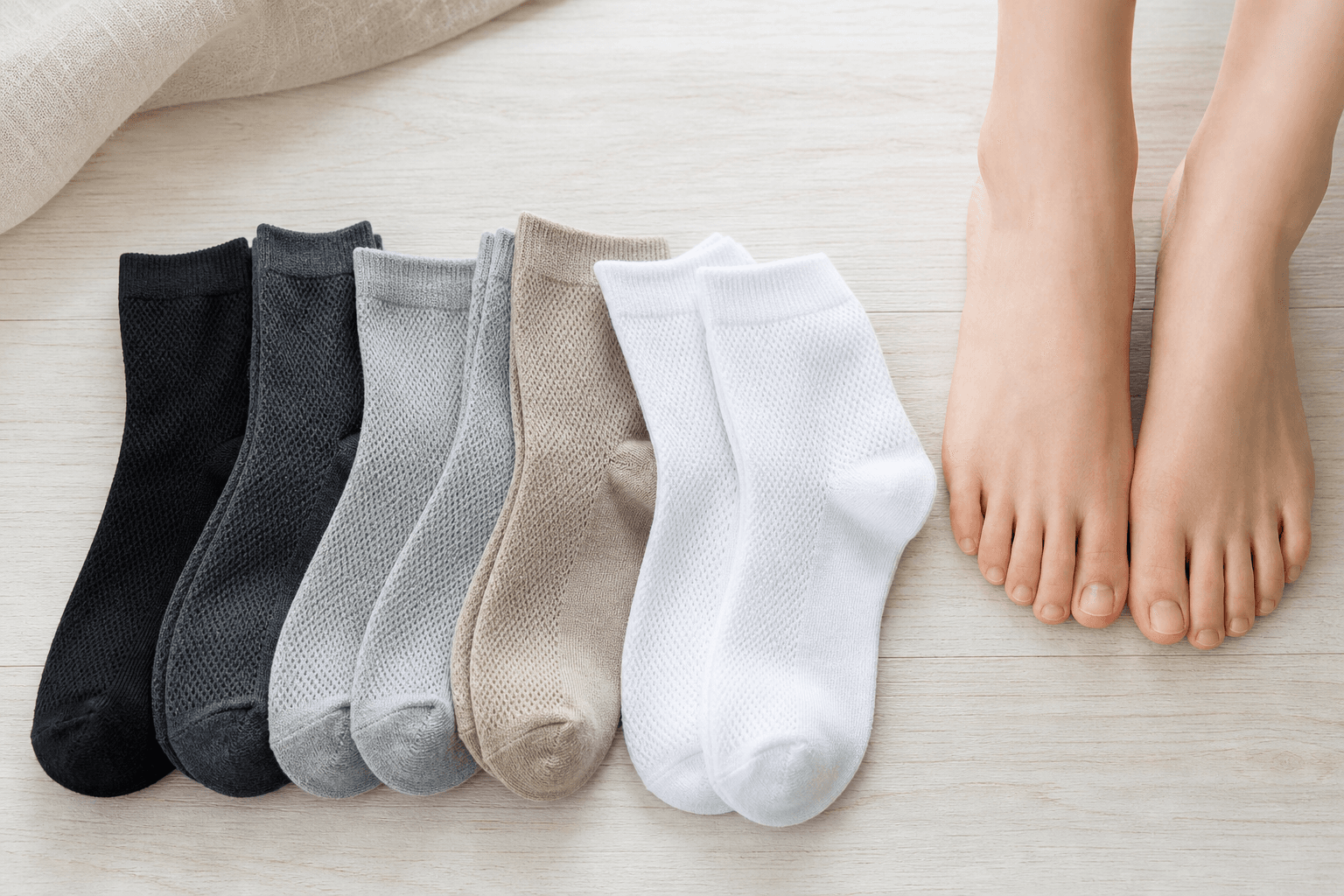
Graduated compression socks are snug at the ankle and looser toward the calf, which gently squeezes the legs to reduce fluid pooling. Cleveland Clinic explains that they increase pressure in the tissue under the skin and can help limit fluid build-up, and they are widely used for the ordinary swelling and heaviness of pregnancy.
They are a comfort tool, not a medical treatment. The UK's NICE guideline on varicose veins says compression stockings can improve symptoms during pregnancy but will not prevent varicose veins from appearing. For mild swelling and tired legs, a Mayo Clinic midwife quoted by Babylist suggests over-the-counter socks around 15 to 20 mmHg are usually enough, while firmer 20 to 30 mmHg socks are sometimes discussed for more visible varicose veins and swelling.
Before you buy, check with your midwife or obstetrician, especially if swelling is sudden or one-sided. This is general information, not medical advice, and some swelling needs urgent assessment rather than a sock.
Why legs and feet swell in pregnancy
The body carries more fluid during pregnancy, and the growing uterus can slow blood return from the legs. Standing for long periods, hot weather and late-day fatigue all make ankles puffier. Mild swelling that eases overnight or after putting your feet up is common.
Our guide to swollen feet during pregnancy covers what is typical, what eases it and the signs to report to your provider.
What compression socks can do
Worn from the morning, graduated socks can make legs feel lighter and reduce the evening puffiness of a long day on your feet. They may also ease the aching of mild varicose veins. They do not remove the cause of the swelling, and they will not stop new veins forming.
Cleveland Clinic advises putting them on early in the day, before swelling builds, because squeezing swollen tissue is harder and less comfortable.
Expect them to feel snug. A well-fitted sock should feel like a firm, even hug, never painful, and it should not leave deep grooves or make your toes tingle. If you find knee-high socks too warm in summer, a lighter fabric or a lower-compression pair may be easier to wear consistently, and a sock you will actually wear is more useful than a stronger one that stays in the drawer.
Choosing a compression level
Compression is measured in mmHg. Lighter socks at 15 to 20 mmHg suit tired legs and minor swelling; 20 to 30 mmHg is firmer and is often something people raise with a clinician first. Our explainer on what 20-30 mmHg compression means goes through the numbers.
Ask your provider which level fits you. Do not jump to a high level on your own, particularly with significant swelling.
Sizing, fit and wearing tips
Measure by the manufacturer's chart, usually ankle and calf circumference and sometimes leg length, rather than shoe size alone. See our compression socks sizing guide. Fit matters more in pregnancy because your measurements can change week to week, so recheck as you go.
Smooth the sock flat with no folds, never roll the top down into a band, and take them off if you get numbness, tingling, a colour change in the toes or sharp pain. Wash them regularly and replace them when they lose their snug feel.
Other comfort habits that go with them
Breaks to elevate your legs, short walks, shoes with room across the foot, and avoiding long stretches of standing still all work alongside socks. Drinking water and keeping a comfortable room temperature are practical extras. These are comfort measures, not treatments.
Sleeping with the feet slightly raised on a pillow, lying on your left side if your provider suggests it, and wearing supportive shoes instead of flat, worn-out ones can all take some load off tired legs. If your feet are also sore at the heel or arch because of extra weight, a supportive shoe or insole may add comfort; our insoles hub explains the options.
Warning signs: talk to a clinician
Sudden or severe swelling, swelling in the face or hands, a bad headache, vision changes, or pain under the ribs can be signs of pre-eclampsia and need urgent care. Swelling, warmth, redness or pain in just one leg, especially the calf, can signal a blood clot and needs same-day assessment. Breathlessness or chest pain is an emergency.
Cleveland Clinic also warns against using compression socks with severe swelling or swelling from a medical condition such as heart failure or kidney disease; see swollen feet and heart failure for related warning signs. If swelling is persistent, painful or worsening, speak to your midwife or doctor.
Explore the foot care hub
More guides on compression, swelling, circulation and everyday foot comfort.
Explore the foot care hub →Frequently asked questions
Are compression socks safe in pregnancy?
They are commonly used, but you should check with your midwife or obstetrician first, particularly if you have swelling in one leg, a history of clots, or circulation problems.
What mmHg should I choose?
A midwife quoted by Babylist suggests around 15 to 20 mmHg for tired legs and mild swelling. Firmer 20 to 30 mmHg socks are better chosen after talking with a clinician.
When should I put them on?
Early in the day, ideally before getting out of bed or soon after, before swelling builds up.
Will compression socks prevent varicose veins?
No. NICE guidance says stockings can improve symptoms but will not prevent varicose veins from emerging.
Can I sleep in them?
Most people take them off at night unless a clinician advises otherwise. See our page on sleeping in compression socks.
When is swelling an emergency?
Sudden swelling with severe headache, vision changes, one swollen painful calf, chest pain or breathlessness needs urgent care.
HeelCups is reader-supported. When you buy through links on our site we may earn an affiliate commission, at no extra cost to you. This article is general information about foot comfort and is not medical advice — see our medical disclaimer.